Loneliness accounts for approximately 871,000 deaths annually, or about 100 every hour, according to the World Health Organization’s latest global report. It is associated with serious health risks, including depression, anxiety, cardiovascular diseases and diminished desire to live. The report estimates that one in every six people worldwide (15.8%) experiences loneliness. We tend to think that elderly people are more prone to loneliness. Curiously, adolescents experience it more frequently than older people: 21% of adolescents report feeling lonely, compared with 12% of older adults. Social isolation, bereavement, retirement, chronic illness and physical disability are among the factors contributing to loneliness.
Although various activities and programmes are organised to help those experiencing loneliness, individual circumstances sometimes prevent people from accessing such support. One tremendous resource that can help overcome loneliness, even in such situations, is faith. It gives meaning to life and a sense of belonging to God, of being loved and cared for by Him. Perhaps the greatest solace faith offers is companionship: the conviction that God is always with us. A beautiful portrayal of God offering such companionship is found in Psalm 23.
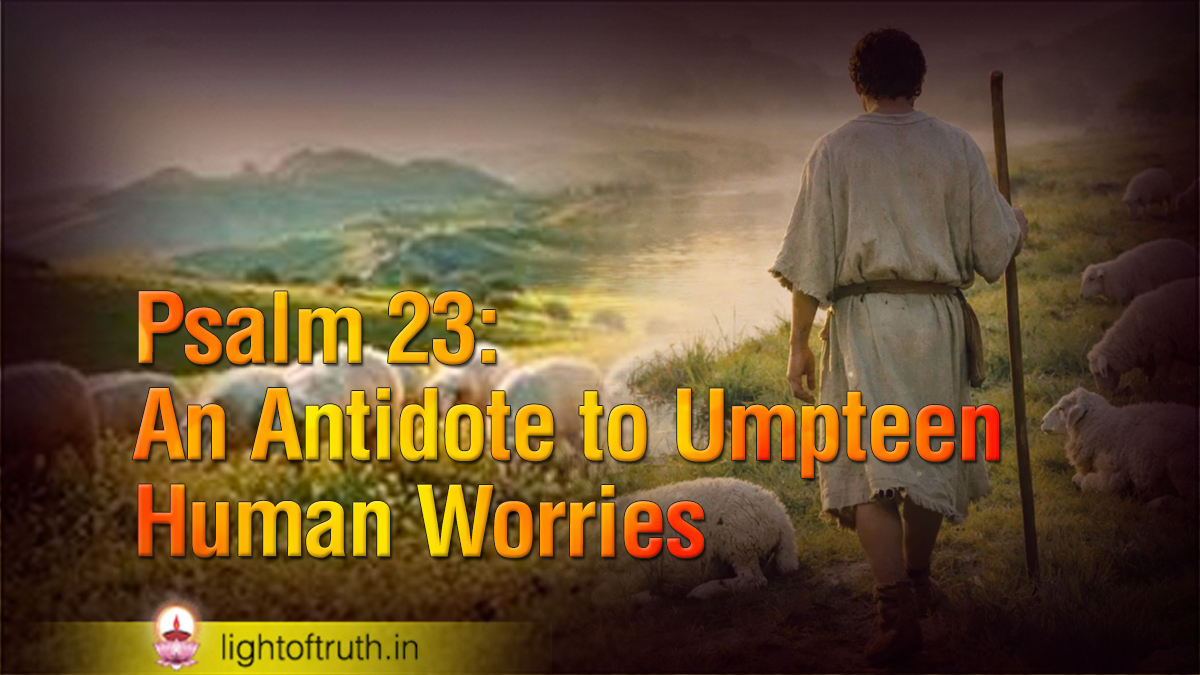
One of the loveliest and best-loved among the 150 Psalms, Psalm 23 portrays God as a shepherd. Accepting God as one’s shepherd can dispel many of the fears we harbour within: that we are unwanted, unloved, uncared for, forgotten or left to face life alone. However, a shepherd is one who constantly accompanies the sheep, cares for them, provides for them and protects them. A sheep without a shepherd is virtually helpless, whereas one under a good shepherd’s care has everything it needs: pasture, food, water, rest, guidance and safety. That is why the Psalmist proclaims: “The Lord is my shepherd; I shall not want.” Those who accept the Lord as their shepherd are freed from needless cares and worries.
Often, we have numerous tasks to accomplish, targets to meet and responsibilities to fulfil. We feel tired and exhausted even at the thought of all that lies ahead. We forget that we have a shepherd beside us who guides us through confusion, strengthens us in weakness and restores us when we falter. The Lord who constantly accompanies us is not a taskmaster, forever dissatisfied with the performance of his employees. Rather, He is a shepherd who leads His sheep to green pastures where they can graze, lie down and rest. Our God is not someone we must constantly strive to appease or impress in order to win His approval.
A devout soul may worry about the possibility of going astray. Yet it is comforting to realise that the shepherd carries a staff to guide the sheep back when they wander from the fold through weakness or foolishness.
Having a loving shepherd does not mean being spared the infirmities of human existence. We may still face enemies, discomforts and diseases. Our greatest fear, perhaps, is death. People living alone may be particularly anxious about falling, falling ill or dying without anyone by their side. Yet the Lord’s sheep need not fear, for even in the valley of death they are not alone. The shepherd walks beside them, leading them safely through the valley towards the mountain of God.
The greatest threat to a sheep is being pursued by predators. Yet the Psalmist rejoices in the wonderful experience of being pursued by God’s goodness and mercy, not merely for a while or intermittently, but continually throughout his life. He is confident that such steadfast love and faithfulness on the part of his shepherd will ultimately lead him to the house of the Lord.
Psalm 23 is an extraordinary expression of absolute trust in God. What makes it particularly remarkable is that it follows Psalm 22, a lament uttered in profound pain and anguish, amid the feeling of being abandoned by God. While Psalm 22 cries out over God’s apparent abandonment, Psalm 23 celebrates His constant care and companionship. Together, the two Psalms portray different phases of the spiritual journey of the Psalmist, Jesus and each one of us. Though we may be haunted by pain and suffering, absolute trust in God can fill us with peace and hope, transforming us into people of grateful hearts and praising lips, like the Psalmist, like Jesus.
We can place our complete trust in the Good Shepherd of Psalm 23 because He is the very Shepherd who suffered and died for us in Psalm 22.






Leave a Comment