- Dr Agnes S Thomas
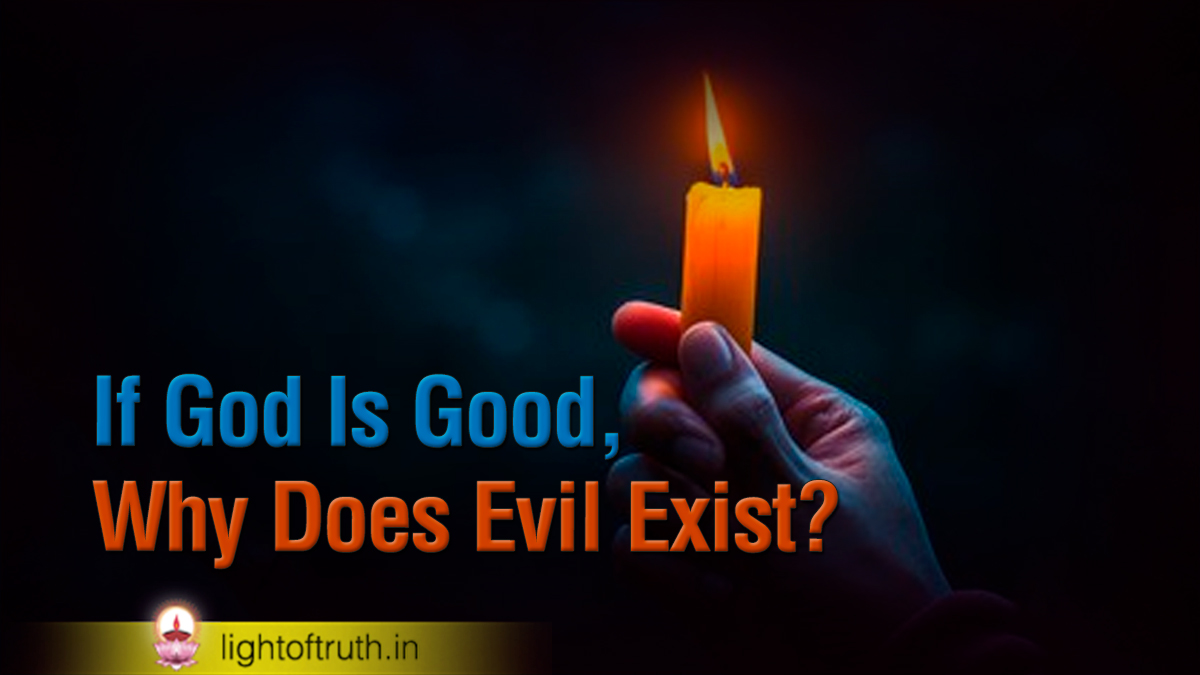
If God Is Good, Why Does Evil Exist?
Few questions are as painful, persistent, and deeply human as this one: if God is good, why does evil exist?
This question has surfaced in conversations three times this week, each time carrying the weight of an earnest desire to make sense of the distortions in our current reality. It has prompted me to pause and reflect. The thoughts presented here reflect neither the viewpoint of a theologian nor that of a subject-matter expert; instead, they stem from the everyday observations and interactions of someone deeply invested in gaining a deeper understanding.
These questions often arise in encounters with people from many walks of life: those struggling with addiction, those serving time in prison, those living at the margins, and those occupying some of the world’s most admired positions. Despite their different circumstances, the questions often sound the same: If God is good, why can’t the evil be stopped? Why has addiction torn my family apart? Why was someone I trusted abusive? Why did God allow such suffering in the world?
These are not abstract theological puzzles; they are the cries of real people, and they often lead some to walk away from God altogether.
These questions come into sharper focus in an age when technology has advanced so rapidly that we sometimes imagine human beings can control everything under the sky and beyond. Yet progress has not removed suffering, hatred, addiction, violence, or grief. This is why the question remains worth asking: Did God make evil?
A simple answer, maybe too simple but still meaningful, is no. God did not make evil, because God is Goodness, Love, and Light, and nothing evil can flow from perfect goodness, perfect love, or perfect light. Wherever light shines, darkness withdraws. Wherever love is present, hate has no place. As St. Paul reminds us, love is patient and kind; it does not delight in evil but rejoices in truth. If God is Goodness, then wickedness, blame, shame, and cruelty do not come from God.
The Cross, however, offers a deeper way to understand suffering. It reminds us that God does not remain distant from human pain but enters into it. Seeking to understand the meaning of suffering is a journey in itself, one that can stretch our capacity for faith, trust, and humility. This will be for another day’s reflection.
So, what is evil? Could it be the absence of love, goodness, and light? When we understand God as all three, that possibility begins to ring true. Evil may be the absence of what is good, loving, and life-giving. In our freedom, we sometimes make choices that harm others and diminish the goodness, love, and light within us. So, what role do we play in it?
Perhaps understanding what evil is does not fully resolve the mystery; we are still left asking why a loving God permits it. Does God permit suffering? Who is the author of suffering? These questions and sometimes their answers emerge from our experiences and our search for meaning. Yet we can assess the quality of our lives and relationships by their impact on ourselves and others. This is where God remains relevant, perhaps now more than ever, and where our understanding of who God is can become a lifelong quest. For example, framing God as Light, Love, and Goodness gives us a way to understand our role and call in the world: to help others experience these qualities through us. Some may never name this God; they may call it goodness, love, or light, and that is enough.
Are we people who carry light and hold it out to others? Do we love ourselves enough to love others, too? Are we willing to extend goodness without hesitation? If there are enough of us to live it intentionally rather than perfectly, we may begin to answer the question not only with words but with our lives; there will be less darkness and little room for evil.
In such a space, children could grow up feeling deeply loved, needed, and safe.
Many of the world’s ills and suffering stem from a lack of Light, Love, and Goodness, where life is neither valued nor recognized as it should be. We can each influence the spaces we occupy and the people we encounter by helping others experience God’s image within themselves and their neighbours.
Love, Goodness, and Light cannot be bought or earned; they are transformational gifts within our reach. Can we grow deep roots of faith, seeing ourselves as the face of God in Love, Goodness, and Light wherever we are planted? If we live it, not perfectly but intentionally, we may begin to see darkness dispelled and evil lose some of its hold on our world.