
Two recent conversations got me thinking about what makes a life meaningful. The first was at home with the kids, discussing meaningful versus successful lives and whether they differ. The second was in the community, on the common good. What is it, and what counts as the common good rather than personal interest?
These may sound like philosophical questions, but they have a great deal to do with how we live every day. Consider two young people in our community. We recently celebrated one youth who spent a year volunteering far from home, embracing unfamiliar circumstances and serving others. Around the same time, we also encountered another youth whose struggle with addiction led to a suicide attempt and hospitalization. We rightly celebrate young people who venture beyond their familiar surroundings, discover new perspectives and give their time to others. But what about the young person who is struggling? What does our response to that person say about how we understand success, worth and a meaningful life?
These two experiences are not measures of one another. They remind us that behind every life is a person whose worth cannot be reduced to achievements, circumstances or struggles. In one of my research projects, the findings suggested that meaning often lies in a purpose beyond oneself, not simply personal fulfilment, though social circumstances can make it difficult to express in daily life. Our conversation at home reached a similar conclusion: meaning lies in how we use our gifts, talents, presence, knowledge, and opportunities to contribute to others lives. This brings me to the idea of the common good. We often speak of the common good as something society should pursue. But what does it look like in practice? It can be as ordinary as checking on an older neighbour who lives alone, making room for a struggling colleague, or ensuring that a young person in crisis encounters support rather than judgment. It means creating conditions in which people can live with dignity and flourish. When our relationships and community life become transactional, the common good becomes an ideal rather than something we practise. We contribute when it benefits us and make room for others when it costs us little. Looking out for our own interest’s matters, but a community cannot thrive if we step back whenever someone’s needs become inconvenient or no longer serve our int erests. If we are only willing to give what we receive in return, we lose sight of what it means to serve the common good.
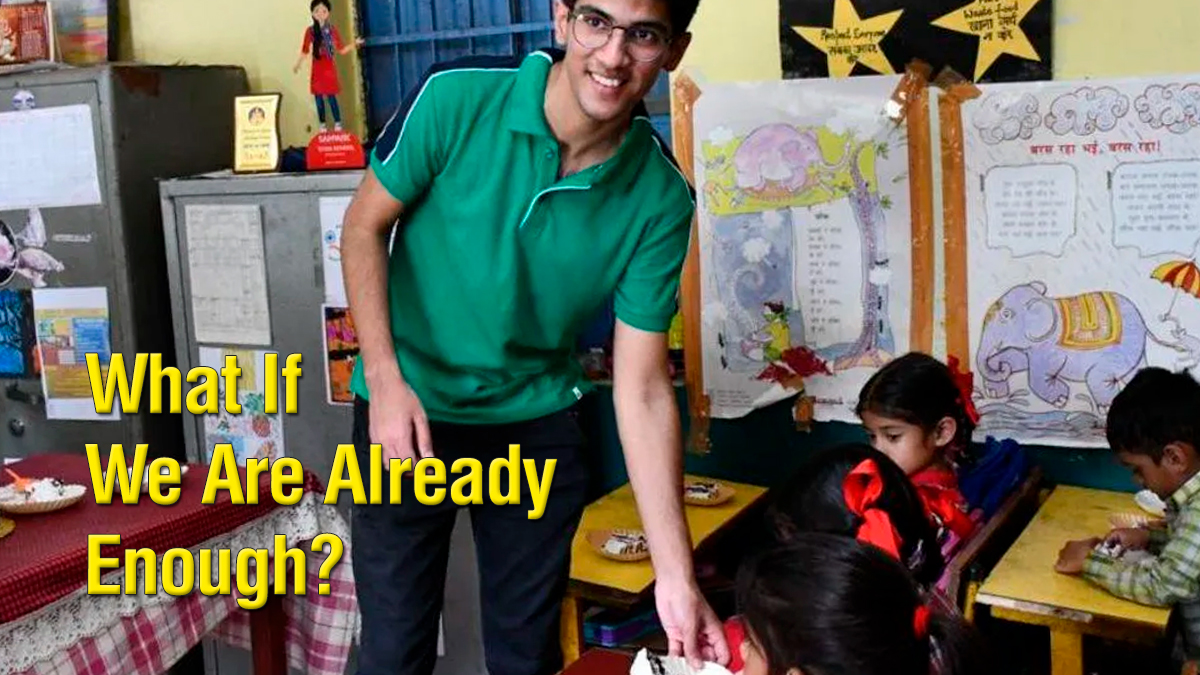
Part of the problem is our participation, conscious or not, in a culture of ‘never enough’. We are encouraged to believe we need more money, more recognition, more power, and more security to survive. Sometimes, this crisis mindset makes it seem acceptable to ignore others’ needs. There is nothing wrong with meeting our needs and seeking a better life. The trouble begins when we measure our worth by what we lack, chase the next achievement, and overlook what we already have to offer. When we never feel we have enough time, attention or resources, giving to others can begin to feel like a loss.
What if a meaningful life begins, in part, by recognizing that we are enough not because we have everything figured out or no longer need to grow, but because our worth doesn’t depend on what we accumulate or accomplish? From that place, we may become freer to recognize others’ dignity, including those whose lives look nothing like our own. This is not a call to abandon personal goals or to solve every social problem through individual kindness. We also need fair systems, adequate resources and institutions that respond to people’s needs. But the relationships we build can help shape the kind of communities and institutions we create. When we place relationships and the wellbeing of ourselves and others at the centre of our lives, they become guideposts for a meaningful life and the common good, where no one feels left alone, excluded, or unwanted. We will all begin to feel, in the core of our being, that we are enough and that we have enough.
A meaningful life and the common good are connected this way: we need communities that help us flourish, and our lives become richer when we contribute to others’ flourishing. In a world that keeps telling us we are not enough, perhaps one of the most important things we can do is recognize our own worth and ensure others have the opportunity to recognize theirs.






Leave a Comment