Prof. Sanjose A Thomas

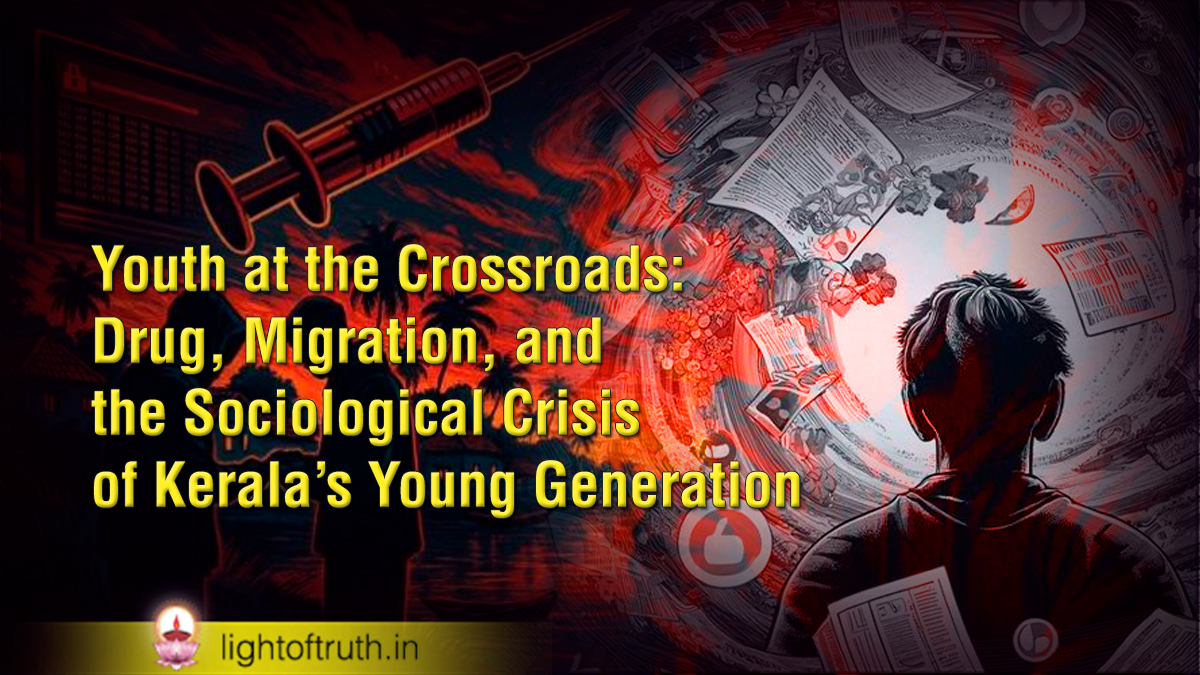
Kerala has long been celebrated as a model of human development. High literacy, strong public health indicators, and a relatively egalitarian social fabric earned it the moniker “God’s Own Country.” Yet beneath this success lies a deepening crisis among its youth. Two phenomena stand out with particular urgency: the rapid spread of drug use and a profound reconfiguration of migration patterns. Together they reveal structural strains in the Kerala Model-educated unemployment, aspirational frustration, shifting family dynamics, and a society struggling to absorb the energies of its young people.
- The Expanding Web of Drug Use
Official data reveal that Kerala has become a leading state in NDPS Act cases, recording roughly 27,000 to 30,000 annual cases with a rate of about 78 per lakh population, heavily impacting urban centres like Kochi and Ernakulam.
A critical shift defines this crisis: synthetic drugs have eclipsed traditional ganja, heavily drawing in youth under 25, college students, and minors. Police data show hundreds of arrestees aged 18 or 19 in Kochi, with initial experimentation often starting between ages 10 and 15 due to peer influence.
Several sociological factors drive this adolescent vulnerability. Intense academic competition, shifting family structures—such as dual-income households and absent fathers from Gulf migration—and reduced daily supervision leave teenagers emotionally isolated. Furthermore, middle-class disposable income, social media glamorisation, and a cultural stigma surrounding mental health lead vulnerable youth to drugs as a private coping mechanism.
The ramifications extend far beyond individual users. Addiction triggers escalating petty crime, violence, and the exploitation of minors as couriers. De-addiction centres face a surge in minor admissions—nearly 2,900 children in 2024 and hundreds more in early 2025. Consequently, unsuspecting families experience severe emotional trauma, academic derailment, and financial devastation, highlighting an urgent societal crisis.
- Migration as Exit and Aspiration
Parallel to the drug crisis runs a transformation in how Kerala’s youth imagine their futures. For decades, migration to the Gulf provided an economic safety valve, sending remittances that underwrote household mobility and state prosperity. That corridor is no longer the primary horizon. Young people now leave earlier, often at 17 or 18, heading toward Canada, Australia, the United Kingdom, Europe, and the United States in search of education that can convert into permanent residency and a different quality of life.
The drivers are structural. Kerala produces large cohorts of graduates whose skills and expectations exceed the jobs available at home. Educated unemployment, especially among women, remains high. Many young men cite the mismatch between qualifications and salary; many young women emphasise the desire for greater social freedom, reduced stigma, and lifestyles less constrained by local norms. Migration has shifted from temporary labour sojourns to longer-term projects of self-realisation and dignity. Return migration has also risen, signalling the precariousness of Gulf opportunities under nationalisation policies and economic shifts abroad.
Drug use and migration are not separate problems; they are twin responses to the same underlying conditions. Both reflect an “aspirational breakdown”—the gap between Kerala’s celebrated human development achievements and the limited institutional capacity to translate education into meaningful local livelihoods and social recognition.
- Toward a Sociological Response
Addressing these challenges requires more than intensified policing or de-addiction beds. It demands recognition that Kerala’s youth crisis is structural. Expanding decent local employment that matches educational attainment, reducing the hyper-competitive intensity of schooling, strengthening community-based mental health support, and fostering open family and institutional conversations about risk and aspiration are essential. Kerala’s young people inherit a society that invested heavily in their education and health. The present moment tests whether that investment can be matched by institutions capable of absorbing their energies at home or guiding their departures productively. The alternative–rising addiction, accelerated brain drain, and deepening social dislocation–threatens the very foundations of the model that once made Kerala distinctive.





Leave a Comment