Pope prays for Christians in China and Middle East

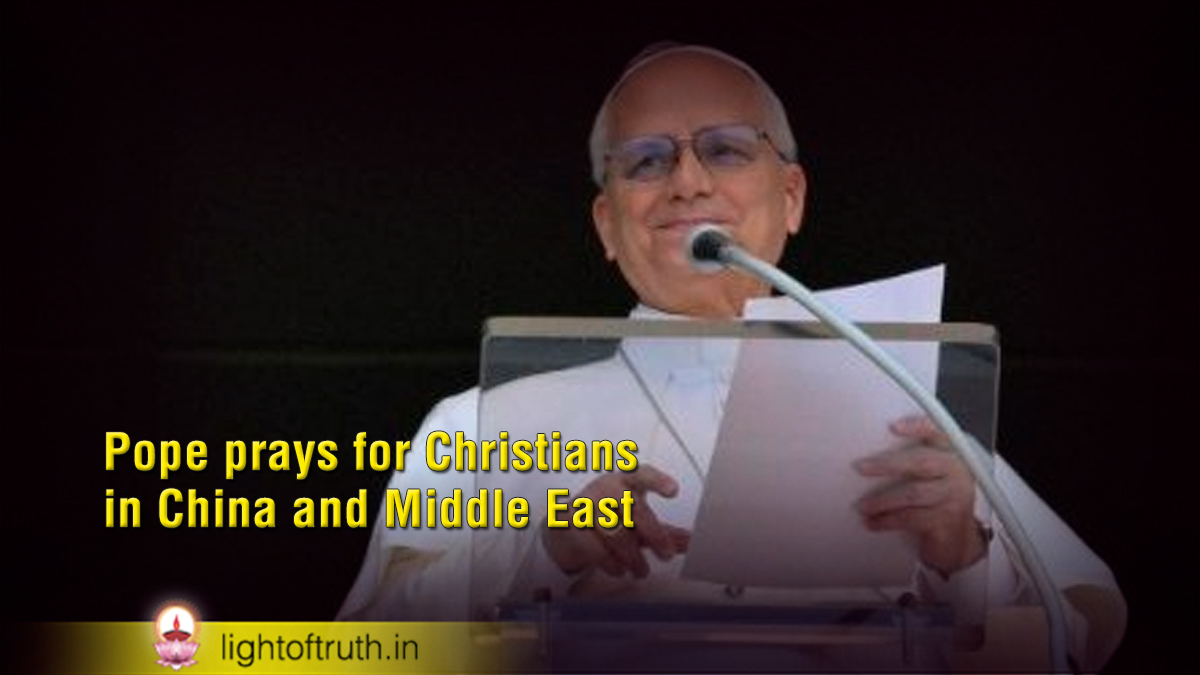
Following the Regina Caeli prayer, Pope Leo XIV entrusts Chinese Christians to the Virgin Mary, praying that they might be witnesses of “hope and peace.” The Pope’s thoughts also turn to those suffering from the conflict in the Holy Land.

Following the Regina Caeli prayer on Sunday, the Pope marked the World Day of Prayer for the Church in China. The day of prayer, the Pope noted, coincides with the feast of the Blessed Virgin Mary Help of Christians, who is venerated “with profound devotion” at the Shrine of Sheshan in Shanghai.

Pope Leo thus entrusted the Chinese Christian community to Mary, in order that it might continue bear witness to the Gospel:

“Let us join our prayers with those of Chinese Catholics, as a sign of our affection for them and of their communion with the universal Church and with the Successor of Peter. May the intercession of the Queen of Heaven grant the believing community in China the grace of unity and give everyone the strength to witness the Gospel in their daily struggles, so that they might be seeds of hope and peace. In particular, I invoke eternal peace for the victims of the recent mining accident in northern China.”

The Pope then renewed his appeal to Mary, Help of Christians, entrusting to her “the Christian communities of the Holy Land, Lebanon, and the entire Middle East, who are suffering because of war.”
Hundreds of Children die within months as measles cases soar in Bangladesh

Over 500 children with suspected and confirmed cases of measles have died in Bangladesh since March, according to the country’s health ministry

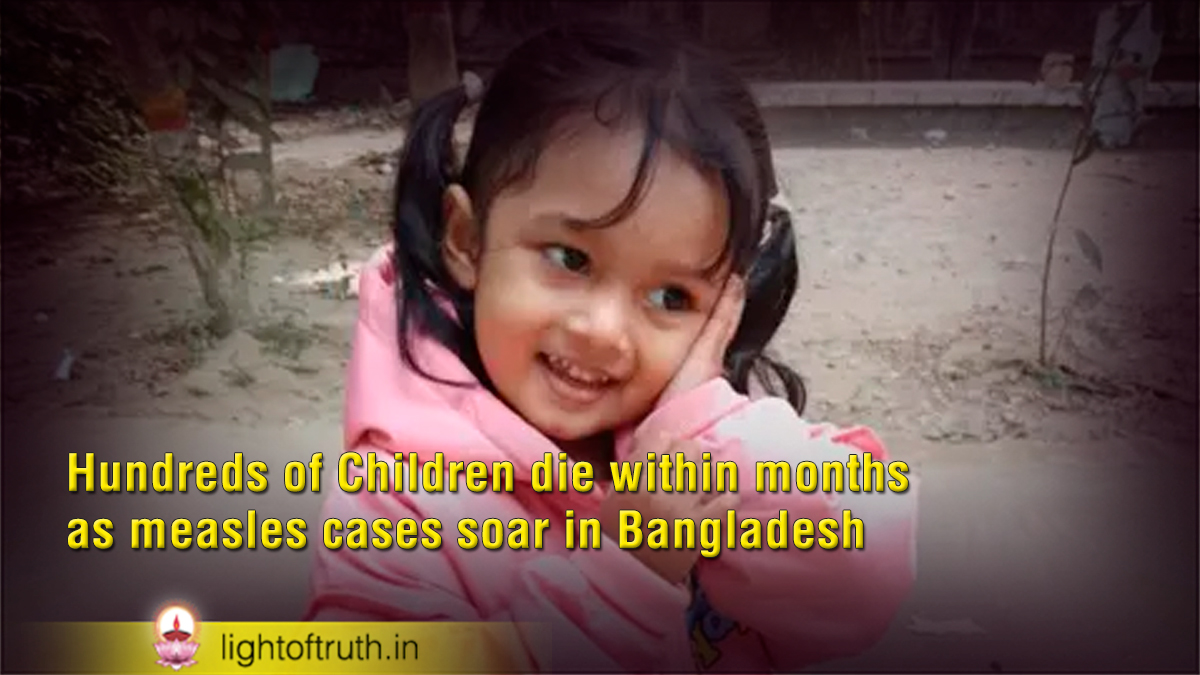
Al Amin, who lives with his family in the Bangladeshi capital of Dhaka, says his daughter had all her vaccines, apart from measles. On 8 March Al Amin took Akira to hospital, suffering with what he thought was a normal fever. She improved, went home, and then started developing a rash, a high fever and sores in her mouth. She was discharged and readmitted to hospital a total of five times, Al Amin says; only on the fifth occasion did a doctor tell him she was suffering from measles. Akira was put on life support. She died 27 days after she was first admitted. Over 500 children with suspected and confirmed cases of measles have died in Bangladesh since March, according to the country’s health ministry.

The health minister said last week that doctors and nurses treating those with the virus have had their Eid holiday leave cancelled and the government has been running a mass vaccination campaign to slow the spread and save lives. Akira’s parents tried on four occasions to get her vaccinated against measles, but were unable.

Al Amin says he and his wife still torture themselves, thinking that their daughter may have picked up the virus in the hospital. Al Amin says he and his wife still torture themselves, thinking that their daughter may have picked up the virus in the hospital. “From the ticket counter line to the x-ray room, there was a measles patient everywhere,” he says.

He is angry; that his child couldn’t get a vaccine, that her symptoms were missed, that he feels the hospitals failed to keep patients with measles apart from others.

In just over two months, the number of suspected cases of measles have reached over 60,000 in Bangladesh, according to the health ministry. The exact number has not been confirmed, as many are waiting for results from the laboratory.

Highly contagious, measles spreads quickly through coughs and sneezes and is particularly dangerous for unvaccinated young children under the age of 5.

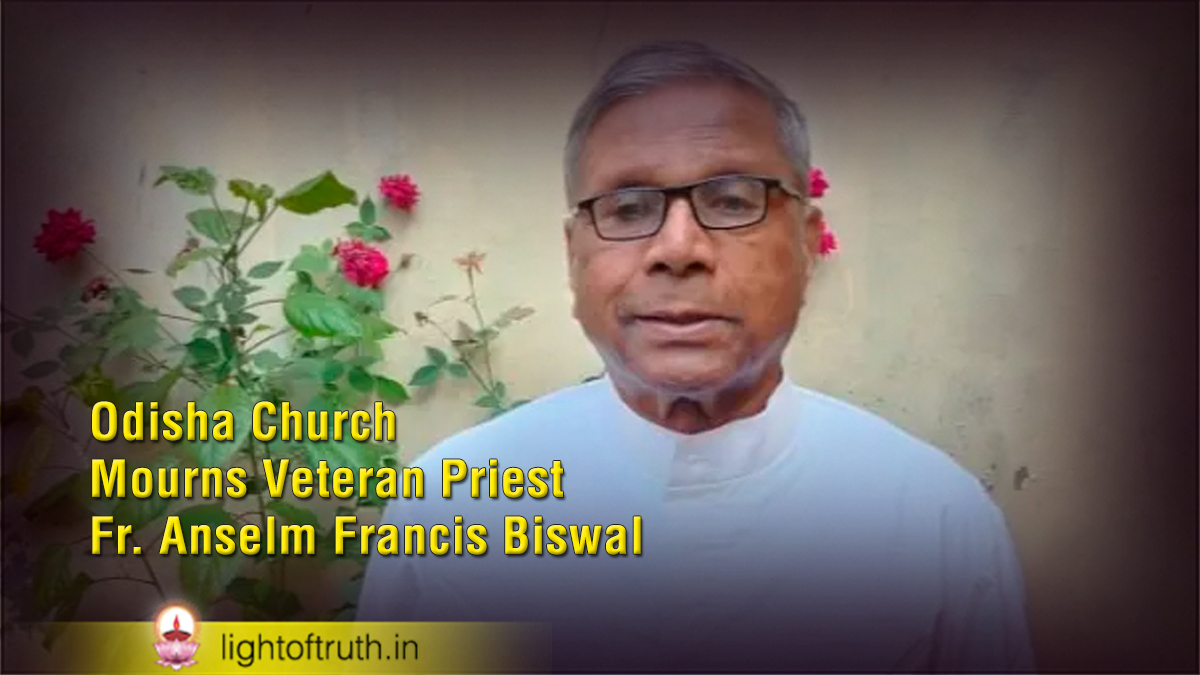
Odisha Church Mourns Veteran Priest Fr. Anselm Francis Biswal

The Catholic Church in Odisha is mourning the death of Fr. Anselm Francis Biswal, a respected priest whose more than six decades of service touched countless lives. He passed away on May 22 at the age of 90.

Funeral services were held at Sacred Heart Parish, Suruda, led by Archbishop John Barwa of Cuttack-Bhubaneswar. More than 50 priests, 25 nuns, and hundreds of faithful gathered to pay their final respects.

Church leaders remembered Fr. Biswal as a humble priest, caring pastor, wise guide, and dedicated missionary. Archbishop Barwa said his life and ministry would continue to inspire people even after his death. He noted that the prayers, guidance, and sacrifices of a priest never disappear from the hearts of the faithful.

Born on November 6, 1935, in Dantolingi, Fr. Biswal joined seminary formation after completing his studies and was ordained a priest on October 2, 1962. Over the years, he served in many parishes and institutions across Odisha, including Puri, Berhampur, Sambalpur, Balasore, and Cuttack.

Apart from pastoral ministry, he was also known for his contribution to education and writing. He authored The Little Mustard Seed, a book that documented the history of Catholic missionary work in southern Odisha.

Many people remembered him as a man of deep prayer, simplicity, and commitment. Former students, family members, and parishioners shared how his kindness and guidance influenced their lives.

Church leaders said Fr. Biswal’s legacy of faith, compassion, and service will continue to live on among the people of Odisha for generations.

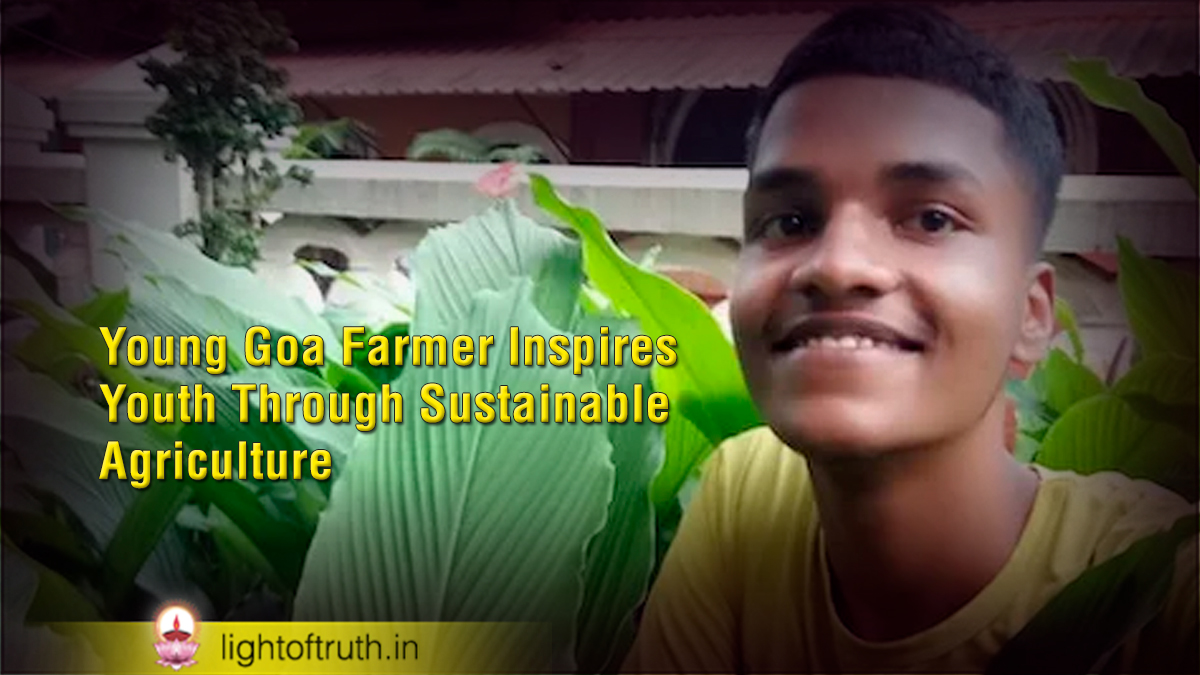
Young Goa Farmer Inspires Youth Through Sustainable Agriculture

Twenty-one-year-old Cleto Avito Fernandes from Panjim is inspiring young people in Goa through his passion for farming, environmental care, and entrepreneurship. Blending traditional farming with modern ideas, he has become a role model for youth interested in sustainable living.

Fernandes began farming when he was in the seventh standard by growing just two lady finger plants at home. Over the years, his small garden developed into a larger mission promoting organic farming and environmental awareness.

Today, he cultivates vegetables in fields at Taleigao and regularly conducts workshops in schools and colleges on composting, organic farming, and paddy cultivation. His home garden has also become a learning space where students visit to understand sustainable agriculture practices.

Using organic methods, Fernandes produces vermicompost and natural liquid manure. In 2024, he expanded his work by starting a poultry farm in Panjim after facing several challenges. He also grows and sells bonsai and ornamental plants while teaching bonsai cultivation to students free of cost.

Apart from farming, Fernandes is active in music, acting, and dance, winning awards in performing arts across Goa and India. In March 2025, he received the Youngest Entrepreneur Award for his achievements.

Currently pursuing a B.Sc. Agriculture degree, Fernandes hopes to encourage more young people to enter farming. He believes agriculture can become both sustainable and meaningful for Goa’s future.

His journey reflects dedication, creativity, and a strong commitment to protecting nature while inspiring the next generation.

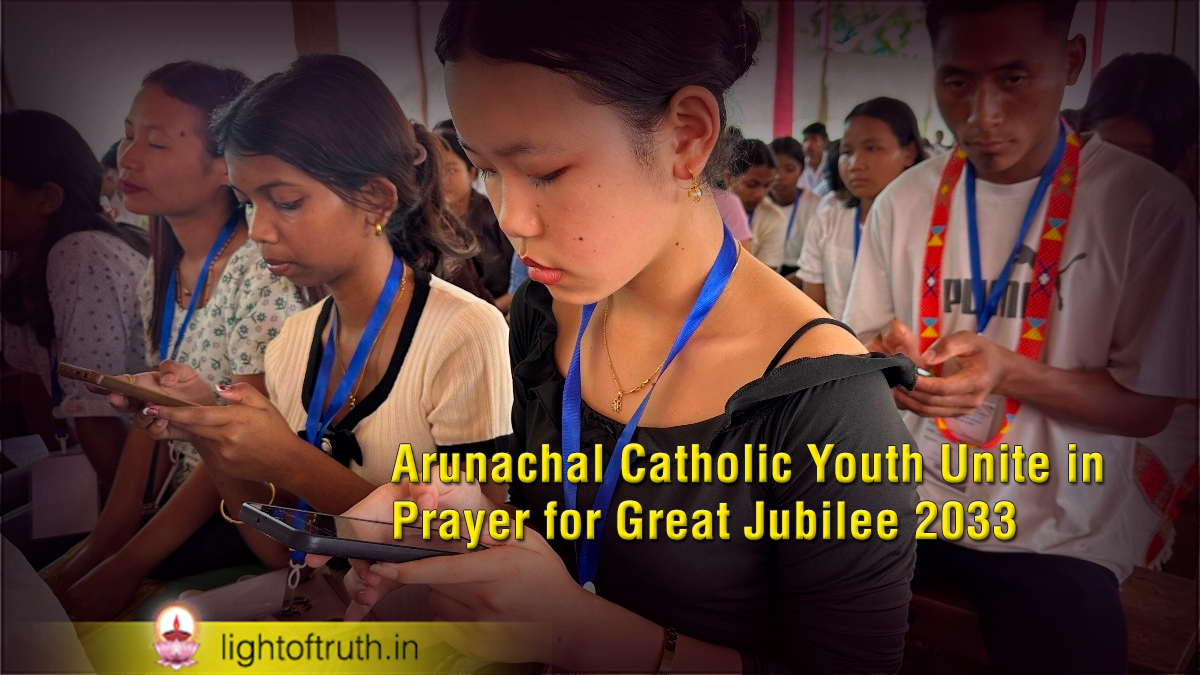
Arunachal Catholic Youth Unite in Prayer for Great Jubilee 2033

Hundreds of Catholic youth from the Diocese of Miao in Arunachal Pradesh made a unique commitment during a three-day Youth Convention by setting their daily alarms for 20:33 as a reminder to pray for the Great Jubilee 2033.

The convention was held at Divine Word School in Roing and brought together around 350 young participants from eight districts of eastern Arunachal Pradesh. The initiative was inspired by the upcoming Jubilee celebration marking 2000 years of the Church and the mission of the Risen Lord.

Bishop George Pallipparambil of Miao encouraged the youth to make prayer a daily habit. He asked them to pause every evening at 20:33 and silently pray “Thy Kingdom Come” wherever they may be. Many participants named their alarms with the same message as a sign of unity and faith.

Former Arunachal Pradesh Chief Minister Mukut Mithi also addressed the gathering. He encouraged young people to preserve their culture and traditions while working for social progress and excellence in education and science.

Youth leaders described the initiative as more than a symbolic action. They said it reflects the youth’s commitment to prepare spiritually for Jubilee 2033 and to grow stronger in faith together. The convention included Bible-based activities, cultural performances, discussions, and the election of new youth leaders. Participants said the shared prayer at 20:33 each day would spiritually unite Catholic youth across the region and strengthen their mission for the future.

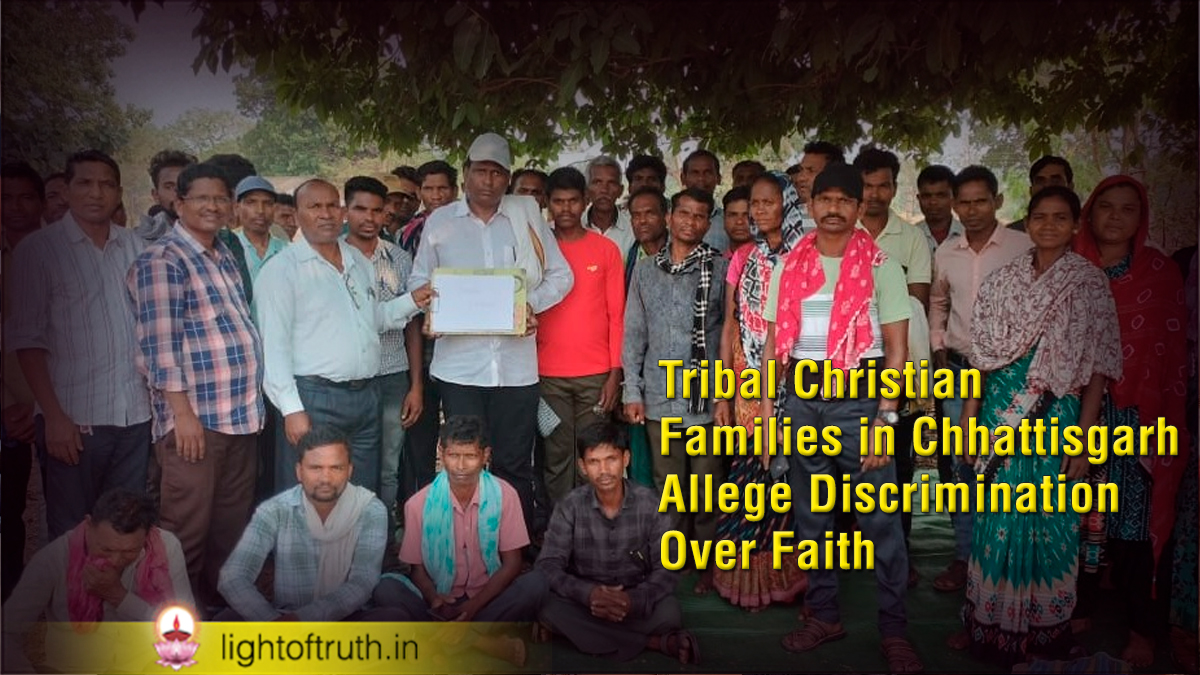
Tribal Christian Families in Chhattisgarh Allege Discrimination Over Faith

Several tribal Christian families in Chhattisgarh’s Kanker district have accused local authorities of failing to protect their basic rights after they were allegedly denied access to water sources and livelihood opportunities because of their faith.

Christian leaders said the problems began in early April and continue in many villages of the Antagarh area. According to a fact-finding team sent by local Christian organisations, at least 26 families have been blocked from using rivers, ponds, hand pumps, and public water taps.

The report also stated that 41 families were excluded from a rural employment guarantee scheme that supports poor villagers with work opportunities. In addition, around 115 families were reportedly stopped from collecting tendu leaves, an important source of income for tribal communities in central India.

Church leaders further alleged that some families had firewood taken away by fellow villagers despite collecting it legally from nearby forests.

Christian groups claimed the affected families had repeatedly appealed to village officials, police, and district authorities, but no effective action was taken. Many families are now forced to travel long distances at night to fetch drinking water.

According to pastors working in the area, the restrictions are being used to pressure Christians to stop attending church services and return to Hinduism.

Christian leaders said denying access to water and livelihoods violates human dignity and constitutional rights. They have appealed to state authorities, human rights groups, and civil society organisations to intervene and ensure protection for the affected families. The incident has once again raised concerns about discrimination and religious tensions faced by Christian minorities in parts of central India.

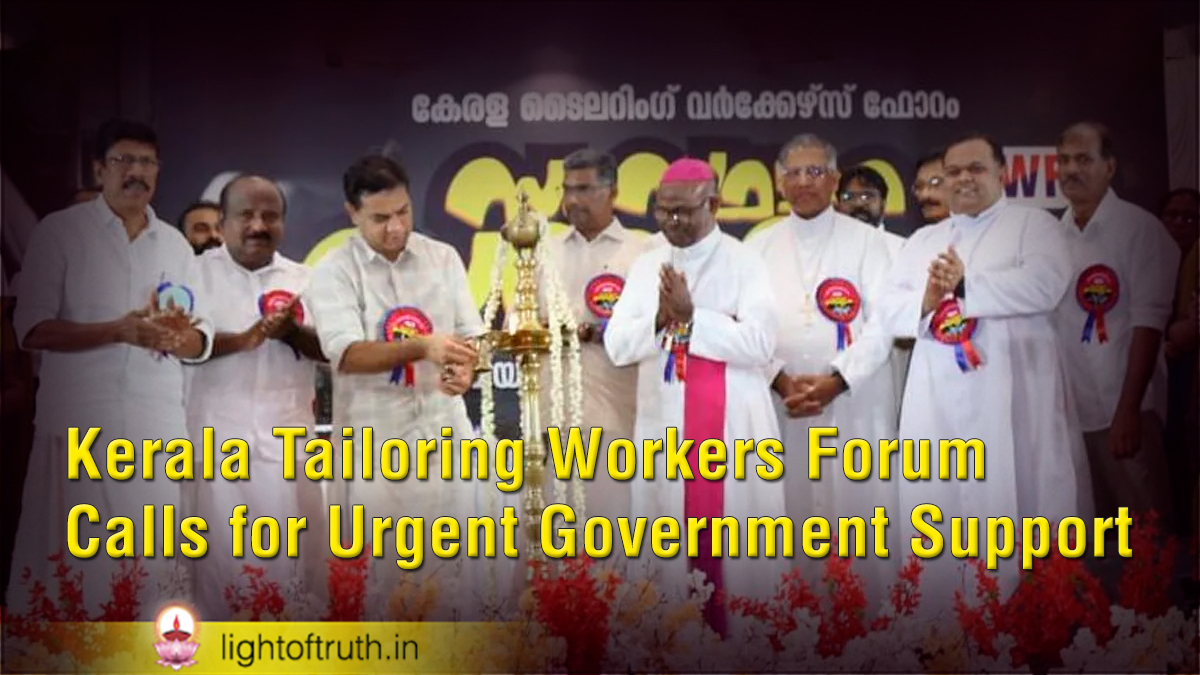
Kerala Tailoring Workers Forum Calls for Urgent Government Support

The Kerala Tailoring Workers Forum (KTWF) has appealed to the state government to take immediate action to solve the growing problems faced by tailoring workers across Kerala.

The demand was raised during the KTWF State Conference held at Ernakulam Town Hall in Kochi on May 25. Leaders at the conference said tailoring workers are facing serious difficulties due to anti-labour policies and increasing monopolisation in the garment industry.

The conference was inaugurated by Hibi Eden, while KTWF State President Babu Thannikkode presided over the meeting. Several Church leaders, labour representatives, and community leaders also attended the gathering.

Among the speakers were Bishop Sylvester Ponnumuthan, Bishop Jose Porunnedom, and T. J. Vinod. They stressed the need for stronger welfare measures and better policy support for tailoring workers.

The conference passed a resolution requesting the Tailoring Workers Welfare Fund Board to introduce special skill development programmes and improve welfare and retirement benefits according to present-day needs.

Delegates also demanded a review of the discontinued service pension scheme and asked that merit scholarships be provided to all eligible children of members.

The forum further requested that marriage assistance benefits, currently available only for daughters, should also be extended to sons. Participants also sought financial support for the families of deceased pension members.

Ten tailoring workers from different districts were honoured during the conference for their dedication and contribution to the profession.

KTWF leaders said urgent policy intervention is necessary to protect the livelihood and dignity of tailoring workers in Kerala.

Delhi High Court Allows Private Schools to Raise Fees Before Academic Year

The Delhi High Court has ruled that private unaided recognised schools in Delhi can increase fees before the start of an academic session without obtaining prior approval from the Directorate of Education (DoE).

The judgment was delivered by Justice Anup Jairam Bhambhani on May 25. The Court clarified that schools only need prior permission from the DoE if they want to increase fees during an ongoing academic year. If the revised fee structure is announced before the academic session begins, no prior approval is necessary.

The Court explained that the role of the DoE is mainly to regulate schools and prevent profiteering, commercialisation of education, and illegal collection of capitation fees. It stated that the department should not interfere unnecessarily in the financial management of private unaided schools.

The ruling came after a group of private schools, led by Delhi Public School, challenged DoE orders that rejected their fee hike proposals.

The Court accepted the schools’ argument that they have financial autonomy under the Delhi School Education Act and Rules. It also observed that maintaining surplus funds for future development cannot automatically be considered profiteering unless proven through proper financial audits.

The High Court cancelled earlier DoE orders rejecting fee hikes proposed before academic sessions and closed pending applications delayed over approval issues.

However, the Court refused to allow schools to collect unpaid fee differences from previous years. It stated that such recovery would unfairly burden parents and students. The revised fee structures will apply only from the academic session beginning in April 2027.

Marco Rubio’s Visit to Mother Teresa’s Home Draws Attention in India

The recent visit of US Secretary of State Marco Rubio to the headquarters of the Missionaries of Charity in Kolkata has sparked discussion among Church leaders and social groups in India.

Rubio, a Catholic, visited the Mother House and Nirmala Shishu Bhawan on May 23 along with his wife Jeanette and US Ambassador Sergio Gor. During the two-hour visit, he met the sisters and spent time with elderly people, children, and the poor cared for by the congregation founded by Mother Teresa.

Church leaders in Kolkata welcomed the visit and described it as a strong message supporting religious freedom and Christian charitable work in India. Rubio reportedly praised Mother Teresa’s mission as “a living example of the Catholic faith in action.”

Some Christian leaders said the visit may also bring international attention to concerns surrounding proposed changes to India’s Foreign Contribution Regulation Act (FCRA), which many Church groups fear could affect Christian institutions and charities receiving foreign support.

In 2021, the Missionaries of Charity temporarily lost their FCRA licence before it was later restored following criticism from India and abroad. Christian leaders believe the proposed amendments could create further difficulties for faith-based organisations working among the poor.

At the same time, some observers felt the visit was largely symbolic and doubted whether issues concerning Christians in India were directly discussed with Indian leaders.

The visit has nevertheless attracted national attention, with supporters viewing it as recognition of Mother Teresa’s continuing legacy of compassion and service to the poor.

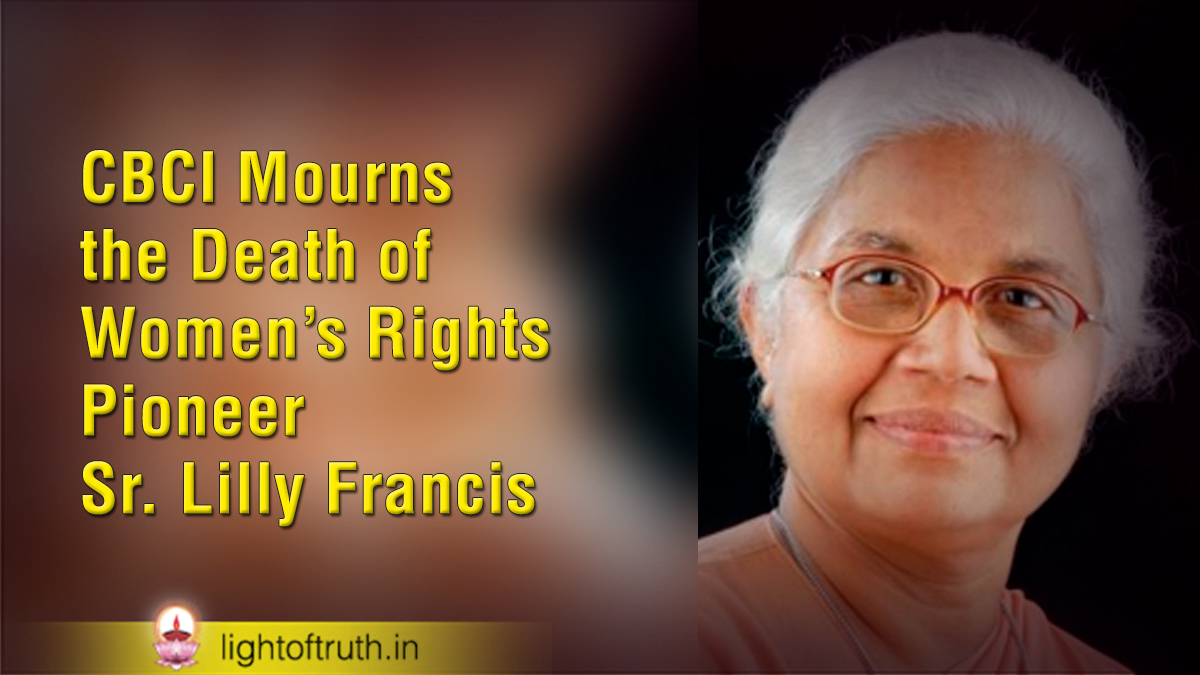
CBCI Mourns the Death of Women’s Rights Pioneer Sr. Lilly Francis

The Catholic Bishops’ Conference of India (CBCI) Council for Women has expressed deep sorrow over the death of Sr. Lilly Francis, a well-known advocate for women’s empowerment in the Church and society. She passed away in Nagpur on May 23 at the age of 76.

Sr. Lilly Francis belonged to the Sisters of Mary Mediatrix Immaculate (SMMI) congregation. She served as Executive Secretary of the CBCI Council for Women from 2004 to 2011 and played an important role in developing the CBCI Gender Policy. She also served as Executive Secretary of the Commission for Women of the Conference of Catholic Bishops of India (CCBI) from 2017 to 2018.

Church leaders remembered her as a visionary leader who worked tirelessly for the dignity, leadership, and participation of women in both Church and society. Through seminars, writings, and training programmes, she inspired thousands of women religious and lay faithful across India.

Born in Kerala in 1949, Sr. Lilly studied social work, law, and theology in India and abroad. She also served in Latin America for three years, working among poor and marginalised communities.

In Nagpur, she founded the Vishwodaya Institute of Social Work and Women Development, where she promoted counselling, women’s leadership, and social awareness. She also worked in prison ministry, pastoral counselling, and interreligious dialogue.

A respected writer and speaker, she authored several books on women’s empowerment and gender justice.

The CBCI described her as a trailblazer whose life reflected faith, justice, simplicity, and dedicated service to society.