Category Archives: National

Supreme Court Upholds Restrictions on Christian Entry in Chhattisgarh Villages

The Supreme Court of India has dismissed an appeal challenging restrictions imposed by village councils in Chhattisgarh that bar the entry of Christian missionaries and converts into certain tribal areas.

On Feb. 16, the court declined to interfere with an October 2025 order of the Chhattisgarh High Court, which had directed the petitioner to seek remedy under the state’s Panchayat (Extension to Scheduled Areas) Rules (PESA), governing tribal self-administration.

The case arose after hoardings were erected in several villages in Kanker district in July 2025, prohibiting the entry of pastors and Christians who had converted from other religions. Village councils said the move aimed to prevent alleged forced or induced conversions.

Petitioner Digbal Tandi, a Protestant Christian, argued that the restrictions violated constitutional guarantees of religious freedom and free movement. His counsel contended that adverse observations about missionary activity were made without evidence.

The Supreme Court, however, advised the petitioner to approach appropriate statutory authorities under the PESA framework.

Christian leaders and rights advocates expressed concern over the ruling, saying constitutional protections should not be curtailed without proof of wrongdoing. They noted that similar restrictions have reportedly spread to at least 19 villages in Chhattisgarh and surfaced in parts of Odisha and Jharkhand. According to the 2011 Census, Christians constitute about 2.3 percent of India’s population.

Christian Worshippers Attacked During Sunday Prayer in Odisha Village

A group of Christian worshippers in Odisha’s Mayurbhanj district is living in fear after a mob allegedly disrupted their Sunday prayer service and threatened them with violence.

Members of the Christian Evangelical Assembly were gathered at the home of Pastor Jagannath Naik in Badabali Chua village on Feb. 22 when around 50 people reportedly stormed the house armed with sticks. The attackers allegedly ordered the group to stop praying to Jesus, claiming their worship angered local deities.

According to the pastor, his wife and an elderly woman were assaulted, and he was beaten when he tried to record the incident. He said he was forced to delete the video. Although the group contacted police through the emergency helpline, they claim no officers arrived.

The following day, alleged members of the mob reportedly warned Christians individually against continuing their worship. Bishop Pallab Lima of the United Believers Council Network India said the situation remains tense, with some families considering leaving the village.

Church leaders noted that Mayurbhanj is a sensitive region, recalling the 1999 killing of Australian missionary Graham Staines and his two sons in Odisha.

Data from the United Christian Forum recorded 40 incidents of harassment against Christians in Odisha in 2024. Christian leaders warn that even minor incidents in the region risk escalating into serious unrest.

Religious liberty restriction case: Archbishop expresses concern

The head of the Catholic Church in Chhattisgarh has expressed concern after the Supreme Court of India dismissed a plea challenging restrictions on Christian missionaries and pastors entering certain tribal villages in the state.

On February 16, the apex court upheld a prior order of the Chhattisgarh High Court, which had declined to interfere with resolutions passed by some village councils allegedly barring the entry of pastors and tribal converts. The lower court observed that such measures were intended to prevent religious conversions through “inducement” or “manipulation” and to protect tribal culture and social harmony.

Archbishop Victor Henry Thakur of Raipur said the ruling appeared discriminatory and raised concerns about constitutional guarantees, including freedom of movement and the right to propagate religion. He noted that the Supreme Court’s dismissal seemed partly procedural, as petitioners were asked to first exhaust statutory remedies by approaching local authorities.

The case involved billboards in several tribal villages stating that entry of pastors and priests was prohibited under local resolutions. Petitioners argued the restrictions amounted to segregation and discrimination against Christians.

A bench of Justices Vikram Nath and Sandeep Mehta granted liberty to the petitioners to seek relief before the appropriate statutory authority.

India’s legal framework on religious conversion remains complex, with 10 states enforcing anti-conversion laws. Critics say such laws, which provide penalties for conversions deemed coercive or fraudulent, have sometimes been used to target religious minorities.

Bishops condemn racial abuse of northeast people

The Catholic Bishops’ Conference of India has condemned what it described as a “shameful act of racial abuse and harassment” against women from Northeast India in the national capital, calling such incidents a blot on the country’s cultural heritage.

In a statement issued on February 26, the bishops’ conference said repeated instances of racial discrimination in different parts of the country are unacceptable and urged authorities to ensure the safety and dignity of citizens from the Northeast.

The condemnation follows the arrest of a woman by Delhi Police in connection with alleged racial abuse and criminal intimidation of three women tenants from Arunachal Pradesh in Malviya Nagar, South Delhi. The tenants had reportedly been supervising electrical work in their rented flat when dust from drilling led to a dispute with neighbours. In their complaint, the women alleged verbal abuse, racial slurs, derogatory remarks, and threats.

The bishops appreciated the prompt police action and appealed to the Union and state governments to sensitize the public about the diverse cultures and traditions of Northeast India.

Delhi Chief Minister Rekha Gupta met the victims and assured strict action. Arunachal Pradesh Chief Minister Pema Khandu and other northeastern leaders also demanded exemplary measures. The statement reiterated that every citizen has the right to live with dignity and called for unity and respect for diversity across the nation.

Students name new plant species after Catholic priest

Students of a Catholic college in Kerala have named a newly discovered plant species after their former principal, Carmelite Father Joseph Paikada.

“Naming this plant after Father Paikada is a tribute to a teacher and principal who inspired students to study and love the natural world. The students themselves suggested the name, showing their deep respect and affection for him,” Carmelite Father Biju Joseph Chakkalayil, the current principal of Devagiri College in Kozhikode.

Tetrataenium paikadaeThe plant was discovered in the high-altitude grasslands of Idukki’s Iravikulam National Park by research students C. Rekha, M. K. Prashant, and T. P. Ashwindas under the guidance of their teacher K M Manudev.

The species has been named Tetrataenium paikadae. It belongs to the Apiaceae family, which includes carrots and celery.

The research finding has been published in the internationally recognized Nordic Journal of Botany. Supported by the Council of Scientific and Industrial Research and the Anusandhan National Research Foundation, the study highlights the rich biodiversity of Kerala’s Western Ghats and the importance of conservation.

Father Chakkalayil said Paikada is remembered for his humility, guidance, and his love for students. The naming of the species ensures that his legacy continues to bloom in the highlands he inspired students to explore and cherish, he added.

Father Paikada died December 20, 2019, aged 83. He served as the principal and manager of Devagiri College for almost three decades. He played a key role in the institution’s development, acting as a teacher, warden, and spiritual guide.

He was also the chairman of the Consortium of the Autonomous Colleges of Keralam.

He founded Christ College in Poonch, a historic, strategic town and district in Jammu and Kashmir, in 1990.

Caritas India’s Lenten campaign combats inequality, ecological distress

Caritas India launched its Lenten Campaign 2026 at the Sacred Heart Cathedral, reaffirming its commitment to combat inequality, promote inclusion, and address growing ecological distress.

The launch event witnessed the distribution of motorized wheelchairs to five persons with restricted mobility, supported by banks under their corporate social responsibility initiatives. Among the beneficiaries was a 32-year-old daily wage worker from East Delhi, paralyzed from the waist down, who described the wheelchair as a life-changing gift restoring his independence and dignity. He said the mobility support would now enable him to seek work opportunities and better provide for his family.

Caritas India Executive Director Father R. Jesudass said the distribution marked the culmination of last year’s Lenten campaign, Chetana (Awareness), which focused on supporting persons with disabilities and promoting their inclusion in society. He thanked donors and partners for their solidarity, calling it a visible expression of the Church’s commitment to dignity and justice.

The 2026 campaign poster was unveiled by Archbishop Anil Joseph Thomas Couto. This year’s theme addresses fractured relationships, deepening inequality, and escalating ecological challenges. The campaign encourages parishes to organize peace circles, families to practice weekly acts of solidarity, and institutions to adopt environmentally responsible practices.

Administrators noted that last year’s outreach impacted over 10,500 people nationwide, with continued advocacy and expanded initiatives planned for the year ahead.

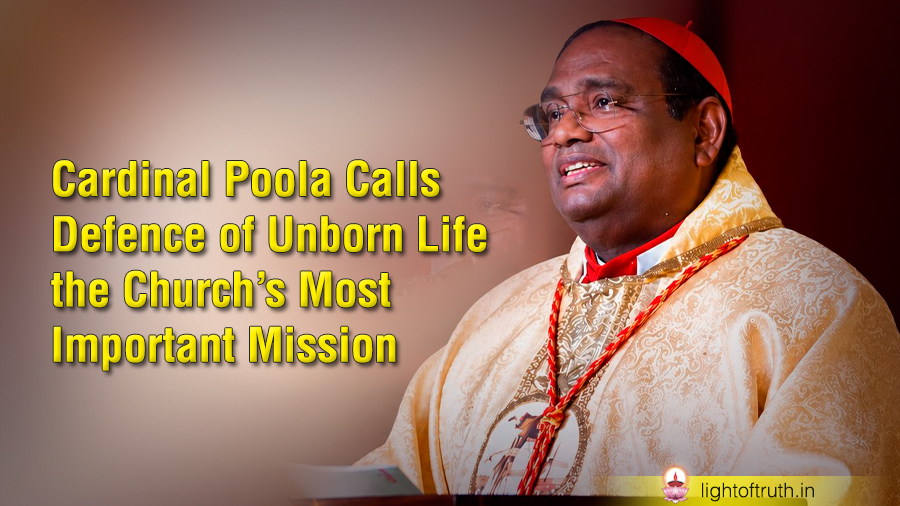
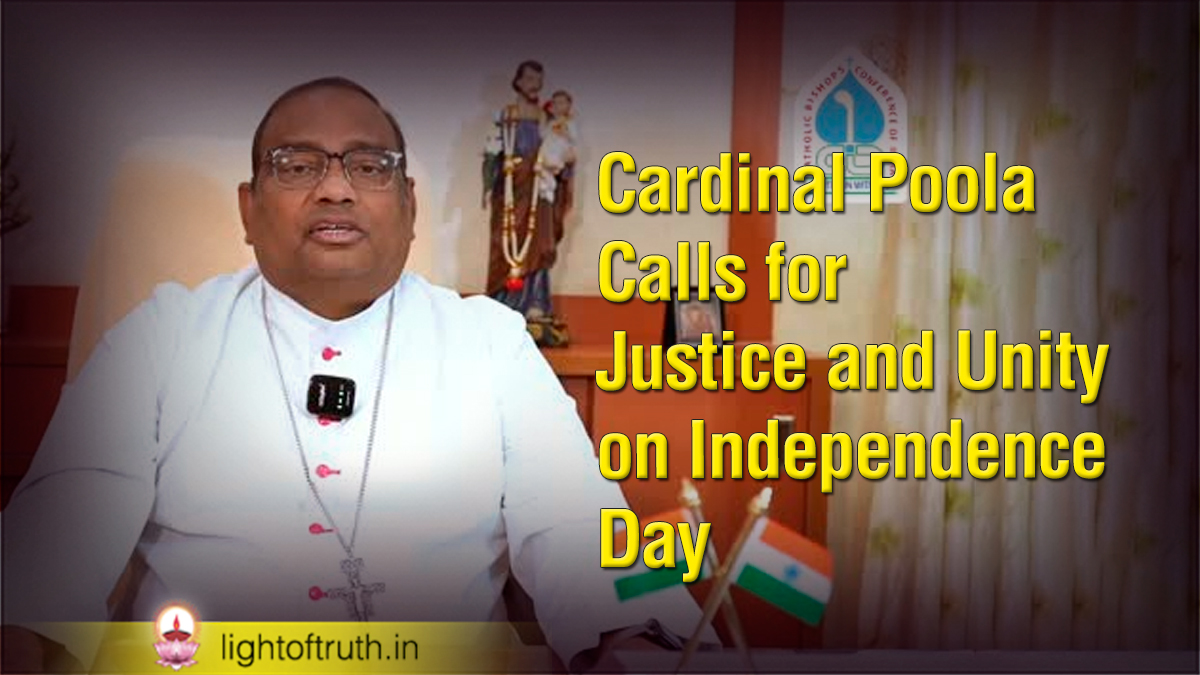
Anthony Cardinal Poola Elected as the President of the CBCI

Cardinal Poola Anthony was born on November 15, 1961, in Poluru in the Diocese of Kurnool. After completing his formation at the minor seminary in Nuzvid, he pursued priestly studies at Saint Peter’s Pontifical Seminary, Bengaluru. He was ordained a priest on February 20, 1992, and incardinated into the Diocese of Cuddapah.

In the initial years of his priestly ministry, he served as parish vicar at Saint Mary’s Cathedral (1992–1993) and Amagampalli (1993–1994), followed by pastoral service as parish priest in Tekurpet (1994–1995), Badvel (1995–2000), and Veerapalli (2000–2001). From 2001 to 2003, he pursued higher studies in the United States, earning a master’s degree in pastoral care and attending a theology course at Loyola University, Chicago, while offering pastoral ministry at Saint Genevieve Church in the Archdiocese of Chicago.

From 2004 to 2008, Cardinal Poola Anthony served as Director of the Christian Foundation for Children and Aging. He also held several key responsibilities in the Diocese of Cuddapah, including diocesan consultor, Secretary for Education, Deputy Administrator of diocesan schools, and coordinator of the Sponsorship Program.

He was appointed Bishop of Kurnool on February 8, 2008, and was consecrated on April 19, 2008. On November 19, 2020, Pope Francis appointed him Metropolitan Archbishop of Hyderabad. He was created and proclaimed cardinal by Pope Francis during the Consistory held on August 27, 2022, and was assigned the titular church of Ss. Protomartiri a Via Aurelia Antica.

CBCI Elects New Leadership at 37th General Body Meeting

The Catholic Bishops’ Conference of India (CBCI) elected its new office bearers for a two-year term during the 37th General Body Meeting held in Bengaluru on February 7.

Archbishop Thomas Mar Koorilos of Trivandrum was elected Vice President–First, while Archbishop Mathew Moolakkatt of Kottayam was chosen as Vice President–Second. Archbishop Anil Couto was re-elected as Secretary General, continuing his responsibility for coordinating the Conference’s national pastoral initiatives and administrative activities.

The newly elected leadership reflects the ecclesial and liturgical diversity of the Catholic Church in India. Archbishop Anil Couto represents the Latin Rite, Archbishop Thomas Mar Koorilos belongs to the Syro-Malankara Rite, and Archbishop Mathew Moolakkatt represents the Syro-Malabar Rite. This representation highlights the inclusive and collaborative character of the CBCI, which brings together bishops from India’s three Catholic traditions to foster unity and common mission.

During the same General Body Meeting, Cardinal Poola Anthony, Archbishop of Hyderabad, was elected President of the CBCI, marking a new phase of leadership for the national body of Catholic bishops. The meeting concluded with renewed commitment to pastoral collaboration, unity, and mission-oriented service across the Church in India.

DMK’s P. Wilson Seeks Constitutional Backing for Minority Commission in Rajya Sabha

DMK Rajya Sabha member P. Wilson urged the Union Government to grant constitutional status to the National Commission for Minorities (NCM), arguing that the statutory body has become ineffective at a time when minority communities face growing insecurity.

Raising the issue in the Upper House, Wilson described the matter as central to the spirit of the Constitution and expressed concern over what he characterised as increasing incidents of targeted violence against minority groups. He referred to cases of mob lynching, attacks on pastors and priests, and vandalism of places of worship, stating that such incidents undermine constitutional guarantees of equality, secularism and religious freedom.

The senior advocate-turned-parliamentarian also alleged that anti-conversion laws in some States are being misused, citing data that nearly 400 cases have been registered since 2020, resulting in around 1,200 arrests. According to him, minorities require stronger institutional protection, yet the NCM currently lacks leadership, with key posts such as Chairperson and members remaining vacant.

Wilson referenced a Parliamentary Standing Committee report that had recommended granting constitutional status to the Commission, noting that its advisory powers have limited effectiveness. He called for constitutional amendments and reforms to strengthen the Commission’s authority, including investigative powers. The issue drew attention in the Rajya Sabha amid broader discussions on institutional safeguards and the protection of constitutional values and minority rights.

Campus deaths reveal Church’s unfinished work in India

The regulations aimed to promote inclusion by requiring equity committees with representation from Scheduled Castes, Scheduled Tribes, Other Backward Classes, persons with disabilities, and women. While intended to improve institutional accountability, critics raised concerns that committees chaired by vice chancellors may struggle to challenge existing power structures. Church leaders have emphasized that caste discrimination remains a serious issue, even within Christian educational institutions. They recalled past demands for justice after student deaths linked to discrimination and stressed that denying rights to Dalit Christians is both discriminatory and unconstitutional. Religious leaders also urged the Church to speak more strongly when efforts to address inequality are portrayed as divisive.

Legal experts have offered differing views. Some political voices welcomed the Supreme Court’s stay, arguing it could reduce tensions, while others pointed to constitutional protections against discrimination and stressed the need to confront social inequalities openly. Studies show that caste-based exclusion continues across religious boundaries, affecting educational outcomes and contributing to higher dropout rates among marginalized students. Dalit Christians, in particular, face challenges as conversion often leads to loss of certain affirmative action benefits while social prejudice persists.

Church statements in the past have declared casteism a sin, but observers say implementation has been uneven. Some institutions have introduced independent anti-discrimination mechanisms and curriculum reforms, showing possible paths forward. Leaders say meaningful change requires stronger policies, independent oversight, and continued advocacy for marginalized communities.