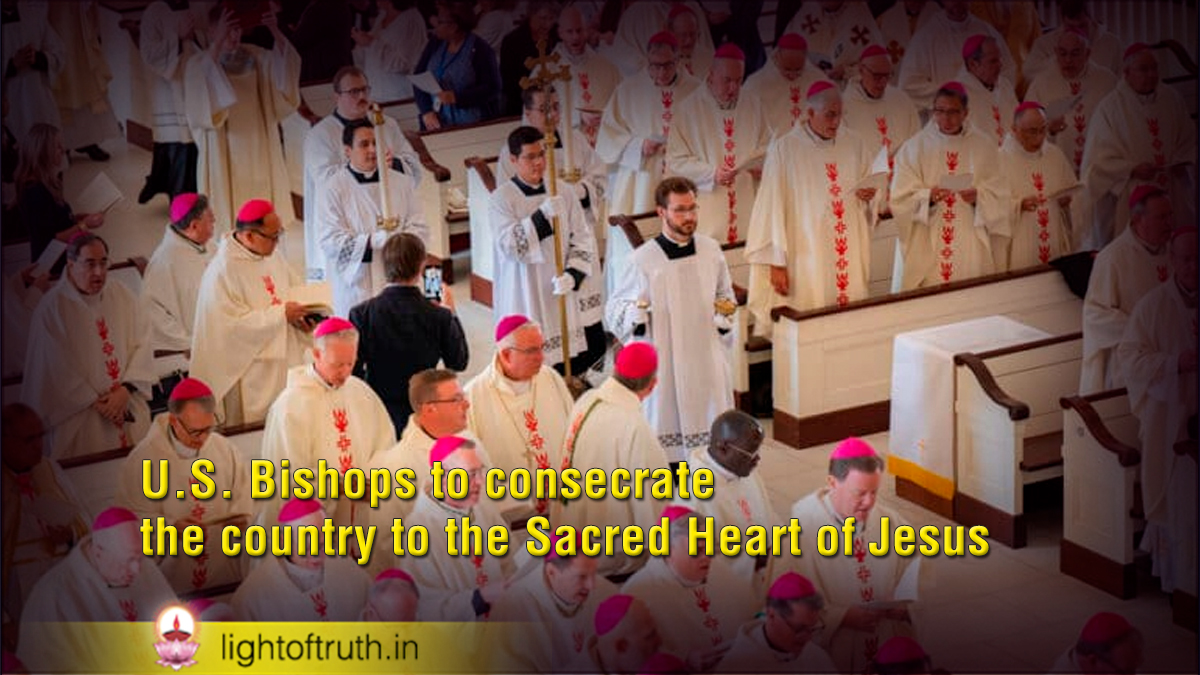
U.S. Bishops to consecrate the country to the Sacred Heart of Jesus

The United States Conference of Catholic Bishops (USCCB) will gather for the 2026 Spring Plenary Assembly in Orlando, Florida, June 10-12. In celebration of the 250th anniversary of the signing of the Declaration of Independence, the U.S. bishops will consecrate the United States of America to the Sacred Heart of Jesus on Thursday, June 11. The public portion of the assembly will begin with an address by Archbishop Paul S. Coakley of Oklahoma City, who will deliver his first remarks as president of the Conference. Archbishop Gabriele Giordano Caccia, the Papal Nuncio to the United States, is also expected to deliver an address to the body of bishops.

The plenary agenda is expected to include votes on a number of action items: Two items pertain to a consultation on causes of beatification and canonization: Monsignor Joseph Francis Buh and John Rick Miller.  The Committee on Divine Worship will also present elements of a new edition of the Lectionary for Mass and the 2025 Roman Missal-Liturgy of the Hours Supplement for approval by the body of bishops.  A revision to the Charter for the Protection of Children and Young People, which was first discussed by bishops in regional meetings in November 2022. Also expected to be addressed at the plenary are updates on the following: Synod implementation and evaluation; The feedback received during the bishops’ fraternal dialogues at the November 2025 plenary about Forming Consciences for Faithful Citizenship; Catholic prison ministry; World Youth Day 2027 in Seoul, South Korea; The 25th anniversary of the implementation of Ex Corde Ecclesiae in the United States. The presentation is expected to provide a reflection on Pope John Paul II’s apostolic constitution to guide Catholic colleges and universities on theological and pastoral principles.

In celebration of the 250th anniversary of the signing of the Declaration of Independence, the U.S. bishops will consecrate the United States of America to the Sacred Heart of Jesus on Thursday, June 11. To prepare for this occasion, the bishops will have time to hear reflections on the Sacred Heart from several of their brother bishops before the special Mass of consecration. The bishops’ live stream event is intended to be a catalyst to encourage parishes and individuals to participate in the America 250 commemoration by contributing to 250 Hours of Adoration and/or 250 Works of Mercy.

The live stream of the public portions of the plenary on June 10 and 11, and the bishops’ Mass consecrating the United States to the Sacred Heart of Jesus will be available at www.usccb.org/meetings. 
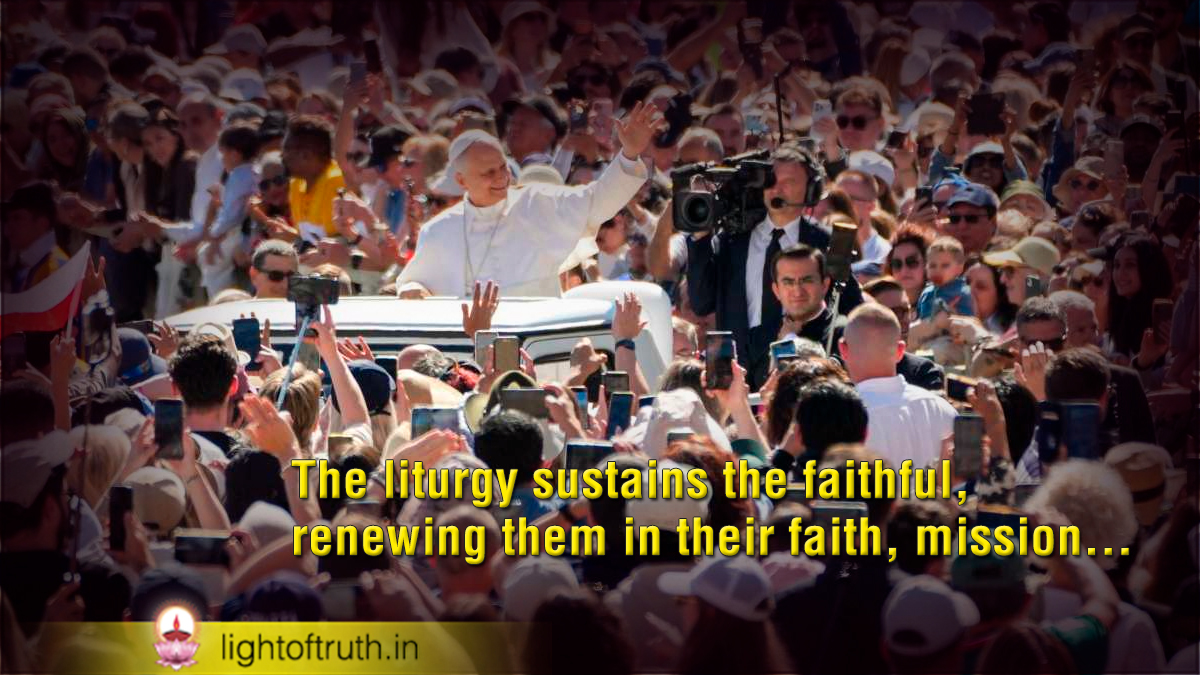
The liturgy sustains the faithful, renewing them in their faith, mission…

Christ is present in the liturgy — in the word that is proclaimed, in the sacraments, in the ministers, in the community and most of all in the Eucharist,. “Let us allow ourselves to be shaped from within by the rites, symbols, and gestures and above all by the living presence of Christ in the liturgy. Pope Leo XIV said. Before the pope began his catechesis, he welcomed Armenian Apostolic Catholicos Aram I of Cilicia, who sat next to him during the audience.  In his main talk, Pope Leo continued his series of catechesis on the Second Vatican Council, but introduced the conciliar document Sacrosanctum Concilium.

In drafting this constitution, he said the “Council Fathers sought not only to undertake a reform of the rites, but to lead the Church to contemplate and deepen that living bond which constitutes and unites her: the mystery of Christ…Indeed, the liturgy touches the very heart of this mystery: it is at once the space, the time and the context in which the Church receives her very life from Christ”. “The Christian mystery: the Paschal event, that is to say, the passion, death, resurrection and glorification of Christ, which is made sacramentally present to us precisely in the liturgy, so that every time we take part in the assembly gathered ‘in his name’ we are immersed in this mystery,” The liturgy that is celebrated must be translated into and lived throughout one’s daily life, “in an ethical and spiritual dynamic,” he said. It demands “a faithful existence, capable of making concrete what has been experienced in the celebration: it is in this way that our life becomes a “living sacrifice, holy and acceptable to God,” fulfilling our “spiritual worship.”

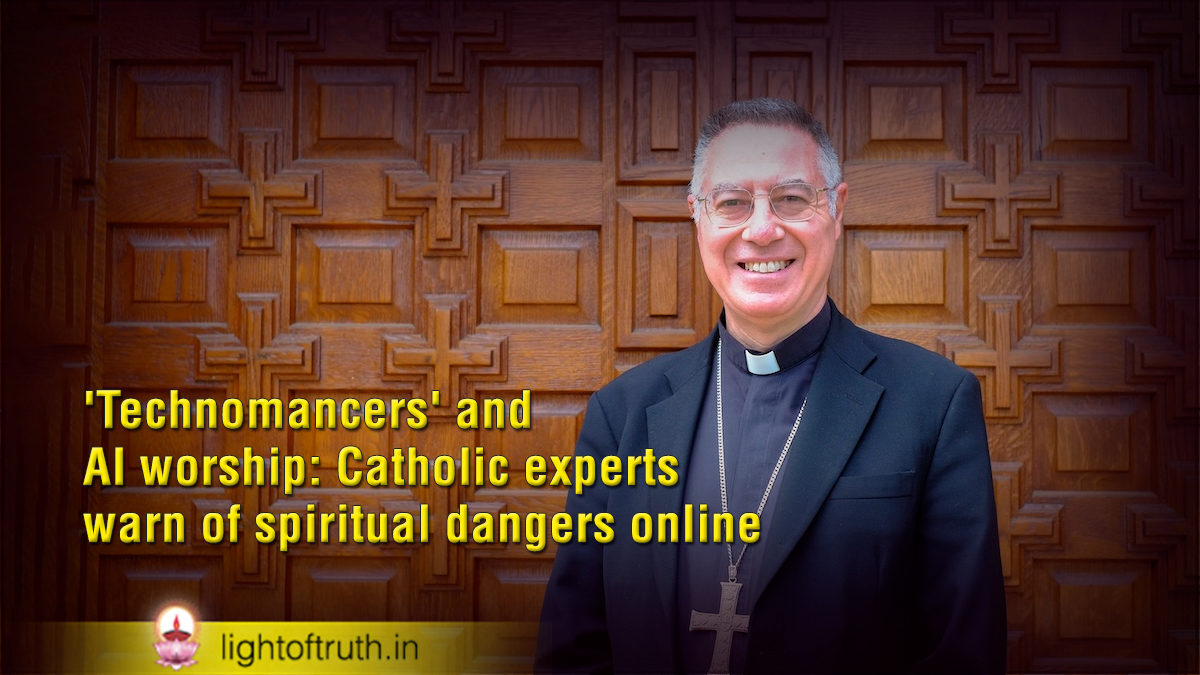
‘Technomancers’ and AI worship: Catholic experts warn of spiritual dangers online

….Speakers at a Rome conference on exorcism warned that artificial intelligence is fueling new forms of occult practice, spiritual dependence and even online movements that treat technology as divine…..

Catholic exorcists and occultism experts warned that artificial intelligence is increasingly being used for rituals, divination and even forms of worship, raising concerns that some people are replacing God with technology.

At a five-day conference in mid-May on the ministry of exorcism and deliverance prayer hosted by the Pontifical Athenaeum Regina Apostolorum in Rome, some speakers said the rapid rise of AI catboats and online occult communities has created new pathways for spiritual confusion, isolation and what some described as demonic influence.

Auxiliary Bishop Cesare Di Pietro of Messina-Lipari-Santa Lucia del Mela in Italy said social media and artificial intelligence can foster the illusion that freedom comes from distancing oneself from God. “When AI or the internet help us access evil, we are not protected, we are exposed,” modern culture often lacks the discernment needed to recognize spiritual dangers.

The conference came just months after the Rome-based International Association of Exorcists reported to Pope Leo XIV a rise in cases linked to occult practices and Satanism, urging dioceses worldwide to appoint trained exorcists to meet growing demand. Bishop Di Pietro said he has personally seen an increase in requests for exorcisms, which he linked to declining religious practice among young people.

“When prayer is reduced, when fewer people go to church, the sacraments and prayer no longer serve as an umbrella protecting us from evil,” he said.

One of the conference’s keynote speakers, Beatrice Ugolini, an adjunct lecturer in “Occultist-Esoteric Languages” at the University of Bologna, warned that some online communities are using artificial intelligence as a tool for magic and spiritual experimentation.

Ugolini described these users as “technomancers” who ask AI chatbots to generate rituals, demonic seals and occult texts, treating the systems as “ritual altars.” “Technology must remain a tool at the service of the human person, without transforming into a substitute for the sacred. Concerns about artificial intelligence replacing authentic human and spiritual relationships have also surfaced repeatedly in several papal addresses.

Pope Leo XIV warned in his message for the 2026 World Day of Social Communications that artificial intelligence systems “not only interfere with information ecosystems, but also encroach upon the deepest level of communication, that of human relationships.”

Sean Tobin, a therapist who conducts psychological evaluations before exorcisms in Los Angeles, said the constant affirmation and personalization offered by AI systems can leave users spiritually vulnerable, because they lack true community in this digital era. 

He compared society’s growing dependence on AI to the widespread reliance on satellite navigation, which diminished many people’s ability to navigate independently. Over time, he warned, excessive dependence on AI could weaken people’s ability to reason, discern and make decisions for themselves.

“Then we’re going to atrophy,” he said.

Tobin said social media and digital isolation have already eroded in-person communities, deepening loneliness and division.

“We’re under the influence of the devil’s own mental illness, his own cognitive dissonance. Still, despite the concerns raised throughout the conference, Tobin said: “I think people are really searching for the sacred again, and for peace,” he said.

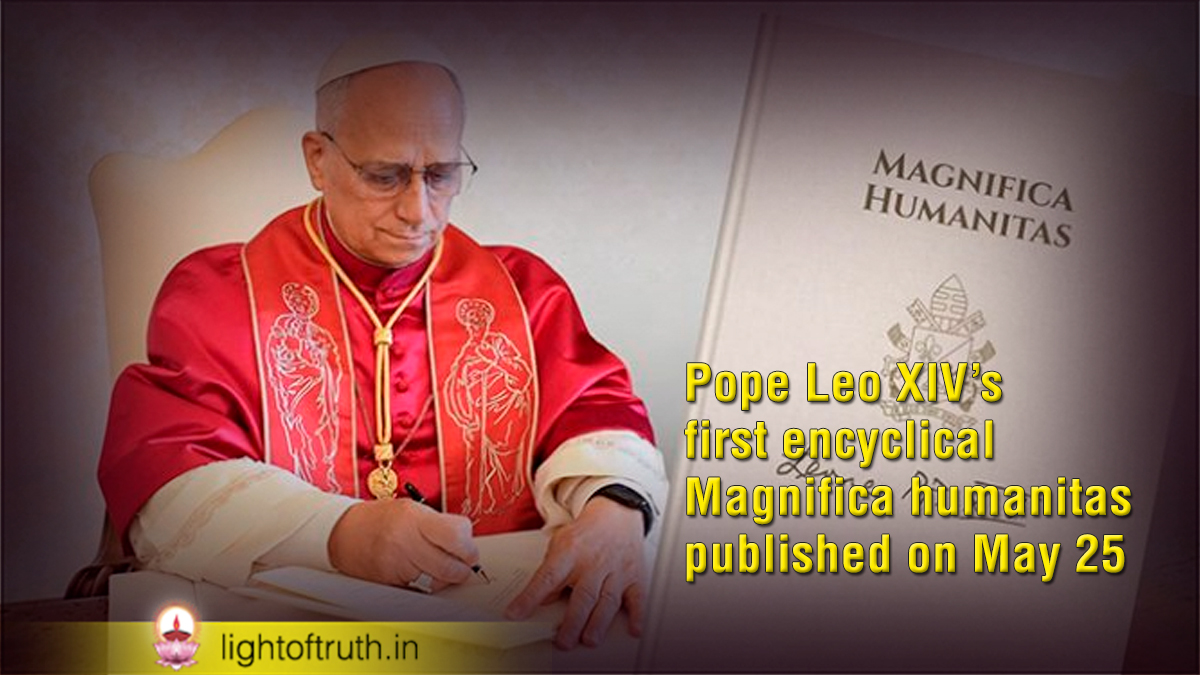
Pope Leo XIV’s first encyclical Magnifica humanitas published on May 25

Pope Leo XIV’s first encyclical, Magnifica humanitas, on safeguarding the human person in the time of artificial intelligence, released on May 25. A presentation event with the Pope and various speakers took place at the Vatican. This could be seen as the follow up of Quo Vadis Humanitas published by the pontifical Theological commission with the approval of Pope Leo XIV. 

Pope Leo XIV’s first Encyclical Letter Magnifica humanitas, on safeguarding the human person in the time of artificial intelligence, released on May 25, 2026.

It bears the Pope’s signature dated May 15th, 135th anniversary of the publication of Pope Leo XIII’s encyclical Rerum Novarum. Magnifica humanitas is presented on the day of its release at 11:30 a.m. at the Vatican’s Synod Hall.

The Pope himself was present, along with several speakers: Cardinal Víctor Manuel Fernández, Prefect of the Dicastery for the Doctrine of the Faith; Cardinal Michael Czerny, S.J., Prefect of the Dicastery for Promoting Integral Human Development; Professor Anna Rowlands, a theologian and professor at Durham University (United Kingdom); Christopher Olah, co-founder of Anthropic (USA) and head of research on the interpretability of artificial intelligence; and Professor Leocadie Lushombo, I.T., professor of political theology and Catholic social thought at the Jesuit School of Theology / Santa Clara University in California (USA). Cardinal Secretary of State Pietro Parolin offered closing remarks, followed by an address and blessing by Pope Leo XIV.

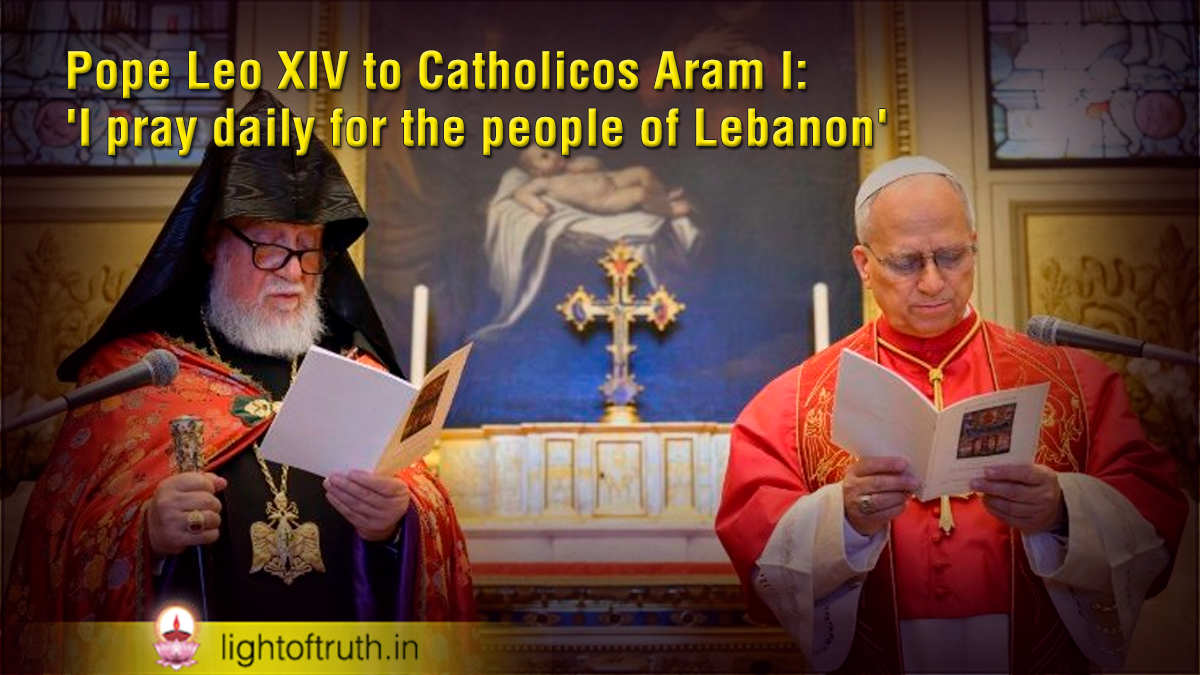
Pope Leo XIV to Catholicos Aram I: ‘I pray daily for the people of Lebanon’

His Holiness Aram I, Catholicos of the Armenian Apostolic Church – See of Cilicia, paid a visit to the Holy Father in the Vatican on Monday, marking the first official visit of the Catholicos to Pope Leo. In Pope Leo’s address, he expressed his daily prayers for the people of Lebanon and his ‘deep concern’ for them and the Churches of the Middle East.

His Holiness Aram I, Catholicos of the Armenian Apostolic Church – See of Cilicia, visited Pope Leo XIV in the Vatican on Monday. The private meeting marking the first official visit of the Catholicos to Pope Leo was followed by a moment of prayer in the Urban VIII Chapel of the Apostolic Palace.

The jurisdiction of the Catholicosate of Cilicia covers Lebanon, Syria, Cyprus, Kuwait, United Arab Emirates, the Gulf region, Iran, Greece and the Americas. Since 1930, the Catholicosate of the Great House of Cilicia has been headquartered in Antelias, Lebanon.

During the meeting in the Vatican, Pope Leo addressed the Catholicos about the importance of the faith, the shared bonds among Christians, and the need for followers of Christ to witness unity together. The Holy Father expressed to the Catholicos of Cilicia his gratitude for his efforts to foster relations with the Catholic Church and for his closeness to the Church of Rome.

The Pope thanked Catholicos Aram I for his personal commitment to promoting theological dialogue between their Churches, which he recalled has been taking place since 2003 within the framework of the Joint International Commission for Theological Dialogue between the Catholic Church and the Oriental Orthodox Churchs.

Pope Leo said he sincerely hopes “that, despite recent difficulties, this dialogue will continue with renewed vigour,” noting, “for there can be no restoration of communion between our Churches without unity in faith.”

The Pope said the Catholicos’ presence brought to mind “beloved” Lebanon, which he recalled with fondness visiting last December. Pope Leo observed that for so long, the country “has shown the whole world that it is possible for people of diverse cultures and religions to live together as one nation,” but lamented that it continues to face severe trials.

“At a time when the unity and integrity of your country are once again under threat,” Pope Leo said, “our Churches are called to strengthen the fraternal bonds that unite not only Christians amongst themselves, but also with their brothers and sisters from other communities in their shared homeland.” “Your Holiness,” the Holy Father continued, “I assure you of my daily prayers and of the deep concern I feel for the people of Lebanon and for the Churches of the Middle East.” Pope Leo XIV expressed his gratitude that he and the Catholicos, ahead of the Solemnity of Pentecost, would be able to pray together for unity, enduring peace, and to renew the face of the earth.

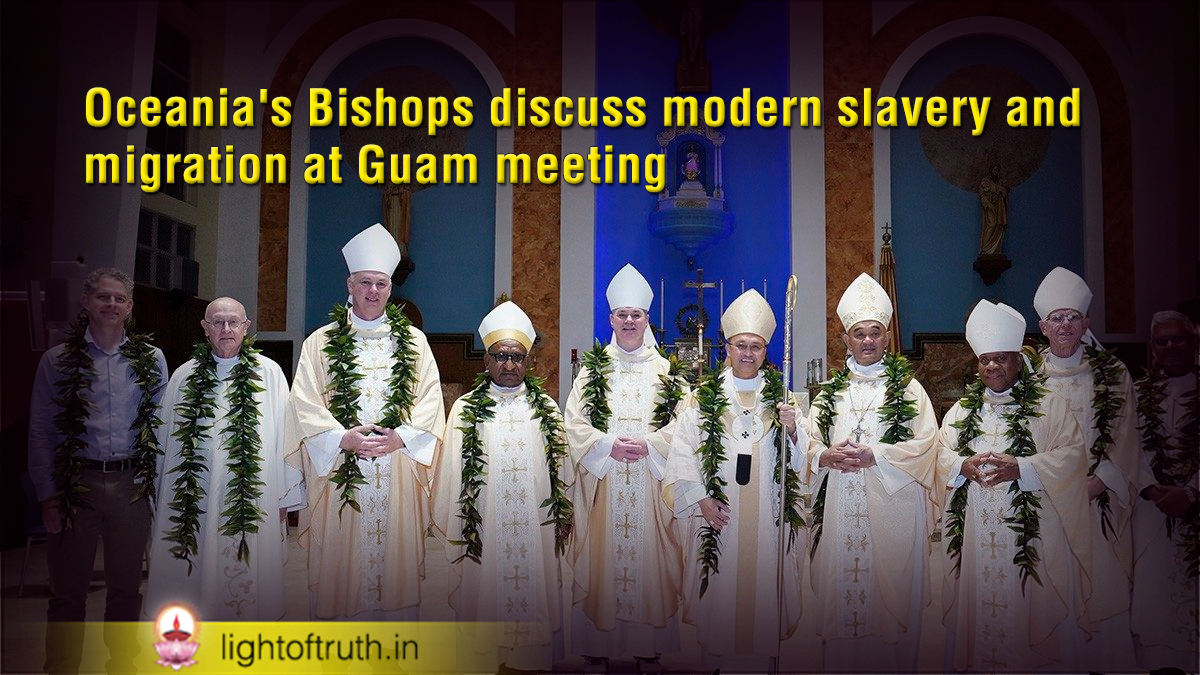
Oceania’s Bishops discuss modern slavery and migration at Guam meeting

During their three-day meeting in Guam, the Federation of Catholic Bishops Conferences in Oceania focuses on modern slavery and migration, formation, pastoral care, globalization, and social injustices.

Catholic Bishops from across Oceania convened in Guam May 18–20 to address regional challenges, including modern slavery, migration, and the future of ministry in the Pacific.

The Federation of Catholic Bishops’ Conferences of Oceania (FCBCO) Executive Committee met to consider how the Church can support vulnerable migrant workers and foster dignified, respectful migration throughout the region, stated a press release from the Federation.

A key focus, it noted, was the Federation’s recent submission to the New South Wales inquiry into modern slavery risks facing temporary migrant workers in rural and regional areas. In particular, the Bishops affirmed their ongoing commitment to the Migrants and Refugees Oceania Network, which advocates for the rights and well-being of displaced and migrant communities.

Discussions also explored the broader impact of migration on sending and receiving countries, as well as strategies for strengthening pastoral care and formation for laity, priests, and Bishops.

The meeting, led by Archbishop Ryan P. Jimenez of Guam, began Monday with a traditional welcome by the Indigenous CHamoru people of the Mariana Islands, with local children performing prayers and songs in the indigenous language.

The Bishops also visited the Shrine of Blessed Diego Luis de San Vitores, the 17th-century Spanish Jesuit missionary martyred in Guam, and attended a reception showcasing CHamoru culture.

Moreover, the statemenet notes that Bishops initiated discussions on the 2028 Plenary Assembly of all Oceania Bishops, to be held in Sydney ahead of the Eucharistic Congress. Initial suggestions for the assembly agenda include continued reflection on synodality, youth engagement, safeguarding, indigenous ministry, and environmental stewardship.

‘Algorithmization’ of life and preserving human dignity

Bruno Giussani, author of a book on artificial intelligence’s impact on our lives, reflects on Pope Leo XIV’s Message for the 60th World Day of Social Communications, “Preserving Human Voices and Faces.”

How many algorithms are part of our daily lives? How many sensors? How many screens?

Interacting with screens and digital interfaces of all kinds has become the main activity for almost all of us.

But how many of these interactions are truly the result of a choice? More than a habit, it is becoming a condition. Our society is increasingly structured around algorithms and digital networks that shape its forms and dynamics.

This has not happened – and is not happening – through public debate, political decision-making, or a democratic process, but rather as the indirect (though by no means accidental) consequence of commercial mechanisms and the often uncritical and impatient adoption of technologies that, in effect, redefine the social, economic, and cultural sphere.

This “algorithmization” of life raises essential questions. Who controls these systems? What values and logics do they convey, and which do they exclude? What are the consequences for our autonomy as human beings? And are we still capable of asking ourselves these questions, or are we becoming accustomed to living in a world where the answers are already written into the computer code that surrounds us?

When, in his illuminating Message for the 60th World Day of Social Communications, celebrated on May 17, His Holiness Pope Leo XIV writes that our challenge “is not technological, but anthropological,” he captures in one sentence that seems simple the full depth, unease, and responsibility that each of us should feel in the face of advancing digital technologies, and especially artificial intelligence (AI)..

The arrival, three and a half years ago, of generative AI — the chatbots with which we interact by writing or speaking — has further accelerated this replacement of human logic with techno-logic.

All of us therefore — technological experts and beginners alike, enthusiasts as much as skeptics — share the same responsibility: to demand technologies that serve people and truth, not the other way around. Tools of justice rather than power. To protect freedom, equality, and human judgment. To recognize that not all questions have an algorithmic answer, that not everything calculable is therefore right, good, or desirable. To measure innovation by the standard of each person’s dignity. And to never forget, behind every algorithm, every app, and every screen, the faces and voices of our fellow human beings.

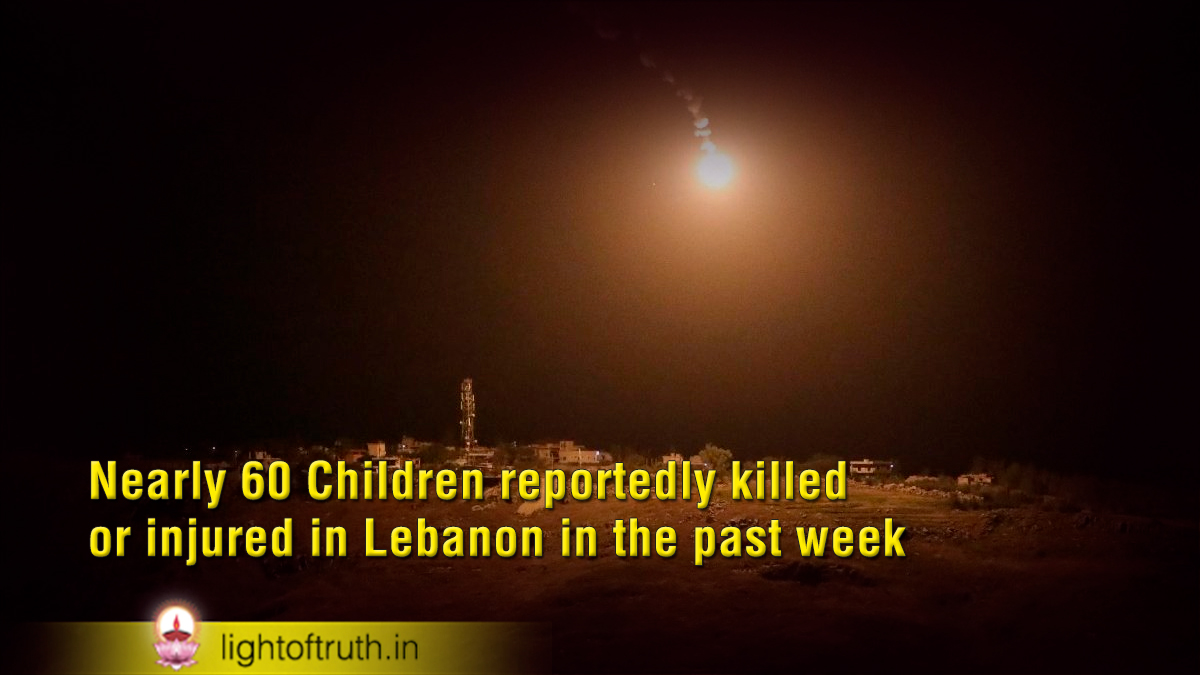
Nearly 60 Children reportedly killed or injured in Lebanon in the past week

The UN Children’s Fund (UNICEF) reportedly killed or injured in Lebanon in the past week, drawing attention to the significant toll on children in the country.

The UN Children’s Fund (UNICEF) says that at least 59 children were reportedly killed or injured in Lebanon over the past week, despite a ceasefire agreed on 17 April 2026.

According to Lebanon’s Ministry of Public Health, at least 23 children have been killed and 93 injured since the ceasefire took effect.

Since 2 March, a total of 200 children have reportedly been killed and 806 injured.

UNICEF said the figures amount to nearly 14 children being killed or injured every day.

The agency called on all parties to protect children, uphold international humanitarian law, and take all necessary measures to ensure the ceasefire holds.

UNICEF Regional Director for the Middle East and North Africa, Edouard Beigbeder, said children should be “returning to classrooms, playing with friends, and recovering from months of fear and upheaval.”

“Reality, however, is proving to be very different,” he said. “Continued attacks are killing and injuring children, deepening their exposure to trauma and leaving devastating consequences that could last a lifetime.”

UNICEF estimates that 770,000 children are experiencing heightened distress from repeated exposure to violence, loss and displacement.

The agency said children and caregivers have reported symptoms associated with traumatic stress and grief, including fear, nightmares, sleeplessness and hopelessness. It warned that without mental health and psychosocial support, many children risk developing long-term psychological problems. UNICEF said urgent investment in mental health and psychosocial services is needed to help children recover from the effects of the conflict.

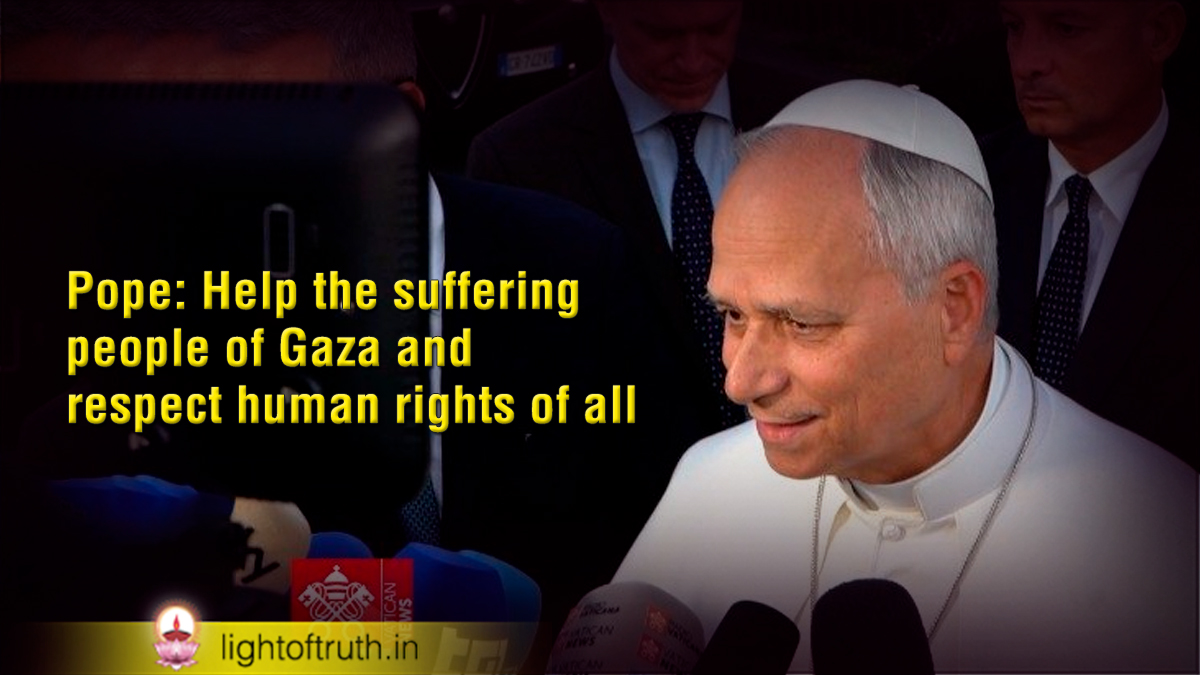
Pope: Help the suffering people of Gaza and respect human rights of all

Speaking to journalists outside Castel Gandolfo on Tuesday evening, Pope Leo renews his appeal for humanitarian assistance in Gaza, warns against the use of artificial intelligence in warfare that disregards human life, and highlights ongoing dialogue with AI Company Anthropic.

Speaking to journalists outside his residence in Castel Gandolfo on Tuesday evening, Pope Leo once again called on the international community to assist the people of Gaza, insisting that human rights must be respected “for everyone”.

Responding to a question about activists involved in the Gaza-bound Global Sumud Flotilla, following reports that some had been handcuffed and blindfolded., the Pope said that “we must renew our appeal for the respect of the human rights” of every person.

He went on to lament the continued suffering of civilians in Gaza, noting that “unfortunately, the people of Gaza are still not receiving humanitarian aid”. The Pope explained that this situation “is provoking protests” and with them complications, including those who were involved in the Flotilla. 

“I would also like to renew this not only as an invitation, but truly as an appeal”, he continued, urging “all authorities to assist and accompany the people of Gaza, and to help begin reconstruction”. “The people are truly suffering”, the Pope said, adding that they “continue to suffer greatly”.

Asked what it means when unarmed peace activists are met with violence, Pope Leo warned of the danger of fuelling further hatred. “We are provoking more and more hatred,” he said, adding that “violence does not help. From any side”. Instead, the Pope stressed the need “to return to negotiations” and “to seek, through dialogue, to resolve problems”, always “respecting the human rights of everyone”.

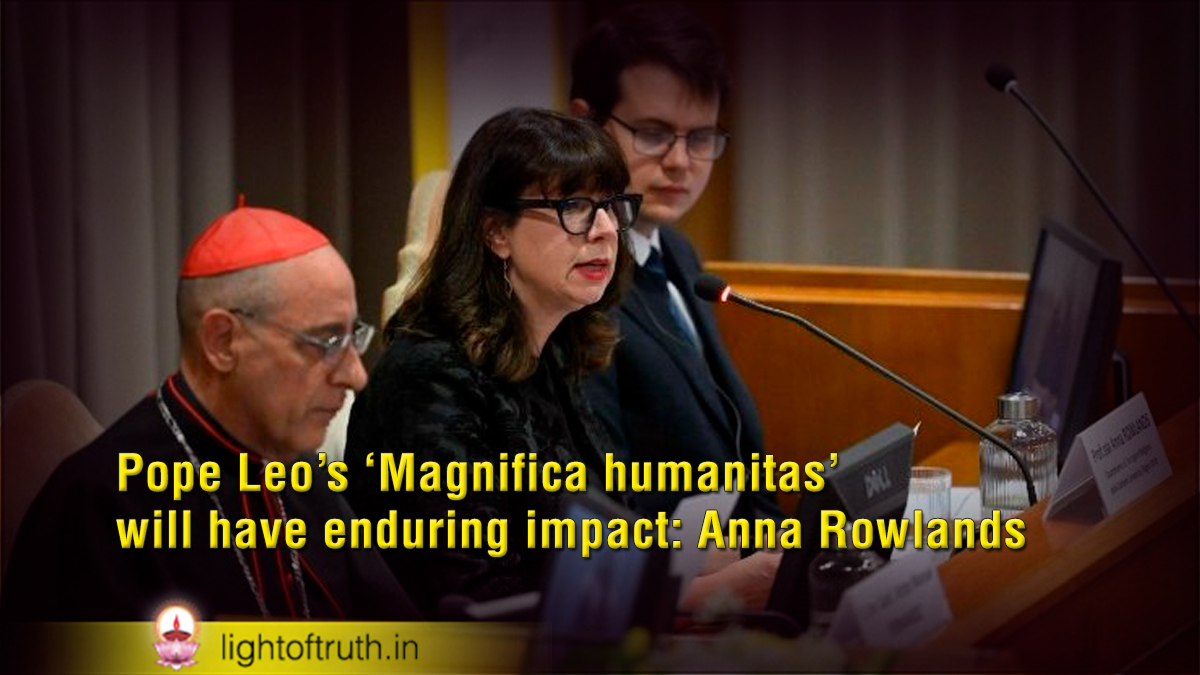
Pope Leo’s ‘Magnifica humanitas’ will have enduring impact: Anna Rowlands

As Pope Leo XIV’s encyclical ‘Magnifica humanitas‘ is unveiled, Professor Anna Rowlands, theologian at Durham University, tells Vatican News that such a powerful message—addressing both the benefits and dangers of our AI era—will leave an enduring mark on the Church and the world.

 “There is not a tomorrow to begin thinking about these issues.”

Professor Anna Rowlands, theologian at Durham University in the United Kingdom, stressed this point in an interview with Vatican News following the release of Pope Leo XIV’s first encyclical, Magnifica humainitas: On safeguarding the Human Person in the Time of Artificial Intelligence, presented at the Vatican on May 25. 

The document, signed by Pope Leo on May 15 – the 135th anniversary of Pope Leo XIII’s landmark encyclical Rerum Novarum – was unveiled in the Vatican’s New Synod Hall in the presence of the Pope himself. Professor Rowlands was among the speakers at the presentation.

Speaking to Vatican News on the side-lines of the event, Professor Rowlands described the encyclical as “an absolutely vital contribution” for two principal reasons.

First, humanity is facing a moment of profound urgency regarding the technological issues addressed in the document.  “There is not a tomorrow to begin to think about these issues,” she warned, “because their impact on workplaces, on labour, on immigrants, on families, on political society and on conflicts globally is now, and was yesterday, and will continue tomorrow as well.”

She acknowledged that many people feel uncertain or unqualified to engage with questions surrounding artificial intelligence. Professor Rowlands suggested that one of the central concerns of Magnifica Humanitas is ensuring that these questions are not left solely to private spaces shaped primarily by profit rather than by human dignity.

“How do we create common spaces,” she asked, “where particularly the voices of the most marginalized, and those most harshly affected by the reality of an algorithmic order, a digital horizon, and an AI world, are heard first?” The encyclical insists that those voices must be central to any conversation aimed at promoting the common good.

The Holy Father, challenges society to reflect on fundamental questions: “What do we think human life is? Who are we as human beings? What vision and goal are we aiming for in our humanity and in our lives together?”

“He offers us both a very strong set of criticisms,” she continued, “of the false storylines, the false narratives about what it means to be human, particularly those that place power and domination over others, whether in politics, war, conflict, or the economy.” In contrast to those narratives, Pope Leo proposes “a rather beautiful vision of a civilization of love.”

The encyclical urges humanity to recover a shared moral imagination, especially “a way of seeing one another and the world that recognizes the inherent value of the human person.” The encyclical warns against transferring human dignity to technological tools or imagining that AI could somehow become “more human” than humanity itself, while simultaneously diminishing our own humanity.

At the same time, the document is also an invitation. “We need together to build that civilization of love,” and we only do that through fully living into a sense that we are finite creatures created for love, yearning for justice, and that we create that world together in participation.”

Professor Rowlands concluded by reflecting on Magnifica humanitas within the broader tradition of Catholic social teaching.

Magnifica humanitas is fresh and new because it is addressing AI,” but it stands within a long tradition of encyclicals focused on industrialization, capitalism, the condition of work, and the meaning of technology for human beings.” The message of Pope Leo XIV’s encyclical, she suggested, is one that will resonate far beyond the present and will impact generations.