Category Archives: International

Spanish bishops speak out after leaks of their meeting with Leo XIV

The executive committee of the Spanish Bishops’ Conference, (CEE, by its Spanish acronym) meeting in Madrid this week, issued an official statement regarding the leaks about its meeting with Pope Leo XIV that recently appeared in various media outlets. The newspaper El País published an article on Feb. 23 titled “The pope warned the bishops that his greatest concern in Spain is the far right that is trying to ‘instrumentalize the Church.’”

The article alluded to alleged comments made by the pope during the meeting with the nine members of the CEE’s executive committee on Nov. 17, 2025, at the Vatican, according to “two sources familiar with what transpired at the meeting.”

Numerous media outlets, based on the article published by El País, replicated the content with similar headlines, and some, such as Vida Nueva, added nuances to what the pope said, citing people who “were present at that meeting.” According to its website, Nueva Vida (New Life) “is a weekly religious news magazine that aims to be a committed voice within the Church.” 

Meanwhile, other media outlets have published information that contradicts the initial reports. Citing “more than two members of the executive committee, and some other prelates familiar with what was said at the meeting,” Religión Confidencial stated that the issue was not raised at the pope’s initiative but rather at the suggestion of one of the Spanish prelates and that the pontiff merely explained a general framework of doctrine regarding the Church’s relationship with politics.

El Debate, more emphatically, headlined: “Clearly, the pope’s greatest concern in Spain is not the far right but evangelization,” citing “episcopal sources who are well aware of what happened at the Vatican on Nov. 17.”

In response to all these publications, the executive committee of the CEE issued a statement on Feb. 24, noting that “Pope Leo XIV received us with special affection, listened to the presentations of all the members of the committee, and encouraged us in the evangelizing mission to which the Church in Spain is committed.”

“The Holy Father also encouraged us to foster communion among all the members and institutions that make up the Church,” the bishops continued. Regarding the issue that sparked the cascade of diverse reports, the CEE explained that “in the dialogue, the Holy Father reflected, among other things, on the risks of subjecting faith to ideologies, without mentioning any specific group.” Finally, the prelates express their “respect for and support of the pope and welcome his call to evangelizing communion in the society in which we live, with all its challenges.”

Thousands convene in Assisi to pray before bones of St. Francis on first day of historic viewing

Hundreds of pilgrims lined up before dawn on Sunday to be among the first to pray before the exposed relics of St. Francis in his basilica in Assisi, Italy.  The saint’s bones will lie in a glass box through March 22 — fully visible outside the stone tomb in a crypt where they usually rest — as hundreds of thousands of people venerate the holy remains.

A highly organized system with QR code reservations allowed approximately 750 people to enter the lower church of the basilica every 30 minutes through most of the day Feb. 22 to view the saint.

Filing past 13th- and 14th-century frescoes by Cimabue and Giotto, pilgrims on the chilly but sunny winter day approached the glass case, protected by a plexiglass barrier. Some were overwhelmed with emotion as they had the opportunity to stand a foot away from what still exists of St. Francis on earth 800 years after his death, according to Jacob Stein.

Stein, the creator of “Crux Stationalis” blog and part of the social media team of EWTN News, was among the first group to arrive at the church. Despite the crowds, he described the atmosphere in Assisi and in the presence of the relics as prayerful and unrushed. Inside the basilica, where cellphone use was forbidden, friars gently recalled the pilgrims to silent recollection when voices got above a whisper. People knelt before St. Francis and kissed the glass and left their written prayers in boxes shared by the Franciscans.

“My prayer afterwards was to the wounds of Christ, to honor them,” Stein said, referring to St. Francis’ stigmata. This moment helps you to understand that the devotion for St. Francis is because of “his conformity to Christ as a complete and utter example to follow.”

Tex-Mex border bishops say ‘Our role is to be pastors’

A group of bishops from the Texas-Mexico border region, informally known as the “Tex-Mex bishops” met in El Paso, Texas on Friday to discuss immigration and its effects on both the U.S. and Mexico, as well as recent drug cartel-related violence in Mexico.

The meeting of the Tex-Mex bishops is now “the longest-running international gathering of Catholic bishops anywhere in the world,” according to a press release from the Diocese of El Paso on behalf of the bishops. The group has met twice a year for more than 40 years.

At the press conference, San Antonio Archbishop Gustavo García-Siller, the group’s coordinator, said the bishops were concerned with the “plight of our brothers and sisters, migrants, which are on both sides of the border.”

The prelate said immigration enforcement has “changed drastically” in recent years. Because of these changes, García-Siller emphasized that the bishops “need to learn new ways to serve well” migrants and refugees in order to “bring solutions” and “some solace, some peace, some kind of understanding.”

“You need to know that God loves you, and that we love you, too,” he said before beginning to address his listeners in Spanish.

At their meeting, the bishops were guided by the November Special Message from the United States Conference of Catholic Bishops (USCCB) on immigration, and the recently released statement of 20 U.S. Catholic bishops from border states and others, who recommended immigration enforcement reforms to the Trump administration.

Bishop Mark Seitz of El Paso said, however, that “bishops are not politicians. That is not our role…our role is to be pastors.” Echoing García-Siller, Seitz said that “Our role is to love the people that we serve. And…it doesn’t matter to us whether they’ve lived here a long time or they’re simply passing through. When we see that other person, we see a person created by God and given a special dignity, a value that is unparalleled and unrepeatable.”

Ukraine four years on: ‘It is a living paschal story’

Four years ago on February 24, Russia launched a full-scale invasion of Ukraine-scaling up on an already intense conflict that had begun eight years prior.

In the last four years, the number of causalities and the destruction have risen. The UN High Commissioner for Refugees estimates that some 5.9 million people have emigrated from the country. Relief Web reports that more than 15,000 civilians have been killed. About one quarter of the pre-war population of 42 million people has been lost.

Speaking to Vatican News, Metropolitan Borys Gudziak, Archbishop of Philadelphia of the Ukrainian Greek Catholic Church, shares how in the midst of this challenging time, the Ukrainian people have been able to foster identity and strengthen relationships, which he says are “the instruments to withstand this kind of assault.”

Despite the lack of heating, electricity, and the ongoing bombings, Metropolitan Gudziak explains how important global support is for the people in Ukraine. Whether it be the voice of the Pope or the collections gathered in countries around the world, the archbishop stresses that Ukrainians are still “standing, tired and exhausted, but faithful and full of faith that God’s truth will prevail.”

Mozambique women demand real action over empty gestures

This year, Mozambique looks forward to celebrating the occasion of Mozambique Women Day on April 7. As part of celebrations, a group of women across Mozambique are raising their voices against what they see as empty symbolism amid the crisis of healthcare and daily survival. In an open letter to First Lady Gueta Selemane Chapo, the wife of President Daniel Francisco Chapo, the women expressed outrage over reports that colorful capulanas (traditional dresses) will be handed out nationwide to mark Mozambican Women’s Day.

According to the Vatican’s Fides news agency, the women claim to speak for Mozambican mothers, daughters, sisters, and grandmothers. “We do not want ‘capulanas‘; we demand respect and dignity for the rights of all,” they stated. “We value symbolic gestures, but not at this time when the Mozambicans are facing real and urgent suffering that needs attention.”

The women highlight the dire need and urgency in the public hospitals. Children are dying as a result of under-equipped facilities, pregnant women endure labor on bare beds without mattresses or vital medication, and families lack basic services. “There is nothing to celebrate,” they lamented. “We can’t celebrate the lack of decent hospitals and the waste of public resources, yet there is inequality and violence that still persist in our country,” they said, adding that they demand sensitivity and real solutions.

The group demands that the state money for capulanas be rerouted to real needs, buy medicine in the hospitals, provide proper beds, ensure that there is food access, and uphold the dignity of women, children, and families. “The initiative of the capulanas doesn’t solve real problems that we face,” the women noted, framing the distribution as a misuse of resources when life hangs in the balance.

Global defence spending rises amid geopolitical tensions

he International Institute for Strategic Studies (IISS) annual Military Balance 2026 report shows that while the pace of increase in military spending for defence has moderated compared to previous years, Europe and parts of Asia recorded significant rises, reflecting ongoing security concerns and shifting regional priorities

The report reveals that global military expenditure continued its upward trajectory in 2025, reaching an estimated USD 2.63 trillion. This, it notes, represents a 2.5 % increase over the previous year, though the pace of growth remains slower than the sharp rises seen in the immediate aftermath of Russia’s invasion of Ukraine.

The report also highlights a divergent picture across regions. Europe’s defence spending surged by around 12.6 %, significantly outpacing the global average, as governments responded to persistent security concerns and renewed commitments by NATO allies to bolster their militaries. Germany played a leading role in this increase, contributing substantially to Europe accounting for more than 21 % of global defence spending in 2025, up from 17 % in 2022.

In contrast, growth in the United States’ defence budget temporarily tapered in 2025, even as proposals under the current administration aim to push U.S. military spending beyond USD 1 trillion in 2026 with initiatives such as the proposed “Golden Dome” missile defence programme.

Russia’s defence spending continued to increase in absolute terms but at a much slower rate than in previous years, a marked change after substantial rises earlier in the conflict with Ukraine.

Across Asia, defence budgets also expanded, with China maintaining a dominant share – estimated at nearly 44 % of regional military expenditure in 2025 – and other states in the region raising their own defence expenditure amid security competition.

Spending in the Middle East and North Africa region also rose, reflecting ongoing regional tensions and state decisions to strengthen military readiness.

South Sudan at risk of sliding into full-scale civil war

As the civil war continues to wreak death, destruction and displacement in Sudan, observers warn its neighbour, South Sudan, risks a return to all-out civil war as well.

Having obtained independence from Sudan in 2011, South Sudan is the world’s youngest nation. It struggled to find stability from the very start as its president and his deputy of opposing parties clashed for power, triggering a deadly war that caused tens of thousands to flee their homes.

The nation’s 2018 “Revitalized Peace Agreement” appears increasingly fragile, and a just-released UN inquiry finds that the country’s political and military leaders are driving the nation towards full-scale war and mass atrocity crimes. South Sudan is at a “dangerous point” and risks sliding back into full-scale civil war as violence intensifies and a fragile peace agreement comes under strain, the UN human rights chief warned Friday.

Addressing the UN Human Rights Council, Volker Turk expressed extreme concern for the human rights situation in South Sudan and described it as one of the world’s forgotten crises. He sounded the alarm following the release of an investigative report that accuses the country’s political and military leaders of systematically dismantling the 2018 “Revitalised Peace Agreement”, of undermining governance and exposing civilians to grave risks of renewed armed conflict, mass atrocity crimes and serious violations of international human rights law.

Turk said Government and opposition forces and allied militias have attacked residential areas across multiple states in recent months, forcing large-scale displacement, noting that in northern Jonglei alone, more than 280,000 people fled their homes.

January, he continued, saw a sharp deterioration with civilians bearing the brunt of a spike in indiscriminate attacks, including aerial bombardments, deliberate killings, abductions and conflict-related sexual violence. “Human rights monitoring provides a warning system. That system is flashing red for South Sudan,” Volker Turk said, calling for an immediate halt to hostilities and renewed commitment to the peace agreement.

Vatican Children’s Hospital ranked 6th best in the world 

The Holy See’s children’s hospital, Bambino Gesù, is considered the leading paediatric hospital in Europe and the 6th best in the world, according to the US magazine Newsweek’s 2026 World’s Best Hospitals ranking. Created in collaboration with the data gathering company, Statista, the ranking highlights leading hospitals around the world in 12 medical fields, including paediatrics. The 2026 edition evaluated 2,500 hospitals in 32 countries. The ranking is compiled with information gathered from a comprehensive international survey of healthcare professionals, independent data on the quality of care and patient safety, and indicators derived from their assessments and reported clinical outcomes.

“This recognition stems from the daily teamwork of the entire hospital community: doctors, nurses, healthcare professionals, technical and administrative staff, researchers, volunteers, and religious personnel who, together, take care of children and their families,” said Tiziano Onesti, President of the Bambino Gesù Hospital, in a press release published by the establishment.

“It is the quiet dedication of these women and men—in the wards, laboratories, offices, reception, and support services—that makes highly specialized care possible, combined with attention to the human and relational aspects of treatment,” he emphasized.

The press release highlights that Bambino Gesù is the only paediatric hospital operating within the Italian healthcare system to be included among the top 30.

It also explains that this recognition shows the hospital’s growth over the years, as it has obtained important international certifications such as the JCI accreditation as an Academic Medical Center for training and clinical and scientific research.

Additionally, the press release underlines how Bambino Gesù is today the leading paediatric centre in Europe in terms of the number of affiliations with European reference networks for rare diseases (affiliated with 20 out of 24 networks).

It records almost 3 million outpatient services, 100,000 visits to the emergency room, and over 33,000 surgical procedures every year.

Pope concludes Lenten retreat with prayer and reflection

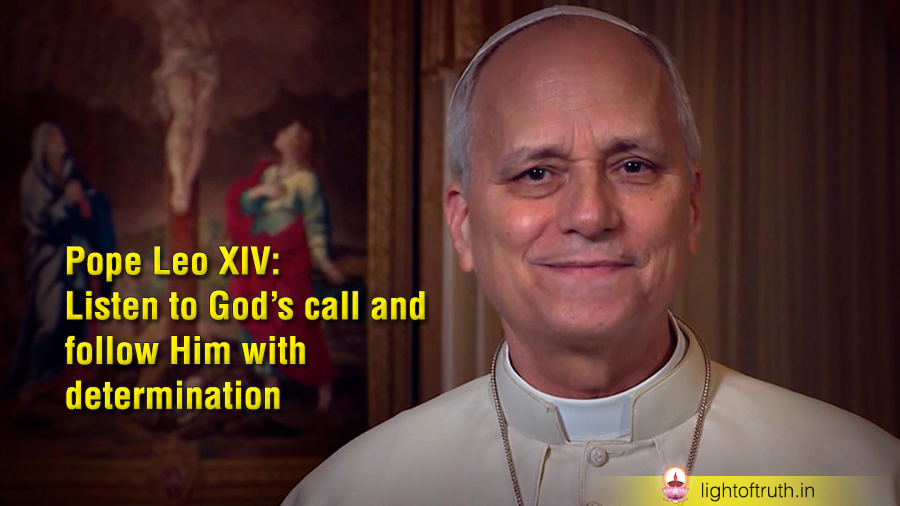
At the conclusion of a week of Spiritual Exercises in the Vatican, Pope Leo XIV offered words of gratitude and reflection, drawing together the themes that marked the Lenten retreat preached by Bishop Erik Varden. He described the days as “a profound spiritual experience,” one that accompanied the Roman Curia along its Lenten path, beginning with meditation on “the Temptations” and unfolding through reflections on monastic life and the witness of Bernard of Clairvaux.

Referring to moments that have touched him deeply, Pope Leo recalled a meditation on the election of Pope Eugene III, and cited Saint Bernard’s words: “What have you done? May God have mercy on you.” He then pointed to the chapel itself, recalling 8 May, when he and his brother cardinals were gathered there for the Eucharistic celebration. Above them is inscribed the verse from Saint Paul’s Letter to the Philippians: “For to me, to live is Christ, and to die is gain.” “In this context and with this spirit of communion,” he said, “all of us gathered together work side by side, though often very separately.” To meet in prayer, he added, is “a very important moment in our life,” a time to reflect on questions vital for personal life and for the Church.

Among the themes chosen by Bishop Varden during the week, the Pope highlighted the reference to the Doctor of the Church, St John Henry Newman, and his poem The Dream of Gerontius. In that work, he noted, Newman presents death and judgment “as a prism” through which the reader confronts fear and unworthiness before God.

Freedom and truth, he added,  also stood out as essential dimensions of Christian life that were touched upon during the reflections.

Returning to Saint Paul’s Letter to the Philippians, the Pope read the Apostle’s words about being “hard pressed” between the desire to depart and be with Christ and the call to remain for the sake of others’ “progress and joy in the faith.” He highlighted Paul’s exhortation: “Only conduct yourselves in a manner worthy of the Gospel of Christ.”

“This,” the Pope said, “is the invitation at the end of these days of prayer and reflection, which the very Word of God addresses to all of us.”

Europe and Africa react to announcement of papal journeys

Enthusiastic reactions are emerging from the various countries that Pope Leo XIV will visit in the coming months, after the journeys were officially announced by the Holy See Press Office on Wednesday, February 25. His first visit will be on March 28 to Monaco; he will then embark on a ten-day journey from April 13 to 23 with 11 stops across Algeria, Cameroon, Angola and Equatorial Guinea, before a week-long journey to Spain from June 6 to 12which includes Madrid, Barcelona, the Canary Islands, Tenerife and Gran Canaria.

In Algeria, the bishops say they are “overjoyed,” while in Cameroun the papal visit is being described as a “sign of hope” amid political and social difficulties, with preparations already underway to guarantee a safe and smooth visit.

From Spain comes a wave of “joy” and “gratitude,” along with assurances of a “warm” welcome. The same is true in the Principality of Monaco, where both the royal family and the local Church emphasize the “honor” of this “historic moment”: the first visit of a reigning Pope to the small city-state.