Vatican Radio celebrates 95 years with new jingle

Marking the 95th anniversary of its founding, on February 12, 2026, Vatican Radio – Vatican News is renewing and relaunching one of the most recognizable elements of its identity: its jingle, the audio logo that has always accompanied the listeners of the Popes’ Radio.

This project has been conceived to celebrate this historic milestone with a sign that merges tradition and contemporaneity.

The new jingle has been entrusted to Maestro Marcello Filotei of the Musical Programs editorial team, led by Maestro Pierluigi Morelli. It will accompany listeners throughout the entire day of February 12, before becoming a permanent feature of regular programming.

The new audio logos are the natural modern evolution of the historic orchestration of Christus Vincit created by Maestro Alberico Vitalini—based on a theme by Czech composer Jan Kunc—a distinctive and recognizable element of the Radio’s identity right from the beginning.

The original Christus Vincit theme has been reworked in a modern key, maintaining a direct link with tradition while at the same time offering a new sonic guise in line with contemporary culture and sensibilities.

The Prefect of the Dicastery for Communication, Paolo Ruffini, stated that, “Vatican Radio has always cultivated, even in its jingle, a special relationship with music that defines its identity.”

“Music,” he said, “speaks to us of that dynamic harmony, never identical to itself, which we all seek in our lives. It generates resonances that become dialogue, dialogue that becomes communion, and memory that becomes life. Celebrating today the 95 years of our radio by revisiting the network’s jingles has precisely this meaning for us: to condense, in the few seconds of an audio logo, a history in which identity and communion merge, grow together, and make us feel at home.”
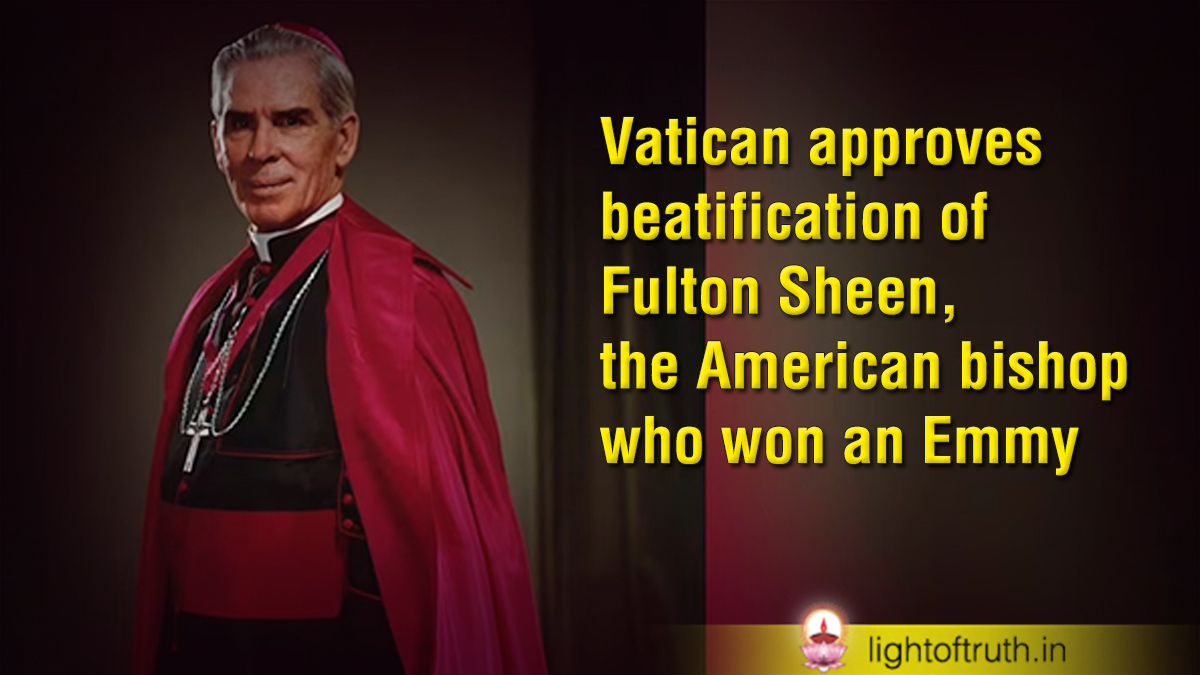
Vatican approves beatification of Fulton Sheen, the American bishop who won an Emmy

After more than two decades marked by enthusiasm, setbacks and prolonged silence, the cause of Archbishop Fulton J. Sheen has reached a decisive threshold. The Holy See has formally notified Bishop Louis Tylka of Peoria, Illinois, that the cause of the Venerable Servant of God may now proceed to beatification, clearing the way for the American prelate to be declared “Blessed” in the Catholic Church.

The announcement, welcomed by the Diocese of Peoria, places one of the most recognizable Catholic figures of the 20th century on the brink of official liturgical veneration. The next step, as Bishop Tylka explained, is the celebration of the beatification itself, the date and location of which are now being coordinated with the Vatican’s Dicastery for the Causes of Saints.

For Catholics less familiar with the Church’s canonization process, beatification represents a pivotal moment. It acknowledges that a deceased person lived a life of heroic virtue and that a miracle has occurred through his or her intercession, allowing for public veneration, usually at a local or regional level. Canonization, which would follow at a later stage, would extend that veneration to the universal Church and would require the recognition of a second miracle after beatification.

Few American churchmen have left a public footprint comparable to that of Fulton Sheen. Born Peter John Sheen on May 8, 1895, in El Paso, Illinois, he was ordained a priest for the Diocese of Peoria in 1919. His episcopal career unfolded largely on the national stage: he was appointed auxiliary bishop of New York in 1951, serving there until 1966, and later became bishop of Rochester, a post he held until his retirement in 1969 at the age of 74.

Yet it was not diocesan administration that made Sheen a household name. His television program Life Is Worth Living, broadcast from 1952 to 1957, brought Catholic moral teaching into American living rooms at a time when religious programming rarely reached mainstream audiences. The show earned an Emmy Award and attracted millions of viewers, a fact Bishop Tylka has often cited in calling Sheen a pioneer who anticipated the Church’s later engagement with mass media. Long before the age of digital evangelization, Sheen demonstrated how theology, philosophy and pastoral concern could be communicated with clarity and cultural relevance. Sheen’s influence extended well beyond the United States. In his later years, he served as national director of the Society for the Propagation of the Faith, supporting missionary work across the globe. According to Bishop Tylka, this phase of Sheen’s life underscored a conviction that the Church exists for all people, especially those on the margins or in places where the Gospel is scarcely heard.

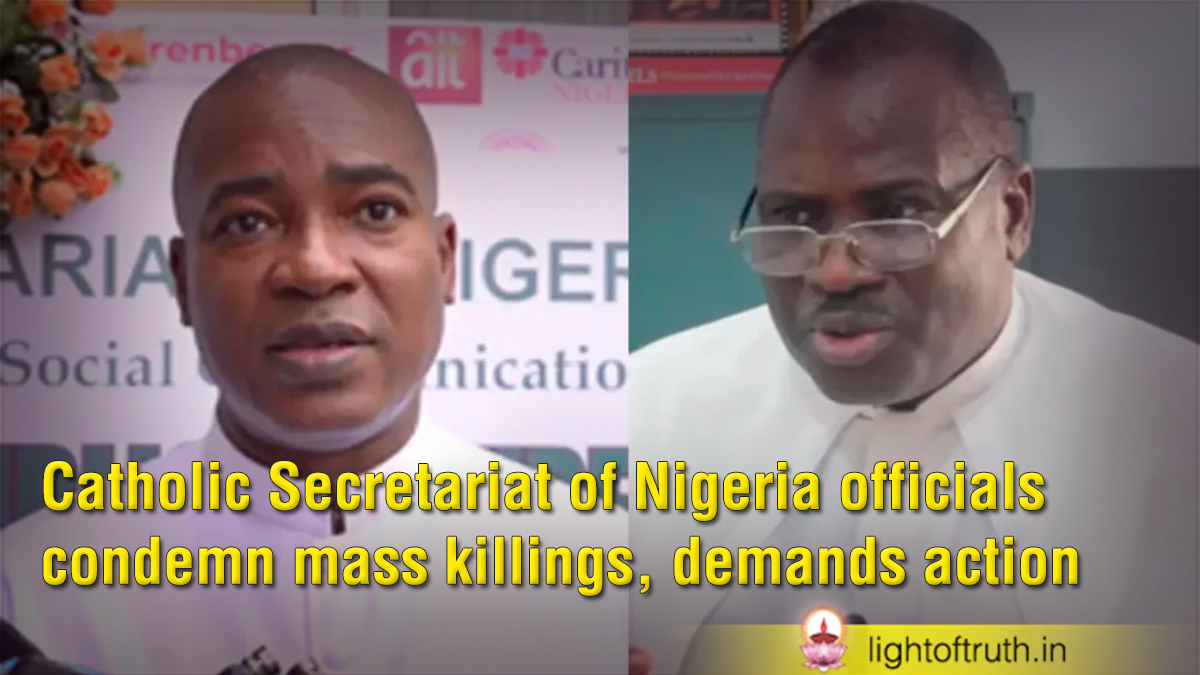
Catholic Secretariat of Nigeria officials condemn mass killings, demands action

Officials at the Catholic Secretariat of Nigeria (CSN), the administrative headquarters of the Catholic Bishops’ Conference of Nigeria, have denounced what they have described as a “relentless wave of killings and abductions” across the West African nation, warning that continued violence and impunity are turning the country into “a field of grief” and eroding the foundations of governance.

In a statement issued on Saturday, Feb. 7, and shared with ACI Africa — the sister service of EWTN News in Africa — CSN Secretary-General Father Michael Banjo and National Director of Social Communications Father Michael Nsikak Umoh expressed “profound outrage and sorrow at the ongoing assault on human life and dignity.”

“After years of repeated complaints and unfulfilled promises, violence persists unchecked, leaving more communities devastated and citizens weary of empty condolences that do not guarantee their safety,” the CSN officials said.

They lamented that the renewed cycle of mass violence “has turned our country into a field of grief.” “Nigeria cannot afford to normalize bloodshed or treat mass killings as routine tragedies,” they emphasized in their one-page statement titled “The Cry of the Innocent: Stop This Slaughterhouse in Nigeria!”

Citing recent attacks between late January and early February, the Catholic officials questioned how such atrocities could be allowed to continue. “How can it be justified that, outside of war, over 160 innocent civilians were slaughtered in one coordinated attack in Woro, Kwara state?” they wrote.

They also referred to “the repeated killings and abductions in Agwara and Tungan Gero in Niger state, the wiping out of entire farming communities in Katsina and Kaduna, and the ongoing violence in Borno.”

“This is not ‘instability’ but a massacre allowed by silence and a betrayal of every Nigerian’s right to live in peace,” the Nigerian Catholic officials added.

They went on to remind politicians that “the constitution is not a lofty document of ideals but a binding covenant with the people” and warned that “when citizens are slaughtered with impunity and communities live in perpetual fear, the very foundation of governance is undermined.” They added that “a government that struggles unsuccessfully to safeguard its people risks diminishing its moral authority to lead.”

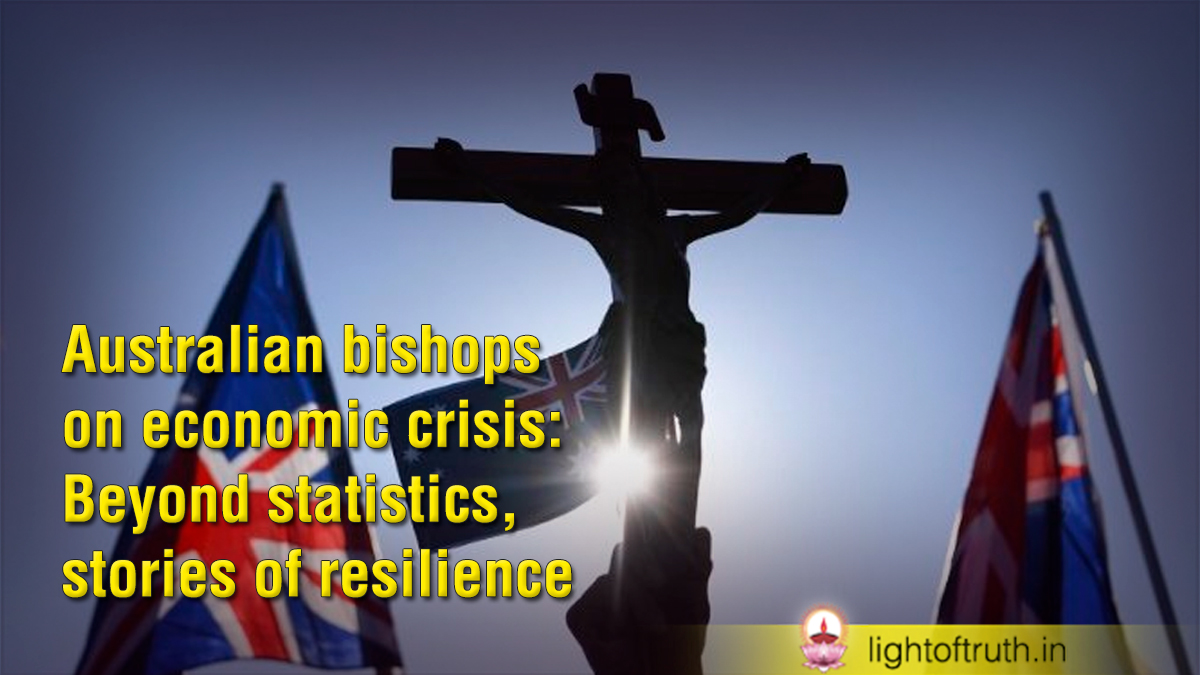
Australian bishops on economic crisis: Beyond statistics, stories of resilience

The first of two statements made by the Australian Catholic Bishops Conference (ACBC) on social justice in the country has been released. The President of the ACBC, Archbishop Timothy Costelloe, described the statement as an invitation “to reflect deeply on the challenges facing our nation and to respond with faith, hope and love.”

Throughout the nation, Archbishop Costelloe lamented, many people are struggling with the rising cost of living. “For some, this means skipping meals, delaying medical care or living without secure housing”, he noted.

But he warned against letting these people become simply numbers or statistics. Rather, we should see them as they are: “human stories of struggle and resilience.”

The Archbishop stressed that the Gospel calls each and every one of us to accompany those who suffer, and this statement is an invitation to that mission. The Australian bishops draw on Catholic social teaching and four of its seven principles: the dignity of every person, the common good, solidarity, subsidiarity and the preferential option for the poor. These, Archbishop Costelloe highlighted, “challenge us to share generously, to advocate for justice, and to build communities where no one is forgotten.”

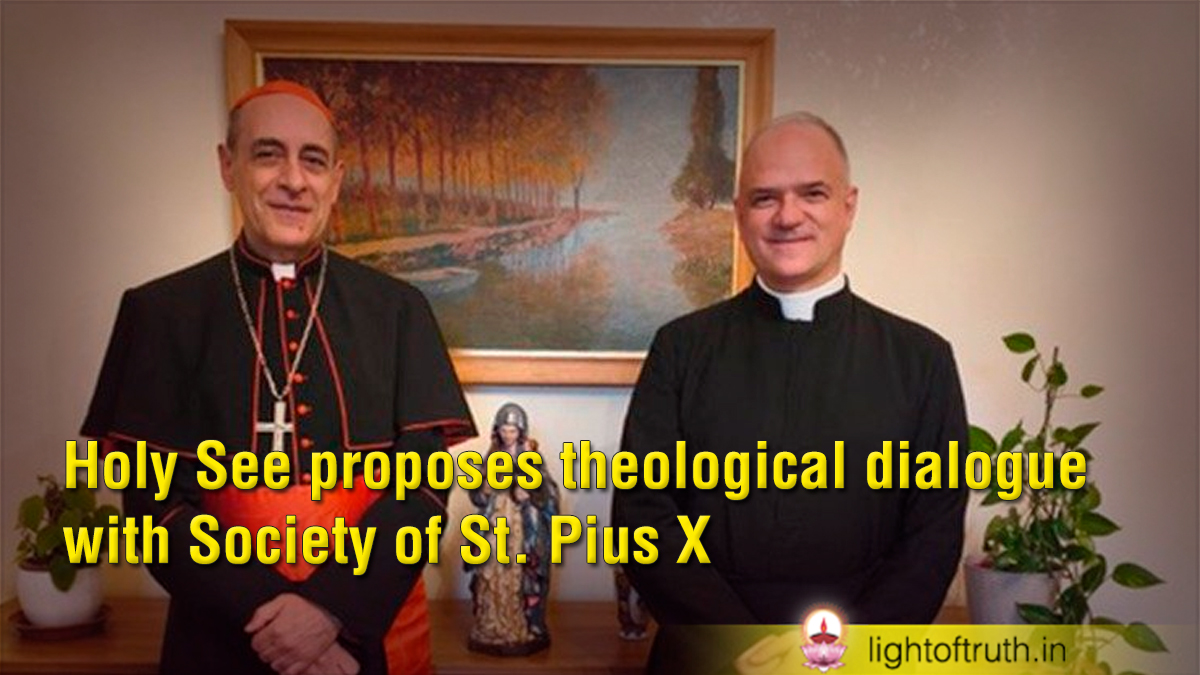
Holy See proposes theological dialogue with Society of St. Pius X

A theological dialogue, on the condition that the episcopal ordinations scheduled for July 1 be suspended: that’s the proposal the Holy See made to the Society of Saint Pius X (SSPX) on 12 February. With the Pope’s approval, a meeting was held at the Palace of the Holy Office between Cardinal Victor Manuel Fernández, Prefect of the Dicastery for the Doctrine of the Faith, and Father Davide Pagliarani, Superior General of the SSPX.

This process, described as having a “well-defined methodology,” would establish the minimum requirements for full communion with the Catholic Church and identify a canonical status for the Society.

In a statement released, the Dicastery described the meeting as “cordial and sincere.” After clarifying several points raised by the SSPX in letters sent between 2017 and 2019—particularly the question of God’s will regarding religious pluralism—Cardinal Fernández proposed a path of theological dialogue.

The discussions would address themes “that have not yet been sufficiently clarified,” including the distinction between “the act of faith” and “the obedience of faith”—that is, the religious submission of intellect and will—as well as the varying degrees of assent owed to different texts of the Second Vatican Ecumenical Council and their interpretation. The Argentine cardinal also suggested examining a series of topics listed by the Society in a letter dated January 17, 2019.

The Holy See nevertheless reiterated that the ordination of bishops without a mandate from the Roman Pontiff—who, according to Pastor Aeternus (1870), holds supreme, full, universal, immediate, and direct ordinary power—would entail “a decisive rupture of ecclesial communion,” namely “a schism,” with “grave consequences for the Society as a whole,” the Dicastery noted.

For this reason, it has proposed suspending the episcopal ordinations announced for July 1, 2026, which were declared without papal approval.

The Superior General of the SSPX will present the proposal to his Council and provide a response to the Dicastery for the Doctrine of the Faith. Should the response be positive, the next steps and procedures will be determined and established “by mutual agreement.” Cardinal Fernández has asked the entire Church to pray to the Holy Spirit to accompany this forthcoming journey.

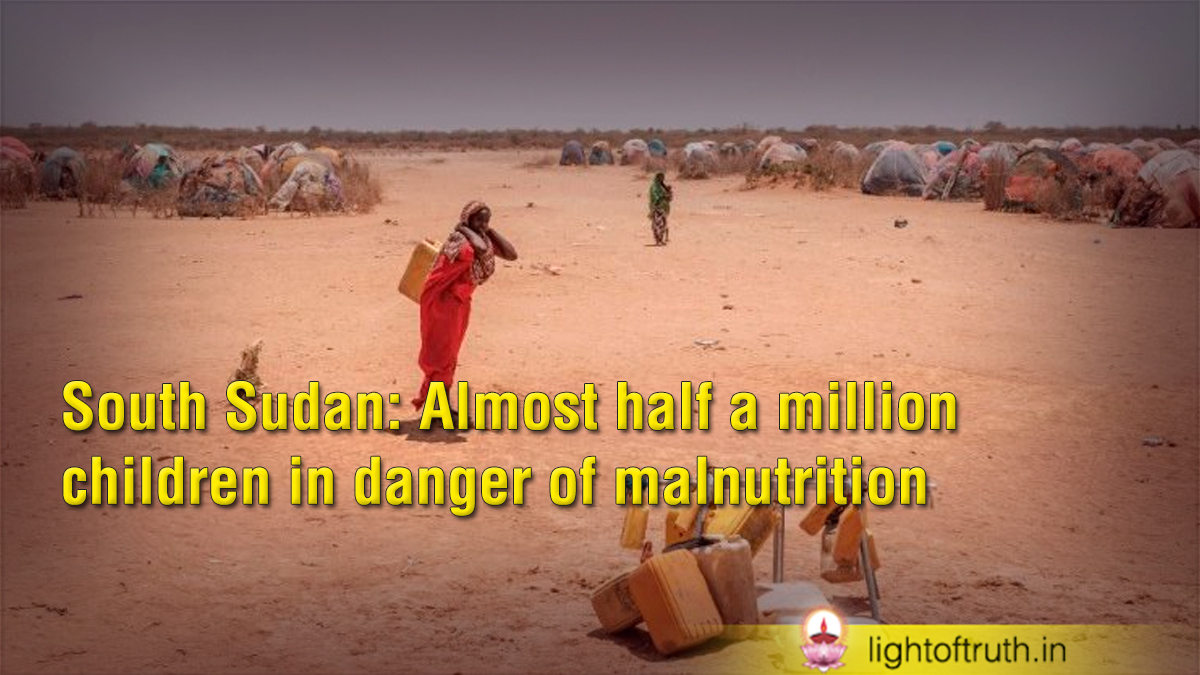
South Sudan: Almost half a million children in danger of malnutrition

UNICEF has reported that more than 450,000 children are currently at risk of acute malnutrition due to the ongoing violence in South Sudan. The internal conflict has led to mass displacement and the interruption of critical health and nutrition services in the Jonglei State. According to reports, since the beginning of 2026, the escalating violence in the Jonglei State has displaced some 250,000 people, particularly in the northern and central parts of the state.

The UNICEF representative in the country, Noala Skinner, explained the organization’s deep concern for the women and children who are being directly impacted by the violence. “We know that these areas have the highest levels of malnutrition among children, and we know that malnourished children without treatment are 12 times more likely to die”, Skinner said. She made an urgent appeal to all the parties involved to end the conflict and work to establish “rapid, unimpeded, and safe access for humanitarian aid and workers to reach highly vulnerable displaced groups.”

Moreover, the conflict has severely limited access to emergency aid. Humanitarian agencies have been unable to reach vulnerable populations due to restrictions on travel by river, air, and road. In the Jonglei State, six counties have already run out of or are about to run out of food supplies, which is a vital need for the numerous severely malnourished children there. UNICEF has reported that about 17 health facilities have closed across the country, which has led to the suspension of associated nutrition services. Consequently, there have been 10 cases of looting of health and nutrition supplies—half of which took place in the Jonglei State.

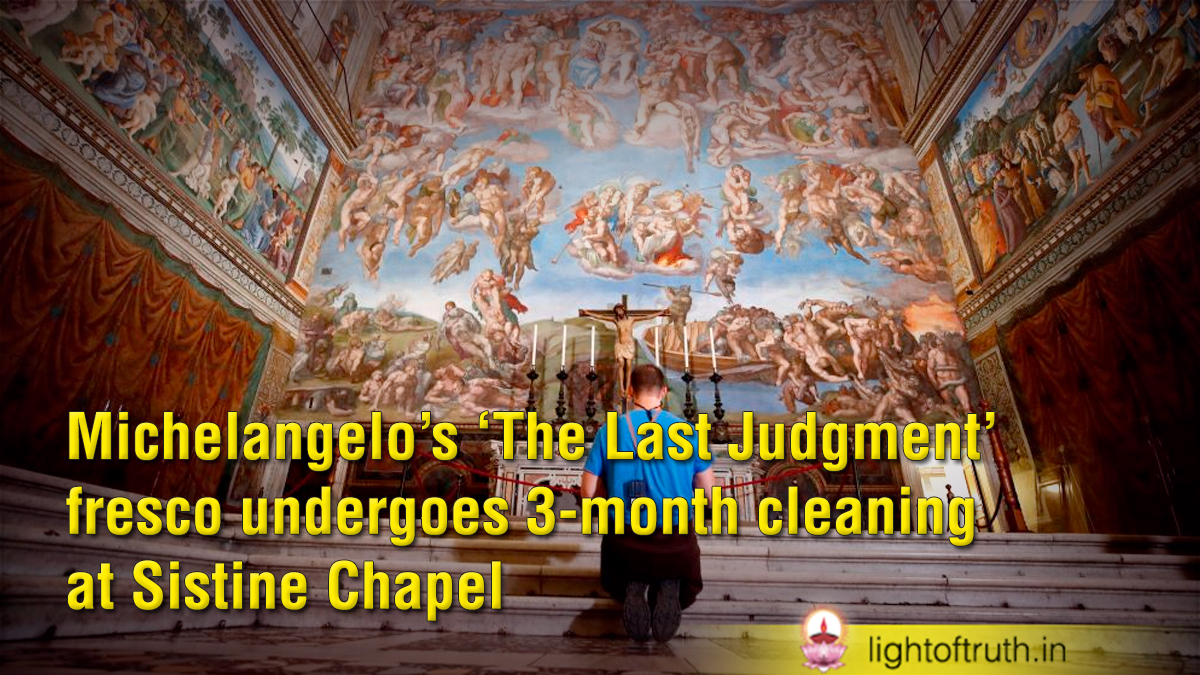
Michelangelo’s ‘The Last Judgment’ fresco undergoes 3-month cleaning at Sistine Chapel

Michelangelo’s “The Last Judgment,” the imposing fresco of heaven and hell which dominates the Sistine Chapel, is undergoing its first major restoration in three decades. The Sistine Chapel will remain open to visitors during the three-month cleaning, albeit with scaffolding partially obstructing the view of the fresco, the Vatican Museums said in a Feb. 2 statement.

The cleaning, the first major restoration since 1994, will remove microparticle build-up on the plaster caused from so many people visiting each day. The museum called the film a “widespread whitish haze, produced by the deposition of microparticles of foreign substances carried by air movements.”

More than 6 million people visit the Vatican Museums each year, with the Sistine Chapel a top destination. With so many people in such a small place, the Vatican is constantly monitoring humidity and temperature levels in the chapel and taking proactive measures to protect it. The chapel is named after Pope Sixtus IV, an art patron who oversaw the construction of the main papal chapel in the 15th century. But it was a later pontiff, Pope Julius II, who commissioned the works by Michelangelo. The Renaissance master painted the famous ceiling, the “Creation of Adam” showing God’s outstretched hand, between 1508 and 1512 and later returned to paint “The Last Judgment” on the wall behind the altar. The chapel hosted the May conclave that elected Pope Leo XIV.

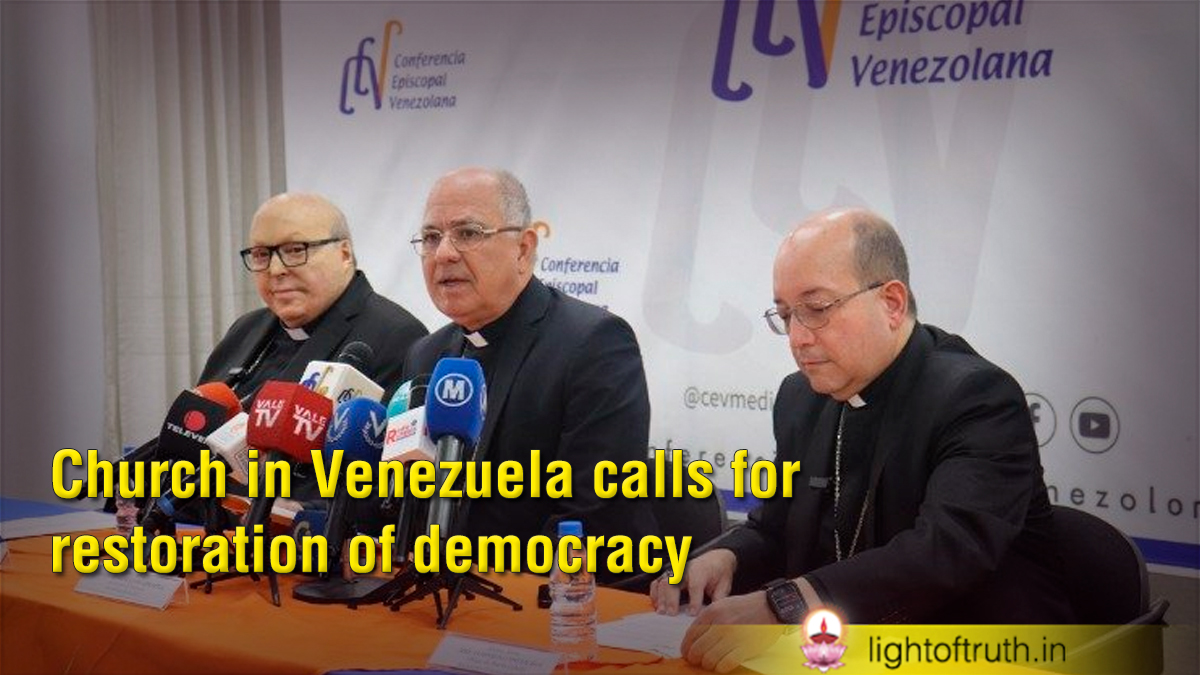
Church in Venezuela calls for restoration of democracy

Drawing from a passage from the book of the prophet Isaiah, “our light shall break forth like the dawn,” the Venezuelan bishops addressed the People of God at the end of their 125th Ordinary Plenary Assembly.

In a pastoral exhortation released on February 9, 2026, by the Venezuelan Bishops’ Conference, the Bishops conveyed a message of hope, while highlighting that “the events of January 3 of this year have profoundly changed the political and social landscape.”

In the face of the concerns and fears generated by the social, political, and economic situation of their country, the bishops allowed themselves to be illuminated by the Gospel that recounts Christ in the boat with His disciples calming the storm. It “invites us,” they write, “to announce that Jesus is always with His people. He is the God-with-us, the Emanuel.”

The bishops base their reflections on Pope Leo XIV’s words after his Angelus prayer on Sunday, January 4.

“The good of the beloved Venezuelan people must prevail over every other consideration. This must lead to the overcoming of violence, and to the pursuit of paths of justice and peace, guaranteeing the sovereignty of the country,” he had said.

Building on the Pope’s remarks, the bishops list the complex situation that the population is facing , such as the lack of opportunities for fairly paid work, “widespread and unpunished corruption, violations of human and civil rights, including freedom of expression and the right to due process and defense.”

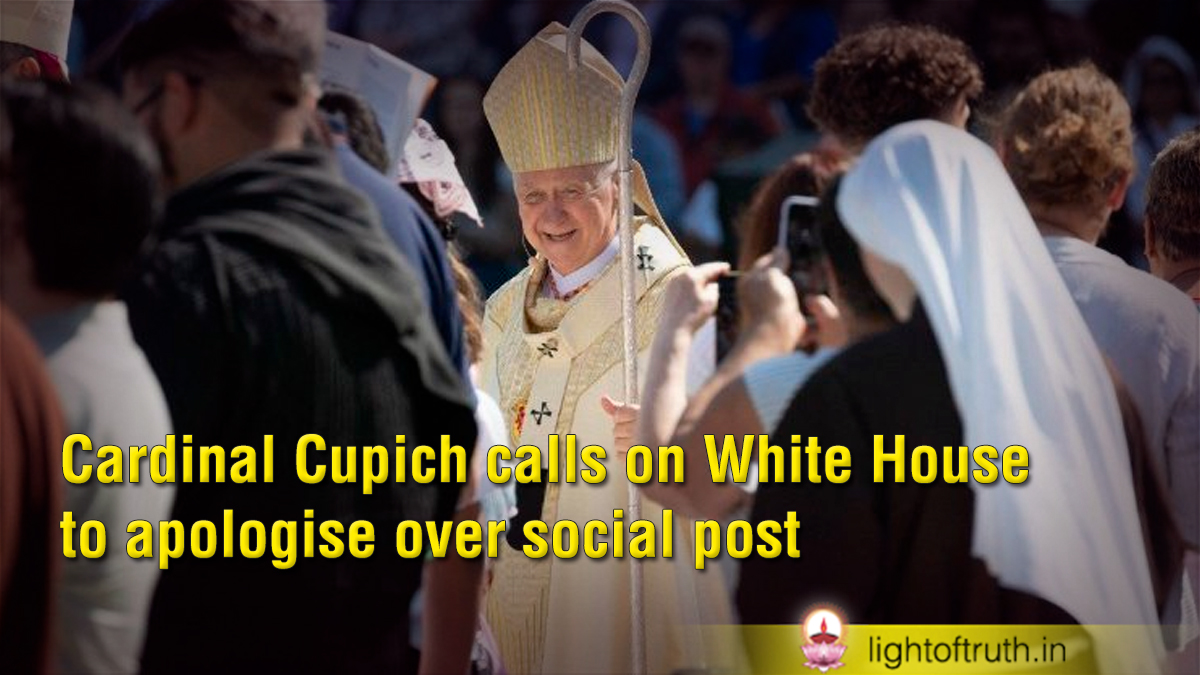
Cardinal Cupich calls on White House to apologise over social post

The Archbishop of Chicago, Cardinal Blase Cupich, has called on US President Donald Trump to apologise over a “viciously racist” videoclip posted to his Truth Social account.

The final frames of the video, which appeared on President Trump’s account on Thursday evening, depicted former US President Barack Obama and former first lady Michelle Obama as apes. White House press secretary Karoline Leavitt initially defended the video, describing the reaction to it as “fake outrage”. It was later deleted, some twelve hours after being published.

In a statement, Cardinal Cupich stressed that “portraying human beings as animals – less than human – is not new”. Successive generations of immigrants to the United States have been demeaned in this way, he said. The videoclip, Cardinal Cupich wrote, shows that “in the White House such blatant racism is not merely a practice of the past”. 

President Trump has condemned the clip, but refused to apologise, saying that it was posted in error by an aide. In his message, Cardinal Cupich called on the President to offer an apology. “If the President intentionally approved the message containing viciously racist images, he should admit it,” the Archbishop wrote. “If he did not know of it originally, he should explain why he let his staff describe the public outcry over their transmission as fake outrage.”

“Our shock is real,” Cardinal Cupich said. “So is our outrage. Nothing less than an unequivocal apology – to the nation and to the persons demeaned – is acceptable. And it must come immediately.”

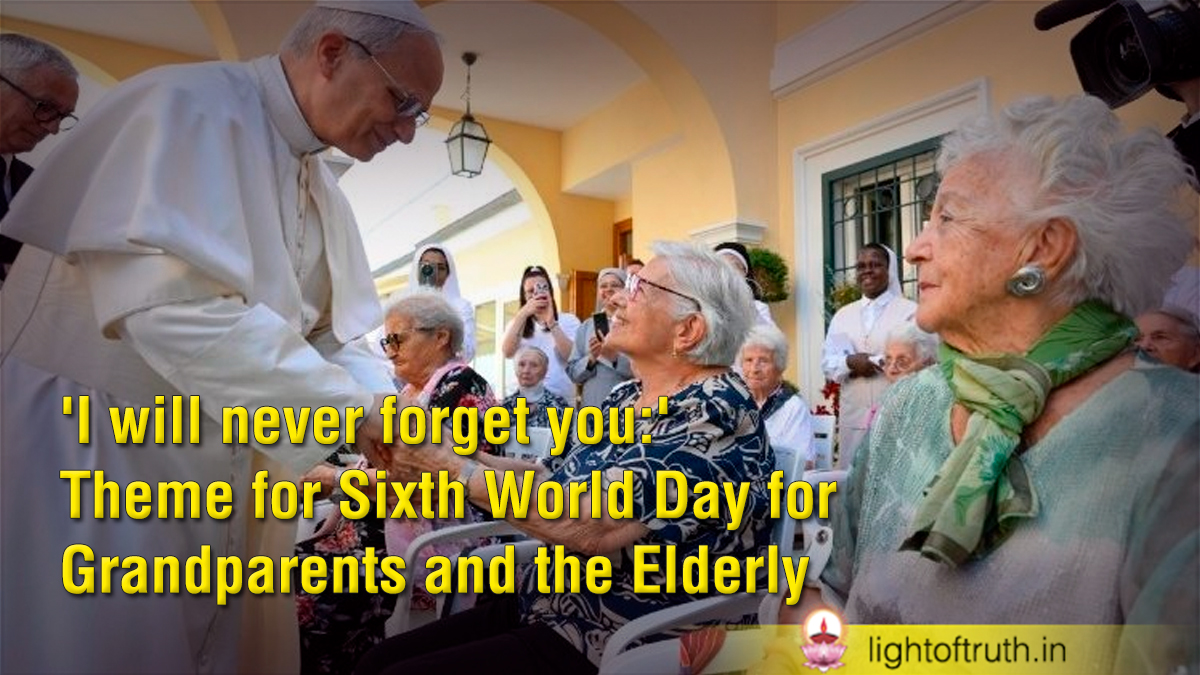
‘I will never forget you:’ Theme for Sixth World Day for Grandparents and the Elderly

Pope Leo XIV has chosen “I will never forget you” (Is 49:15) as the theme for the Sixth World Day for Grandparents and the Elderly, said the Vatican’s Dicastery for Laity, Family and Life in a statement.

The World Day, instituted by the late Pope Francis in 2021, is celebrated every fourth Sunday of July and is presented as an opportunity to bring the closeness of the Church to the elderly and to enhance their contribution within families and communities. This year, the date coincides with the feast of Saints Joachim and Anne, Sunday, July 26, and the Holy Father invites everyone to celebrate the Day with a Eucharistic liturgy in the cathedral church of each individual diocese.

Taken from the Book of the Prophet Isaiah, the chosen verse is meant to be a message of consolation and hope for all grandparents and elderly people, especially those who live in loneliness or feel forgotten. At the same time, it is a reminder to families and ecclesial communities not to forget them, recognizing in them a precious presence and a blessing.

The Pope’s choice highlights how God’s love for every person never fails, not even in the fragility of old age.

The Dicastery for Laity, Family and Life encourages particular Churches, associations, and ecclesial communities throughout the world to find ways to promote and celebrate the Day within their local contexts, and for this purpose it will later make available specific pastoral resources.