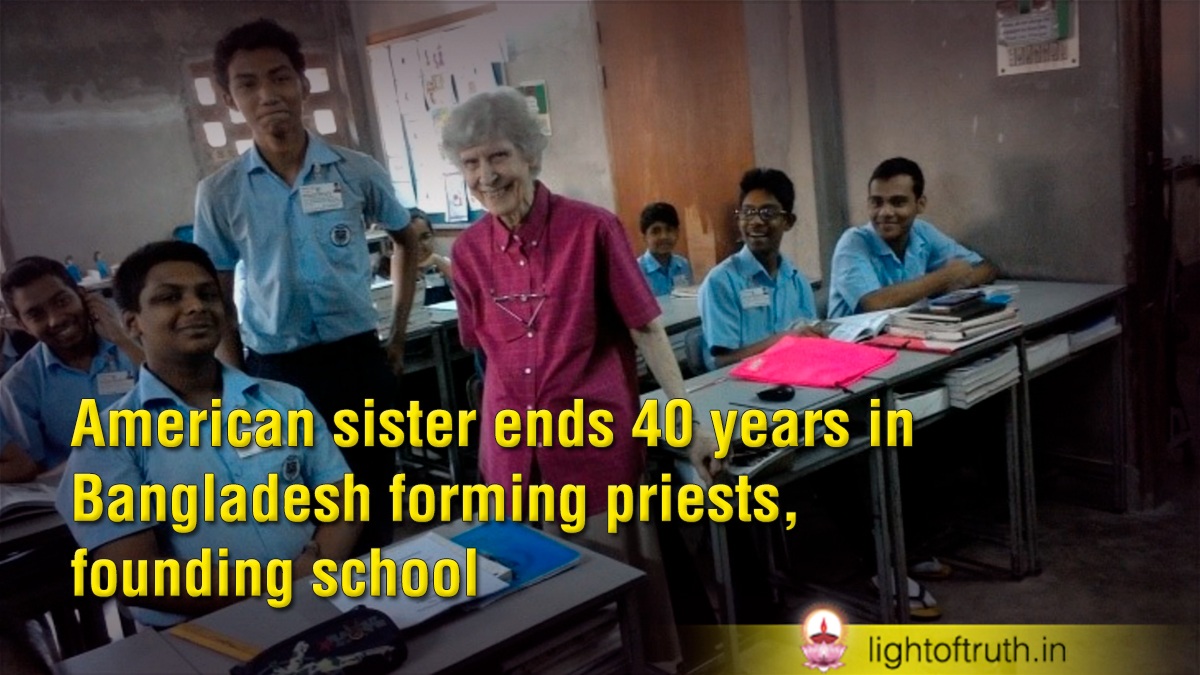
American sister ends 40 years in Bangladesh forming priests, founding school

For nearly four decades, Sister Miriam Francis Perlewitz has lived a quiet but extraordinary missionary life in Bangladesh, a Muslim-majority nation where Catholics represent a tiny minority.

An American missionary sister, Scripture scholar, and educator, she has shaped generations of Catholic priests while also transforming grassroots education for children of all faiths. Today, she stands as one of the last American nuns still serving in the country — and as her advanced age signals an imminent departure, her story emerges as a rare testimony to missionary perseverance, women’s leadership, and faith lived from the margins.

Sister Miriam arrived in Bangladesh in 1985, initially to teach sacred Scripture part time at Holy Spirit Major Seminary in Dhaka. At the time, Bangladesh faced daunting challenges: widespread poverty, limited access to education, and pervasive illiteracy. The idea of a woman teaching future priests — let alone in South Asia — was uncommon and controversial.

Yet what she encountered immediately disarmed hesitation. “The friendliness and welcoming attitude of the students, as well as the questions I had about applying the message of Scripture in a Muslim environment, deeply touched me,” she told EWTN News.

For several years, she divided her time between Maryknoll’s major seminary and Bangladesh. When Maryknoll closed its school of theology in 1992, she made a decisive choice: She would remain full time in Bangladesh. That decision would shape the Church in the country in lasting ways.

For more than two decades, Sister Miriam taught sacred Scripture at Holy Spirit Major Seminary, forming generations of priests — including men who would later become bishops and archbishops. Her presence itself was a quiet challenge to convention.

“First of all, the fact that I was a woman, involved in a ministry that was considered to be a man’s field, was questioned,” she recalled. Initially, some Church authorities hesitated. But the seminarians themselves defended her role. “When the students supported and spoke in my favour, the ‘powers that be’ decided to allow me to continue.”

What followed was a deeply collaborative ministry. Sister Miriam describes her seminary years not simply as academic formation but as a shared spiritual journey. “We became ‘one’ in the endeavour,” she said, united by the goal of passing on the Gospel — “the good news that God became man so that man may become one again with God.” For her, the word “man” was always inclusive, embracing all humanity.
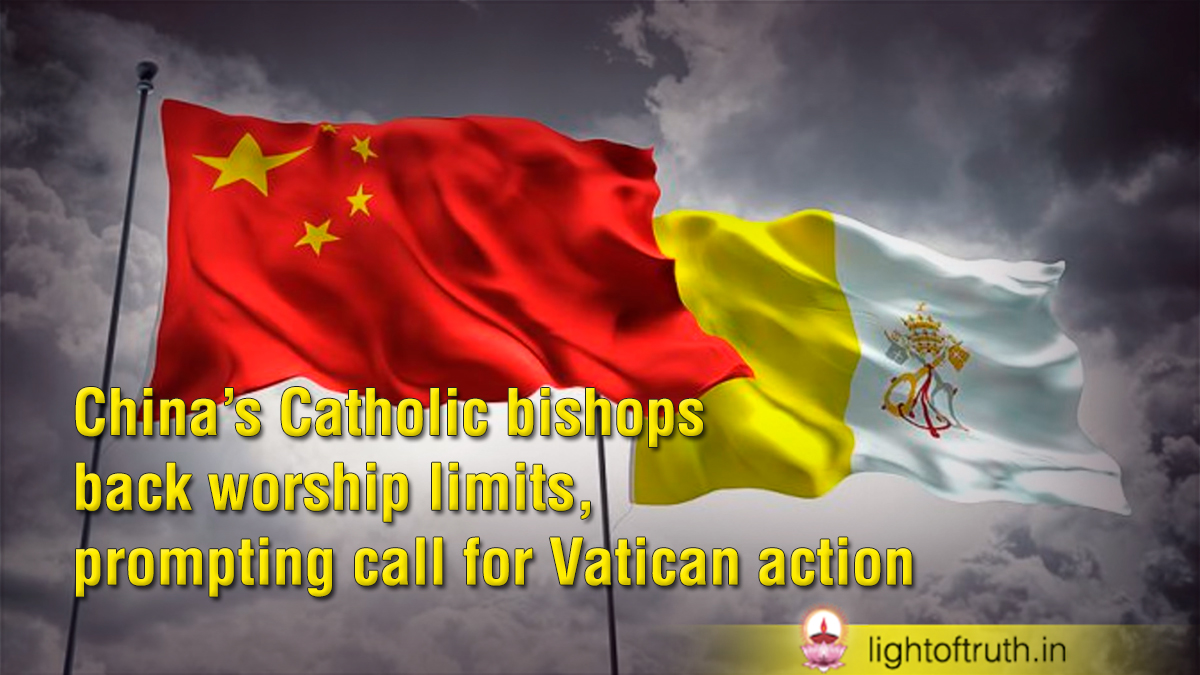
China’s Catholic bishops back worship limits, prompting call for Vatican action

The state-sanctioned Bishops’ Conference of the Catholic Church in China (BCCC) backed the government’s ban on unregistered clergy engaging in pastoral work and using unapproved sites for worship. The BCCC said in a Feb. 4 statement that “religious groups must comply with relevant laws and regulations when conducting religious activities,” describing compliance as a matter of “national and public interest.” The statement aligned with the Chinese Communist Party’s controls over the region.

Nina Shea, Hudson Institute senior fellow, called on Pope Leo XIV to summon the Chinese Catholic bishops’ conference for supporting the “suppression of Chinese Catholicism.” “That the heads of these entities are the bishops of Beijing and Shanghai, China’s most important dioceses, is shameful,” she told EWTN News. “Pope Leo should immediately summon them to Rome to review their episcopal authority.” Chinese Communist Party (CCP) controls stipulate that religious activities occur in “registered” religious venues by “certified and registered religious personnel.”

Though the bishops noted religious groups may request to carry out their activities in a temporary location with prior permission from the government, no unauthorized clergy may ever preside over such activities for any reason, according to Article 40 of the Regulations on Religious Affairs.

Shea, who also directs the Center for Religious Freedom, said: “Supporting the CCP ban on unregistered clergy and churches directly conflicts with Vatican policy.” “[Pope Leo] should disclose the content of the Holy See’s provisional agreement with China and review whether this new Chinese policy constitutes a breach of the agreement’s terms or even of its spirit,” she said.

Shea cited a 2007 letter from Pope Benedict XVI to the Chinese Catholic Church in which the late pontiff described the Chinese government’s bid to impose its own structure on the Church in China as “incompatible with Catholic doctrine.”

Shea said the Vatican’s 2019 pastoral guidance to members of the Chinese Catholic Churchaffirmed that a cleric had the right to “individually follow one’s conscience on whether to refuse to take the pledge renouncing foreign influence, such as papal influence — a pledge required to register with the state’s Chinese Patriotic Catholic Association and its bishops’ conference.”

“This new position in support of banning and criminalizing those clergy who refuse to take the pledge renouncing papal authority lays bare these entities as mere party tools for communist control and suppression of Chinese Catholicism,” Shea said.

Church in Northern Thailand urges ethical formation in the AI age

At the beginning of this year, the Catholic Church in northern Thailand held its 2026 Annual Regional Seminar in Nakhon Phanom Province in the country’s northeast, bordering Laos. The gathering was attended by nearly 200 priests, five bishops, and several delegates from neighboring Laos.

The seminar focused on the theme drawn from the recent Vatican document Antiqua et NovaNote on the Relationship Between Artificial Intelligence and Human Intelligence, issued by the Dicastery for the Doctrine of the Faith and the Dicastery for Culture and Education. The main speaker was Fr. Joseph Anucha Chaiyadej, Secretary General of the Office of Social Communication of the Bishops’ Conference, who addressed clergy and pastoral workers on the Church’s discernment regarding emerging technologies.

In his keynote address, Fr. Joseph reflected on the nature and limits of artificial intelligence. “Artificial intelligence does not possess true intelligence, consciousness, or comprehension. AI is not the ‘subject’ but the ‘object.’ It has no conscience and no life,” he said.

Basing his reflections on Antiqua et Nova, he presented the document as a “moral compass” for “those entrusted with transmitting the faith,” especially priests and pastoral ministers working in digital environments. He urged participants, “Don’t let algorithms write your story; use technology to serve humanity.” Fr. Joseph also highlighted what he described as the ongoing tension between “statistics and wisdom.” While AI excels in “averaging and predicting” based on available data, he emphasized that human love, freedom, and intelligence remain “unpredictable and sacred.”

In his concluding remarks, Fr. Joseph emphasized the importance of transparency in artificial intelligence systems, especially in areas that have significant social impact.

He described transparency as the effort to “open the black box”, the hidden and often opaque processes by which AI systems generate decisions and recommendations.

This, he explained, is particularly necessary in “high-impact areas” such as education, governance, communication, and social services, where technological manipulation can have serious consequences.

Only through clarity, ethical oversight, and human discernment, he said, can technology truly serve the dignity of the person and the mission of the Church.

Through initiatives such as this regional seminar, the Catholic Church in northern Thailand continues to promote a critical, faith-based engagement with artificial intelligence, one rooted in responsibility, wisdom, and fidelity to the Gospel in the digital age.

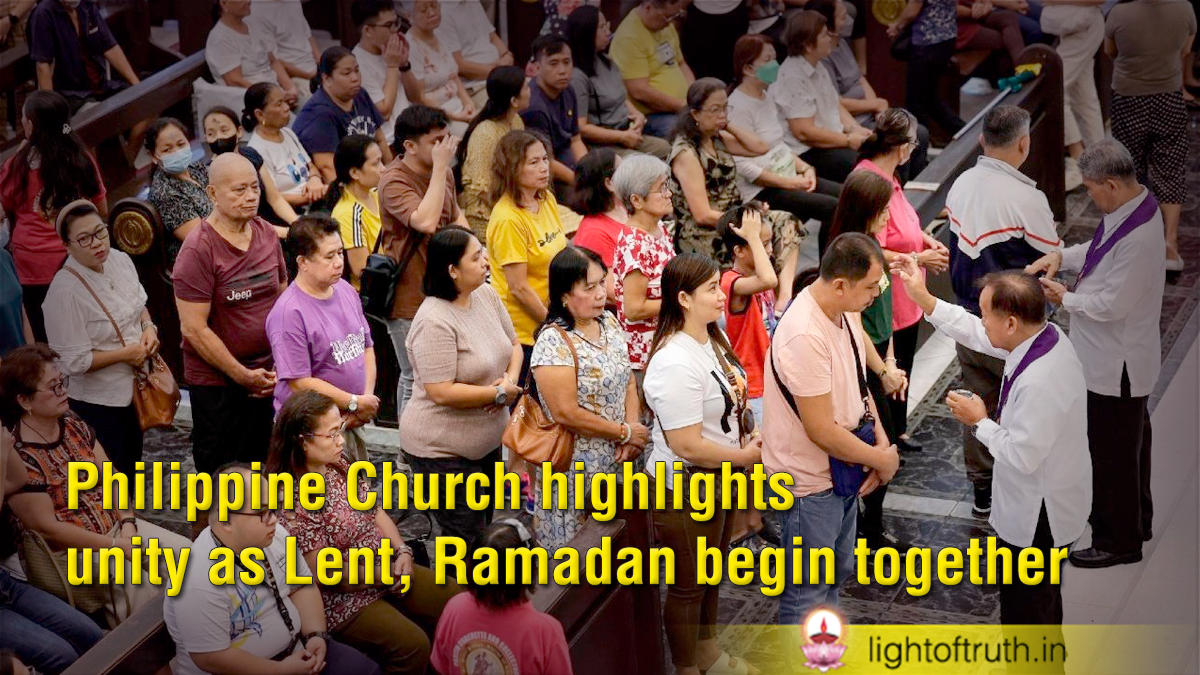
Philippine Church highlights unity as Lent, Ramadan begin together

As Ramadan and Lent begin on the same day this year, Catholic and Muslim communities in the Philippines are being invited to embrace the moment as a shared season of prayer, fasting, and conversion. Ramadan commemorates the first revelation of the Qur’an to the Prophet Muhammad, while Lent prepares Catholics for the commemoration of the passion, death, and resurrection of Jesus Christ.

Although Ramadan begins in the evening of February 17, the first full day of fasting starts on Wednesday, February 18, subject to the sighting of the crescent moon. For Catholics, the same day marks Ash Wednesday, the beginning of the Lenten journey.

In countries where Muslims and Christians live side by side, Church leaders say this convergence is a rare and meaningful coincidence, a shared sacred moment to reflect and walk together toward God, who is “Merciful and Compassionate.”

From southern Philippines, Bishop Jose Colin Bagaforo of Kidapawan, chairman of the Commission on Interreligious Dialogue of the Catholic Bishops’ Conference of the Philippines, highlighted the spiritual significance of this convergence. “This shared beginning is a grace,” he said. “It invites us to slow down, to return to God and to walk together in faith.” “In these sacred seasons, Muslims and Christians enter a time of prayer, fasting, repentance, and generosity. We turn our hearts to the Merciful. We learn again to see one another as brothers and sisters,” he added. Reflecting on the sacred texts of both traditions, the bishop recalled: “Our scriptures call us to peace: ‘Blessed are the peacemakers’ (Matthew 5:9) and God ‘invites all to the Home of Peace’ (Qur’an 10:25).”

Bishop Bagaforo described Ramadan and Lent as traditional seasons of prayer, repentance, fasting, and charity; moments that renew the heart and strengthen the call to live as brothers and sisters. “Fasting opens our eyes to suffering and enlarges our compassion,” he said. “Love of God is proven in love of neighbour, especially the poor and the forgotten.”

The bishop also emphasized that peace must be rooted in right relationships with God, with others, and with creation. “Peace is more than the absence of war,” he said. “It is the right relationship with God, with one another, and with creation. The cry of the earth and the cry of the poor are one.” Caring for the environment, he explained, is therefore an essential dimension of working for peace and social harmony.

Drawing from the Filipino Lenten tradition of Alay Kapwa (Lentern Offering), the bishop highlighted the social dimension of prayer and sacrifice. He explained that through this practice, “prayer becomes service, and sacrifice becomes hope for communities affected by poverty, conflict, disaster, and ecological harm.” In this way, Lent and Ramadan become not only personal spiritual journeys, but also collective commitments to uplift the most vulnerable.

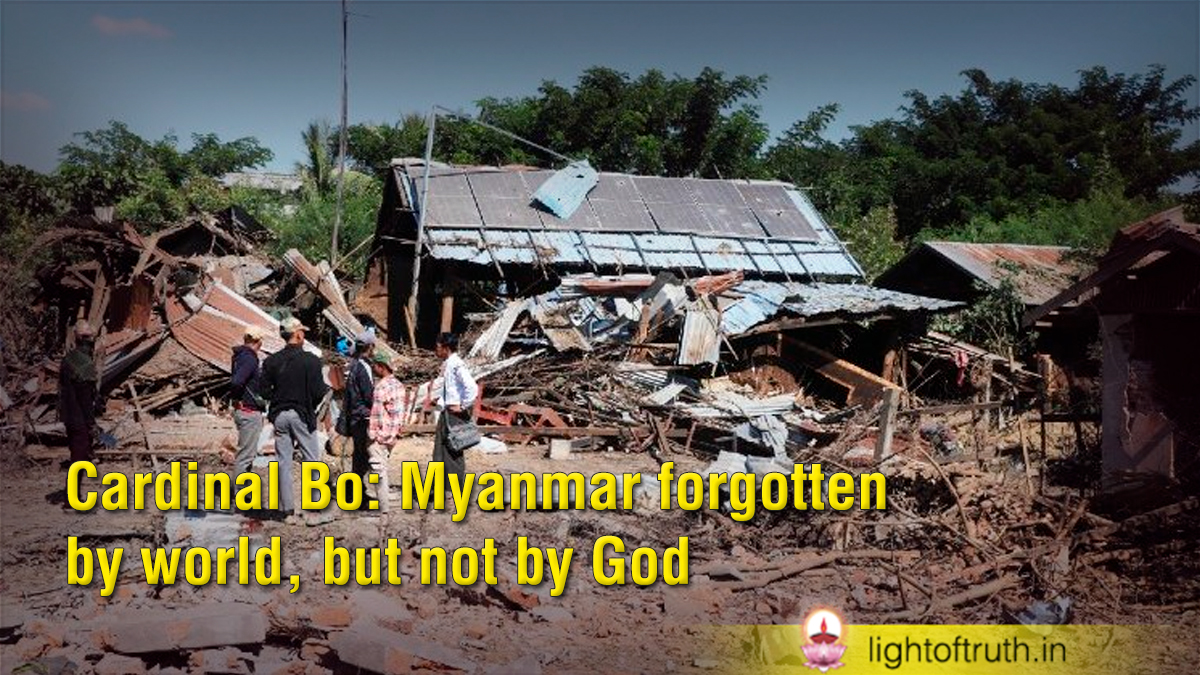
Cardinal Bo: Myanmar forgotten by world, but not by God

Cardinal Charles Maung Bo, Archbishop of Yangon, has repeatedly warned that “Myanmar is going through a ‘polycrisis’: an economic crisis, with rising prices; a crisis due to the loss of job opportunities; a social crisis, with more than 3.5 million displaced persons and young people fleeing abroad; a crisis of basic health care; and a crisis of education, with a generation that has lost five years of schooling.”

Sharing with Vatican Media the dire situation facing the country, the Cardinal described Myanmar, five years after the military coup, as a nation marked by fear, exhaustion, and deep uncertainty, especially among young people. Yet, he observed, while hope is “not dead,” it is “crucified.”

Cardinal Bo acknowledged that the general mood among the population is complex and varies according to personal experience, geographic location, and proximity to violence.

Among young people in particular, the Cardinal noted, daily life is increasingly defined by insecurity, psychological strain, and a loss of trust in the future.

“Young people are living with near-constant fear for their personal safety,” Cardinal Bo explained, pointing to ongoing conflict, widespread violence, economic instability, and the threat of forced recruitment. This prolonged insecurity, he said, has led to rising anxiety, stress, and psychological pressure among youth across many regions of the country.

Cardinal Bo also decried a deep sense of loss, observing how years of disruption have eroded education, employment prospects, and normal social life. Many young people, he said, express frustration, sadness, and helplessness, with surveys showing sharp increases in anger and emotional distress compared to the years before the coup. “Very few still experience any sense of normalcy,” he noted, adding that a growing number of young people are considering leaving Myanmar, or have already done so.

At the same time, Cardinal Bo cautioned against reducing Myanmar’s youth to victims alone. Even amid hardship, he observed signs of resilience and determination. Some young people continue to believe in the possibility of a better future, investing in education and new skills, including digital technologies, in an effort to create opportunities against extremely difficult odds.

Against this backdrop, Cardinal Bo insisted that hope remains possible. “This is not naïve optimism,” he said. “It is a Christian hope born of the Cross and Resurrection.”

This hope, the Cardinal explained, does not rest on circumstances or political calculations. “The people of Myanmar have lost many securities—peace, livelihood, stability, even international attention—but,” he noted, “they have not lost God’s presence.” That presence, he said, is visible in displaced villages, in camps for the internally displaced, and in the quiet endurance of families, mothers, catechists, and religious who continue to serve amid suffering.