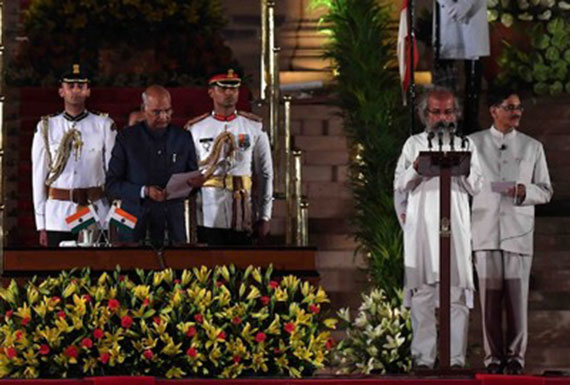
Indian minister compares religious conversion to ‘sex for favours’

Christian Leaders in India have deplored a newly appointed federal minister’s description of religious conversion as “the exchange of sex for favours.”

Minister of State for Animal Husbandry Pratap Chandra Sarangi made the comment in an interview with English news portal The Print on June 3.

“Suppose somebody helped a girl in a medical or engineering college and wanted to enjoy the girl physically. That would be treated as a crime, an inhuman act,” said the first-time Odisha MP, a member of the Bharatiya Janata Party (BJP) headed by Prime Minister Narendra Modi.

“Similarly, if somebody wants to convert or exploit someone’s belief by giving some service or money, then that should also be treated as a crime — a crime against nature, against humanity.”

Sarangi was the Odisha chief of Bajrang Dal, a hard-line Hindu group, when Australian missionary Graham Staines and his two young sons were burned alive by extremists in 1999. He was accused of being linked to the gruesome murders but denied the allegations.

Odisha, formerly Orissa, is an eastern state where Christians have faced sustained persecution, particularly during riots in 2008.

Father Kulakanta Dandasena from Kandhamal condemned Sarangi’s statement and said it sent a bad message to the country and the international community, “which sees India as a secular country that respects all classes, creeds and religions.”

“We totally disagree with whatever the minister has said because it is vulgar and not true,” he said. “Christians are not involved in any kind of religious conversion and have always respected other faiths and beliefs. We have no differences.”

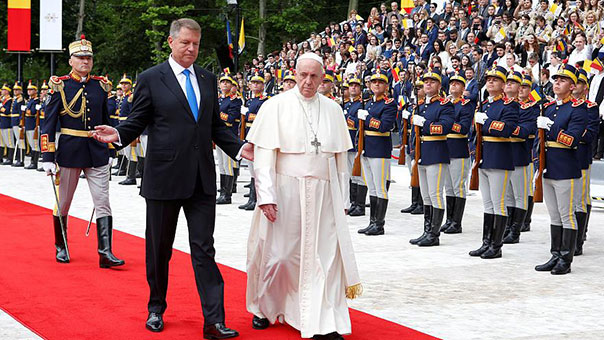
Indian prelate reflects on Pope’s Romania visit

Pope Francis arrived in Romania on May 31 for a three-day, cross-country pilgrimage. The visit took place 20 years after St John Paul II made the first-ever papal visit to a majority Orthodox country, which is on the Catholic and European periphery.

On this occasion, Arch-bishop Felix Machado of Vasai recalls his visit to Romania when he worked in the Vatican during 1994-1998. I had participated in a meeting in Bucharest, Romania, invited by Catholic Action, a recognized lay association well known in Italy.

It was a memorable meeting and I saw and met so many Orthodox Christians and got to know the place.

One thing is sure, that Pope Francis, like Pope Emeritus Benedict XVI, is very interested in Catholic-Orthodox dialogue. Pope Francis is much loved by the Orthodox leaders as we can see that Patriarch Kiril of Moscow, hard liner, has met only Pope Francis. Pope Francis is close to Bartholomew, Patriarch of Istanbul.

Bomb threat to retired priests’ home in Manipur

In what could be termed as yet another threat to the Catholic Church in Manipur, a hand grenade was found placed at the gate of retired Priests’ Home in Imphal, Manipur, on June 6 morning.

According to sources, when the driver went to open the gate on June 6 morning at around 6:20, a hand grenade was found at the gate in a polythene bag. Police came and defused the bomb, the source said.

Fr Solomon, Chancellor of the Archdiocese of Imphal said that there were no threats or any monetary demands prior to the discovery of the bomb at the gate.

“We are shocked and surprised at the same time. When we heard of the threat, we rushed from the Archbishop’s House to the Priests’ Home,” the Chancellor said. The police came to the spot and defused the bomb and took it away, Fr Solomon added.

Andhra Church welcomes Reddy’s promise of clean government

The Andhra Pradesh Federation of Churches has welcomed a clean government promised by the southern Indian state’s new chief minister.
“We are well pleased of your promise that your government would be revolutionary and would stand as an example and model to the country within a year,” the federation said in a letter addressed to Yeduguri Sandinti Jaganmohan Reddy, who on May 30 took over as Andhra Pradesh’s chief minister The federation, the apex body of the bishops and heads of mainline Churches and major Christian denominations in the state congratulated Reddy for his “landslide victory” in the recent assembly elections.

Modi’s reelection: A turning point in India’s political history

India’s 2019 general elections could have redirected the country’s politics from the trajectory it had been hurtling on for the past five years. There had been some wishful thinking that if the electorate replaced the ruling pro-Hindu party, the country’s strength — its plurality — would have been protected.

But the election’s outcome was different. In a historic man-date, Prime Minister Narendra Modi was given a second term to run the world’s largest democracy. Modi is the first Prime Minister since 1971 to return to power with an absolute majority. He is the third one to do so after the country’s first Prime Minister Jawaharlal Nehru and his daughter Indira Gandhi.

In the recent elections, Modi’s pro-Hindu Bharatiya Janata Party (BJP) garnered 303 seats while with his allies it has 353 seats in the 545-member Lok Sabha, the lower house of parliament.

The question now for many Indians is: What comes next?

“A new battle for the idea of India begins today,” wrote Shiv Visvanathan in The Hindu on May 24 when the election results were declared.

To some the ‘battle’ is one picked by a BJP leadership that seeks to subvert the secular principles of the Indian constitution, a foundation that allows religious and ethnic plurality to breathe in the country.

The main apprehension among religious minority leaders and a section of left-liberals has been that the BJP could change the constitution to discard the parliamentary system.

Religion blamed for India’s poor gender equality grade

A global study of gender equality has placed India nearly at the bottom, with some research and rights groups accusing religion of playing a major role in Indians discriminating against women.

The Sustainable Development Goals Gender Index ranked India 95th out of 129 countries. The index measures how well nations are progressing toward achieving gender equality by 2030, which is part of the 17 sustainable development goals set by the United Nations.

The index, developed by U.K. based Equal Measures 2030 and released on June 4, is a joint effort of regional and global organizations. It placed Denmark at the top and Chad at the bottom.

However, India fared better than its neighbours, with Pakistan at 113, Nepal at 102 and Bangladesh at 110. China was in 74th position.

Gender equality progress is measured by a set of indicators including the proportion of seats held by women in national parliaments. India ranked 16th in the region as women made up only 1.8 percent of parliament in 2018. Another indicator is the extent to which a national budget is broken down by factors such as gender, age, income or region. India scored zero, the worst in the region.

The percentage of seats held by women in India’s Supreme Court was the fourth worst in the region.

Allen Frances, a women’s rights activist in New Delhi, said the gender gap in India is “deep and dreadful” as women comprise 48 percent of the nation’s population of 1.25 billion.

Discrimination against women results in social evils such as child marriage, Frances said. India has 24 million child brides, 40 percent of the world’s 60 million child brides.

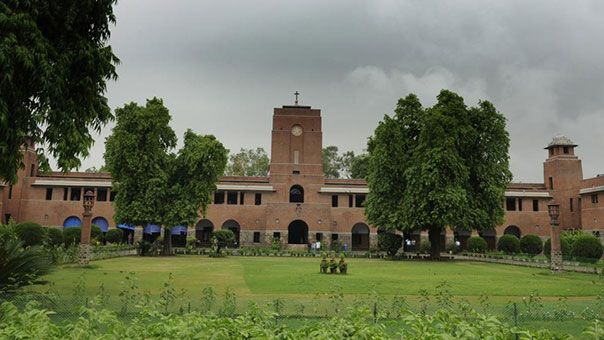
Delhi High Court refuses to stay interview process for admission of Christian Students in St Stephen’s

The Delhi High Court on June 13 refused to stay the interview process for admission of Christian students in Delhi University’s St Stephen’s college.

The court said it did not consider it appropriate to stay the interview process.

“I am not inclined to grant the stay…. I do not consider it appropriate to stay the interview process. They are seeking to maintain their institution as they want it to be,” Justice Anu Malhotra said.

The interview process is scheduled to commence later.

The court was hearing a petition filed by three teachers of the college against the inclusion of a member of the institution’s Supreme Council in the interview panel for the selection of Christian students.

The teacher-members of the college’s governing body — N P Ashley, Abhishek Singh and Nandita Narain — have challenged a decision taken by the Supreme Council at its meeting on March 12.

The teachers, represented in the court by advocate Sunil Mathew, said it was decided at the meeting to have an additional Christian member nominated by the Supreme Council or the governing body to be part of the interview panel in respect of admission of Christian students in all subjects.

The Supreme Council is higher in authority than the governing body of the college comprising members from the Church of North India and also those nominated by it. The teachers contended that the “interference” of the church in the admission process was against the norms of the college.

However, the college, in its response, claimed that the petition was not maintainable as neither any fundamental right nor any statutory or legal right of the petitioners was violated.

Rights group condemns repeated raids on Jesuit activist

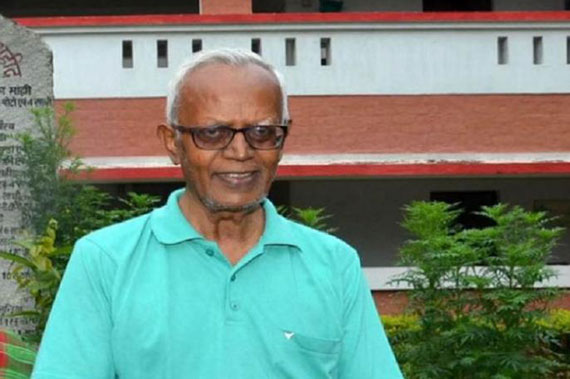
A human rights group in Jharkhand, eastern India, has condemned what it called repeated raids on Jesuit social activist Father Stan Swamy.

“The raids and arrests are part of the government’s growing attempts to stifle dissent and intimidate those who are fighting for justice,” the Jharkhand Janadhikar Mahasabha (Grand council of people’s rights in Jharkhand) said on June 12 soon after the police raid.

An eight-member team of the Maharashtra police raided the Bagaicha campus, the 83-year-old priest’s residence at Namkum near Ranchi, the Jharkhand State Capital. The raid that started at 7:15 am continued for 3.5 hours.

The Maharashtra police had earlier raided the priest’s residence on August 28, 2018.

In the latest raid, the police searched the priest’s belongings and took his computer hard disk and internet modem and forced him to give his email and Facebook passwords. Thereafter, they changed the passwords and seized these accounts.

“The Jharkhand Janadhikar Mahasabha condemns repeated raids on Stan Swamy and arrests of other human rights activists,” the statement said.

Archbishop Machado mourns Karnad’s death

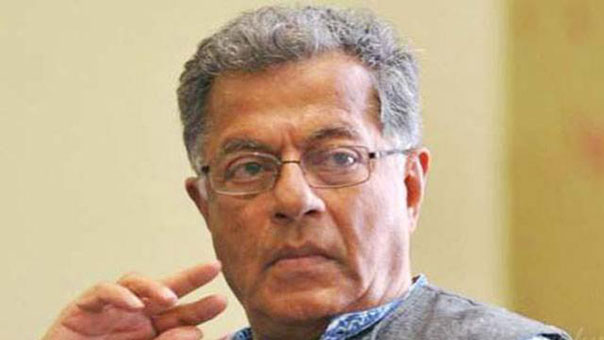
Archbishop Peter Machado of Bangalore on June 11 expressed deep sorrow over the passing away of Girish Karnad, a legendary playwright, actor and social activist.

“We have lost a legend in field of literature and arts. Truly our cultural world is poorer today,” Archbishop said in his condolence message.

The archdiocese later stated that the Catholic bishops of Karnataka with the entire Christian community, priests, religious and lay faithful joined the archbishop in conveying heartfelt condolences to the bereaved family.

Karnad was a man of multi-dimensional talented in nature. Theatre was his vocation. He was a prolific writer, thinker, actor, social activist, non-corrupt and fearless speaker. He also left an indelible impression on cinema, Archbishop Machado noted.

Pope Francis was right to approve the new translation of the Lord’s Prayer

Does God lead people into temptation? Not anymore, at least if you’re a Catholic in France, Spain, or – as of – Italy, where the Bishops’ Conference has approved (with Pope Francis’ blessing) a translation of the Our Father that wrestles the blame for sin away from God, and into the world. The subtle change – from “lead us not” into “do not let us fall” – is an exegetical sleight of hand that has caused theological uproar, bringing on bewilderment in the broadsheets and forging an unlikely alliance between Traditionalist Catholics and Protestant literalists.