UN declares special day to remember victims of violence against religion

On May 28, the UN General Assembly adopted a resolution establishing on August 22 as the Day to Commemorate Victims of Violence Based on Religion.

The resolution invites all member states, relevant organisations, civil society, individuals and the private sector to observe the international day and show appropriate support for victims of religiously motivated violence.

In the wake of recent religiously motivated terrorist attacks, the resolution notes a serious concern for “continuing acts of intolerance and violence based on religion or belief against individuals, including against persons belonging to religious communities and religious minorities around the world, and at the increasing number and intensity of such incidents.” Poland initiated work toward the commemorative day, but united with Brazil, Canada, Egypt, Iraq, Jordan, Nigeria, Pakistan, Poland, and the United States to co-draft the resolution.

Ultimately, 88 UN member states voted to co-sponsor the resolution.

“The right to freedom of thought, conscience and religion, which is commonly referred to as the right to freedom of religion or belief, is a universal right of every human being and the cornerstone of many other rights,” Polish Minister of Foreign Affairs Jacek Czaputowicz said in his keynote speech before the vote.

In response, the US Commission on International Religious Freedom in Washington issued a statement praising the resolution.
Francis: Leaders who talk of peace but sell arms will face ‘wrath of God’

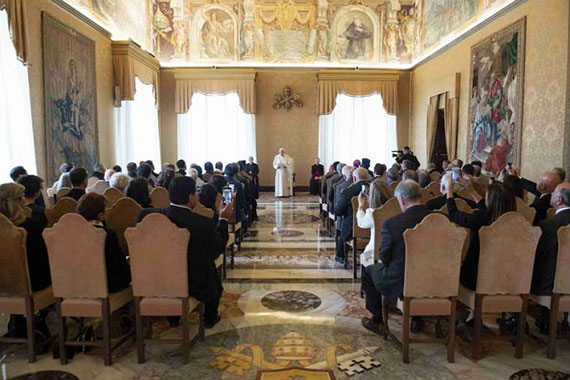
Discussing the Syrian civil war on June 10, Pope Francis said God hears the cry of orphans and widows, and that His wrath will be visited on those who deal in arms trafficking while speaking of peace.

“I think with sadness, once again, of the drama of Syria and the dense clouds that seem to thicken above it in some areas that are still unstable and where the risk of an even greater humanitarian crisis remains high. Those who have no food, those who do not have medical care, who have no school, orphans, the wounded and widows raise their voices up high,” the Pope said on June 10 to participants in the plenary assembly of the Reunion of Aid Agencies for the Oriental Churches.

“The hearts of men may be insensitive, but that of God is not: wounded by the hatred and violence that can be unleashed among his creatures, always able to be moved and take care of them with the tenderness and strength of a father who protects and guides. But sometimes I also think of the wrath of God that will be unleashed against the leaders of countries that talk about peace and sell weapons to carry out these wars. This hypocrisy is a sin.”

Francis’ meeting with ROACO was at the Vatican’s Consistory Hall. The organization unites funding agencies to provide services to members of the Eastern Catholic Churches.

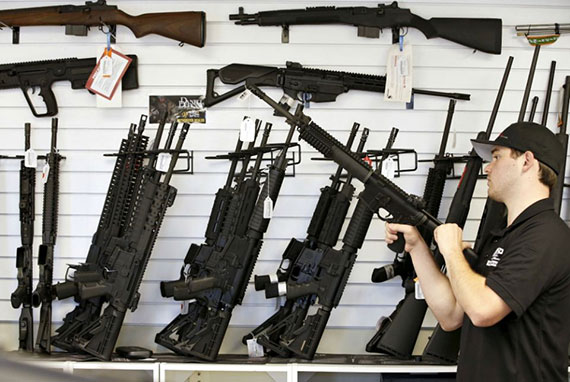
US gun ‘idolatry’ demands more prophetic church stand, some Catholics say

A total of 35,141 people die from gun violence in the United States each year, according to the Brady Campaign to Prevent Gun Violence, which averaged deaths over a five-year period through 2018. That’s 96 people each day.

According to the centre:

1,24,760 people are shot every year;

17,207 children and teens are shot every year;

Seven children and teens die from gun violence in the United States every day.

Between 2000 and 2017, 250 FBI-designated “active shooter” incidents occurred in the United States.

There are more guns than people in the United States.

At the start of June, which is Gun Violence Awareness Month, the United States received its latest tragic reminders of the gravity and magnitude of the gun violence problem. In Virginia Beach, Virginia, a gunman killed 12 people while firing indiscriminately in an office building. In Chicago, 10 people were killed and 52 wounded in gun violence across the city during the week-end.

Since 1994, the U.S. bishops’ conference has supported a number of “reasonable measures to address the problem of gun violence,” including an assault weapons ban, universal background checks, and limitations on high-capacity weapons and ammunition magazines. With each successive mass shooting, bishops are quick to offer prayers and statements of their condolences.

However, as gun violence continues to affect and take thousands of lives each year, some Catholics are expressing a desire for a broader and more prophetic denouncement of American gun culture from the church across the board, laity and clergy alike.

US Bishop bars pro-abortion lawmakers from Holy Communion

The Bishop of Springfield, Illinois, has decreed that state legislative leaders may not be admitted to Holy Communion within his diocese, because of their work to pass the state Reproductive Health Act. The bishop also directed that Catholic Legislators who have voted for legislation promoting abortion should not present themselves to receive Holy Communion until they have first gone to confession. “In accord with canon 915 of the Code of Canon Law… Illinois Senate President John Cullerton and Speaker of the House Michael J. Madigan, who facilitated the passage of the Act Concerning Abortion of 2017 (House Bill 40) as well as the Reproductive Health Act of 2019 (Senate Bill 25), are not to be admitted to Holy Communion in the Diocese of Springfield in Illinois because they have obstinately persisted in promoting the abominable crime and very grave sin of abortion as evidenced by the influence they exerted in their leadership roles and their repeated votes and obdurate public support for abortion rights over an extended period of time,” Bishop Thomas Paprocki wrote in a June 2 decree.

“These persons may be readmitted to Holy Communion only after they have truly repented these grave sins and furthermore have made suitable reparation for damages and scandal, or at least have seriously promised to do so, as determined in my judgment or in the judgment of their diocesan bishop in consultation with me or my successor,” the bishop added.

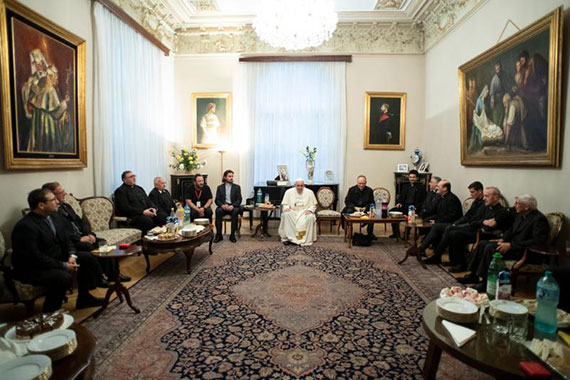
Church wounded by internal tensions, pope tells Jesuits in Romania

Pope Francis told Jesuits in Romania that tensions and struggles within the Church have left it wounded and that the only path forward is through humble dialogue, not futile arguments. “I think of the Church as a field hospital. The Church is so wounded, and today it is also so wounded by tensions within it,” the Pope told the Jesuits during a meeting on May 31 in Bucharest.

“Meekness, it takes meekness! And it takes a lot of courage to be meek! But you have to go forward with meekness,” the Pope said. “This is not the time to convince, to have discussions. If someone has a sincere doubt, yes, one can dialogue, clarify. But don’t respond to the attacks.”

As has become customary when the Pope meets Jesuits during a foreign trip, a transcript of his remarks was released weeks later by the Jesuit journal La Civilta Cattolica.

According to the text published on June 13, Francis told the 22 Jesuits that in moments of “tribulation and fury,” Christians must imitate Jesus who “didn’t argue with the Pharisees and the Sadducees as he had done before when they tried to set traps.” Instead, “Jesus remained silent.”

“There’s no talking at the moment of fierce fury. When persecution is taking place, what remains to be lived is witness and loving closeness, in prayer, in charity and in goodness,” he said. “You embrace the cross.”

Francis met with the Jesuits at the apostolic nunciature in Bucharest at the end of his first day in the country. According to La Civilta Cattolica, the Pope spent nearly an hour with the group answering their questions “in a relaxed and family atmosphere.”

Asked about where he finds consolation in moments of trial, the Pope said he seeks it in prayer and especially in meeting with “God’s people.”

“God’s people understand things better than we do. God’s people have an under-standing, the sensus fidei, (sense of faith) that corrects your line and puts you on the right path,” the Pope said. “You should hear what people say to me when I meet them! They have a nose for understanding situations.” Another Jesuit asked the Pope his thoughts regarding marriage annulments and the difficulties faced by many couples who “are unable to make it to the end of the process” because “the tribunals don’t work.”

Catholics hold traditional Whit Monday ceremony in Germany

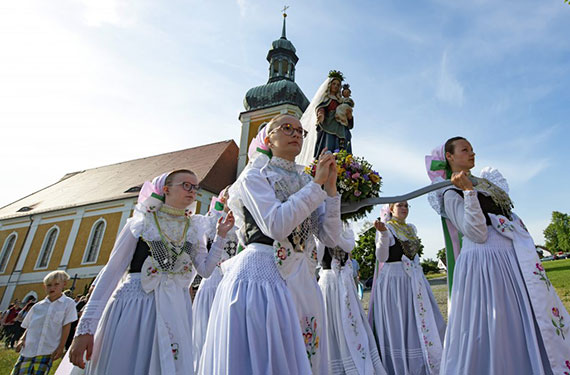
Women in traditional white dresses have carried a centuries-old statue of the Virgin Mary to mark Whit on June 10 in an annual ritual in the eastern German town of Rosenthal. Hundreds of Catholic Sorbs, a Slavic minority, held prayers in rural churches in about a dozen areas before walking to Rosenthal for another service. They then ended their pilgrimage walking with the young women carrying the 1480 wooden statue of Mary through the town to a field for an open-air mass.

The ritual marks Whit Monday, the day after Whitsun or Pentecost, which falls seven weeks after Easter Sunday and is the day the Holy Spirit is said to have descended upon the apostles. The day is a national holiday in Germany and many other countries

More than a century later, Sagrada Familia gets building permit

After 137 years of ongoing construction, Barcelona’s Sagrada Familia received a building permit on June 6.

Construction on the basilica is expected to be completed in 2026.

Architect Antoni Gaudí began his work on Sagrada Familia in 1883, and in 1914 stopped all other projects to work exclusively on the basilica, to which he dedicated himself until his death in 1926.

“It was a historical anomaly that La Sagrada Familia did not have a license,” said Janet Sanz, deputy mayor for Ecology, Urbanism and Mobility, according to NPR.

“They were working on the church in a very irregular way,” she said. “And we were very clear that, like everyone else, La Sagrada Familia should comply with the law.”

A permit had been applied for in 1885, but the city’s council never responded to the application. Three years ago, the authorities discovered that the building did not have the proper paper-work.

Most U.S. adults don’t think abuse is more common among Catholic leaders

Despite the slew of abuse allegations and cases surfacing within the Catholic Church, most U.S. adults actually do not think that sexual abuse of children is more common among Catholic priests and leadership than it is among any other adult groups.

The abuse crisis also has caused some Catholics to attend Mass less often and decrease donations to the Church, although some personally supported their local parish priest.

The Pew Research Centre released a report on June 11 revealing statistics about what Americans, and particularly American Catholics, believe about abuse in the Catholic Church.

According to the Pew survey, 57% of U.S. adults believe that sexual abuse of children is equally as common among Catholic clergy as it is among other adults who work with children. How-ever, when surveying only non-Catholics, Pew found that only 44% believe that sexual abuse is equally as common among Catholic Leaders as other adults working with children.

Further, among Catholics, 68% believe this is not a uniquely Catholic problem.

Of all U.S. adults, 92% have heard about the scandal and 79% believe it reflects an ongoing problem, while only 12% believe that it is in issue of the past.

New Syriac Catholic bishop hopes Christianity will thrive again in Iraq

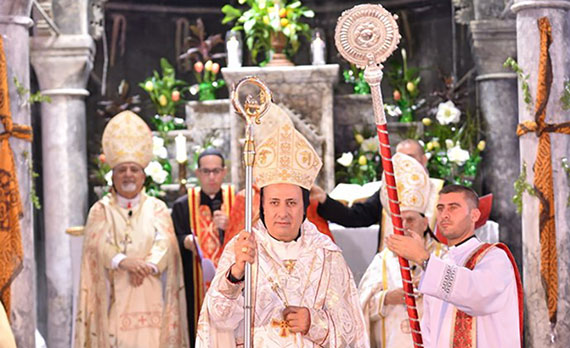
Syriac Catholic Auxiliary Bishop Nizar Semaan begins his new mission in Iraq with hope “that Christianity will flourish again” in his homeland.

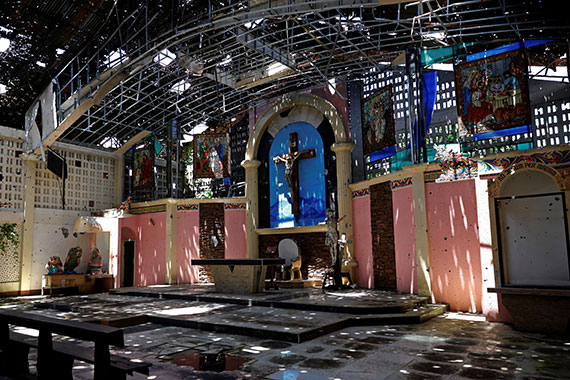
Semaan chose the Church of the Immaculate Conception in Qaraqosh, Iraq, his birthplace, as the site of his episcopal ordination on June 7.

Still scarred from the Islamic State group and not yet fully restored, the church, Semaan said, is “a symbol of what happened to our cities and villages in 2014 until the liberation (in 2017) from ISIS.”

It’s also the church where the new bishop was ordained a priest in 1991. Located in the Ninevah Plain, Qaraqosh was the largest Christian city in Iraq. Its 50,000 residents – all of them Christians were expelled by Islamic State forces in a single night during the summer of 2014. They were among 120,000 Christians up-rooted from Mosul and the Ninevah Plain that summer.

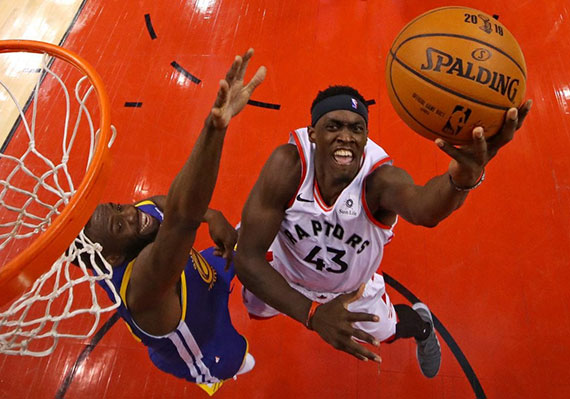
Toronto Raptors’ player took a shot at priesthood training

When Pascal Siakam was in his young teens attending a minor seminary in Cameroon – and mostly playing soccer in his free time – he likely never imagined he’d be playing in the NBA Finals.

Studying for the priest-hood, it turned out, was more of his father’s idea, and not a personal calling. Now-25-year-old forward for the Toronto Raptors, who are playing in their first Finals against the Golden State Warriors.

The 6-foot-9 player, drafted by the Raptors in 2016, also is a possible candidate for the NBA’s Most Improved Player award. He made just one 3-point shot in his first season; he now averages one 3-point shot made per game.

In 2017, ESPN writer Jackie MacMullan went to Cameroon to visit Siakam’s hometown of Douala and St Andrews Seminary in Bafia for a feature story.

She interviewed the semi-nary’s director, Msgr Armel Collins Ndjama, who said through an interpreter that he knew early on that Pascal’s father had a vision “and Pascal was not sharing it.”

“I knew we would probably not be able to train him to be a priest, but I still hoped we could teach him to be a man,” the priest added.

Siakam similarly agreed that he did not think he had a vocation to the priesthood, but he also didn’t want to go against his father. “There isn’t a better man I’ve known in my life,” he told ESPN about his dad, who died before Siakam’s first college game after complications following a car accident.