Kerala court quashes case against Cardinal in land scam

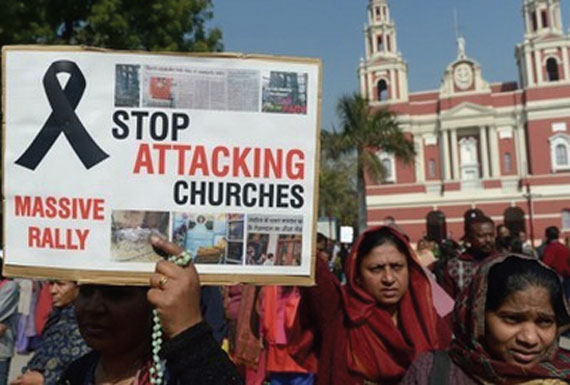
Priests in India are pinning their hopes on the Vatican after the High Court of Kerala dismissed a case against Cardinal George Alencherry over a land deal that has rocked the church for more than a year. Chief Justice Antony Dominic dismissed the case on May 22 on grounds that the court made jurisdictional errors in allowing the investigation against the cardinal and petitioners had rushed to the court before waiting for a police investigation.

The court’s move has “not given us any justice. The moral and ethical violations and the related frustrations continue,” said Father Kuriakose Mundadan, secretary of the presbyteral council, a canonical body of priests in the cardinal’s Ernakulam-Angamaly Archdiocese.

The court dismissed the case, filed by lay Catholic Shine Varghese, on grounds of legal infirmity because the petitioner approached the court complaining of police inaction within hours of filing a police complaint. “The court has not quashed the police complaint. It has not said there is no case against the cardinal, nor that the police should not investigate. However, we continue with the problem without a solution,” Father Mundadan said.
India’s government accused of shaping top judiciary

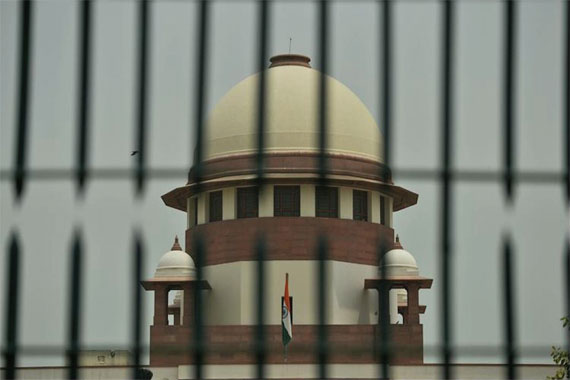
The collegium of India’s Supreme Court has met to reconsider its recomm-endation to elevate a Christian judge to the top court amid allegations that the pro-Hindu federal government had rejected him for ideological reasons.

The collegium of judges met on May 11 to consider its January recommendation to elevate Chief Justice K.M. Joseph of Uttarakhand High Court to the Supreme Court, local reports said.

The federal government, run by the Bharatiya Janata Party (BJP), rejected the recommendation on April 26 and asked the collegium to consider other names.

The collegium concluded that Joseph was “more deserving and suitable in all respects” than other eligible judges, according to local media.

“The government turned down the collegium recommendation as he is a Christian and may not toe the pro-Hindu ideological line,” said Govind Yadav, a Supreme Court lawyer.

The government said Joseph was a junior judge who stood 42nd in India’s rankings. It also suggested the collegium consider candidates from socially poor Dalit and indigenous groups as they have no representation in the top judiciary.

The government also said Joseph’s appointment would cause regional imbalance as he hails from the same southern State of Kerala as another judge, Justice Kurian Joseph, who was already serving the top court. However, Kurian Joseph is due to retire this year.

“None of these arguments hold water,” said Yadav. “There is no such law that a junior judge cannot be elevated.”

The government “is taking revenge” on Joseph because he led bench judges to strike down the BJP-led federal government’s decision to impose president’s rule in Uttarakhand when the rival Congress party was in power.

The bold order humiliated the federal government and therefore it does not want him to be elevated to the top court, Yadav said. “Then again, he is a Christian who may not follow pro-Hindu ideology. That further contributed to rejection of his name,” he said.

Religious persecution the new normal in India

In the campaign for the southern Indian State of Karnataka’s May 12 election, religion was once more at the centre of the battle between the Hindu-nationalist Bharatiya Janata Party (BJP), which controls the federal government, and its long-term rival, the Indian National Congress. The two, along with local secular party Janata Dal (Secular) were fighting for the votes of a substantial Muslim minority of about 13% in a poll that underscores the religious versus secular battle lines that have now been drawn in the world’s largest democracy. The poll was more than just a test to determine which side had a superior on-the-ground organization. Rather, it was a test of how well the Hindu nationalist card, melded with promises of economic improvements, would fare in the heartland of India’s information technology sector.

Such episodes have claimed at least 25 lives since 2010, with 21 of the victims being Muslims, according to a recent report by the IndiaSpend website.

Orthodox Church cautious in its approach

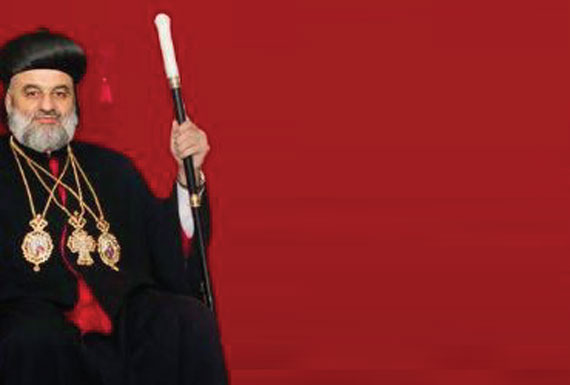
The Patriarch has invited the church for peace talks during his visit to India Even as they have received an explicit invite from Patriarch of Antioch Ignatius Aphrem II for initiating peace talks during his visit to India, the Malankara Orthodox Church appears to be taking a cautious approach to the issue.

Speaking to The Hindu, church spokesperson P.C. Elias said the church had already made its stance clear on the peace talks with the Pontiff when he had made the overture before. “We are ready for talks on the basis of two key points; one, it should be on the basis of the 1934 Constitution of the Church and second, it should be based on the Supreme Court verdict in the case,” he said. The definition of peace shall be identified on the basis of these two key factors, he said. He, however, said the Church had not made any formal reply to the recent invite from the Patriarch. The communications are being handled by the Ecumenical Relationship Committee of the church.

Gender bias kills over 200,000 girls in India each year: Lancet

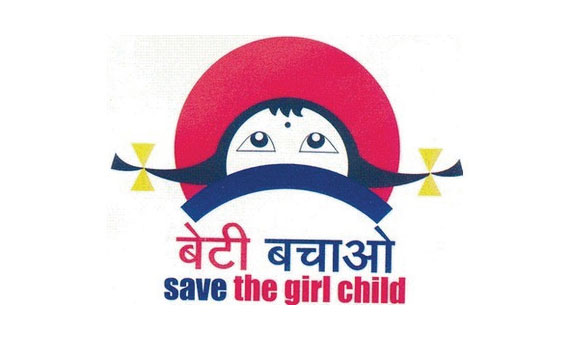
Apart from the rising number of female foeticide cases in India, more than 200,000 girls under the age of five die each year in the country, finds a Lancet study led by an Indian-origin resear-cher. The study, published in the journal Lancet Global Health, has found that there is on an average 239,000 excess deaths each year of girls under the age of five owing to neglect due to gender discrimination.

The numbers which are particularly higher in the northern States of Uttar Pradesh and Bihar, are mostly due to unwanted child bearing and subsequent neglect.

For too long, the focus has been only on prenatal sex selection, said co-researcher Christophe Guilmoto from the Universite Paris Descartes in France.

“Gender-based discrimi-nation towards girls doesn’t simply prevent them from being born, it may also preci-pitate the death of those who are born,” he said.

The figures which are around 2.4 million in a decade can only be checked with stress on female literacy and employment in modern industries, the researchers noted.

“Regional estimates of excess deaths of girls shows any intervention in the food and health care allocation should particularly target Bihar and Uttar Pradesh, where poverty, low social development, and patriarchal institutions persist and investments on girls are limited,” said Nandita Saikia post-doctoral research scholar at the International Institute for Applied Systems Analysis (IIASA) in Austria.

Church calls for clean Nagaland by poll

The Nagaland Baptist Church Council (NBCC) has reminded people to go for a “clean election,” vote with a clear conscience and without influence. May 26 appeal came two days ahead of the Nagaland Lok Sabha by-election. Naga People’s Front (NPF) president Shürhozelie Liezietsu also urged the party people to take a firm stand to defend the Christian faith.

The by poll was necessitated after Chief Minister Neiphiu Rio resigned from the Lok Sabha in February to contest the Assembly election. The polling held on May 28 and the counting of votes will take place on May 31. Campaigning closed on May 26.

India’s Christians to back supportive parties in polls

Six months ahead of elections in three northern Indian states, Christian leaders have pledged to vote for poli-tical parties assuring protection of their communities from discrimination and abuse.

Ecumenical Christian group Sarva Isai Mahasangh (All Christian Forum) has resolved not to support parties in upcoming federal and state elections that work against religious minorities.

Madhya Pradesh, Rajasthan and Chhattisgarh States, ruled by the pro-Hindu Bharatiya Janata Party (BJP), face elect-ions in November and December while the term of BJP Prime Minister Narendra Modi expires next May. “We are passing through a very critical period in the history of our country where people are divided on caste and religious lines,” said Arch-bishop Leo Cornelio of Bhopal, the capital of Madhya Pradesh. “A very dangerous trend exists in the country that undermines the secular tenets of our constitution.” He added: “Come what may, we will continue with our mission of serving the poor and the needy.”

Pope: if it is not ‘feminine’, the Church becomes a ‘church for old bachelors’

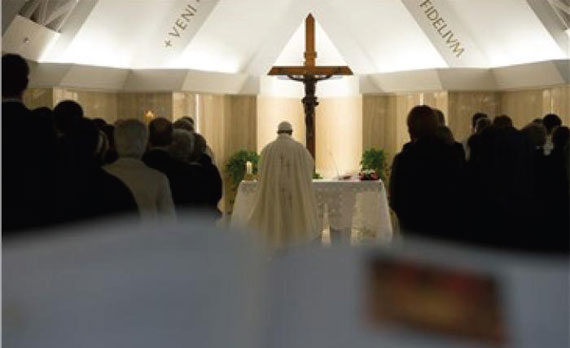
“The Church is a woman” and if she lacks this identity she becomes “a charity association or a football team;” when “it is a male Church,” it becomes “a Church of old bachelors,” “incapable of love, incapable of fecundity,” said Pope Francis at Mass this morning at Casa Santa Marta, on the day dedicated to the memory of the Blessed Virgin Mary, Mother of the Church.

The feast is being celebrated this year for the first time, after the publication in March of the decree Ecclesia Mater (“Mother Church”) by the Congregation for Divine Worship and the Discipline of the Sacraments. Pope Francis himself decided the feast should be celebrated immediately following Pentecost, in order “to encourage the growth of the maternal sense of the Church in the pastors, religious and faithful, as well as a growth of genuine Marian piety.”

In his homily, Pope Francis said that in the Gospel, Mary is always described as “the Mother of Jesus,” instead of “the Lady” or “the widow of Joseph”: her motherliness is emphasized throughout the Gospels, beginning with the Annunciation. This is a quality that was noted immediately by the Fathers of the Church, a quality that applies also to the Church.

The Church is feminine, because it is “Church” and “bride” [both grammatically feminine]: it is feminine. And she is mother; she gives life. Bride and Mother. And the Fathers go further and say that even your soul is the bride of Christ and mother.” And it is with this attitude that comes from Mary, who is Mother of the Church, with this attitude we can understand this feminine dimension of the Church, which, when it is not there, the Church loses its identity and becomes a charitable organization or a football team, or whatever, but not the Church.

Only a feminine Church will be able to have “fruitful attitudes,” in accordance with the intention of God, who chose “to be born of a woman in order to teach us the path of woman.”

German President: Catholic Church should ‘share’ Communion with Protestants

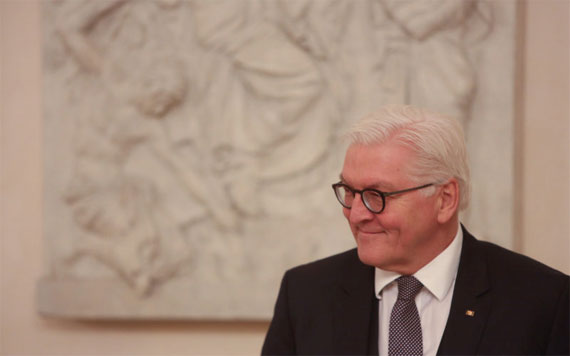
The President of Ger-many has called for the Catholic Church to allow Protestants to receive Communion. Speaking at Katholikentag, a major conference for German-speaking Catholics in Münster, Frank-Walter Steinmeier said: “Let us seek ways of expressing the common Christian faith by sharing in the Last Supper and Communion. I am sure: Thousands of Christians in interdenomi-national marriages are hoping for this.”

Steinmeier said he was speaking “not as Federal President, but as an a vowed Evangelical Christian who lives in an interdenominational marriage.”

He also criticised the Bavarian government’s decision to hang crosses in public buildings, saying the state should not “patronise” religion.

His words came after the Vatican failed to rule on whether a proposal by German bishops to allow Protestants married to Catholics to receive Communion under certain circumstances violated Church teaching. Seven German bishops, including Cardinal Rainer Woelki of Cologne, had challenged the proposal and asked the Vatican to intervene, but Pope Francis urged the bishops to come to an agreement amongst themselves.

“I don’t see the point of a public debate about wafers,” he said, referring to the Blessed Sacrament. He added that climate change is a “far more serious” issue. The crowd, which was mainly Catholic, applauded him as he said that, since he paid his Church tax, the Church had “better happily hand out a wafer for it, or give me back my money!”

Pope Paul VI prepared ‘resignation letter’

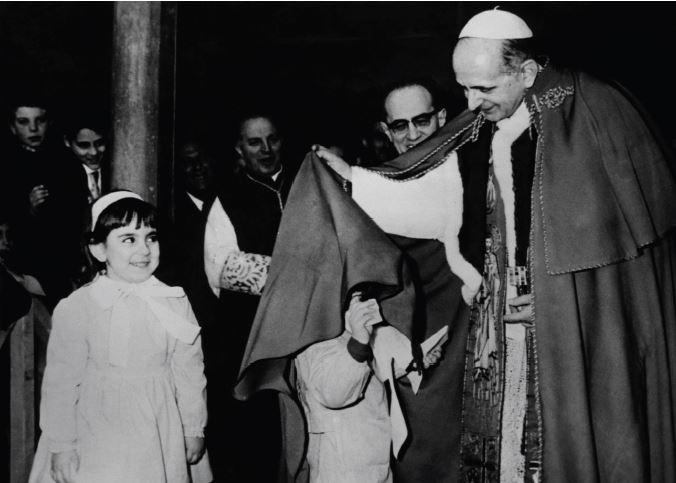
Pope Paul VI wraps his cape around a small boy who has just presented him a bouquet of flowers on behalf of the parish children Photograph: S&G Barratts/EMPICS/PA Archive 13 years before his death, Blessed Paul VI wrote that he should be allowed to resign if he became too ill to carry on Commenting on the letter, Pope Francis said, “We must thank God, who alone guides and saves the church, for having allowed Paul VI to continue until the last day of his life to be father, pastor, master, brother and friend.”

Blessed Paul said he was writing “aware of our responsi-bility before God and with a heart full of reverence and of charity, which unite us to the holy Catho-lic Church, and not unmindful of our evangelical mission to the world.”

“In case of infirmity, which is believed to be incurable or is of long duration and which impedes us from sufficiently exercising the functions of our apostolic ministry; or in the case of another serious and prolonged impediment,” Blessed Paul wrote, he renounced his office “both as bishop of Rome as well as head of the same holy Catholic Church.”