
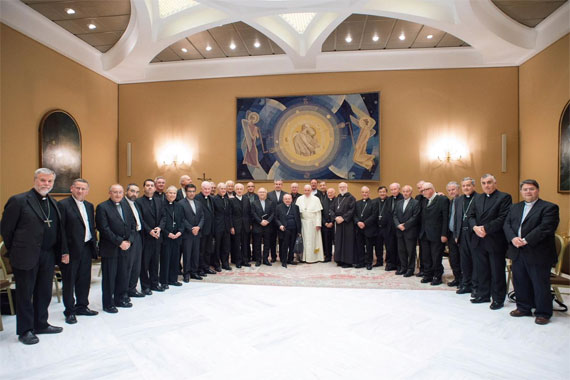
Every Chilean bishop has offered his resignation to Pope Francis after a series of closed-door meetings with all 34 bishops at the Vatican, to discuss the abuse crisis in the country. The dramatic announcement followed the leaking of a 10-page letter to television channel T13, reportedly handed to the bishops at the start of discussions, in which Francis said removing bishops may be needed but would not be sufficient to solve the abuse crisis in Chile. In the letter Francis cites clericalist, elitist and authoritarian attitudes dominating in the Church and an urgent need to put Christ back at the “ecclesial centre.” “It would be irresponsible on our part not to delve into looking for the roots and the structures that allowed these [abuses] to happen and to be perpetuated,” the Latin American Pope explained. Francis ordered the bishops to Rome after receiving a 2,300- page report into the sex abuse problems written by the Archbishop of Malta, Charles Scicluna. He commissioned the report after his visit to Chile in January in which he defended Bishop Juan Barros of Osorno against accusations from abuse survivors.
Daily Archives: June 5, 2018

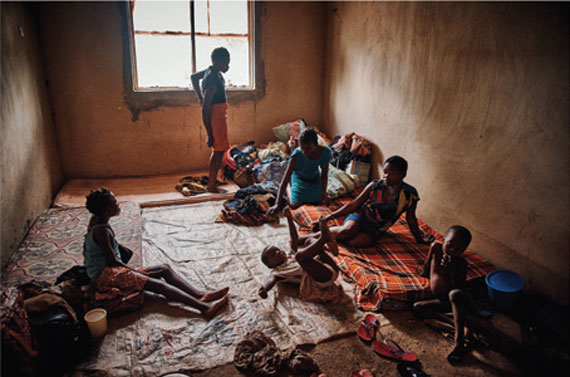
Bishops warn of ‘growing genocide’ in Cameroon
“They are hunting us,” murmurs a secondary school teacher, turning his back to the camera and asking not to be named. “The Cameroon government security forces were entering villages and killing unarmed people. Bodies have been found in forests, they used every method and means to kill. It’s a huge number of fatalities.” Nearly 26,000 people, four-fifths of them women and children, have fled into Nigeria from Southern Cameroon. The number has doubled since January, according to Caritas Internationalis and the UN High Commissioner for Refugees (UNHCR). More are arriving daily, while an estimated 40,000 people are displaced inside Cameroon. Political upheaval is provoking an under-reported humanitarian crisis in both countries, with refugees flooding into Nigeria’s border states carrying nothing but their children and the clothes on their backs.

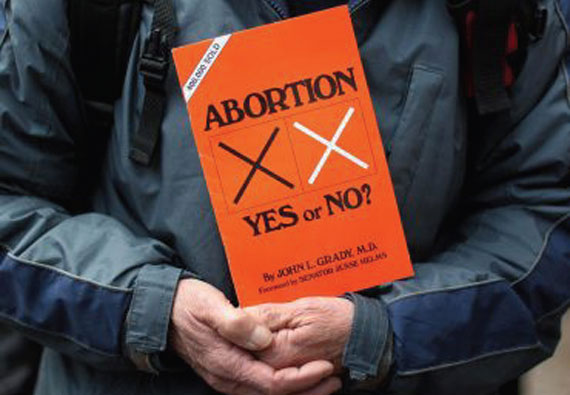
Irish abortion referendum : Landslide win for pro-choice
Voters in Ireland have opted to remove the right to life of the unborn from the country’s constitution, paving the way for abortion on demand up to 12 weeks.
With votes counted from 30 of Ireland’s 40 constituencies, results from the nationwide referendum showed that 67.3% of citizens opted to remove the Eighth Amendment from the constitution, while 32.7% voted to retain it. Turnout was 64.5%.
Voters inserted the original amendment in the constitution in 1983 by a margin of 2-1, and it “acknowledges the right to life of the unborn and, with due regard to the equal right to life of the mother, guarantees in its laws to respect, and, as far as practicable, by its laws to defend and vindicate that right.”
That text will now be deleted and replaced with an article stating that “provision may be made by law for the regulation of termination of pregnancy.” Minister for Health Simon Harris has said he would introduce legislation that would allow abortion on demand up to 12 weeks, up to 24 weeks on unspecified grounds for the health of the mother, and up to birth where the child is diagnosed with a life-limiting condition that means he or she may not live long after birth.

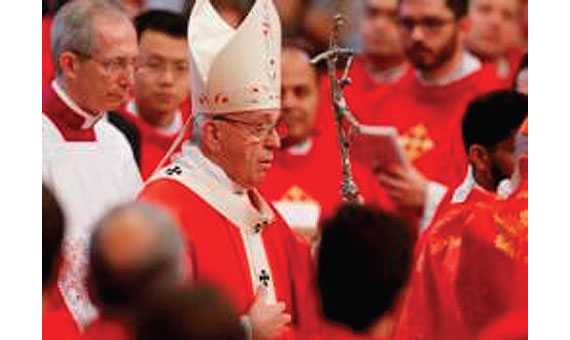
Pope creates 14 new cardinals in June
Pope Francis announced he would make 14 new cardinals June 29, giving the red cardinal’s hat to the papal almoner, the Iraq-based patriarch of the Chaldean Catholic Church and the arch-bishop of Karachi, Pakistan, among others.
Announcing his choices May 20, the Pope said that coming from 11 nations, the new cardi-nals “express the universality of the church, which continues to proclaim the merciful love of God to all people of the earth.”
Pope Francis’ list included three men over the age of 80 “who have distinguished them-selves for their service to the church.”
When the Pope made the announcement, the College of Cardinals had 213 members, 115 of whom were under the age of 80 and therefore eligible to vote in a conclave to elect a new Pope. Cardinal Angelo Amato, prefect of the Congregation for Saints’ Causes, was to celebrate his 80th birthday on June 8. The new cardi-nals hail from: Iraq, Spain, Italy, Poland, Pakistan, Portugal, Peru, Madagascar, Japan, Mexico and Bolivia.

Nigerian minor seminary attacked, priests injured byMuslim herdsmen, plan to ‘Islamicize the Christian areas’
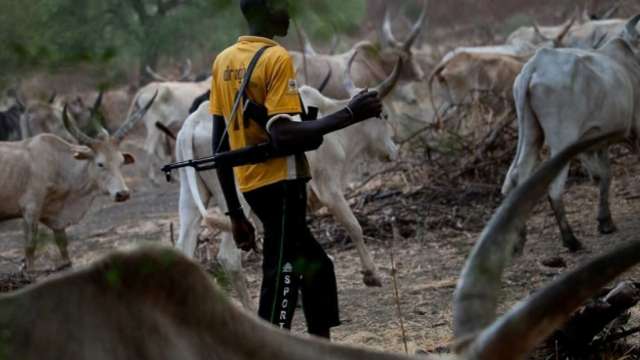
According to reports in the Nigerian media, confirmed on May 28 by a Nigerian priest, a Catholic minor seminary has been attacked by largely Muslim Fulani herdsmen in Jalingo, part of Nigeria’s north-central “Middle Belt” region, leaving no fatalities but several injuries, including two priests.
The attack occurred in the early morning hours, and is the latest in a long-running series of violent incidents invol-ving mostly Muslim herdsmen and mostly Christian farmers in the Middle Belt area.
“They shot and injured one of the priests, Father Cornelius Pobah, in the leg, [and] beat up Father Stephen Bakari,” he said.
For now, the Nigerian priest said, calm has been restored “thanks to the prompt response from the Nigerian Police, Army, Civil Defence and local vigila-ntes.”
The attacks were carried out by nomadic cattle herders of the Fulani tribe which tends to be Muslim. “We are not speaking of Boko Haram this time, although some of the cattle herders have had relations with that terrorist group in the past and both groups are united in the same intention to Islamicize the entire region,” the bishop charges. In the face of so much violence one of the most worrying aspects for the bishop is the complete lack of action on the part of the government, especially the federal government.
“THERE IS A CLEAR agenda: a plan to Islamicize all the areas that are currently predominantly Christian in the so-called Middle Belt of Nigeria.”
Those are the words of Bishop Wilfred Chikpa Anagbe of the Diocese of Makurdi in Nigeria. His diocese is home to the parish of Saint Ignatius in Ukpor-Mbalom, Benue State—the scene of the most recent attack by Fulani herdsmen, which took place on April 24, 2018.
Pope says he has thought about when ‘to take my leave’
‘May the Lord give the grace to all of us to be able to leave this way, with this spirit, with this strength, with this love of Jesus Christ.’
Pope Francis has said he has thought about when it might be time to “take my leave.”
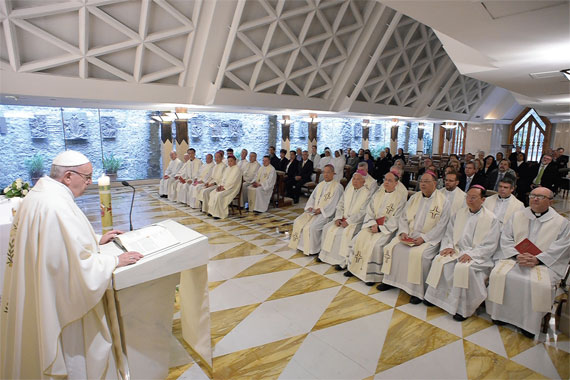
Francis made the comment during his morning homily on May 15 at the Santa Marta chapel.
Speaking on a passage in Acts where the Apostle Paul is discerning when to leave his flock in the care of others, the Pope said: “when I read this, I think of myself.”
“I think of me as well, because I am a bishop and I must take my leave,” he continued.
Francis said that for Paul “his great love is Jesus Christ” and his second love is “for the flock.” As a result, Paul exhorts “watch the flock; you are bishops for the flock, to keep the flock, not to climb into an ecclesiastical career,” Francis explained.
Paul’s last testament – or will – is far “from worldly testaments” where people “have so many” goods to distribute, the Pope said.
Paul, the Pontiff insisted, had nothing, “only the grace of God, the apostolic courage, the revelation of Jesus Christ and the salvation that the Lord had given to him.” “I ask the Lord for the grace to be dismissed like this,” Francis said.
He concluded: “I think of the bishops, of all the bishops: may the Lord give the grace to all of us to be able to leave this way, with this spirit, with this strength, with this love of Jesus Christ, with this trust in the Holy Spirit.”
Pope to canonize Blesseds Paul VI, Oscar Romero in Rome Oct. 14
Pope Francis will declare Blesseds Oscar Romero, Paul VI and four others saints Oct. 14 at the Vatican during the meeting of the world Synod of Bishops, an institution Blessed Paul revived. The date was announced May 19 during an “ordinary public consistory,” a meeting of the Pope, cardinals and promoters of sainthood causes that formally ends the sainthood process. During the consistory, Cardinal Angelo Amato, prefect of the Congregation for Saints’ Causes, formally petitioned the Pope “to enroll in due course among the saints” six candidates for canonization “for the glory of God and the good of the whole church.” Each of the candidates, the cardinal told the Pope, gave “a convinced and coherent witness to the Lord Jesus. Their example continues to enlighten the church and the world in accordance with the perspective of mercy that your Holiness never ceases to indicate and propose.”
Two Vatican offices to release document on morality of global market system
Two influential Vatican offices are set to release a new joint document evaluating the morality of the global market system, in what appears to be an effort to give more theological weight to Pope Francis’ frequent criticism that “this economy kills.” The Congregation for the Doctrine of the Faith and the Dicastery for Promoting Integral Human Development have co-authored “Oeconomica eetpecu niariae quaestiones: Considera-tions for ethical discernment about some aspects of the current financial-economic system,” the Vatican press office announced May 14.
The new document, the first such joint effort of two Vatican offices during Francis’ five-year papacy, will be released on May 17. It will be presented at a press conference by the heads of the two dicasteries: Archbishop Luis Ladaria and Cardinal Peter Turk-son, respectively, alongside two noted Italian economists.
The Pope has often criticized the global capitalist system, saying it has perpetuated a “throwaway culture” that serves to enrich the wealthy at the expense of the world’s poorest.
In one of the pontiff’s most stinging criticisms, he told residents of a Kenyan slumduring a visit in 2015 that they were suffering from “wounds inflicted by minorities who cling to power and wealth, who selfishly squander while a growing majority is forced to flee to abandoned, filthy and run-down peripheries.”
German priest criticised for headscarf protest
A German pastor priest has ignited controversy by donning a headscarf during his Pentecost Sunday sermon. Fr Wolfgang Sedlmeier, pastor of the Parish of St Maria in Aalen, shocked his congregation by tying a scarf around his head during a Pentecost sermon and wearing it on the altar during the duration of the Mass.
Fr Sedlmeier said he wished to protest discrimination against Muslims and Jews, according to SWR radio.