Minister feting lynch mob? India recoils in disgust

Jayant Sinha is a Celtics fan. He graduated from Harvard. He worked for McKinsey. Born and raised in India but minted in the United States, he found wealth and success in the Boston area. His American friends say his politics were moderate, maybe even progressive.

Then he returned to India.

He ditched the suits he had worn as a partner at McKinsey & Company, an elite management consulting firm, in favour of traditional Indian kurtas. He joined the governing Hindu right political party and became a member of Parliament and then a minister, leading Hindu parades and showering worshipers with flower petals from a helicopter.

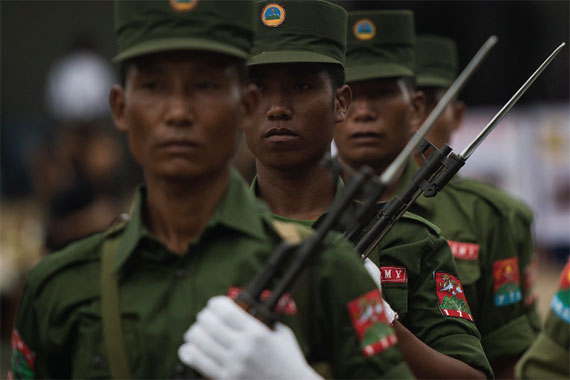
This month, he also feted and garlanded eight murderers who were part of a Hindu lynch mob that the authorities said beat an unarmed and terrified Muslim man to death. His embrace of the convicted killers has become the political stunt that Indians can’t stop talking about.

Across the country, the images of Mr. Sinha draping wreaths of marigolds around the men’s necks have started a conversation about whether the state of Indian politics has become so poisoned by sectarian hatred and extremism that even an ostensibly worldly and successful politician can’t resist its pull.

Archbishop slams controversial Bangladeshi author’s tweet on Mother Teresa 

Abp Thomas D’Souza of Calcutta on Sunday reacted strongly to author Taslima Nasreen’s controversial tweet criticising Mother Teresa and the Missionaries of Charity founded by her. Missionaries of Charity spokesperson Sunita Kumar told PTI that such comments “hurt her.” “I will not speak anything on this but it hurts me to hear such things,” Ms Kumar told PTI. The controversial Bangladeshi author had tweeted, saying “Mother Teresa charity home sells babies, it is nothing new.

Adoptive parents nervous after raids of Missionaries of Charity homes

Theodore Kiro held 13-month-old Navya on her return to his family after they were separated for a week. The crying baby happily clung to Kiro, whom she knows as her grandfather.

Navya is one of the four babies whose fate became entangled in the recent child trafficking scandal broke at Rachi’s Nirmal Hriday (Tender Heart) home, run by the Missionaries of Charity. A five-member district child welfare committee decided it was not fair for the foster mother and the child to be separated for long and ruled they should be united conditiona-lly. The welfare committee asked the foster parents to take the child before the committee every week and keep it informed of the child’s schedule.

“The child and the mother were in trauma after separation, so the committee members decided compassionately to unite them. But this status has been fixed for the next two months only,” said Kiro, a local political leader using his clout to prepare legal papers for adoption of the toddler. Navya was brought to their home in Ranchi just after her birth and was reclaimed by the child welfare committee as one of the babies who allegedly was sold illegally by an employee of the Missionaries of Charity home.

Though the parents confess that there was no exchange of money yet, the officers are investigating the process of adoption without proper paperwork. This makes Anuka Tigga, another adoptive mother of a 4-year-old, jittery.

Lay organization urges government to stop harassing Mother Teresa nuns

The All India Catholic Union (AICU), a 99-year-association of Catholic lay people in the country, has called on the Jharkhand and federal government stop harassing the Missionaries of Charity Sisters, a religious order founded by Mother Teresa. “There seems but little doubt that the government of India, egged on by the religious nationalism of the RSS has decided to teach a lesson to the Christian community in India by singling out for posthumous criminalization the global icon Saint Teresa, a Nobel laureate but perhaps more important, an Indian citizen given its highest national honour of Bharat Ratna,” Dr. John Dayal, former national president and official spokesman of the AICU, which will be a 100 year old in 2019, told Matters India.

Does faith get a yellow card at the FIFA World Cup?

As a passionate soccer fan, Jennifer Bryson has been faithfully watching every game she can during the 2018 FIFA World Cup. But as a religious freedom expert, she’s found herself wondering how, and why, soccer authorities regulate the many religious expressions on display in the international soccer tournament.

“Sport is so relevant to religious freedom because it offers a shared civic space where people from diverse traditions come together and compete towards a common goal,” said Bryson, who is the director of the Religious Freedom Institute’s Islam and Religious Freedom Action Team.

Bryson watches for the moments when an athlete visibly prays in gratitude after a goal or makes the sign of the cross while coming onto the field, noting how the referees react to these religious expressions.

Between social media and worldwide television broadcasts, faith has been widely on display in this year’s World Cup in Russia. The Tunisian soccer team recited the Quran together in the team room, and Mexico’s soccer team celebrated Mass before their unexpected victory against Germany. A Nigerian athlete celebrated a win by waving his rosary. Egypt’s Mohamed Salah prostrated himself in prayer after scoring against Russia. A Catholic and an evangelical from opposing teams knelt down next to each other to pray after the Belgium-Panama match. Even the 2018 World Cup logo was inspired by the Russian tradition of icon painting, according to the FIFA website.

But in soccer’s recent history there have been several controversies over “demonstrative prayers” on the field. Israeli soccer player Itay Shechter received a yellow card after he knelt on the field and prayed with a Jewish kippah after scoring a goal at UEFA Champions League game in Austria in 2010.

“For a Jewish player to get penalized for visible prayer in Austria was extra-controversial,” explained Bryson.

To defend Shechter’s right to pray, his coach, Eli Guttman said, “When a Christian player crosses himself after a goal, that’s also fine with me.” In Scotland, lawmakers in 2003 proposed banning players from making the sign of the cross in a “provocative” way on a soccer field due to the religious divide of local teams among Protestant and Catholic soccer fans.

Protests against Patriarch Karekin continue The Supreme Spiritual Council urgently summoned

The mobilization of groups of Armenian demonstrators who on July 6 entered the Patriarchal See of the Catholicosate of Echmiadzin to demand the resignation of Karekin II, Supreme Patriarch and Catholicos of all Armenians continues. The groups of protesters are still in the area of the Patriarchal See, where they have also set up some tents for overnight stays. The blatant form of protest is creating confusion, and is called “unacceptable” by priest Vahram Melikyan, at the head of the Patriarchate’s communications office. On July 10 – according to Armenian media – the critical situation created around the Armenian Apostolic Patriarchate could be examined during a meeting of the Supreme Spiritual Council, urgently convened to take advantage of the presence, in Yerevan, of many Council members from the Diaspora, who in these days have come to Armenia to take part in the pan-Armenian youth meeting.

The protests against Patriarch Karekin have gained strength due to the wave of political and social crisis that last May led to the exclusion of Prime Minister Serzh Sargsyan from power, replaced by the leader of the government of opposition leader Nikol Pashinyan. The Armenian protesters accuse Patriarch Karekin II of excessive closeness with the political apparatuses who were defeated by the political-institutional clash in the last few months.

As churches close in Minnesota, a way of life fades

For 100 years, Lutherans in this farming community on the Minnesota prairie have come to one church to share life’s milestones.

They have been baptized, confirmed and married at La Salle Lutheran. Their grand parents, parents and siblings lie in the church cemetery next door. But the old friends who gathered here early one recent Sunday never imagined that they would one day be marking the death of their own church.

About the series this is the first in an occasional series about Christianity at a crossroads — a time of unprecedented decline in church membership and a changing future for the faith.

“Sunday used to be set aside for church: that’s what families did,” said Donna Schultz, 74, a church member since grade school at La Salle, in southwest Minnesota. “Now our children have moved away. The grandkids have volleyball, dance on weekends. People are busy with other things.

“I’m really going to miss this,” she added quietly, gesturing to her friends in the lobby. “We’re like family.”

The rising toll is evident in rural, urban and suburban churches across the state.

St Paul’s On the Hill Episcopal Church on prestigious Summit Avenue was recently sold to a developer after more than a century of religious service. Bethany Lutheran Church in the Longfellow neighborhood of Minnea-polis held its “holy closure” ceremony last fall. St Michael Catholic Church in West St Paul celebrated its last mass 18 months ago.

Mainline Protestant churches have been hit the hardest. The Evangelical Lutheran Church in America (ELCA) in Minnesota has lost almost 200,000 members since 2000 and about 150 churches. A third of the remaining 1,050 churches have fewer than 50 members. The United Methodist Church, the second largest Protestant denomination in Minnesota, has shuttered 65 churches since 2000.

Catholic membership statewide has held steady, but the number of churches fell from 720 in 2000 to 639 last year, according to official Catholic directories. The Archdiocese of St Paul and Minneapolis, which closed 21 churches in 2010 and merged several dozen others, is again looking at ways to consolidate church staffing and programs.

The closings and mergers are leaving a void in communities where churches frequently house child care, senior programs, food shelves, tutoring and other services.

And it seems likely to get worse. Most Americans still report that they are Christian, but the worshipers in the pews on Sunday increasingly have gray or white hair. The median age is older than 50 for nearly all mainline Protestant denominations, according to the Pew Research Center, a national polling and research group in Washington, D.C. For Catholics, it’s age 49.

German bishop invites all Protestant spouses to receive Communion at jubilee Masses

The Bishop of Würzburg has allowed all Protestants married to Catholics to receive Holy Communion at jubilee Masses for married couples in his cathedral. Bishop Franz Jung, who was installed as bishop recently told spouses in “inter-denominational” marriages that they were welcome to “join the Lord’s table” at the Masses, which are taking place on July 5 and 6.

An article on the diocese’s website says the bishop “expressly invited interdenominational [literally ‘confession-uniting’] couples to celebrate the Eucharist.” The article says that, in the coming months, the diocesan committees will discuss the recommendations of the German Bishops’ Conference on Communion of Protestant spouses. “But today I extend the heartfelt invitation to all mixed-confessional couples to join the Lord’s table,” the bishop adds.

The bishop’s invitation goes well beyond that from Archbishop Hans-Josef Becker of Paderborn, who earlier approved Communion for Protestant spouses “in individual cases” after a period of discernment. The archbishop pointed out that this did not grant “general permission.”

Government allies rough up priests at Nicaragua church siege

Masked supporters of Nicaragua’s government attacked a group of Roman Catholic priests led by Cardinal Leopoldo Brenes on July 9 as they arrived to help anti-government protesters trapped inside a church.

Managua auxiliary Bishop Silvio Jose Baez sustained cuts to his arm as the delegation made its way into the San Sebastian Basilica in Diriamba south of the capital. The Episcopal Conference of Nicaragua posted photos of Baez’s injured arm to its Twitter account with a message saying that pro-government “gangs awaited them, specifically to physically attack them.”

The message continued: “Lord, forgive them for they know not what they do.”

Dozens of government sympathizers chanting “Murderers!” and “We want peace!” and waving flags of the ruling Sandinista National Liberation Front roughed up the religious delegation. Some journalists covering the arrival were also attacked and had their equipment stolen.

The delegation succeeded in safely escorting out people who had been stuck in the church since police and armed pro-government allies violently put down a protest in the city. Human rights groups say at least eight civilians were killed and police said two of their own died in the clash.

Southwest pilot hailed as hero: ‘God is good’

After successfully landing her damaged plane and helping to calm frightened passengers, Southwest Airlines pilot Tammie Jo Shults texted a longtime friend: “God is good.” Passengers hailed the 56-year-old for her “nerves of steel,” but friends who go to church with Shults said they weren’t surprised. “Everybody is talking about Tammie Jo and how cool and calm she was in a crisis, and that’s just Tammie Jo,” Rachel Russo said. “That’s how she’s wired.” Shults and her husband, Dean, also a Southwest pilot, live in Boerne, Texas, about 30 miles northwest of San Antonio. After graduating from MidAmerica Nazarene University in Olathe, Kan., in 1983, Shults joined the U.S. Navy in 1985. She was one of the first female fighter pilots in the Navy, which didn’t allow women to fly in combat until a few months after Shults left active duty, in 1993. But she participated in training missions during Operation Desert Storm, acting as an aggressor enemy pilot.

Official Website

Exit mobile version