The number of abortions in Russia in 2018 fell almost by 10%, according to a Health Ministry report. “In 2018 the number of abortions dropped by 9.6%, i.e. almost by 60,000 cases, and by over 39% in seven years,” the report said. Last year there were 78,000 free extracorporeal fertilization procedures, up 21% on the previous year, resulting in 28,500 newborns, the report said.
Study Finds 23 Million Females are Missing Due to Sex-Selective Abortion
Sex-selective abortion has caused the premature death of over 23 million females, according to the first-ever systematic global study of sex ratio imbalance.
Demographers have noted the phenomenon of skewed sex ratios for decades. Millions of females are missing because of sex-selective abortion. This has led to increased trafficking in children and women. It has also led to increased rates of suicide, depression, and substance abuse among unmarried men. But the global scale of the phenomenon and how many girls exactly have been aborted has relied on uncertain estimates.
Now, for the first time, demographers have undertaken to study the phenomenon of skewed sex ratios due to sex-selective abortion systematically across the globe in a study published in the Proceedings of the U.S. National Academy of Sciences with funding from the University of Singapore.
Catholic historians study social changes in India
The Association of Catholic Historians of India is holding an international seminar on “Social Changes in India and the Catholic Church: A Historico-Anthropological Approach.”
The May 3-7 seminar at Christ Deemed-to-be University, Bengaluru, is studying the changes between 17 and 20 centuries.
The event is taking place in collaboration with Christ University, Pontifical Committee for Historical Sciences, Holy See, Vatican and Dharmaram Vidya Kshetram (DVK), Bengaluru, said Carmelite Father Antony Bungalowparambil, an official of the association.
Cardinal Oswald Gracias, Archbishop of Bombay and president of the Catholic Bishops’ Conference of India, addressed the gathering on May 5.
Norbertine Bishop Bernard Ardura, O’Prem, president of the Pontifical Committee for Historical Sciences, Vatican, and rector and director of Missions Etrangeres de Paris are among the participants.
The association consisting of those teaching history in governmental and non-governmental organizations as well as those interested in history, proposed to organise this international seminar for three days.
Scientific discussions supported by solid evidences are to be held by resource persons in the seminar. Participants in the seminar will be drawn from different walks of life.
It is an association of Catholic historians, scholars, and researchers consisting of clergy and lay. It has more than 60 members.
Christian pastor acquitted of anti-conversion charges
A Protestant pastor in the central Indian state of Madhya Pradesh has been acquitted of charges held against him under India’s state-level anti-conversion laws.
Pentecostal Pastor Balu Saste, his wife, his son, and members of his community were violently attacked by Hindus, later detained by the police and accused of trying to convert people to Christianity by force, according to ADF International.
The group announced on May 6 that a court had dropped all charges against Balu and his family. “The acquittal of Pastor Balu and his family is a vital step towards the protection of religious freedom and the right to freely live out one’s faith,” said Tehmina Arora, Director of ADF India.
“Now he can continue to tend to his small community of Christians without interference from the state. Unfortunately, this is not the only case in India where Christians have been falsely accused under anti-conversion laws.”
A group of nationalists stormed Balu’s church three years ago during a service and began beating and harassing worshippers, ADF International reports.
Court orders probe into bishop’s death
A court in Madhya Pradesh on May 11 ordered a police probe into a Catholic bishop’s death in a road accident almost four months ago. Judicial Magistrate First Class Nidhi Neelesh Shrivastava, Pohari, district Shivpuri has directed the police to investigate the circumstances that led to the death of Bishop Thomas Thennatt of Gwalior and submit its report within a month. The court order came following a laywoman’s petition saying that she suspected foul play in the bishop’s death. The woman, Dolly Theresa, alleged the diocesan authorities have restrained her from receiving Holy Communion from all churches in the diocese after she filed the petition.

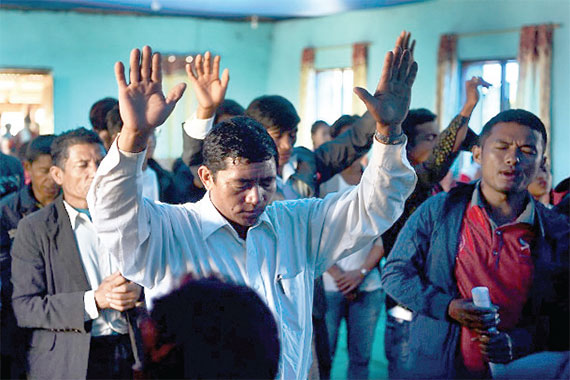
Nepal’s Christians need new laws as cults wreak havoc
A pastor accused of evangelizing in Sarlahi, a remote province in southern Nepal, was beaten by an angry mob on March 24 as religious minorities in the country face escalating levels of persecution. Meanwhile, the organizer of a retreat held in Kathmandu Valley from April 11-13 had to change the venue at the last minute due to threats from Hindu extremists.
Another prayer service scheduled for April 13-14 at the Jesuit run St Xavier school in Patan, Nepal’s third biggest city, also changed venue after Hindu delegations reported that the school was acting as a venue for proselytizing.
Proselytizing and religious conversion are still legally prohibited in Nepal, which began admitting foreign missionaries in the early 1950s but remains heavily committed to ensuring there are no threats to Hindus. Calls to dilute or scrap the law have been surfacing for years.
Hindus represent 80 percent of the population. Buddhists make up 11%, Muslims 4%, and Christians a meagre 1-2%.

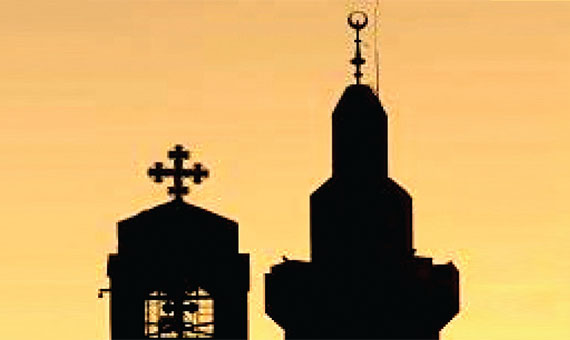
Christian-Muslim dialogue should continue and promote freedom of religion
The Pontifical Council for Interreligious Dialogue issued a message addressed to Muslims on the occasion of Ramadan, which began on 5 May, and for the Eid al-Fitr, which ends the Islamic holy month of fasting.
Titled ‘Christians and Mu-slims: Promoting Universal Fraternity Dear Muslim Brothers and Sisters,’ the message is signed by Secretary of the Dicastery, Miguel Ángel Ayuso Guixot, MCCJ.
The culture of dialogue between Christians and Muslims, it says, must go on and “promote every person’s right to life, to physical integrity, and to fundamental freedoms, such as freedom of conscience, of thought, of expression and of religion.”
“The month of Ramadan with its dedication to fasting, prayer and almsgiving, is also a month for strengthening the spiritual bonds we share in Muslim-Chri-stian friendship. I am pleased, therefore, to take this opportunity to wish you a peaceful and fruitful celebration of Ramadan.”
“Our religions invite us to remain rooted in the values of peace; to defend the values of mutual understanding, human fraternity and harmonious co-existence; to re-establish wisdom, justice and love” (cf. Human Fraternity for World Peace and Living Together, Abu Dhabi, 4 February 2019).

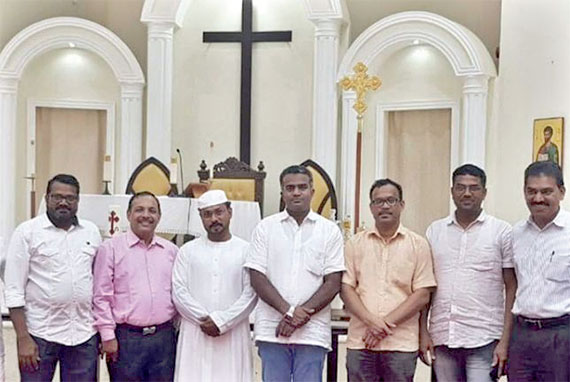
Iftar held inside a church premises
Keeping with the UAE’s vision for 2019 to be the ‘Year of Tolerance’, a group of expats took the opportunity to celebrate Ramadan and partake in a special Iftar inside a church in Ras Al Khaimah.
In what could be a first, the expats, mainly from Kerala, spent the evening celebrating Ramadan and partaking in the Iftar inside St Luke Anglican Church in the Northern Emirate.
St Luke Anglican Church is part of the Chaplaincy of Dubai and Sharjah with the Northern Emirates, within the Anglican Diocese of Cyprus and the Gulf; one of four Dioceses which make up the Episcopal Church in Jerusalem and the Middle East, which is also a Province within the world-wide Anglican Communion. There are five churches within the chaplaincy: St Luke Anglican Church, Ras Al Khaimah; St Nicholas Anglican Church, Fujairah; St Martin Anglican Church, Sharjah; Christ Church (Anglican), Jebel Ali; and the Holy Trinity Anglican Church, Dubai. Chief priests from three religious groups –Hindus, Christians and Muslims–came together to spread the message of peace, love and harmony among the expatriate community in the UAE.
The event titled “Vishu Easter and Iftar meet”, was organised by the RAK Knowledge Theatre in conjunction with other community groups, including the Kerala Muslim Cultural Centre based in the UAE.


‘Today God has answered their prayers’: Pakistan releases Asia Bibi
Pakistani authorities freed Asia Bibi, a Catholic woman acquitted of blasphemy, and she has flown to Canada to join her family at a secret address. Her release was confirmed on May 8 by Wilson Chowdhry of the British Pakistani Christian Association, who has been in almost daily contact with Ashiq Masih, Bibi’s husband.
In a statement sent by email to Catholic News Service, Chowdhry, who is based in London, said a British diplomat confirmed early on May 8 that Bibi had left her country.
“Ashiq has always remained hopeful of an imminent release from Pakistan, and we have both been shocked at how long it has taken,” he said. “Asia Bibi and Ashiq have remained resolute in their faith and have prayed daily for their release, and today God has answered their prayers,” he added.
Chowdhry said Bibi was “unwell” after being held in isolation for nearly a decade.
“She must be treated with utmost care and receive appropriate medical care, now she is free,” he said.
“The Pakistani government must ensure Asia and her family are compensated for the loss to their freedom and the fragile safety they have had to suffer under their auspices,” he continued. “Moreover, moves must be made to reform or abrogate the infamous blasphemy laws of Pakistan.”
Bibi’s release was subsequently confirmed by Saiful Malook, the lawyer who represented her in the Supreme Court of Pakistan.
“She was reunited with her family in Canada more than five hours ago,” he told ucanews.com on May 8.
Bibi, a mother of five, was sentenced to hang for allegedly insulting Muhammad, the founder of Islam, under Section 295C of the Penal Code.
Communal harmony among Lankan Christian, Muslim minorities
In the aftermath of the horrific Easter Sunday multiple bomb blasts by Islamic terrorists on 3 Churches and 3 luxury hotels in Sri Lanka claiming lives of over 250 people including 50 foreigners and injuring hundreds, the Churches were closed.
Lankan Cardinal Malcolm Ranjith has now called for Churches to re-open for Sunday services from 5th May 2019.
In the context of retaliation from some Christian groups targeting innocent Muslims, the Federation of Asian Bishops Conference president Cardinal Charles Maung Bo of Myanmar wrote on 3rd May saying, “I condemn unequivocally the horrific unprovoked suicide bomb attacks against unarmed civilians in Churches and hotels on Easter Sunday, April 21, 2019 in Sri Lanka.”
The 71 year old cardinal further condemned the trend of retaliation by some Christian groups saying, “The Church is deeply concerned by reports of revenge and the targeting of Muslim residents, refugees and asylum seekers in Sri Lanka. Many have fled persecution in their own lands, and are now being targeted again. Almost 900 have been reported to have been at risk of reprisal and 150 of these were forced to seek shelter in police stations.”