
Catholic Sisters Help Children Living with HIV Build a Better Future
Faith Brings New Hope to Assam Village Once Known for Alcoholism
Cardinal Tagle: Friendship reveals the face of Jesus and the Church
Israel prepares ‘extensive’ West Bank operation after deadly shooting near Tal
Pope: Visit to Türkiye and Lebanon teaches that peace is possible
Thousands protest corruption in Philippines as Church leaders call for accountability
Pope: Nicaea invites Christians to unity in face of violence, conflict
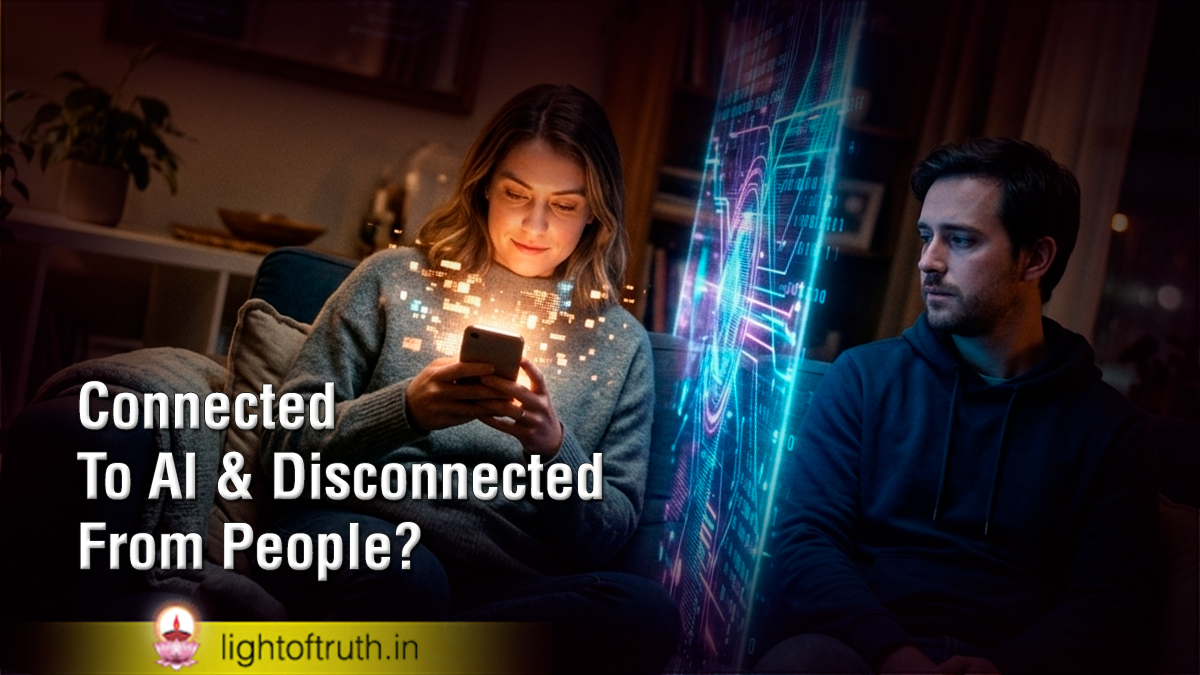

Artificial intelligence is no longer something confined to laboratories, offices or science-fiction movies. It has quietly entered the most personal spaces of our lives, including our relationships. People now use AI to draft messages to a spouse or partner, decide how to respond after an argument, write love letters, plan dates, interpret a partner’s messages, seek advice about relationship problems, or even turn to AI for comfort when they feel lonely. Some use AI companions simply because they are always available to listen. This raises an important psychological question: could our growing connection with AI gradually weaken our connection with people?
AI offers something many human relationships cannot provide: immediate attention without criticism, impatience or rejection. For someone experiencing loneliness, anxiety or social insecurity, talking to an AI may feel safe and comforting. There is no awkward silence, fear of being misunderstood, or need to manage another person’s emotions. But this convenience can also become a psychological trap.
Healthy relationships require vulnerability. They demand patience, compromise, forgiveness and the ability to tolerate differences. Real people are unpredictable and imperfect. If we become accustomed to conversations where our preferences are constantly accommodated and our opinions are easily validated, we may gradually lose patience with the complexity of real relationships.
AI could also change the way we experience intimacy within families, friendships and marriages. Instead of having a difficult conversation with a spouse, a person may turn to AI for comfort. Instead of facing loneliness and building friendships, one may choose an artificial companion that is always available. Technology designed to connect us could, ironically, become a means of avoiding genuine connection.
There is also the possibility of emotional dependency. When AI becomes the first place we turn to for reassurance, advice or emotional comfort, we may slowly surrender some of our ability to cope independently and communicate directly with others. The danger is not that AI becomes too intelligent, but that we become too dependent.
AI itself is neither the enemy nor the solution. It can help us learn, reflect, communicate and even prepare for difficult conversations. The real question is how we use it.
Perhaps the greatest challenge of the AI age is not teaching machines to become more human, but ensuring that humans do not become less human.





Leave a Comment