

The Protestant Church of North India (CNI) has reinstated a bishop three months after it laicized him for breaking away and declaring his diocese autonomous. The CNI Synod, the church’s top decision-making body, on Nov. 19 decided to revoke its decision to laicize Bishop Basil B. Baskey of Chotanagpur Diocese in eastern India’s Jharkhand State. The Synod on Aug. 11 removed Bishop Baskey from office and withdrew his ordination as a priest and a bishop after an internal probe found the bishop guilty of acts of revolt and indiscipline. “The Synod has revoked its Aug. 11 decision and agreed to reinstate Bishop Baskey as the bishop of Chotanagpur Diocese,” said Suresh Jacob, a senior member of the Synod executive committee.
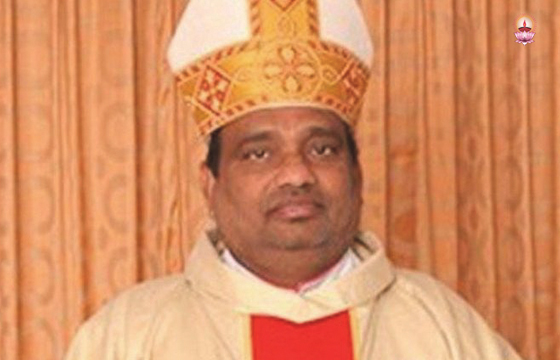
New archbishop appointed for Hyderabad
Pope Francis on November 19 transferred Bishop Anthony Poola of Kurnool to Hyderabad as its archbishop.
The Pope also accepted the resignation of Archbishop Thumma Bala of Hyderabad, who reached the bishops’ canonical retirement age of 75 in April 2019. Archbishop Bala headed the archdiocese for 9 years since 2011.
Bishop Poola was born on November 15, 1961, at Chindhukur, Andhra Pradesh. He joined the minor seminary in Kurnool and studied at St Peter’s Pontifical Major Semi-nary, Bangalore. He was ordained a priest on February 20, 1992. At the age of 46 he was appointed as the Bishop of Kurnool on February 8, 2008,’
He has served as chairman for Youth Commission Telugu Region, Scheduled Castes/Backward Classes Commission and Andhra Pradesh Social Service Society. He also served the Telugu Catholic Bishops’ Council as its secretary general and treasurer.
He was also the chairman of the Sikh Village Campus, secretariat for TCBC Priests Community.
He has completed 28 years as a priest and 12 years as a bishop, says a press release from Father Stephen Alathara, deputy secretary general of the Conference of Catholic Bishops of India.
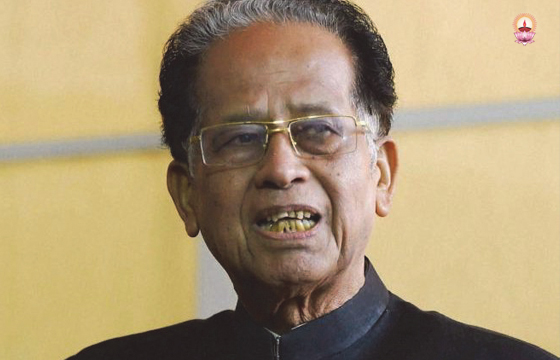
Assam Christians mourn death of former chief minister
The Christian community of Assam joined social and political leaders to mourn the death of Tarun Gogoi, a former chief minister of the north-eastern Indian State. Gogoi, who was Assam chief minister for three terms died on November 23 while undergoing treatment at the Gauhati Medical College Hospital for post-Covid complications. He was 84.
The death was confirmed by Assam Health Minister Himanta Biswa Sarma.
The Christian community expresses “its deepest sorrow and offers its condolences at the sad demise” of Gogoi, says a condolence message from Allen Brooks, spokesperson of the Assam Christian Forum.
Exhibition of paintings by Capuchin priests concludes
An exhibition of paintings by Fr Joby Maryson Capuchin and an exhibition of pen sketches by Fr R.V. Capuchin was held at Kerala Lalithakala Acadami in Thrissur from 30 April to 5 May 2018.
Fr Joby Marson Capuchin, an ardent admirer of mural paintings, show-cased about 12 sets of pictures of the Saint Francis of Assissi, while Fr R.V. Capuchin displayed his works on the theme ‘motherhood’ in the rather unusual painting format of ball-pen sketching.
Each of the drawings depicts maternal love, womanhood, affection and spirituality. The emotions in the cycle of a woman life like childhood, menstrual period, marriage and motherhood are depicted beautifully.
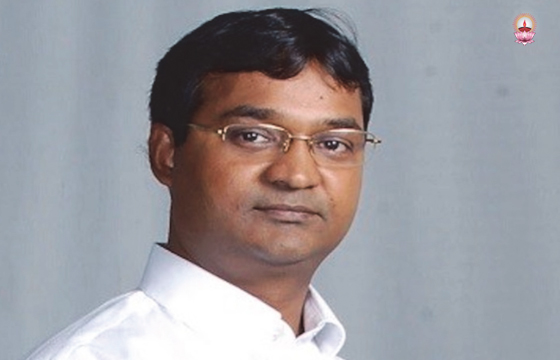
Pope defrocks Indian priest
Pope Francis has dismissed from priesthood the former spokesperson of the Catholic Church in the central Indian State of Madhya Pradesh.
“Now, with regret and pain I wish to formally communicate to everyone that by an official decree from our Supreme Pontiff Pope Francis, dated 22 October 2020, Anand Muttungal (Joseph M.T) of the Archdiocese of Bhopal, has been dismissed in poenam (penalty) from the clerical state and dispensed from all his clerical obli-gations, including that of celibacy,” says a November 26 message from Archbishop Leo Cornelio of Bhopal.
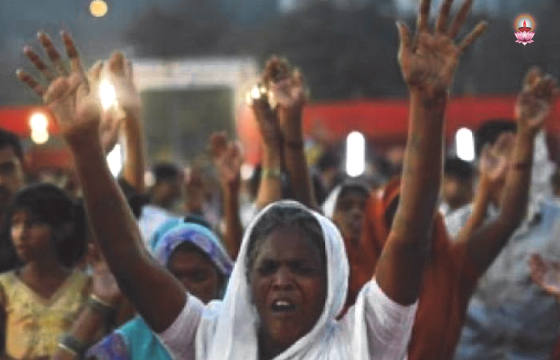
Bloody attack on Chhattisgarh Christians preparing to celebrate Christmas
Hundreds of people have been injured at a gathering of Christians preparing to celebrate Christmas. There are even some unconfirmed reports of deaths.
The area is isolated, perhaps not allow witnesses and the police refuse to respond to calls. The violence took place in the village of Sindhwaram, in Chhattisgarh: from 2.00 AM night until the morning, a crowd of drunk and armed people attacked a tent where groups of Christians who had been celebrating the beginning of the Advent season in preparation for Christmas had gone to sleep the previous day. The gathering was also attended by faithful from other villages around. The village members have sealed off the area and are not allowing anyone to enter or take photos or videos.
Activist Arun Pannalal, president of the Chhattisgarh Christian Forum, managed to get in touch with the Gajral police station only morning at 6 am. The police denied all violence. The victims are being housed in the police station. Members of the Chhattisgarh Christian Forum say that as soon as they heard of the attack, they immediately phoned the police, but the phone lines were cut off from 2am until this morning.
For the past two years Arun Pannalal has been appealing to the Chief Minister of the State and the Minister of the Interior, “but my requests – he tells AsiaNews – have not been taken seriously. The entire Bastar region suffers from premeditated attacks targeting Christains. They are attacks related to a planned conspiracy. The government should act immediately ordering an in-depth investigation into this violence.”
–ASIANNEWS

Guide to interfaith marriages to be drawn up in India
Cardinal George Alencherry has formed a commission to frame guidelines for interfaith marriages following a controversy over a retired bishop solemnizing such a marriage between a Christian bride and a Muslim groom in a church in India’s Kerala State.
Cardinal Alencherry, the head of the Eastern-rite Syro-Malabar Church based in southern India, “wants to clear the confusion among the faithful over interreligious marriages and constituted a commission of canon law experts to prepare the guidelines to be followed in interreligious marriages in churches,” said Father Alax Onampally, secretary of the church’s media commission. Card. Alencherry, the president of the Kerala Catholic Bishops’ Council, also sought a separate report from Archbishop Antony Kariyil of Ernakulam-Angamali Arch-diocese, where the controversial marriage was solemnized.
On Nov. 9, Bishop Mathew Vaniyakizhakkel of Satna in the central State of Madhya Pradesh, blessed the marriage between the Catholic bride and Muslim groom at Kadavanthra St Joseph Church in Ernakulam-Angamali Archdiocese. Archbishop Kariyil’s probe will investigate if the parish priest obtained permission from the local bishop to solemnize the marriage in church.
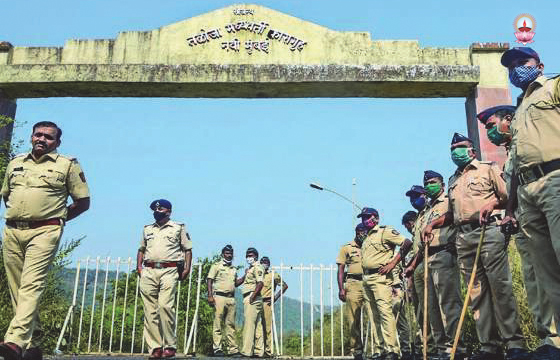
Elderly Jesuit priest describes ‘joy’ of Indian prison life
An elderly Jesuit priest struggling in an Indian jail with ill health says he still finds happiness in listening to the stories of other inmates and credits his congregation for the training that helped him cope with such a difficult situation. Father Stan Swamy, 84, has been in Taloja Central Jail in Mumbai, capital of Maharashtra in western India, since Oct. 9 following his arrest on charges of sedition and links with outlawed Maoist rebels.
The priest is suffering from Parkinson’s disease, a hernia and age-related ailments and is unable to eat and drink without help from other prisoners.
Inmates help him to bathe, wash his clothes and do other daily chores on account of his age and ill health. “Listening to the life narratives of the poor prisoners is my joy in Taloja prison. I see God in their pains and smiles,” Father Swamy told one of his priest colleagues in a telephone call. “Now, I am using a baby-sipper mug, which I purchased through the prison hospital. I have communicated this need to our lawyers. I am still awaiting to receive the sipper-tumbler,” Father Swamy said.
The priest maintains an attitude of contentment even in his struggle and gives credit to his Jesuit training and close to 50 years of working with under privileged indigenous and Dalit former untouchable people.
“My needs are limited. The adivasis [indigenous people] and the Society of Jesus have taught me to lead a simple life,” he said.
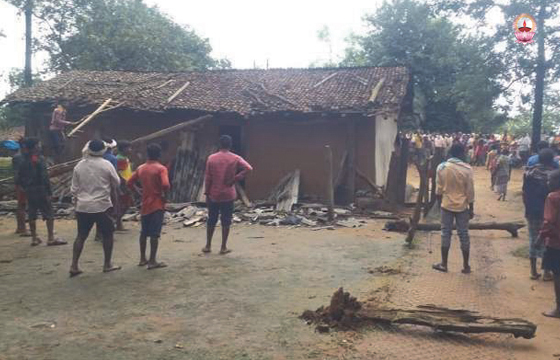
Driven out Indian Christians return, threat lingers
Some 100 Christians have returned to their villages in India’s Chhattisgarh State following a court order, almost two months after they were attacked and driven out of their homes.
The state High Court in Bilaspur ordered the Kondagaon district administration to facilitate the safe return of the displaced Christians from three villages and to ensure their protection.
“We have returned to our villages as the court has ordered our protection,” Shiv Ram, one of the petitioners to the court, told UCA News on Nov. 17.
Ram said all 66 Christians from 10 families driven out of his Kakrabeda village have returned to the village. Some 30 Christians from six families, who fled from two other villages, also have returned, he said.
A mob of suspected Hindu right-wing activists attacked 16 houses in three villages in the state’s Bastar region on Sept. 22 and 23. The attack came after Christians refused a demand to abandon their faith in Jesus Christ.
They also attacked Christians, including women and children, in front of the police, forcing them to escape to a nearby forest to save their lives.
Following the Nov. 8 court order, the administration has set up a police check post and posted 12 police officers to ensure the Christians’ safety.

Loyola College professor listed among world’s top scientists
A female professor at Loyola College (Autonomous) is listed in the world’s top 2 percent scien-tists. J. Judith Vijaya of the De-partment of Chemistry has been named in the world’s top scientist, in the field of “materials.”
The analysis was conducted by a team of scientists from Stanford University, USA, led by John P. A Ioannidis and published in PLOS Biology on October 2, Jesuit Father A Thomas, principal said in a statement.
The management of Loyola congratulates Vijaya for placing Loyola College on the global map of scientific research and bringing laurels to the institute, he added.
“Our youngest cousin Vijaya who is a professor at Loyola Chennai is listed in the world’s top 2% scientists. Proud of this brilliant sister of ours,” said Sister Cicily, a Handmaid of Mary nun, who is working in Odisha. Vijaya has been teaching at Loyola College since 2001.
Jesuit-run Loyola College was established in 1925. It offers several undergraduate and graduate degrees in Commerce, Sciences, Humanities, Social Sciences and liberal arts.
She did her undergraduate course in Chemistry at Stella Maris College, University of Madras, Masters in Chemistry and Ph.D. at Loyola College.