
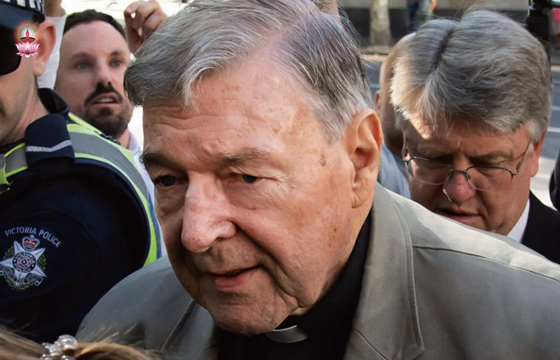
A judge on June 4 ordered a dozen Australian media compa-nies to pay fines from 1,000 Australian dollars ($766) to AU$450,000 ($345,000) for breaching a gag order by publishing references to Cardinal George Pell’s since-overturned convictions in 2018 for child sexual abuse.
Dozens of companies, repor-ters and editors were initially charged with contempt and breaching a suppression order over their coverage of the convictions, which were banned from publication in Australia until February 2019.
Such suppression orders are common in the Australian and British judicial systems. But the enormous international interest in an Australian criminal trial with global ramifications high-lighted the difficulty in enforcing such orders in the digital age. The media companies pleaded guilty in February to 21 charges of contempt in a plea deal in the Victoria state Supreme Court.
Justice John Dixon said on June 4 the guilty pleas did not demonstrate remorse but were entered to protect individual editors, reporters and broadcast presenters from convictions. The individuals had faced potential prison sentences.
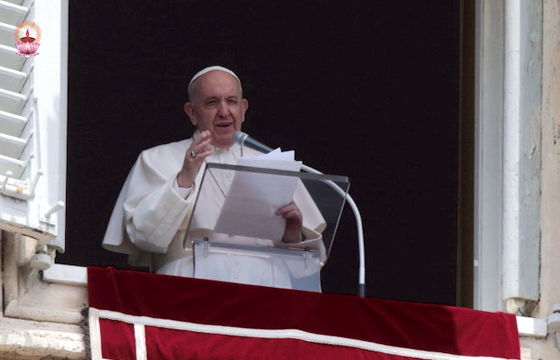
Pope orders sweeping change of abuse law
Pope Francis has ordered a sweeping revision of the Church’s Canon Law, toughening up regulations on abuse which now include lay people who commit offences while in office.
The changes were made after a 14-year process of study of the Church’s laws, and is the most significant updating of Canon Law since the 1983 code was published. The revisions concern book VI of the code, which covers penal law, and are significant as
Canon Law is the tool which regulates
Church discipline.
The revisions make clear that abuse can be committed by a cleric against an adult, and not just a minor, and states that “any one of the faithful who enjoys a dignity or performs an office or function in the Church” abuse . Any priest, it says, who abuses his authority to force someone to engage in sexual acts can be removed from the clerical state.
Furthermore, the new norms criminalise the grooming of minors or those with “imperfect use of reason” by priests, which includes exposing a victim to pornography, a method long used by abusers.
As a result of the revisions, bishops and other church leaders who display “culpable negligence” of abuse can be removed from office. In a letter introducing the changes, the Pope reminded bishops they are responsible for following the law, and the updating of the code was designed to reduce the number of occasions where penalties for abuse were left to the “discretion” of some superiors.
Significantly, the abuse of minors was placed under the section “Offences Against Human Life, Dignity and Liberty,” instead of the previous title “Crimes Against Special Obligations.” The Bishops of England and Wales had this year requested this change in a letter to the office tasked with undertaking the revision of the code. They had requested a different title to placing abuse under “crimes against the obligations of celibacy on the part of clerics.” At the time they were told the change would be made.
The Pontifical Council for Legislative Texts has overseen the latest changes with Archbishop Filippo Iannone, explaining at a Vatican press briefing on Tuesday 1 June that there had been “a climate of excessive slack in the interpretation of penal law,” where mercy was placed ahead of justice.
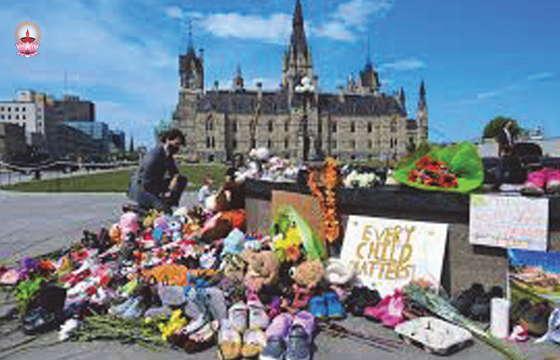
Pope acknowledges ‘pain’ for boarding school discovery, no apology
Pope Francis expressed closeness to all Canadian people traumatized by the shocking discovery of the remains of 215 children in the Kamloops Indian Residential School, Canada’s largest indigenous boarding school.
Though he spoke of pain and suffering, the pontiff avoided apologizing.
“I follow with sorrow the news coming from Canada,” Francis said at the end of his Sunday Angelus prayer from the balcony in the Apostolic Palace overlooking St. Peter’s Square. “I join the Canadian bishops and the entire Catholic Church in Canada in expressing my sympathy to the Canadian people, who have been traumatized by the shocking news.”
The pontiff said that the “sad discovery” further heightens “our awareness of the pain and suffering of the past,” urging Canada’s political and religious authorities to continue to work together with determination to shed light on this event and to “commit themselves humbly to a path of reconciliation and healing.”
Francis also said that the difficult times posed by the discovery of the remains in the Canadian State of British Columbia represent a strong call to “turn away from the colonizing model,” which also applies to what he called today’s “ideological colonization.”
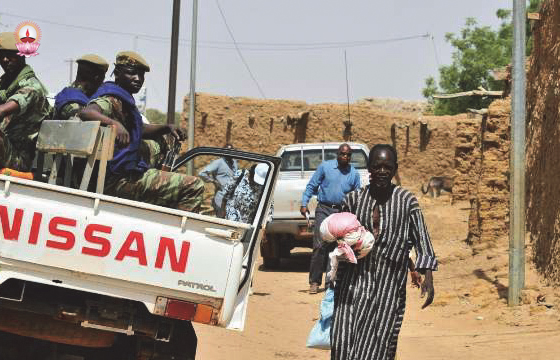
Burkina Faso bishop deplores village attack that left 160 dead
A Catholic bishop in Burkina Faso has condemned an Islamist attack on a north-eastern village which left at least 160 people dead and urged residents to “keep faith and stay united.”
“They executed them, purely and simply, and then burned the market, houses and shops, and the vehicles, lorries and transport parked outside,” Bishop Laurent Dabire of Dori said, decrying the June 5 attack on Solhan, a village in his diocese.
Although no group claimed responsibility, authorities blamed Islamists for the attack, which also left 40 people injured. It is believed to be the worst violent incident since the start of an insurgency in 2015.
In a Vatican Radio interview June 7, Bishop Dabire, president of the bishops’ conference of Burkina Faso and Niger, said he believed the attack was retaliation for local involvement in a government-backed civil defence militia, set up in 2020 in the gold-mining area.
The early-morning attack fuelled a “sense of powerlessness,” Bishop Dabire said.
“People would like to do something, but what can they do, when faced with an invisible enemy, unknown and well armed?” the bishop asked. “We must not lose confidence in life, keeping faith firmly in hope, and staying united in face of the violence falling on us, in order to explore all solutions, including dialogue.”
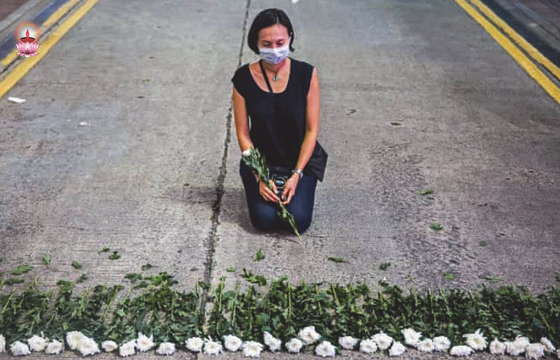
Hong Kong Masses remember Tiananmen Square protesters
The protesters killed in Tiananmen Square in mainland China on June 4, 1989, used to be remembered in Hong Kong with an annual candlelight vigil in the city’s expansive Victoria Park, attended by crowds as big as 130,000, all holding flickering candles.
Now the lawful gatherings seem to be limited to seven Catholic churches. The reason for the dramatic downsizing? Politics and the pandemic. Police said they had to cancel the event this year and last year because of social distancing rules put in place to control the spread of COVID-19. This year’s event is the first one banned since the Chinese government in Beijing imposed a national security law on Hong Kong last June. The controversial legislation prohibits acts of secession, subversion, terrorism and collusion with foreign forces.
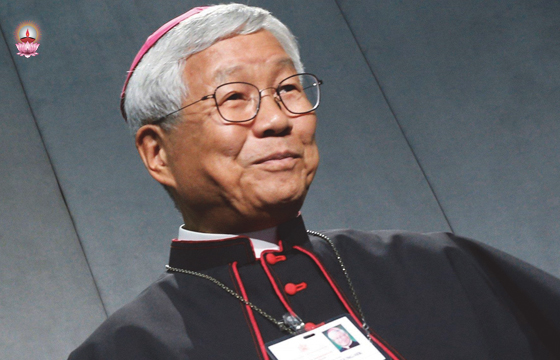
Pope names South Korea bishop prefect for clergy
Pope Francis has appointed South Korean Bishop Lazarus You Heungsik of Daejeon as the new prefect of the Vatican Congregation for Clergy.
The Vatican made the announcement June 11, adding that the outgoing prefect, Italian Cardinal Beniamino Stella, 79, would remain at the congregation until the new prefect could assume his role.
The new prefect has also been made an archbishop, the Vatican added.
Born Nov. 17, 1951, in Nonsan, Archbishop You studied in Seoul and in Rome, where he received his doctorate in dogmatic theology at the Pontifical Lateran University.

Iran expels Italian nun who has spent her life for the poor of the country
Seventy-five-year-old Sister Giuseppina Berti, who has worked for 26 years in the leprosarium of Tabriz and now lives in Isfahan in the house of the Congregation of the Daughters of Charity of St. Vincent de Paul, will have to leave Iran in the coming days. In fact, her visa has not been renewed and she has received a travel order. Her departure will make it difficult for her fellow nun, Sister Fabiola Weiss, a 77-year years old Austrian, who has dedicated 38 years to the poor and the sick in the leprosy hospital, and whose residence permit has been renewed for another year. The two religious nuns, who have dedicated their lives to the country’s sick without distinction of religious or ethnic affiliation, are forced to abandon the Congregation’s house, built in 1937.
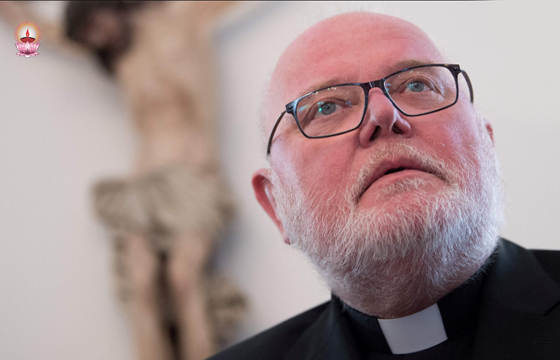
German lay Catholics ‘shattered’ by Marx resignation
The head of Germany’s lay Catholics has said he is “shattered” by the resignation of Cardinal Reinhard Marx while others have written to Pope Francis, asking him not to accept.
The head of the Central Committee of German lay Catholics (ZdK), Thomas Sternberg, with whom Marx initiated the German synodal path for church reform in December 2019, told the Rheinische Post that he was “shattered” by Marx’s resignation. “Should the Pope accept his resignation, that will leave a huge hole in the German Church”, he said.
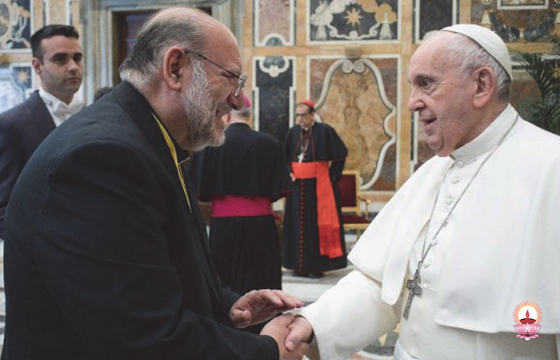
‘Old habit’ of covering up abuse must stop everywhere, pope says
Abuse against a minor is a kind of “psychological murder” that can destroy the victim’s childhood, Pope Francis told an Italian association active in the fight against child abuse and online child pornography.
“Therefore, protecting children against sexual exploitation is a duty of every nation, (which is) called to identify both traffickers and abusers,” he said during an audience May 15 at the Vatican with members of the association, Meter.
The association was founded in 1989 by Father Fortunato Di Noto, an Italian priest who has been leading the fight in Italy to protect children from online predators around the world. It works with law enforcement, government agencies and schools in fighting the crime of child sex abuse and other forms of online abuse, in prevention and offering safety and help for victims.
The pope praised its work, especially in trying to protect children from danger online.
“It is a scourge that, on the one hand, must be confronted with renewed determination by public institutions, authorities and others and, on the other hand, it requires raising even more awareness in families and different educational agencies,” he said.
“Even today, we see how often in families the first reaction is to cover everything up,” he said, adding it has always been the first reaction by other institutions, too, including the church.
“We have to fight against this old habit of covering it up,” he said. “Abuse against minors is a kind of ‘psychological murder’ and in many cases an obliteration of childhood,” he said, calling on everyone to do their part to safeguard children.
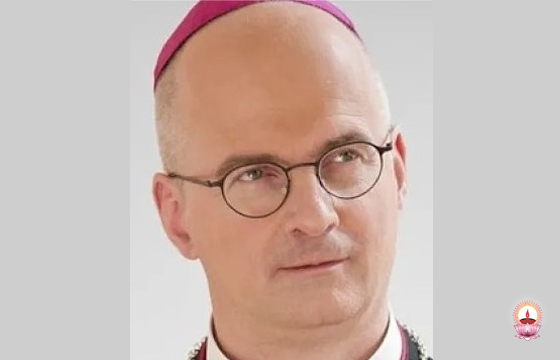
Swiss bishop appoints lay people in episcopal vicars’ place
A Swiss Catholic bishop has announced that he is appointing lay people in place of episcopal vicars in his diocese.
Bishop Charles Morerod, who has led the Diocese of Lausanne, Geneva, and Fribourg since 2011, revealed the decision in a May 25 interview with the Swiss Catholic Church’s website kath.ch. The Dominican prelate said that he had chosen two lay people and a deacon as his “lay representatives,” replacing three episcopal vicars.
“By virtue of baptism, lay people have an active role in the life of the Church and should not only take care of administrative matters, but also be active in pastoral care,” he said.
“This cooperation is a positive thing. It already exists, but we can further develop it positively.”
CNA Deutsch, CNA’s German-language news partner, reported that the three vicariates concerned will now be known as “diocesan regions.”
According to the bishop, his representatives will take care of “local issues” and discuss them with him at the diocesan level.
The Code of Canon Law, the body of ecclesiastical laws for the Latin Church, says that “In each diocese the diocesan bishop is to appoint a vicar general to assist him in the governance of the whole diocese.”