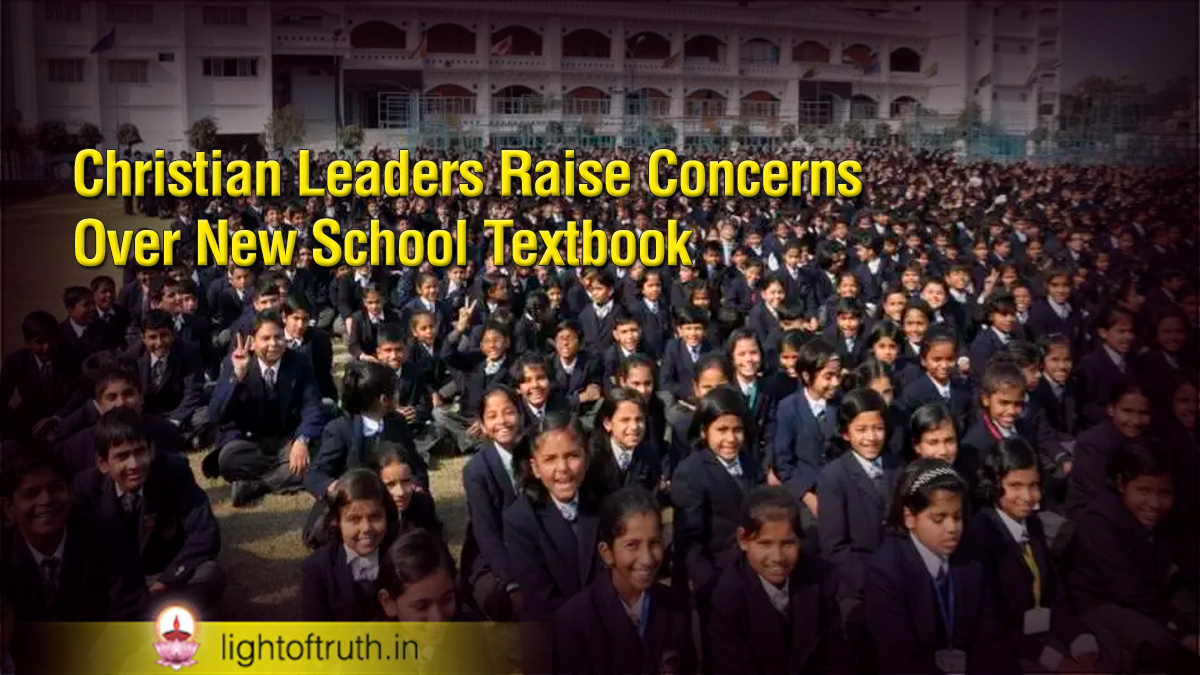
Christian leaders, educationists, and civil rights groups have expressed concern over a new Class 6 school textbook introduced by the Indian government, saying it may promote a majoritarian view instead of reflecting India’s cultural and religious diversity.
The textbook, titled “Krishna,” was prepared by the National Council of Educational Research and Training (NCERT), an organization under the Central Board of Secondary Education (CBSE). Government officials said the book is named after the Krishna River and is part of a series named after Indian rivers. However, critics believe the title may also be linked to the Hindu deity Krishna.
One chapter, “Health is Wealth,” has drawn criticism for promoting the Hindu concept of sattvic food, which focuses on vegetarian eating. Critics say the chapter does not include meat, fish, or eggs as part of a balanced diet, even though these foods are commonly eaten in many parts of India.
A. C. Michael said the textbook could make minority communities and people from different cultural backgrounds feel excluded. He added that education should encourage inclusion, respect, and critical thinking.
Michael Williams said school textbooks should reflect India’s constitutional values of equality, diversity, and respect for all cultures. He stressed that no child should feel that their food habits, faith, or family traditions are less important than others.
Education activists have also questioned recent curriculum changes, saying local cultures and regional diversity should be respected in school education. The government has defended the textbook, stating that the changes are intended to strengthen national unity and improve educational standards. However, the revisions have sparked a wider debate on how India’s history, culture, and diversity should be presented in school classrooms.