
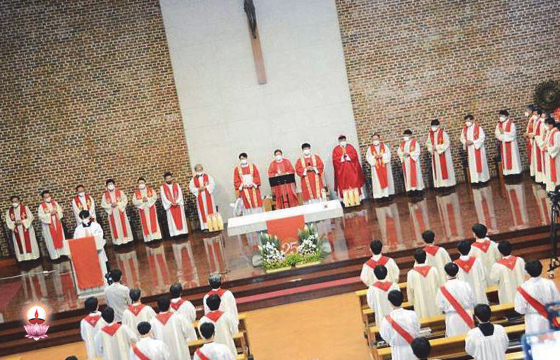
A Catholic archdiocese in South Korea will hold a musical contest with an aim to revitalize church music and to provide the faithful with an opportunity to reflect and practice pastoral priorities of the Church.
The Archdiocese of Daegu, which covers the third largest metropolitan area after capital Seoul and Busan, is launching the Creative Artist Contest that focuses on a 10-year pastoral plan recently adopted by the arch-diocese.
The pastoral plan announced by Archbishop Thaddeus Hwanki Cho is based on the theme “Community living the joy of the Gospel together.”
Any faithful can participate in the contest and all have been asked to submit traditional church music and music on Catholic life with core values of the pastoral plan such as the Word of God, fellowship, liturgy, love of neighbours and missions.
In cases of church music, both single-voice and mixed choral songs with three or more voices that can be used in liturgy are acceptable, while music on Catholic life should be in single-voice form that anyone can sing easily.
The deadline for submissions is Sept. 30 and results of the contest screening will be announced in December. The prizes will be conferred during a grand ceremony next January.
A total of 20 million won (US$17,600) will be awarded to winners — 3 million won for the first prize, 2 million won for second, and 1 million won for others.

Indonesian Catholics mourn death of Dutch-born nun
Catholics in Indonesia’s Ruteng Diocese are mourning the death of a Dutch-born nun who spent more than half of her life doing family pastoral work in their diocese.
Sister Robertilde Wihelmina van Der Meer from the Congregation of Servants of the Holy Spirit (SSpS) died on June 18 at 87 and was buried at the congregation’s cemetery in Ruteng on June 21.
News of her death prompted many Catholics, including the district government, to express their condolences on social media for the friendly nun.
Sister Natalia Maria Naki, director of SSpS-run St. Raphael Hospital in Cancar, 15 kilometers west of Ruteng, who had lived with Sister Robertilde since 2012, said the nun showed “total devotion to the people she served.”

Cardinal Advincula is installed as Manila’s new archbishop
Cardinal Jose Advincula was installed as the new archbishop of Manila in a ceremony at the Philippine capital’s historic cathedral on June 24.
The 69-year-old cardinal from Capiz became the 33rd archbishop of the country’s largest diocese, succeeding Cardinal Luis Tagle, now prefect of the Congregation of the Evangelization of Peoples in Rome.
The installation was attended by the papal nuncio, Archbishop Charles Brown, along with another former Manila arch-bishop, Cardinal Gaudencio Rosales, and apostolic administrator Bishop Broderick Pabillo.
Several other bishops were also present as were a limited number of priests and civic officials in a ceremony that was scaled down to avoid the spread of Covid-19.
Cardinal Advincula, who is the sixth Filipino to hold the office, promised to fulfill his new mission by listening and knowing his sheep — Manila’s poor and marginalized.
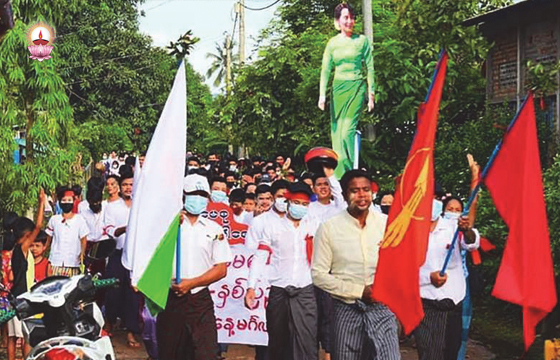
Pope in aid plea for Myanmar’s hungry displaced people
Pope Francis has appealed for aid for thousands of displaced people who are facing starvation in Myanmar after fleeing from their homes as fighting escalates in the beleaguered country.
During his Sunday Angelus on June 20, the pope joined bishops in Myanmar who have appealed for humanitarian corridors to allow safe passage for those fleeing.
He said Myanmar bishops last week launched an appeal “calling to the attention of the entire world, the heart-wrenching experience of thousands of persons in that country who are displaced and are dying of hunger.”
Echoing the bishops, the pope pleaded for respecting religious sites as places of sanctuary. “Churches, pagodas, monasteries, mosques, temples, just as schools and hospitals, are respected as neutral places of refuge.”
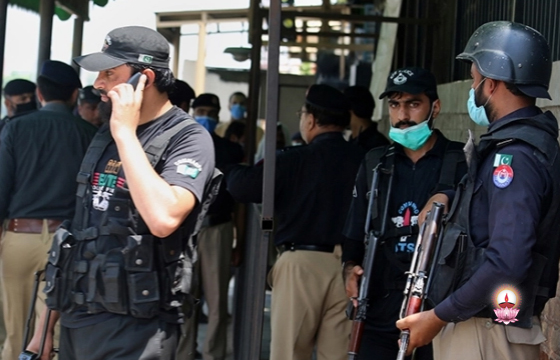
Pakistan court acquits Christian couple of ‘blasphemy’
A Pakistani court has acquitted a Christian couple who have spent seven years on death row for alleged blasphemy, their lawyer says, in a case that rights groups have long singled out for fair trial issues.
The Lahore High Court acquitted Shafqat Emmanuel and his wife Shagufta Masih after a hearing in the eastern city of Lahore on June 3, the couple’s lawyer Saif ul Malook told Al Jazeera.
“They have been acquitted on all charges […] and the capital sentence is set aside,” said Malook.
Ghulam Mustafa Chaudhry, the lawyer for the complainant in the case, confirmed the verdict to Al Jazeera.
“The appeal was allowed after hearing the arguments [from both sides],” said Chaudhry. “The grounds and reasons for the decision have not yet been given.”
Emmanuel and Masih were convicted and sentenced to death in April 2014 for having allegedly sent “blasphemous” text messages that were insulting to Islam’s Prophet Muhammad and its holy book, the Quran, to a local Muslim leader in their native Gojra, a town located 165km (102 miles) west of provincial capital Lahore. The couple denied the charges, with their lawyer arguing they were illiterate and unable to compose the text messages they were accused of sending, court documents say.
Blasphemy is a sensitive subject in Pakistan, where certain forms of the “crime” carry a mandatory death sentence.
Violence around blasphemy allegations has become increasingly common, with mob violence or targeted attacks against those accused of the “crime” or people who defend them.

Fr. William Nellikal retires from Vatican Media
Fr William Nellikal who has been in charge of the Malayalam section of Radio Vatican and Vatican News for the past 12 years will retire on 13, June. He worked 4 years during the reign of Pope Emeritus Benedict XVI and nearly 8 years with Pope Francis. He will be resuming the pastoral ministry of his alma mater, the Archdiocese of Verapoly soon after a short period of rest.

Covid-19: Indian Jesuits suffered worst despite precautions
The Society of Jesus has suffered the largest number of Covid deaths among Catholic priests in India despite all alertness and preparations, says the congregation’s South Asia chief.
“Despite our goodwill and efforts, we lost about 37 Jesuits to Covid-19 this year,” Father Stanislaus D’Souza, president of the Jesuit Conference of South Asia told on June 10.
As on June 11, the coronavirus pandemic claimed three bishops, 125 diocesan and 131 religious priests, nine religious brothers and 248 religious women, according to a list compiled by Capuchin Father Suresh Mathew, editor of the Indian Currents weekly.

Indian takes over as Radio Veritas’ chief content editor
An Indian priest on June 11 took over as the chief content editor of Radio Veritas Asia, a pan-Asian radio service of the Catholic bishops of Asia.
Fr Feroz Fernandes, a member of the Society of Missionaries of St. Francis Xavier or better known as Society of Pilar, was the editor-in-chief of a Konkani weekly “Vaura-ddeancho Ixtt” (Worker’s Friends), Goa, western India, from 2008 to 2013.
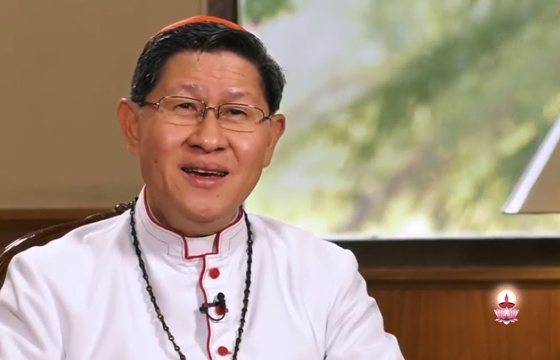
Tagle made member of Eastern Churches Congregation
Pope Francis has appointed Cardinal Luis Antonio Tagle as a new member of the Vatican body that supports the Eastern Catholic Churches throughout the world. The cardinal is the sole addition to the Congregation for the Eastern Churches, which also assists the Latin-rite Catholic dioceses of the Middle East. Cardinal Tagle is the current prefect of the Congregation for the Evangelization of Peoples or Propaganda Fide, which oversees the church’s vast “mission territories.” Formerly known as the Congregation for the Oriental Churches, it began as part of the Propaganda Fide, established by Pope Pius IX in 1862.
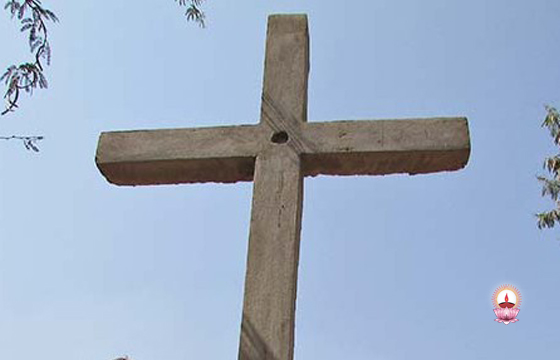
Amid pandemic, violence against Christians continues
In the first five months of 2021, in 151 days of the current year, despite the serious pan-demic situation, 127 episodes of violence against Christians took place in India: says to Agenzia Fides “United Chri-stian Forum” (UCF), reporting the data obtained from the special “Toll-free number”, a telephone line activated to monitor incidents of violence against the faithful in the country.
Among the complaints registered on the toll-free num-ber by Indian Christian citizens, there are attacks by mobs or threats and intimida-tion of various kinds, for reasons of religious affiliation.
“Furthermore, there is a tendency not to file the First Information Report (FIR), the official complaint handed to the police, which was presented only in 15 cases out of 127 episodes of violence”, notes to Fides A.C. Michael, a lay Catholic and leader of the UCF.
According to data sent to Fides, the state of Chhattis-garh, in central India, leads the count of the largest number of accidents (19), while 17 cases occurred in Karnataka and Jharkhand. Religious violence, it highlights, can be exacerbated by the conditions of poverty and destitution caused by the pandemic, across the national territory.
555 women, 120 dalits and 189 tribals were injured in these incidents. The incidents of religious violence, notes the UCF “have become so com-mon that no one feels the need to condemn them anymore, including political, civil society and religious leaders”, says Michael, signaling the danger of indifference.
Thanks to the interventions of lawyers and volunteers who provide free legal and social assistance, in the first six months of the current year 28 places of worship or prayer meetings have been reopened while 66 Christian faithful arrested by the police have been released. UCF, based in New Delhi, is an organization that promotes fundamental and civil rights and is an interfaith Christian body that fights for the rights of the Christian mi-nority. It works with network partners such as Alliance Defending Freedom India, Religious Liberty Commission of Evangelical Fellowship of India (EFI) and Christian Legal Association.