
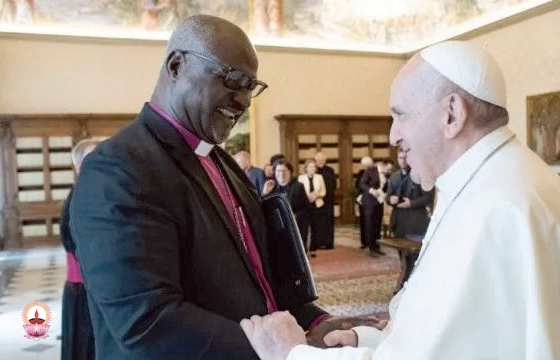
Pope Francis told a group of Lutheran leaders on June 25 that the desire for unity grows the more Christians understand how much Christ suffers over our divisions. In a June 25 meeting with representatives of the Lutheran World Federation, the pope said: “The passion for unity matures through the suffering that is felt in the face of the wounds we have inflicted on the Body of Christ.”
“When we feel pain for the division of Christians, we get closer to what Jesus experiences, continuing to see his disciples disunited, his garments torn apart,” he said.
Archbishop Panti Filibus Musa, president of the Lutheran World Federation, and the Rev. Martin Junge, the organization’s general secretary, were among those who met with Pope Francis at the Vatican on Friday. In his speech, the pope thanked the group for gifting him a paten and a chalice made in the studios of the ecumenical community Taizé.

Pope Francis appoints English Oblate, Father Andrew Small, secretary of child protection commission
Oblate Father Andrew Small, then-director of the Pontifical Mission Societies in the United States, is pictured in Washington July 21, 2020. Pope Francis has named Father Small secretary of the Pontifical Commission for the Protection of Minors.
Pope Francis has appointed Andrew Small, O.M.I., a 53-year-old English priest, as the secretary of the Pontifical Commission for the Protection of Minors. The appointment is “pro tempore,” meaning his appointment is either temporary or, more likely, subject to change or development.
Father Small, a talented organizer, fundraiser and legal expert, succeeds Msgr. Robert Oliver, who returns to work in the Archdiocese of Boston after serving eight years as the secretary of the commission. The commission expressed its “heart-felt” thanks to Monsignor Oliver for his dedicated service over these years.
The Vatican broke the news on June 22. The commission said in a press statement that it was “excited” about the appointment and recalled Father Small “has worked in human rights advocacy, economic development across Africa and Latin America and the development of initiatives to increase funding for training in child protection throughout the Universal Church.”
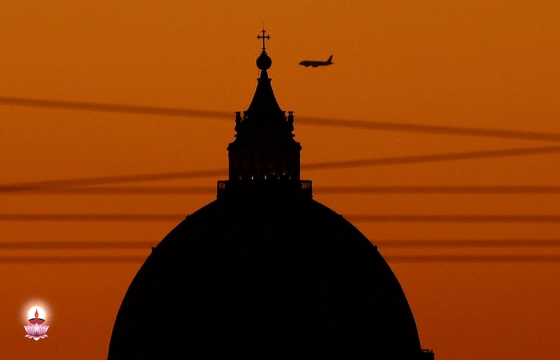
Catholics must know how Peter’s Pence is spent
The head of the Vatican Secretariat for the Economy said he hopes efforts at financial transparency and reform will foster Catholics’ trust ahead of the annual Peter’s Pence collection.
In an interview with Vatican News June 25, Jesuit Father Juan Antonio Guerrero Alves, prefect of the Secretariat for the Economy, said Catholics “have the right to know how we spend the money given to us.”
“Sometimes contradictions arise from a lack of knowledge, which, in turn, comes from a lack of transparency,” Father Guerrero said. Peter’s Pence is a papal fund used for charity, but also to support the running of the Roman Curia and Vatican embassies around the world.

Irish bishops choose woman to head steering group for synodal pathway
The Irish Catholic bishops have chosen a laywoman to head preparations for a national synod, due to be held in the next five years.
Nicola Brady has worked in a number of peace-building roles, both nationally and internationally, and currently works on building relations between the Christian traditions in Ireland.
Bishops meeting virtually for their summer 2021 plenary meeting announced June 16 that Brady will head up a new synodal steering group to make preparations. She is currently general secretary of the Irish Council of Churches.
Vice chairs for the group will be Bishop Brendan Leahy of Limerick and a layman, Andrew O’Callaghan.
In their statement, Irish bishops said their work on the synodal pathway has been “assisted and greatly encouraged by Cardinal Mario Grech and Sister Natalie Becquart of the general secretariat for the Synod of Bishops in Rome.”
The bishops also announced they had received more than 550 submissions from the public as part of the initial phase of the synodal pathway.
Brady described the Irish synod as “an important and hope-filled development in the life of the Catholic Church in Ireland.”
“I am grateful for the opportunity to help guide and shape this work,” she said.
A statement from the Catholic Communications Office said Brady “has particular expertise in the area of faith-based peace building on the island of Ireland and internationally, including human rights advocacy, support to victims/survivors, facilitation of civic dialogue, community engagement with policing, and research across a broad range of issues relevant to reconciliation.”
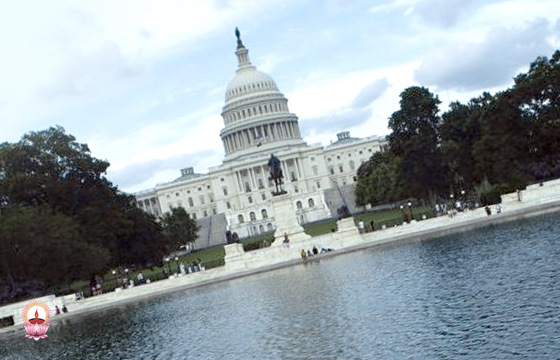
Catholic Democrats in House say they work to advance respect for life
Shortly before the U.S. Conference of Catholic Bishops announced the bishops had approved moving forward in drafting a teaching document on the Eucharist, a group of Catholic Democratic members of the House of Representatives asked the bishops not to deny holy Communion to anyone over the issue of abortion.
Saying they were guided by “the living Catholic tradition” that promotes the common good, ex-presses a consistent moral framework and calls for protecting vulnerable lives, 59 legislators said in a “Statement of Principles” released June 18 that they were concerned about the Eucharist being denied to Democratic members of Congress over a single issue: Abortion.
“We believe the separation of church and state allows for our faith to inform our public duties and best serve our constituents,” the statement said. “The sacrament of holy Communion is cent-ral to the life of practicing Catholics and the weaponization of the Eucharist to Democratic lawmakers for their support of a women’s safe and legal access to abortion is contradictory.”
The bishops approved 168-55, with six abstentions, the drafting of a document to examine the “meaning of the Eucharist in the life of the church” following a lengthy debate during their virtual spring general assembly June 16-18.
The bishops’ Committee on Doctrine, chaired by Bishop Kevin C. Rhoads of Fort Wayne-South Bend, Indiana, will draft the document. It is expected to be completed in time for the bishops’ fall general assembly in November, which will be in person.
Backers of such a document said they believe it is needed given the results of a 2019 survey that found declining belief among American Catholics about the Real Presence in the Eucharist. They also expressed concern that the long absences from regular Mass attendance because of the coronavirus pandemic may have led people to place less significance in receiving Communion, a central tenant of the faith.
One of the three parts proposed in the document would examine “eucharistic consistency” in eligibility to receive Communion. That section has drawn the most challenges from bishops opposed to the document’s drafting who said it would unnecessarily threaten church wide unity in the U.S. church as well as with the Vatican.

Bishop: Pope wants German Catholics to discuss issues openly, honestly
The president of the German bishops’ conference said he personally assured Pope Francis that the Catholic Church in Germany does not want “to go its own way.”
Bishop Georg Bätzing of Limburg, president of the conference, met Pope Francis privately at the Vatican June 24 and issued a statement afterward.
“Our conversation focused first on the situation of the church in Germany in light of the processing of sexual abuse cases and the difficult situation in several dioceses,” which have recently or are about to publish reports on the handling of abuse allegations, the bishop said. “Pope Francis is well aware of the situation of the church in Germany. He hopes that tensions can be overcome.”
Bätzing also said he “informed the pope in detail” about the status of the German church’s “Synodal Path” and “made it clear that the rumours that the church in Germany wants to go its own way are not true.”
The decision by the German bishops and a national council of laity to design an ad hoc synodal process, different from a national synod or plenary council, and the decision to discuss issues of power, sexual morality, priestly life and the role of women in the church have led some people to comment that German Catholics were ignoring church procedures and were, perhaps, even headed for schism.
Asked if he is now a practicing Catholic, UK prime minister refuses to answer
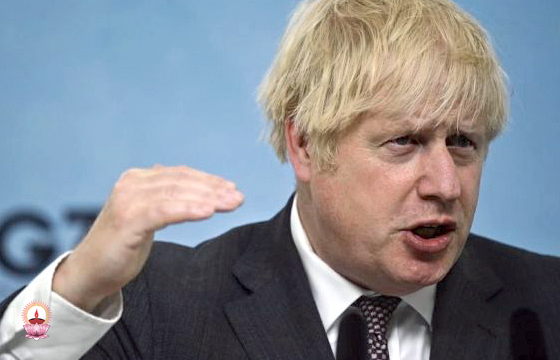
In short exchange with a journalist during the G7 summit in Cornwall, British Prime Minister Boris Johnson refused to comment on whether or not he is now a practicing Catholic.
ITV political editor Robert Peston noted that Johnson got married in Westminster Cathedral on May 29, and then asked him, “Are you now a practicing Roman Catholic?”
Johnson replied, “I don’t dis-cuss these deep issues. Certainly not with you.”
Johnson was the first prime minster to get married in office for 199 years, and his unannounced wedding to Carrie Symonds caused some to question how he was married in a Catholic ceremony, since Johnson was married twice before.
The answer was that Johnson was baptized Catholic – he left the Church and became an Anglican while in school – and Church law stipulates that his previous two marriages weren’t recognized, since they had not been solemnized in the Catholic Church.
Symonds is a practicing Catholic and has not been married before.
Writing on the ITV website, Peston said he was “struggling to make sense of the prime minister’s answer” to his question about Johnson’s religion.
“He is aware that – for better or worse (worse for a long time) – this has been a pertinent quest-ion for chief and prime ministers since Henry Vlll,” Peston wrote. “More broadly, the professed faith or none of a leader matters to many voters.”

A Marvellous encounter: Pope Francis meets Spiderman
At the end of his weekly June 23 audience, Pope Francis and Spider-Man shook hands in Rome, with the superhero handing the pontiff a mask.
Although the pope often will graciously put on a hat when it is offered to him, he didn’t try on the mask.
The moment had been building up ever since TV cameras captured a man dressed in a Spider-Man costume in the Cortile di San Damaso, where the papal audiences are being held to prevent big crowds, in light of the COVID-19 pandemic. The picture of the two went viral, with some people in social media adding the line, “with great power comes great responsibility,” used in the comics and movies by the character’s Uncle Ben.
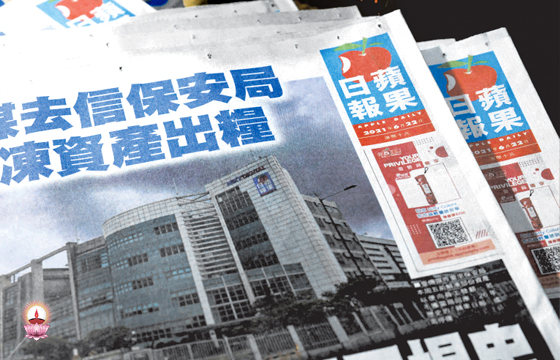
Pro-democracy newspaper Apple Daily shutting down after raid in Hong Kong
The pro-democracy Hong Kong newspaper Apple Daily will be shutting down on June 24 , one week after the arrest of five of its editors and executives under a year-old national security law.
As The Associated Press reports, the board of directors for the newspaper’s parent company Next Media, said in a statement that its online and print editions would cease production due to ”the current circumstances prevailing in Hong Kong.”
The newspaper had initially said it would continue its reporting. It printed 500,000 copies the day after the arrests, five times more than it usually does. However, Apple Daily reported that management made the decision to shut down out of concern for employee safety as well as staffing issues.
Last week, five editors and executives for Apple Daily were arrested on charges of colluding with a foreign country, with authorities citing over 30 articles that they claimed played a ”crucial part” in foreign countries issuing sanctions against China.
This is the first time that the national security law has been used against journalists for something they published, the AP notes. Under this law, much of the company’s assets were also frozen, with the company’s board of directors requesting that some of its assets be released in order to pay wages earlier this week.
The New York Times notes that Apple Daily’s criticism of authorities has sparked concerns from the Communist Party of China for several decades. Shortly after the new national security law was passed last year, the newspaper’s founder, Jimmy Lai, was arrested at his home.
Lai, 73, was sentenced to 14 months in prison in April on charges of attending and organizing an unlawful protest.
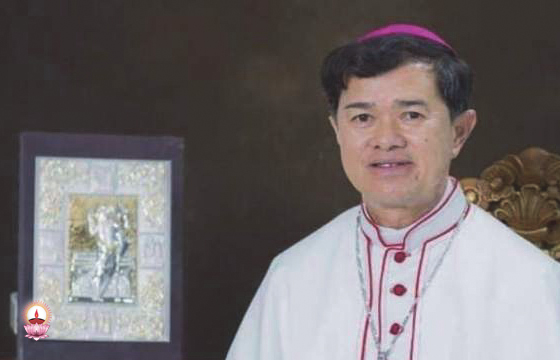
Thai Catholics and Buddhists strengthen ties
Catholic and Buddhist leaders in northern Thailand have been engaging in dialogue seeking to strengthen unity and harmony among followers of both faiths for the common good.
Interfaith dialogue is an integral part of the Catholic Church’s pastoral plan, said Archbishop Anthony Weradet Chaiseri of Tharae and Nonseng Arch-diocese that covers the four northern provinces of Kalasin, Mukdahan, Nakhon Phanom and Sakon Nakhon. Dialogue with Buddhists is vital for Christians in a nation shaped by the strong cultural and religious legacies of Buddhism, he said.
Archbishop Chaiseri made the observations after recently meeting with Sutham Suthammo, a promi-nent Buddhist monk and abbot of the Forest Monastery in Kesetsrikhun in Nong Phai.
“The Church wants to promote and strengthen relations with the representatives of the local Buddhist community,” Archbishop Chaiseri told the Vatican’s Fides news agency.
“A stronger collaboration with the Buddhist community can help us work together for the common good, peace, harmony and development.” Buddhists make up about 95% of Thailand’s more than 69 million people. Christians are a small minority accounting for about 1%.