
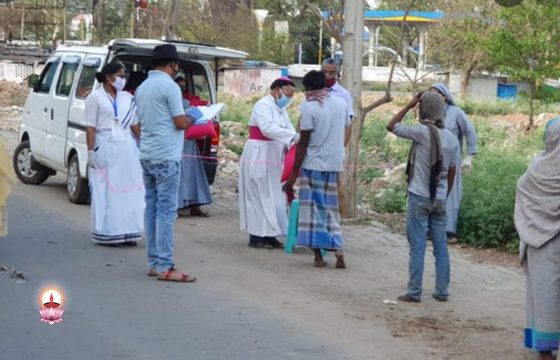
The Church’s vital role in providing emergency help for those hit by Covid-19 is rebuilding community relations in India where Christians have been demonised by far-right politicians. Archbishop Leo Cornelio of Bhopal told Aid to the Church in Need (ACN) that, despite polarising rhetoric by politicians trying to divide citizens along religious lines, the pandemic has prompted people from all parts of society working together.
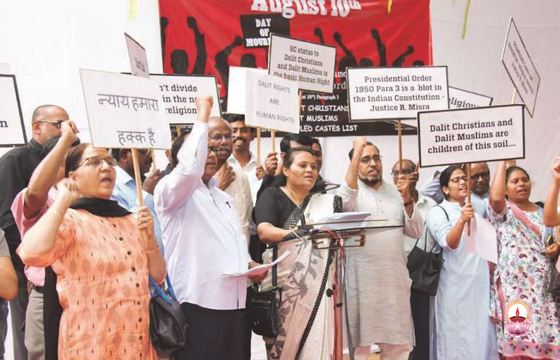
Dalit Christian dies in police custody in India
A Dalit Christian woman in the southern Indian state of Telangana has died in custody after allegedly being tortured by police.
Maid Ambadipudi Mariyamma of Yadadri-Bhongir district was booked along with her minor son Udaykiran on June 17 by Addagudur police after a complaint of theft by her employers, according to media reports.
Her relatives and daughter Swapna alleged that she was tortured by police while in detention.
Mariyamma, 44, was found collapsed early on June 18 at the police station and was rushed to a hospital where doctors declared her dead.
“When people in America protested after a black man was killed and started a campaign — Black Lives Matter — some people here voiced Dalit Lives Matter. The time has come to intensify it,” Father Z. Devasagaya Raj, former secretary of the Indian bishops’ office of Dalits and backward classes, told.
“Dalits and minorities community are always at the receiving end at the hands of people of so-called high society, elite groups, administration and government, hence police brutality upon them is nothing new. Anyone who speaks up for Dalits and the downtrodden is subject to attacks or branded anti-national.”
Pastor Sudarsan Masih of the Apostolic Christian Assembly Church in Khammam told UCA News that members were shocked to learn about the incident.
“Our prayers are with the family of the woman and we pray that there will be a fair and unbiased investigation and the culprit will be booked,” he said.
“The government should do justice to poor and underprivileged people, otherwise it will give them the wrong message and cause insecurity among them.”

AP state produces first Bollywood singing sensation
Anong Singpho had never imagined that his singing videos on social media would one day make him the first Bollywood star from Arunachal Pradesh.
The 27-year-old, who performs regularly at functions at Miao’s Government Higher Secondary School, used social media platforms to showcase his singing talents.
One such video caught the attention of Zee Music Company, a popular Indian music company and a subsidiary of Zee Entertainment Enterprises Limited, and it offered him to sing for their label.
“It is dream-come-true moment for me,” said Singhpo, a resident of Miao Singpho village in Changlang district. “Growing up, I always used to have dreams about singing for a Bollywood music company. I never imagined that would actually happen to me through this famous music label.”
Singhpo’s music single, Laut Aao Maa, was released by Zee Music Company as a tribute all mothers on Mother’s Day this year and within a span of one month the video has been viewed by 1.4 million viewers on video sharing platform YouTube alone.
Picturized with the junior reality show cont-estant, Oupseng Namchoom, the single highlights the emotions a child goes through in the absence of his mother in this soothing number.
The single is a song recording of fewer tracks than an LP record or an album. The song has been well received by people across the country. More than 1.4 million people have made positive comments on the video, singling out Singhpo’s voice for special appreciation.
The only son of Innao Ladoi Singpho and Jamai Thu Singpho, the singing sensation says the response from people across the country has been overwhelming. “I never thought I would receive such an overwhelming appreciation. I feel I am lucky to receive so much love,” said the graduate from Delhi University.
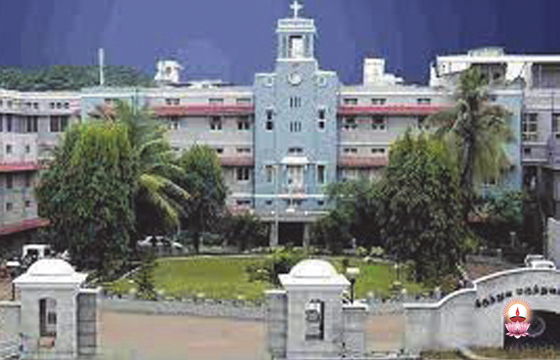
Vellore hospital confirms Covid vaccine efficacy
Vaccines are working well against the Indian (delta) variant of the SARS-CoV-2, the virus that causes Covid-19, according to a study on healthcare staff working at the Christian Medical College in Tamil Nadu’s Vellore town.
By April 30, at the height of the second wave of the pandemic in India, about 84.8 percent of the medical school’s employees received a shot of the Astra Zeneca vaccine with a smaller number getting the Indian-made Covaxin.
The medical school, managed by the Protestant Church of South India, has more than 2,600 beds and 10,600 employees.
Some 679 (9.6%) of the 7,080 employees of the Vellore hospital who received their second dose became infected by the virus within 47 days of the second dose. This is 65% lower than for the unvaccinated.
In addition, those who contracted Covid-19 also required fewer hospitalizations (-77%), less use of oxygen tanks (-92%) and fewer intensive care admissions (-94%).
“The only staff member who died since the beginning of the pandemic had multiple co-morbidities and had not taken the vaccine,” noted the study, autho-red by Doctor Joy J Mammen, professor at the medical school’s Department of Transfusion Medicine.

Churches opt for portable crematoriums in Kerala
The pandemic has created a demand for portable crematoriums in Kerala with many churches relying on it as an alternative to burying those who succumbed to Covid-19.
Covid victims’ families and relatives see portable crematoriums as a viable solution as the units can be used either inside the cemetery of churches or even outside.
“It is after we faced difficulties in disposing of bodies of our parishioners who died of Covid-19 that we started to think of making a portable crematorium,” said Fr Francis Areeckal, vicar of St Antony’s Church at Kizhakkambalam in Ernakulam district.
“We worked out the plan in consultation with an engineering contractor who is also a parishioner,” said Father Areeckal, who has claimed that they are willing to offer its services to “anybody cutting across barriers of caste and religion.”
“In case they need assistance for cremation, we have a team. They would volunteer their service,” the priest said. The portable crematorium they have made weighs 650 kg and can be transported in a pick-up van or a mini truck.
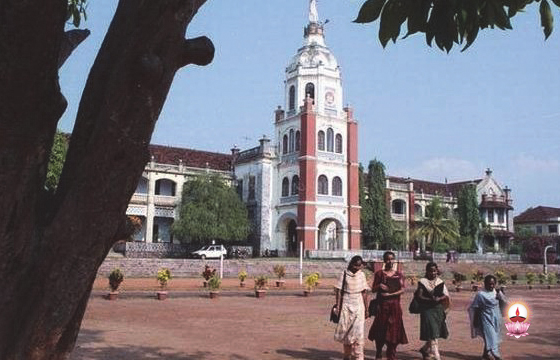
Berchman’s College completes 100 years
The year was 1922 and the occasion a momentous one. V.V. John, former Vice Chancellor of the Jodhpur University, had just enrolled in a junior intermediate class of 125 students that functioned from a multi-story building in the vicinity of the Parayil Church in Changanacherry.
Feeling slightly nervous, he proceeded straight to a class room where a man called Kulandaiswami Pillai was teaching English. “We admit boys till the benches break,” remarked Pillai, welcoming the youngster to his class.
The occasion marked the be-ginning of the iconic St. Berchman’s College, which has lived through a century to emerge as a premier institution of higher education in Central Kerala.
Over the years, it has under-gone several progressive changes to become the first college in the State to secure autonomous status in 2014. It currently hosts about 3,200 students and 170 teachers across 18 departments, besides 80 non-teaching staff.
Meanwhile, the college management intends to roll out a slew of programs in the centenary year, including scholarship for 100 students and adoption of five villages in Changanacherry taluk, besides opening an interdisciplinary research department.
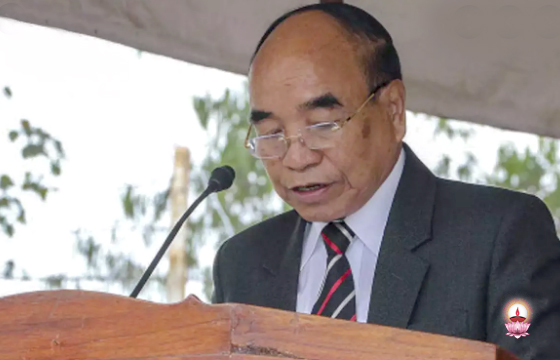
Mizoram Presbyterian Church urges State government to resolve border disputes
Top leaders of Mizoram Presbyterian Church, the largest denomination in the State has urged the State government to take measure to resolve border disputes with neighbouring States, an official statement said.
The church leaders called on Chief Minister Zoramthanga and urged him to resolve the border dispute with neighbouring States and to take measure for the inclusion of the Mizo language in the eighth schedule of the Indian constitution, the statement said on June 14 .
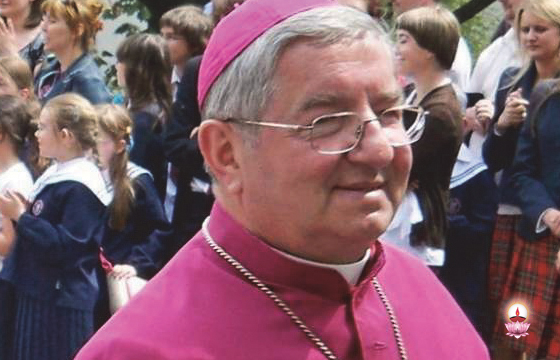
Anger as disgraced Polish archbishop is elected mayor
A disgraced Polish archbishop has been elected mayor of his hometown after being sanctioned by the Vatican for ignoring sexual abuse by his clergy as two more bishops were disciplined for similar offenses.
In a statement, the Jaswila district council said Archbishop Slawoj Glodz, who headed the Gdansk Archdiocese until last August, had been elected administrator, of Piaski, adding that local officials had extended “heartfelt congratulations.”
However, Poland’s Catholic Wiez quarterly, which has campaigned against sexual abuse in the Church, warned the “unprecedented move” would provoke “irritation and scandal in society.” “Unfortunately, this isn’t the opening of a new TV comedy season, but part of our Polish ecclesial life,” Wiez said on June 24.
“As a doctor of canon law, Archbishop Glodz may well defend his decision from the letter of the law — but the letter isn’t everything. An additional issue is the disgust associated with yet another exposure of a person who, with Vatican-imposed penalties, should by normal logic be remaining silent.”
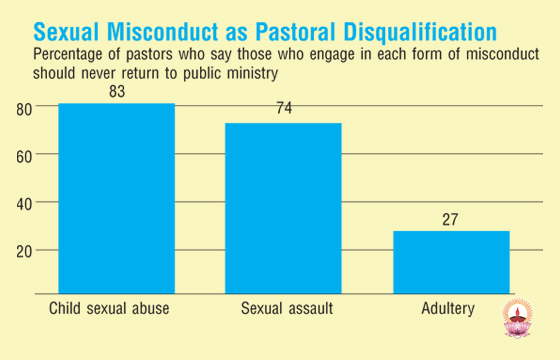
Most Pastors Agree Abuse Should Ban Them from Ministry
As Christian groups and denominations debate the proper response to clergy sexual misconduct, most pastors believe those who commit such crimes should withdraw from public ministry permanently.
At the recent Southern Baptist Convention annual meeting, the topic of pastoral sexual abuse and assault dominated much of the conversation and business, including passing a resolution that “any person who has committed sexual abuse is permanently disqualified from holding the office of pastor.”
A study from Nashville-based Lifeway Research revealed a significant majority of US Protestant pastors share that opinion whether the victim is a child or an adult.
More than 4 in 5 Protestant pastors (83%) say if a pastor commits child sexual abuse, that person should permanently withdraw from public ministry. For 2 percent the time away should be at least 10 years, while 3 percent say at least five years and 3 percent say at least two years.
Few point to a shorter time frame as appropriate—1 percent say at least 1 year, and fewer than 1 percent say either six months or three months. Another 7 percent say they aren’t sure how long the time frame should be.
While majorities of every demographic group of pastors support a permanent exit from public ministry for child sexual abuse, some are less supportive than others. Pentecostal pastors (60%), African American pastors (67%), pastors with no college degree (69%), and pastors 65 and older (76%) are among those least likely to support permanent withdrawal.
The US Sentencing Commi-ssion reported that 98.8 percent of sexual abuse offenders were sentenced to prison and their average sentence was almost 16 years.
“The five years or less time frame, that 7 percent of pastors suggest is appropriate, does not even cover the length of the ty-pical prison sentence for offend-ers convicted of sexual abuse,” said McConnell. “In contrast, more than 10 times that number of pastors do not hesitate to say the disqualification from ministry should be permanent for a pastor who commits child sexual abuse.”
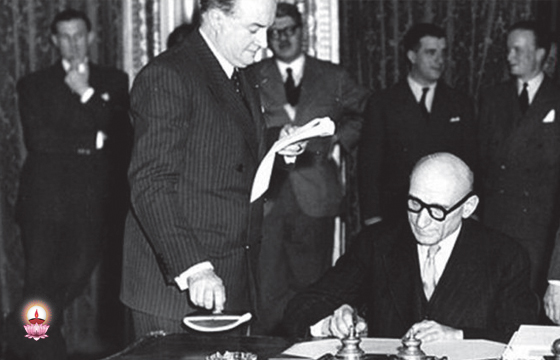
Road to sainthood for Robert Schuman, the ‘Father of Europe’
French statesman Robert Schuman, known as the “Father of Europe” for his role in creating the institutions that became the European Union, has been put on the path towards possible sainthood by the Catholic Church. Pope Francis on June 19 approved a decree declaring the “heroic virtues3 of Schuman, a devout Catholic during his life. He can now be called “venerable” by Catholics, one of the many steps in the long process to be recognised as a saint by the Rome-based church.
Schuman is described by the European Commission website as “one of the founding fathers of European unity” and “the architect of the project of European integration.” Born in 1886 in Luxembourg, Schuman later became a French citizen, and for a short while supported Marshal Pétain, a Nazi collaborator during World War II who was later sentenced to death. Schuman was arrested by the Nazi Gestapo in 1940 during Germany’s occupation of France.