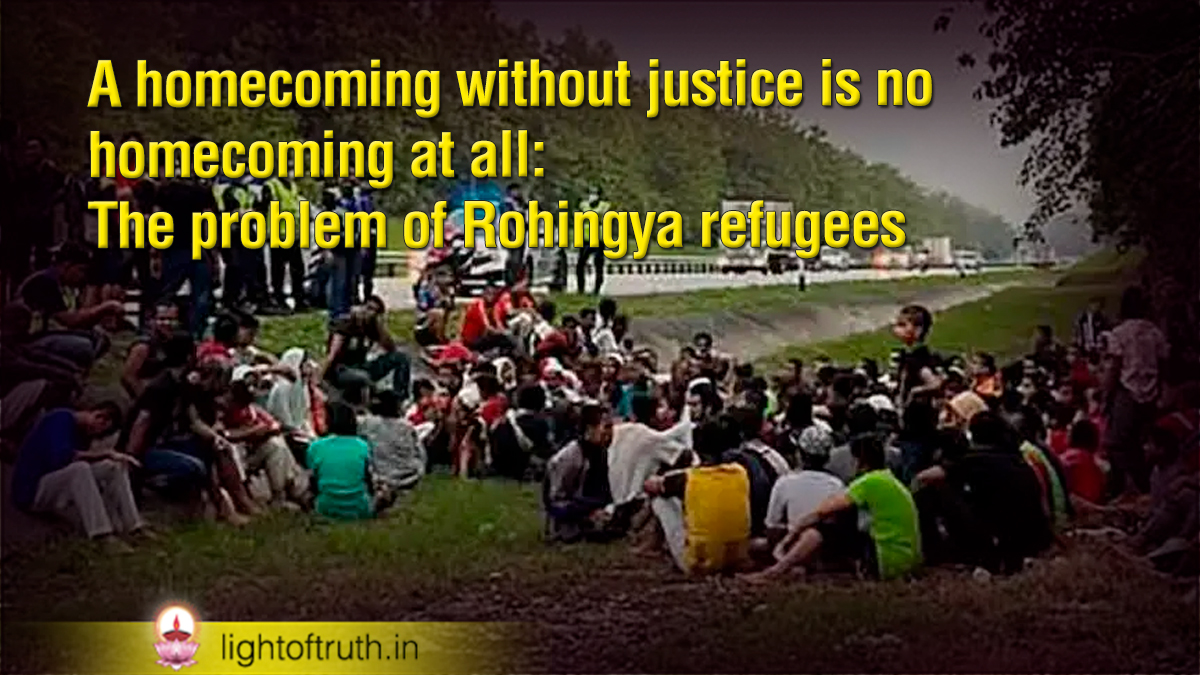
A homecoming without justice is no homecoming at all: The problem of Rohingya refugees

After years of diplomatic stalemate, Myanmar has agreed to receive an initial group of 5,000 Rohingya refugees currently in Malaysia, with more expected to follow.  For a country that has hosted tens of thousands of Rohingya over decades despite not being a signatory to the 1951 Refugee Convention, the announcement could represent a long-awaited breakthrough.

But it has also raised serious concerns. Five international rights groups -Nationality For All, the Institute on Statelessness and Inclusion, Global Movement Against Statelessness, Asia Pacific Refugee Rights Network and the Dignified Citizenship Coalition Asia Pacific – have urged Putrajaya not to proceed with repatriation, warning that the Rohingya continue to face risks of persecution and genocide in Myanmar.

For decades, many Rohingya in Myanmar have lived without citizenship or equal legal protection. Their predicament is therefore not simply an immigration problem. It is also a citizenship problem. The denial of legal recognition has contributed to restrictions affecting education, health care, employment, freedom of movement and political participation. The mass displacement of 2017 was not an isolated movement of people across a border. It followed years of discrimination and insecurity.

The Rohingya crisis is also larger than Malaysia. Bangladesh remains the principal destination for those who fled Myanmar, hosting a vast refugee population in camps in Cox’s Bazar and elsewhere. Generations of Rohingya children are growing up there, often without a clear path to citizenship or permanent integration. Bangladesh has carried an enormous humanitarian burden, and its generosity cannot be taken for granted. At the same time, the longer the refugees remain in camps, the more difficult and uncertain their future becomes.

India presents another reality. Rohingya refugees there have faced an increasingly difficult environment, with questions over documentation, detention and deportation adding to their insecurity. India, like Malaysia, is not a party to the 1951 Refugee Convention. Indonesia offers a different picture. Rohingya have reached its shores by sea, particularly in Aceh, where local communities have sometimes responded with compassion but also with growing unease over new arrivals. These experiences differ, but they reveal a common regional problem. Asia has no comprehensive system for sharing responsibility for refugees. Countries receiving displaced people often carry the burden largely on their own, while the people at the centre of the crisis remain caught between a dangerous homeland and uncertain refuge.
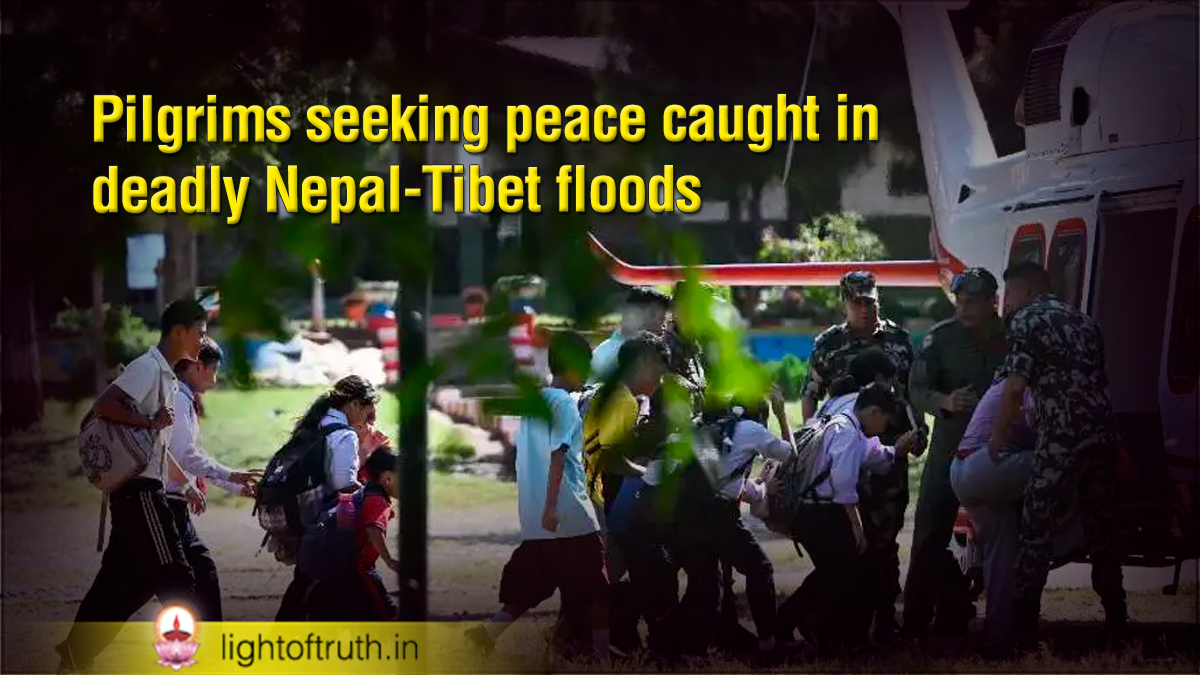
Pilgrims seeking peace caught in deadly Nepal-Tibet floods

Mount Kailash is sacred to Hindus, Buddhists and Jains. They came to the Himalayas seeking spiritual renewal, drawn by Tibet’s sacred, snow-capped Mount Kailash. Instead, many pilgrims were caught in deadly floods that tore through the Nepal-Tibet region, wiping out entire villages. “I saw two buses carrying Indian pilgrims to Kailash Mansarovar,” said 27-year-old Laloma, a Nepali mother. She was rescued on Aug. 27 from Nepal’s devastated area of Syabrubesi, along with her infant son and husband, after sheltering for a freezing night in a school. The buses were swept away, she said.

“They are all gone,” she told AFP. Mount Kailash is sacred to Hindus, Buddhists and Jains. Hindus regard Kailash as the abode of deities Shiva and Parvati, while Tibetan Buddhists associate it with Mount Meru, which they say is the centre of the universe. It is forbidden to climb the 6,638-metre-high (21,778-foot) mountain.  Instead, pilgrims undertake a roughly 52-kilometre (32-mile) contemplative circuit around its base, taking most walkers about three days.

For those en route or returning from the isolated, pyramid-shaped peak and bathing in the frigid ice waters of nearby Lake Mansarovar, across China’s frontier with Nepal, it was meant to be a healing journey of peace.  But climate change is causing glaciers to melt worldwide, increasing the risks of glacial lake floods and glacial collapses.

On Aug. 26 morning, a tsunami-like wall of water and mud powered down, caused by a glacial collapse that sent a torrent of debris downstream, burying homes and sweeping away bridges. More than 470 people are dead and upwards of 1,400 others are missing in both China and Nepal.

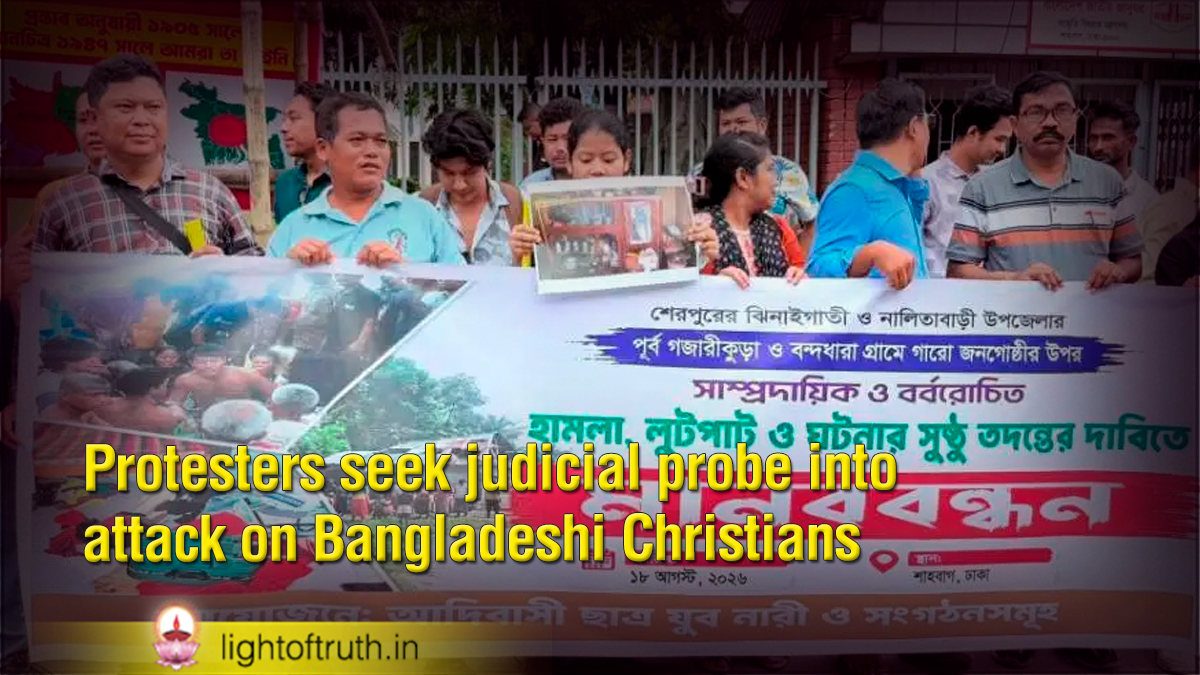
Protesters seek judicial probe into attack on Bangladeshi Christians

Ethnic Garo Christian families came under a mob attack in Sherpur district on Aug. 12

About 200 mostly ethnic minority Christians joined a protest rally in Bangladeshi capital Dhaka demanding a judicial probe into a recent mob attack on Garo Christian villagers. The Garo Student Union (GSU), a body of ethnic Garo students, organized the rally at Dhaka’s Shahbag intersection on Aug. 18. It drew support from a host of political groups, indigenous rights bodies and cultural organizations.

The demonstrators alleged the mob attack by Bengali Muslims on Garo villagers in Purba Gazarikura and nearby areas of Jhenaigati subdistrict in Sherpur district on Aug. 12 was based on unfounded allegations related to the death of a Muslim man.

They also accused the local administration and police of taking sides with the instigators of the attack and detaining five Garo Christians without any proof of their connection to the crime.

Mrinmoy Chiran, a GSU leader from Dhaka, said the physical attack, vandalism and looting left Garo villagers devastated. “They are low-income people. Many of them cannot afford private lawyers to seek justice from the court,” Chiran told UCA News. He said the community is seeking assistance from Bangladesh Legal Aid and Services Trust (BLAST), a non-government organization, to wage a legal battle for justice.

Garo activist Nilu Chambugong alleged that the discovery of the body was used as a pretext for a planned attack on the community without any investigation into the death. He said that abuses and attacks on ethnic minorities for various reasons, including land disputes and impunity, are very common in Bangladesh.

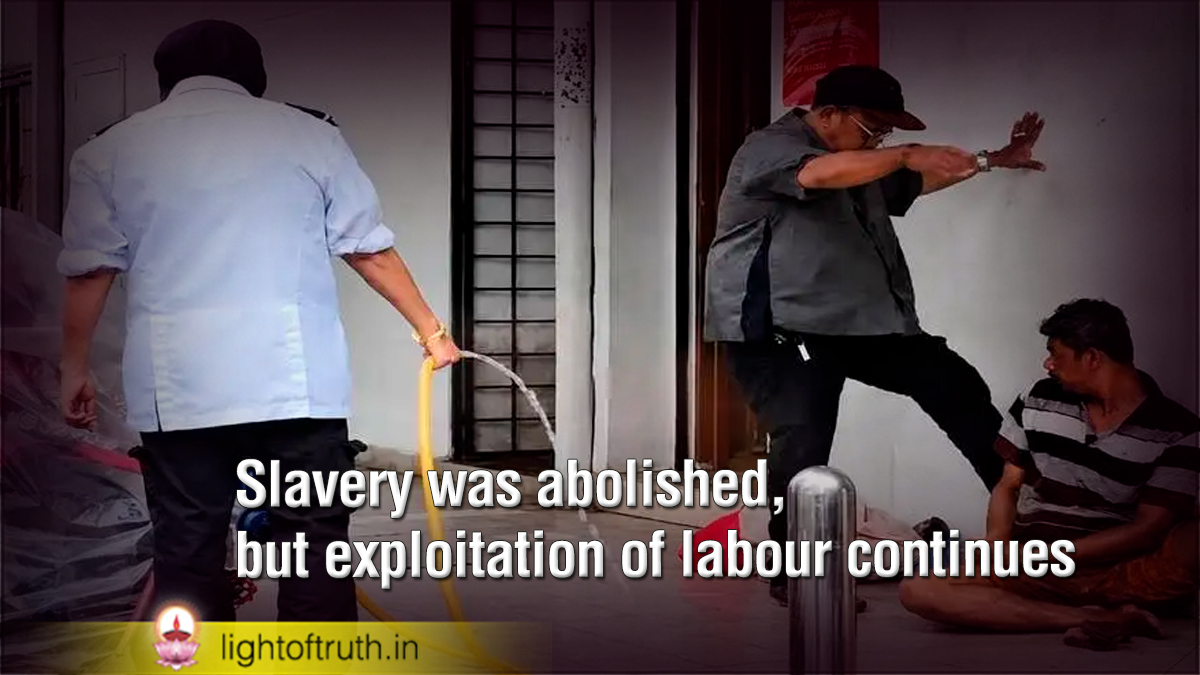
Slavery was abolished, but exploitation of labour continues

Migrants remain vulnerable to exploitation, modern slavery, challenging the Church to defend their dignity and freedom. 

How easily can an exploited migrant worker become a victim of modern slavery?

On Aug. 23, the world marked the International Day for the Remembrance of the Slave Trade and its Abolition. The date recalls the night of Aug. 22-23, 1791, when enslaved people in Saint-Domingue, now Haiti, began a major uprising against slavery. The revolt became a turning point in the Haitian Revolution, which eventually led to the creation of the first independent black republic in 1804.

Today’s migrant labor exploitation cannot simply be equated with the slavery of the past. But the day carries an important lesson: Abolishing slavery did not abolish the exploitation of human beings. Modern slavery does not always look like slavery in history books. There may be no chains, whips or slave markets. Instead, control can begin with a recruitment fee that leaves a worker heavily in debt.

It can continue with false promises of employment, withheld wages and confiscated passports, threats, restrictions on movement or fear of arrest and deportation. For many migrant workers, vulnerability begins before they even reach the country where they will work. Recruitment agents may charge large sums of money. Workers arrive already owing debts and desperate to keep their jobs. Finally because of the merciless attitude of the masters these people become penniless and desperate.

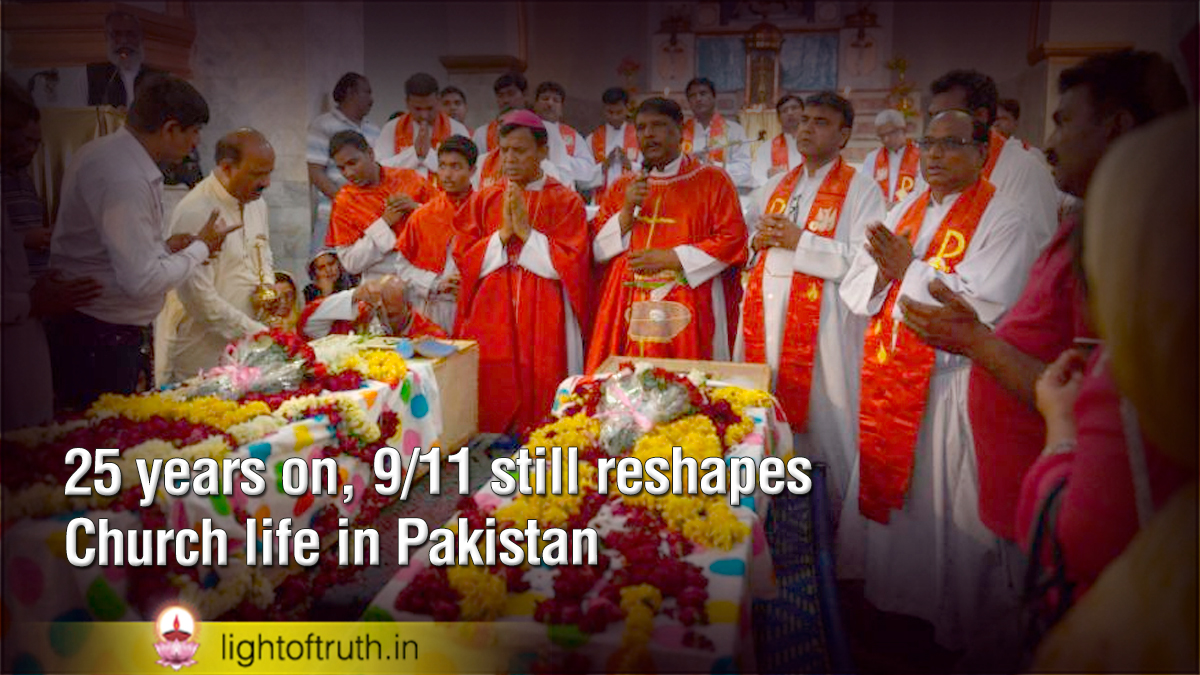
25 years on, 9/11 still reshapes Church life in Pakistan

Komal Maria, 23, walks smoothly through the metal detector at the entrance to St. Joseph’s Catholic Church in Lahore, a northern city regarded as Pakistan’s cultural capital. She routinely presents her purse for inspection, placing her phone in the tray and her keys beside it before nodding as a guard briefly pats her down. For Maria, the armed guard at the church gate, body scanners and heavy iron turnstiles are simply part of the church she grew up attending. Her father, Iqbal Masih, remembers a very different time.

The 52-year-old Masih, walking behind his daughter, appears uneasy. As the guard sweeps a handheld metal detector across his chest, his shoulders tense. He sighs as he looks up at the razor wire coiled above the high concrete wall. “Going to Sunday Mass has changed since the 9/11 terror attacks,” Masih says, noting that over the past 25 years, churches across Pakistan have reinforced their iron gates and checkpoints, and armed security has “become a permanent reality” in churches.

The heightened security has also changed the Church’s pastoral administration, drained its finances and altered the nature of its major churches, which were once seen as cultural landmarks and meeting points for people of different faiths, according to Church leaders.

Almost overnight, following the Sept. 11, 2001, terrorist attacks in the United States, peaceful places of worship and Church-run schools were forced to tighten security amid fears that militant Islamists could view them as supporters of the US and attack them. After the U.S.-led war in neighboring Afghanistan began in October 2001, Christian communities across Pakistan sought state protection for their communities and institutions as they faced heightened threats from domestic extremist groups that equated Christians with Western countries.  “What began as temporary, emergency measures slowly hardened into permanent fixtures,” said Younas John, 62, a long time parishioner in Lahore. “To respect local cultural sensitivities,” churches also introduced more discreet screening arrangements.

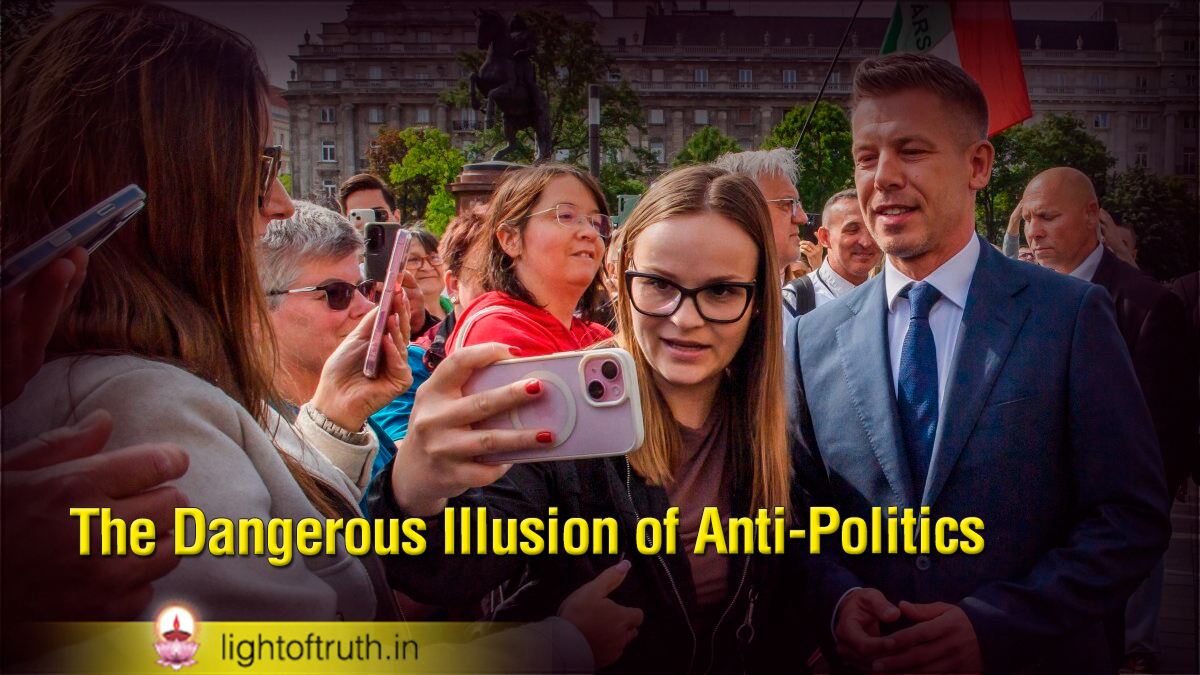
The Dangerous Illusion of Anti-Politics

Countless analyses have already been written about the causes of Péter Magyar and the Tisza Party’s landslide success and the resulting electoral realignment. Yet, there is a crucial factor that receives relatively little attention: the complete depoliticization of political struggle. The parliamentary elections birthed the newest and most successful product of the 21st-century Hungarian wasteland: anti-politics has become the new politics, a trend that Tisza is now driving to its absolute peak in government.

It is worth observing Péter Magyar’s and his party’s communication. The cornerstone of their rhetoric is that they themselves are not part of the political class in the classical sense. A recurring trope during the election campaign was that the people behind Tisza are not career politicians, but civilians and patriotic professionals. He also stated, “This homeland does not need street fighters or rusted terminators but decent, honest people working so that every Hungarian can feel Hungary is their own.” Or consider another statement: “I didn’t embark on this to topple the entire power elite; I am merely a spark that can start the engine”-all these points in a single direction.

Through a calculated marketing strategy, they have distanced themselves-and continue to distance themselves-from ‘politics’ and the word ‘politician.’

The communication framework employed by Tisza’s politicians appears to be an effective strategy during the post-election honeymoon phase. Yet, simultaneously, they are engaging in a highly classical power game. In his seminal work The Concept of the Political, Carl Schmitt warned that the sharpest and most ruthless political weapon is attempting to depoliticize political struggle while cloaking one’s own position in a veil of morality. According to Schmitt, anyone who claims not to engage in politics but merely represents “the good” or “the pure people” against a “corrupted elite” does not treat their opponent as a rival but brands them a moral monster.

However, this calculated distance creates a trap. As painful as the realization might be for the newly minted representatives and Tisza voters alike, the moment they ran in the elections, secured mandates, and assumed positions of public authority, they, too, became politicians.

This Schmittian strategy can be sold so masterfully in Hungary today because the word ‘politics’ has become irredeemably pejorative-degraded and sullied.

Who will replace the politician?This is exactly where the greatest danger lies. In his classic work In Defence of Politics, British political scientist Bernard Crick warned, among other things, that politics is not a necessary evil, but rather civilization’s greatest achievement—the art of resolving conflicts without violence. Anti-politics ostensibly promises voters an epistocracy (the rule of the knowledgeable, the intelligent, and independent experts) whereby ‘the thoroughly corrupt state apparatus will magically be fixed.’ In reality, if we eliminate politicians, their place can be taken by only two types of people.

For years, domestic research on institutional trust-particularly studies focusing on the post-communist region-has highlighted that confidence in political institutions in these societies, especially in parties and parliament, is drastically low. This is unequivocally a bad sign; when institutional trust erodes to such an extent, a demand inevitably arises for an ‘outsider’ (in politics, not in a partisan sense)-a savior arriving from beyond the existing establishment. When voters feel that the playing field itself is flawed, they no longer simply demand a change in the rules; they want to flip the entire table.

The first is the technocrat, who governs by appealing to their expertise. However, as Max Weber pointed out, these individuals are mere executors who lack both political passion and the sense of responsibility required for a political vision. The second—and more realistic—danger is kakistocracy, or the rule of the incompetent. When political routine, a willingness to compromise, and a knowledge of state administration are stigmatized, amateurism suddenly transforms into a virtue. By repackaging outsider status as freshness and inexperience as innocence, we pave the way for chaos. It is therefore a dangerous illusion to believe that politics can be eradicated or substituted with experts and civilians. Politicians remain a necessity, especially during uncertain times riddled with crises. At present, the duty of citizens is not to abolish politics for good but to continue demanding its responsible and professional practice. The death of politics never brings purification; rather, it spells the end of discourse and the birth of autocracy—or chaos.

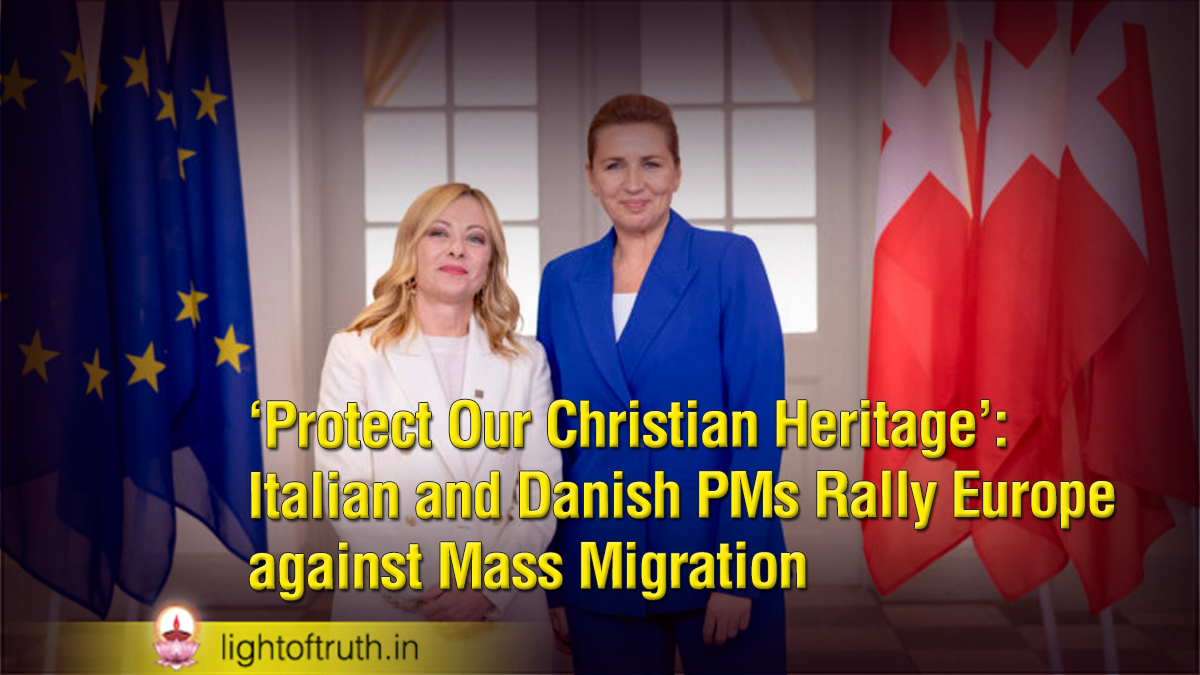
‘Protect Our Christian Heritage’: Italian and Danish PMs Rally Europe against Mass Migration

Italian Prime Minister Georgia Meloni and Danish PM Mette Frederiksen have made a joint appeal for a tougher European approach to migration, bringing together two leaders from opposite sides of the political divide.  In “A joint message for Europe”, published on August 10, the conservative Italian premier and centre-left Danish leader said Europe must both curb uncontrolled immigration and defend its Christian cultural heritage. “We do not accept uncontrolled immigration to Europe,” they wrote.

The intervention follows a Denmark- and Italy-led letter signed by 22 EU member states after some 60,000 migrants entered Ceuta. That letter criticised Spanish immigration policies and warned that the dispute could threaten the Schengen area.

Meloni and Frederiksen argued that mass migration has increased pressure on public services and contributed to crime, including violent crime, drug dealing and sexual violence, while eroding citizens’ trust in governments and public institutions.

They pointed to efforts to clarify how international human-rights obligations apply to deportations, alongside the recently adopted EU Return Regulation and its provision for return hubs in third countries. They promised to continue pursuing further “innovative solutions”.

The leaders linked migration policy to cultural integration, arguing that people who settle in Europe should respect the values of their host countries. They did not set out a broader test of assimilation.

“We are both proud of the Christian cultural heritage of Europe and we want to protect it,” they wrote. They added that those who make Europe their home should respect European values and not seek to impose ways of life the leaders said they did not share. By presenting tougher border and return policies as inseparable from a defence of Europe’s cultural identity, Meloni and Frederiksen sought to broaden their case beyond immigration control-and to show that the argument now reaches across Europe’s traditional left-right divide.

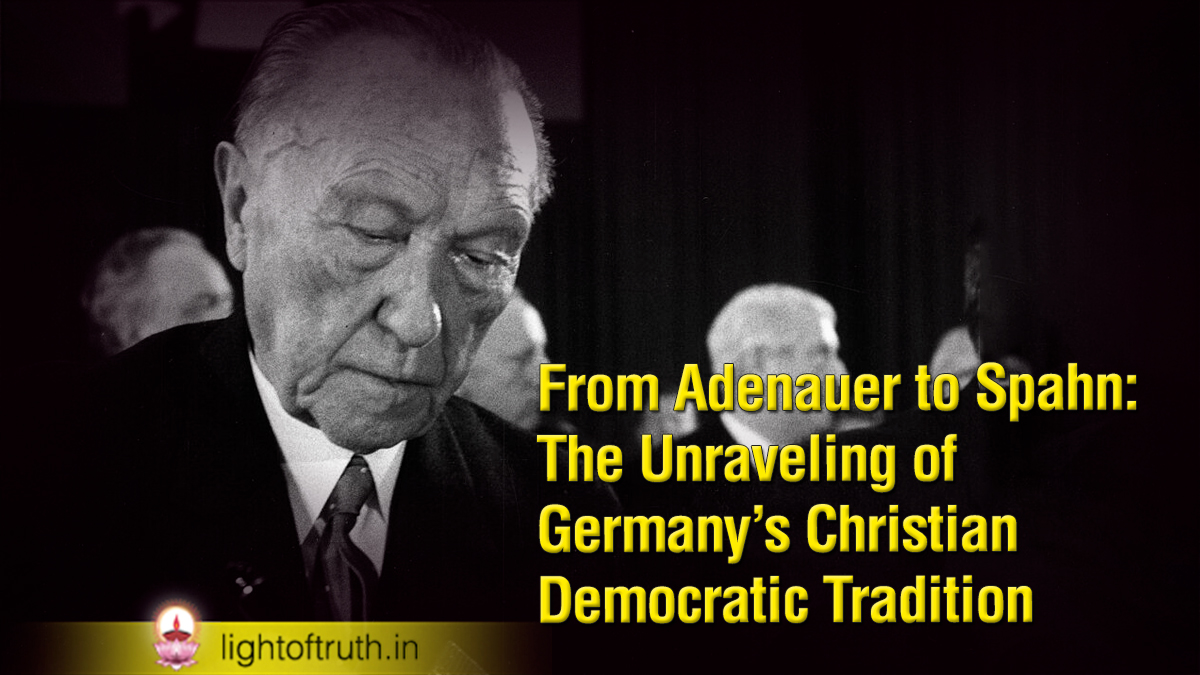
From Adenauer to Spahn: The Unraveling of Germany’s Christian Democratic Tradition

The recent controversy surrounding German politician Jens Spahn, until recently the parliamentary leader of the center-right Christian Democratic Union (CDU) in the Bundestag and long regarded as a potential future chancellor, was revealing. Spahn resigned after it emerged that he and his same-sex partner had commissioned an American surrogate mother, despite belonging to a party that has long opposed the encroachment of the market into one of the most fundamental of human relationships: that between a mother and her unborn child. Most commentators treated the affair as a straightforward case of political hypocrisy, while other more opportunistic actors hoped to seize upon it as an opportunity to argue for the liberalization of Germany’s laws governing assisted reproduction. Yet the deeper significance of the episode lies elsewhere.

The Spahn affair is symptomatic of a Christian Democratic tradition that is now Christian largely in name alone. The party founded by Konrad Adenauer sought to rebuild Germany on the moral and spiritual foundations of Christian civilization after the catastrophic rupture that was National Socialism. Over time, however, the CDU has gradually surrendered that inheritance. It has exchanged a confident vision of redemption and renewal for the cautious respectability of a bourgeois party whose primary ambition is the acquisition and preservation of political power. At worst, it risks becoming defined not by resistance but by accommodation – a Vichy-like surrender to the very forces that Pope Benedict XVI, a proud son of Bavaria, warned against as the “dictatorship of relativism.” 

In many respects, Adenauer anticipated the synthesis later articulated by Pope John Paul II in his 1991 encyclical Centesimus Annus, which defended the legitimacy of private property and free economic initiative while insisting upon a genuine commitment to social justice. Adenauer sought to ground Germany’s economic reconstruction in the principles of Catholic social teaching. He rejected both socialist collectivism and a purely materialistic conception of capitalism, recognizing that both become reductive when detached from the proper telos of the human person. In other words, while recognizing that man requires his daily bread, bread alone cannot satisfy the deeper spiritual longings that animate human existence. Thus, the CDU’s enduring appeal rests on a fundamentally anthropological claim: that human dignity is rooted in man’s creation in the image of God and that the moral order is not made by politics but precedes it.

If Jens Spahn represents the future of a Christian Democracy untethered from its Christian anthropology, Markus Söder’s Kreuzpflicht reveals the fate of its patrimonial inheritance. The cross endures, but increasingly as an emblem of identity shrouded in vague notions of ‘cultural Christianity’ rather than as the sign of a moral order to which both ruler and citizen are accountable. At best, the cross becomes a political instrument wielded to reclaim cultural ground from the insurgent AfD, a party that now threatens to eclipse the CDU as the principal force on the right side of Germany’s political spectrum. Yet this instrumentalization of Christian heritage-preserving its symbols while severing them from their theological foundations-is not only unprincipled but strategically shortsighted. One can only imagine that Konrad Adenauer, devout Catholic and astute statesman in equal measure, would find little comfort in the trajectory of his party. (Adapted from Joe Wozniak’s article)

US Bishops launch prayer and action initiative against spread of abortion pills

The US Conference of Catholic Bishops’ Committee on Pro-Life Activities invites Catholics to pray and act to stop the spread of abortion pills.

The US Conference of Catholic Bishops’ (USCCB) Committee on Pro-Life Activities is inviting Catholics to join a focused effort of prayer and action against the spread of abortion pills, starting on August 18 and lasting until October.

“Every abortion involves the death of a child and harm to the mother. Now with easier access to abortion pills, the abortion rate is tragically climbing, along with increased health risks,” said Archbishop Paul Coakley, USCCB President, and Bishop Daniel Thomas, Chairman of the Conference’s Pro-Life committee, in a joint invitation released on August 18.  The invitation includes a prayer in English and Spanish that can be said for the intercession of St. Joseph, Defender of Life. It also encourages Catholics visit the USCCB’s ‘Respect Life Prayer and Action website’, where they can learn about the danger of abortion pills and send messages to pharmacies and pharmaceutical companies that are involved.

The initiative was launched in order to overlap with the Respect Life Month, which is observed every October by the Catholic Church in the United States. “The Food and Drug Administration has enabled a nationwide mail-order abortion industry by allowing abortion pills to be prescribed in tele-health appointments and sold both at neighbourhood pharmacies and online, circumventing state laws that protect life in the womb,” the Bishops’ invitation explains.

“This leaves women vulnerable to suffering an abortion alone at home, without any medical supervision. It also sets up additional opportunities for exploitation by violent partners or human traffickers.”

In May, the US Supreme Court extended an order that temporarily continues to allow for abortion pills to be prescribed through telemedicine and sent by mail, as a legal dispute over this issue takes place in a lower court.

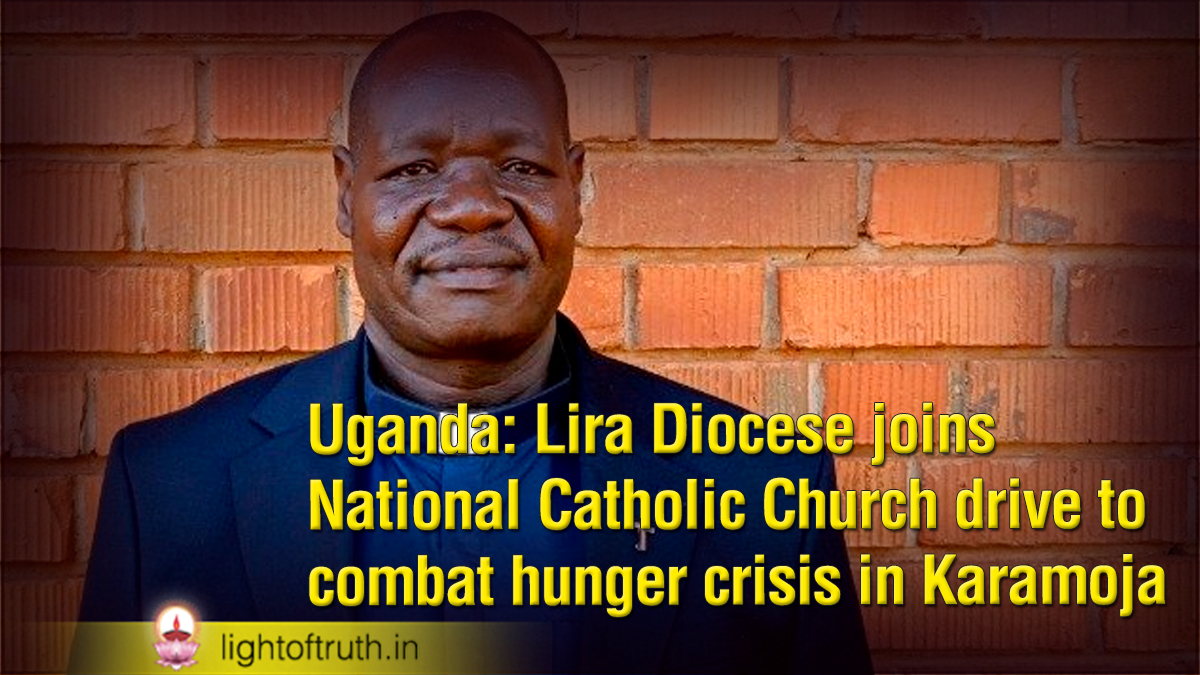
Uganda: Lira Diocese joins national Catholic Church drive to combat hunger crisis in Karamoja

The Catholic Church in Uganda has intensified its response to the worsening food crisis in Karamoja, a sub-region located in the northeastern corner of Uganda, bordering Kenya and South Sudan. Lira Diocese is mobilising food assistance for the most vulnerable families.

The crisis began to escalate between April and July this year after a prolonged drought destroyed crops, leaving many households without food and severely affecting their livelihoods

In response to the humanitarian situation, the Bishop of Kotido Diocese, Bishop Dominic Eibu, MCCJ, appealed to his brother bishops across the country to support the people of Karamoja through donations of food and other essential supplies.

Following this diocesan appeal, the Chairman of the Uganda Episcopal Conference (UEC), Bishop Joseph Anthony Zziwaof Kiyinda-Mityana Diocese, called on all bishops in their respective dioceses to organise relief efforts for the people of Kotido and Moroto dioceses, where thousands of families continue to face acute food shortages.

Responding to this call, Lira Diocese, together with other dioceses across Uganda, has launched a diocesan-wide campaign encouraging Christians to donate food items as an expression of Christian charity and solidarity with their brothers and sisters in Karamoja. The initiative aims to provide immediate relief to families affected by the prolonged drought while demonstrating the Church’s commitment to caring for those most in need.

Lira Diocese’s response

In Lira Diocese, the campaign is being coordinated by Caritas Lira Diocese, the Church’s official charitable and humanitarian arm. Christians in parishes across the diocese are donating food items such as maize flour (Posho), beans, and other non-perishable foods, which will be transported to the affected communities in Karamoja.

Every family in Lira Diocese is being encouraged to contribute whatever they can afford, however small, to help alleviate the suffering. Reports indicate that children, pregnant and breastfeeding mothers, and the elderly are among the most affected by the food crisis, with many showing signs of severe malnutrition.

Speaking during the launch on the diocesan Catholic radio station – Radio Wa, the Vicar General of Lira Diocese, Monsignor Valente Innocent Opio, appealed to the lay faithful to respond generously to the humanitarian call.

“Let every family share whatever it can afford. Feeding the hungry is not only an act of charity but also a command from our Lord Jesus Christ,” Monsignor Opio said, referring to the Gospel of Matthew 25:35, where Christ identifies Himself with those who hunger.

The campaign has already recorded encouraging progress, with thousands of Kilograms of maize and other food items collected from generous Christians across the diocese.

Official Website

Exit mobile version