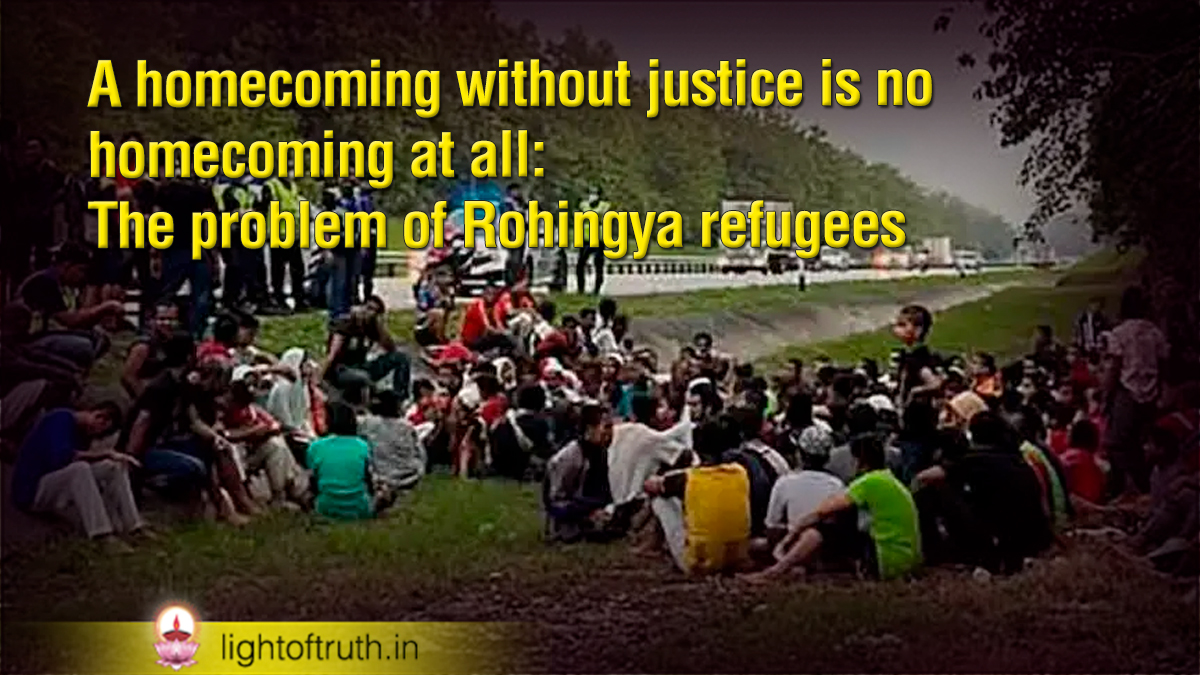
After years of diplomatic stalemate, Myanmar has agreed to receive an initial group of 5,000 Rohingya refugees currently in Malaysia, with more expected to follow. For a country that has hosted tens of thousands of Rohingya over decades despite not being a signatory to the 1951 Refugee Convention, the announcement could represent a long-awaited breakthrough.
But it has also raised serious concerns. Five international rights groups -Nationality For All, the Institute on Statelessness and Inclusion, Global Movement Against Statelessness, Asia Pacific Refugee Rights Network and the Dignified Citizenship Coalition Asia Pacific – have urged Putrajaya not to proceed with repatriation, warning that the Rohingya continue to face risks of persecution and genocide in Myanmar.
For decades, many Rohingya in Myanmar have lived without citizenship or equal legal protection. Their predicament is therefore not simply an immigration problem. It is also a citizenship problem. The denial of legal recognition has contributed to restrictions affecting education, health care, employment, freedom of movement and political participation. The mass displacement of 2017 was not an isolated movement of people across a border. It followed years of discrimination and insecurity.
The Rohingya crisis is also larger than Malaysia. Bangladesh remains the principal destination for those who fled Myanmar, hosting a vast refugee population in camps in Cox’s Bazar and elsewhere. Generations of Rohingya children are growing up there, often without a clear path to citizenship or permanent integration. Bangladesh has carried an enormous humanitarian burden, and its generosity cannot be taken for granted. At the same time, the longer the refugees remain in camps, the more difficult and uncertain their future becomes.
India presents another reality. Rohingya refugees there have faced an increasingly difficult environment, with questions over documentation, detention and deportation adding to their insecurity. India, like Malaysia, is not a party to the 1951 Refugee Convention. Indonesia offers a different picture. Rohingya have reached its shores by sea, particularly in Aceh, where local communities have sometimes responded with compassion but also with growing unease over new arrivals. These experiences differ, but they reveal a common regional problem. Asia has no comprehensive system for sharing responsibility for refugees. Countries receiving displaced people often carry the burden largely on their own, while the people at the centre of the crisis remain caught between a dangerous homeland and uncertain refuge.