
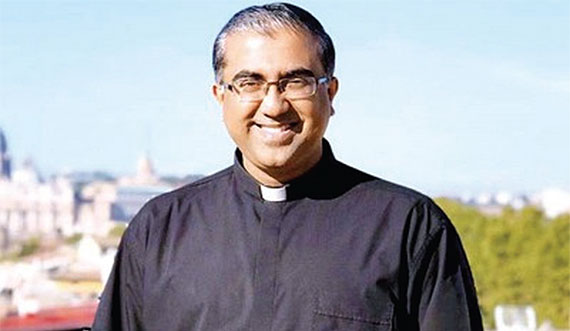
Fr Joshan Rodrigues of Bombay archdiocese has started a blog— Musings in Catholic Land—aiming to engage Catholics, especially youth, in difficult conversations, otherwise considered controversial. From porno-graphy, the church’s stand on the LGBT community, boredom at mass to in-law woes, Fr Rodrigues’ posts have gained over 15,000 hits ever since he started the blog five months ago. Most of his readers are between the ages of 18-30.

India marks World Day of the Poor
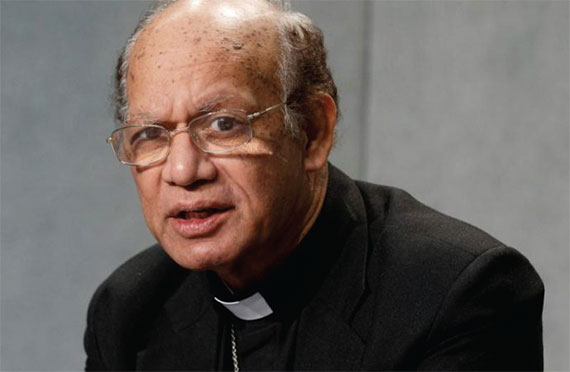
In Mumbai, the Church will be taking up donations to mark the World Day of the Poor, instituted by Pope Francis at the end of the Jubilee of Mercy. Cardinal Oswald Gracias, the Archbishop of Bombay, launched the ACTS project – standing for ‘Actively Called to Serve’ – which will give bags to each parish, so people can donate items like grain, rice, sugar, and toiletries for the less fortunate.
ACTS will work with the Saint Vincent de Paul Society and the Centre for Community Organization.
NIA files third status report in SC in Kerala ‘love jihad’ case
The National Investigation Agency (NIA) on November 23 submitted a third status report on the Kerala ‘love jihad’ episode to the Supreme Court, where the case is scheduled for hearing on Nov. 27.
The agency completed the detailed status report after a thorough examination of 11 cases of alleged ‘love jihad’ and handed it over to the Supreme Court in a sealed envelope, an official said.
Hadiya is in the custody of her parents following Kerala High Court order. Supreme court has allowed to continue her studies in Tamil Nadu as she claimed that her conversion was by her own will and wants to live by her husband in the court.
Vatican scolds Chinese priest for self-ordination
The Vatican warned the underground Catholic Church in China against ordaining bishops apart from the Holy See, as tensions rise over a proposed agreement between the Vatican and China’s communist leaders.
“The Holy See has not authorized any ordination, nor has it been officially informed of such events,” the church statement said. “Should such episcopal ordinations have occurred, they would constitute a grave violation of canonical norms.”
Archaeology department stalls church renovation in Kerala
Renovations of a historic church near Kochi was stopped after the Archaeology department intervened, on receiving requests from an action council to protect the heritage structure. Authorities at the St Louis Catholic Church in Mundamveli have said that they have stopped a move to make alterations inside the church after they received a stop memo from the State Archaeology Department.

Sr Rani Maria’s beatification celebrated in Kerala
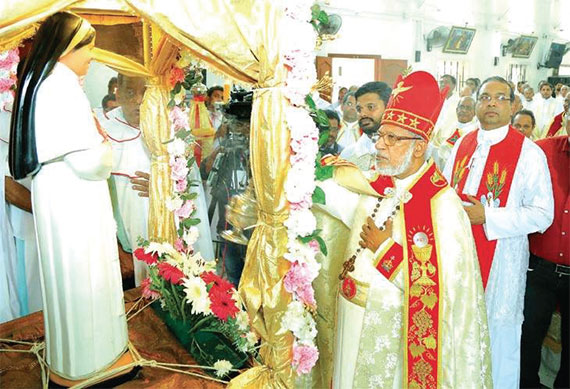
The celebration organised by the Catholic Church of Kerala in connection with the beatification of missionary nun Sr Rani Maria was held at St Mary’s Basilica in Kochi on november 11. It began at 2.45 pm with a procession carrying relics of the beatified nun from the Archbishop’s House to the basilica. Bishop Mar Sebastian Aayanthrath welcomed the gathering. Bishop Mar Jose Puthenveettil read out the Pope’s decree elevating Sr Rani to the status of ‘Blessed Martyr’. This was followed by a thanksgiving Holy Mass led by Cardinal George Alencherry. KCBC president Archbishop M Susai Pakiam delivered the homily. Nagpur Archbishop Abraham Viruthukulangara, Indore Bishop Chacko Thottumarikkal, and several bishops from within and outside Kerala were co-celebrants.
Cardinal Alencherry delivered the benedictory address at the public meeting. Archbishop Viruthukulangara, Bishop Thottumarikkal, FCC mother general Sr Anne Joseph, Sr Rani’s sister Sr Selmy, Archdiocese pro vicar general Fr Antony Narikulam, Seva Singh , a representative from Uday Nagar where Sr Rani carried out her missionary work, spoke. The celebration was organised by the Catholic Church in Kerala and Franciscan Clarist Congregation, the order to which Sr Rani belonged.

Persecution, neglect and silence deepen Rohingya crisis
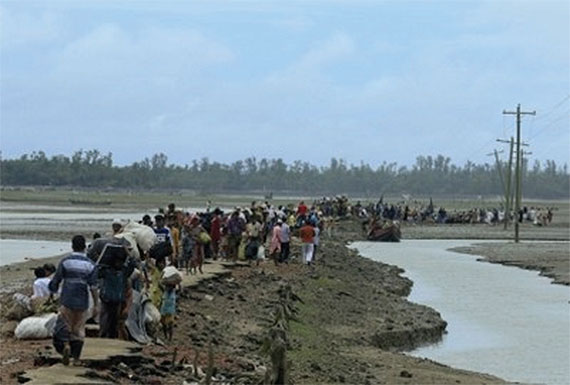
Ethnic cleansing of Rohingya in Myanmar has strong parallels with the genocide of ethnic Tutsis in Rwanda, one of the worst atrocities of modern times.
From April-July 1994, Hutu militias backed by the Hutu-majority government and military, massacred up to one million minority Tutsis. The genocide was the culmi-nation of long-time ethnic conflict in Rwanda, a small equatorial republic straddling central and eastern Africa.
It was triggered by the killing of then Rwandan Hutu president Juvenal Habyarimana in an April 6 rocket attack on his aircraft. Hutus blamed the Tutsi rebel Rwanda Patriotic Front (RPF) for the attack.
Then RPF leader Paul Kagame, who is now the nation’s president, alleged it was Hutu extremists who staged the assassination as a pretext for genocide. The International community stood aside as mass killings took place before the U.N. belatedly intervened to overthrow the murderous regime.
Lighter-skinned and taller than Hutus, Tutsis are widely considered to originally have been immigrants from Ethiopia. Belgian colonists (1916-61) treated Tutsis as superior to Hutus. Better employment and educational opportunities for Tutsis frustrated Hutus.
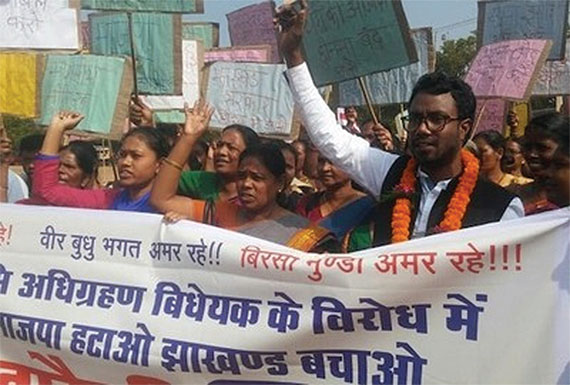
Indian cardinal opposes move to marginalize tribal people
India’s tribal dominated Jharkhand state has banned people who have more than two children from contesting local body elections, which the local cardinal sees as a way to politically side-line indigenous people who traditionally have large families. The pro-Hindu Bharatiya Janata Party state government has decided to disqualify people with more than two children in local body elections.
“It is a human rights violation,” said Cardinal Telesphore Toppo of Ranchi who is based in the state capital. He said it was ironic that Jharkhand was created 17 years ago to ensure the advancement of indigenous people but now works against their interest. “Restricting our people, who generally have more than two children, to contest the election is blocking our people from coming up in life,” said the local cardinal from Oraon tribe. “The government wants to demoralise and suppress tribal people and crush any emerging leadership,” said the first tribal cardinal from Asia. Anabel Benjamin Bara, who teaches at the Jesuit-run Xavier School of Management, Tribal people, including church groups and Cardinal Toppo, had campaigned against the amendments ever since the state legislature passed them in November.
Mineral-rich Jharkhand has some 9 million tribal people, who form 26 percent of the state’s 33 million population. About 1.5 million people in the state are Christians, at least half of them Catholics.
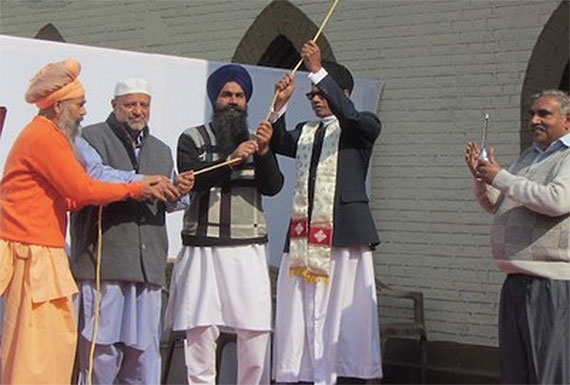
Hindus, Muslims, Sikhs come together for peace in Kashmir
Hindu, Sikh, Muslim and Christian leaders joined together to symbolically usher in peace by ringing a church bell in Srinagar, the main city in the violence-torn Indian state of Jammu and Kashmir.
The bell at the 120-year-old Holy Family Catholic Church, the largest in the city, rang Oct. 29 for the first time in 50 years after it stopped working. The bell and belfry was damaged in a fire 1967 and the economically poor parishioners had no resources to install a new one until one of the 30 odd Catholic families in the parish donated a 105 kilogram bell this year, Father Roy Mathews said.
“We wanted to share this occasion with well-wishers of other faiths who joined and prayed for peace and normalcy, brotherhood and mutual respect for values and beliefs,” said Father Mathews the parish priest. Religious tolerance in Jammu and Kashmir, India’s only Muslim-majority state is “grossly misunderstood outside Kashmir. Our message to the world is clear that we are all one here and accept each other,” the priest said.
Manzoor Ahmad Malik, a Muslim at the church function, told that he was happy to see people from other faiths. “We want to give a message of peace to the world.”
Nuns welcome life imprisonment for Ranaghat rapist
The head of the Religious of Jesus and Mary congregation has welcomed a November 8 court decision to sentence a man to life imprisonment for the rape and attempted murder of a 71-year-old member in eastern India. It is a “red letter day” because “justice has been meted out and the culprits have been punished,” Sister Monica Joseph, superior general of the congregation, said during a press conference hours after a local court in Kolkata announced the punishment. Nazrul Islam, a 30-year-old Bangladeshi national, will spend the rest of his life in jail. Judge Kumkum Sinha said that what happened to the senior nun is a blot on Bengal’s legacy.
The judge also said that Bengal is also the land of Irish-Hindu social worker Sister Nivedita and St Mother Theresa.
Rome-based Sister Joseph said the nuns are “thankful to the police and the chief minister of Bengal for fast-tracking the trial and bringing the criminals to justice.” “The attack on the nun was inhuman and intolerable. The man who attacked the sister should have no place in our society,” Minoti Mondal, who in 2015 took part in a demonstration seeking justice for the nun, told ucanews.com.