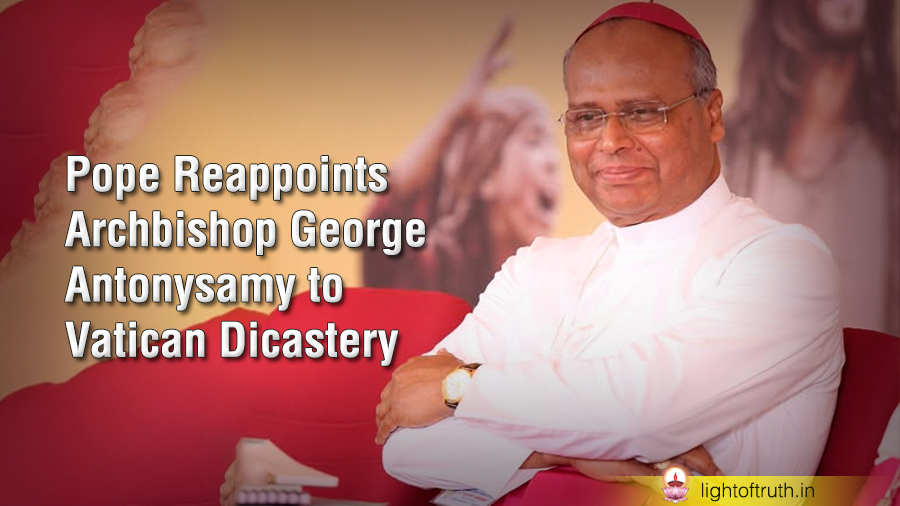
Pope Leo XIV has reappointed Archbishop George Antonysamy of Madras-Mylapore as a member of the Dicastery for Evangelization, one of the Vatican’s most important departments responsible for supporting the Church’s missionary work throughout the world.
The reappointment reflects the Holy Father’s confidence in Archbishop Antonysamy’s experience and leadership. Before becoming Archbishop of Madras-Mylapore, he served the Holy See in the Vatican’s diplomatic service and represented the Pope in several countries. His long experience in international ministry has helped him contribute to the Church’s mission both in India and abroad.
The Dicastery for Evangelization assists the Pope in promoting the proclamation of the Gospel, supporting missionary churches, coordinating evangelization efforts, and encouraging the growth of faith in different parts of the world. Members of the Dicastery offer guidance on pastoral strategies and missionary initiatives suited to diverse cultures and communities.
Church leaders in India welcomed the announcement with gratitude and joy. They said the reappointment recognises not only Archbishop Antonysamy’s personal service but also the growing contribution of the Indian Church to the universal mission of the Catholic Church.
Priests, religious, and lay faithful have assured the Archbishop of their prayers as he continues this important responsibility. Many believe his international experience and pastoral leadership will help strengthen the Church’s missionary outreach in the years ahead.
The reappointment is also a source of encouragement for Catholics in India, highlighting the increasing participation of Indian Church leaders in the life and mission of the universal Church. It reflects the Vatican’s appreciation for the experience, commitment, and missionary spirit of the Church in India.