

Pope Francis on August 27 made 20 prelates, including Indian Archbishops Filipe Neri Ferrão of Goa and Daman and Anthony Poola of Hyderabad, in a consistory held at St. Peter’s Basilica, Vatican City.
Cardinal Ferrao is the president of the Conference of Catholic Bishops of India (Latin Rite).
The ceremony was attended by thou-sands of faithful from around the world, including India.
Cardinals Oswald Gracias, Archbishop of Bombay, attended the ceremony along with Cardinals George Cardinal Alencherry, head of the Syro-Malabar Church, and Baselios Cleemis, head of the Syro-Malankara Church.
Other participants were Archbishop Peter Machado of Bangalore, Bishop Jaya Rao Polimera of Eluru, Joseph Raja Rao of Vijayawada, and Archbishop Emeritus Bernard Moras of Bangalore.
The 20 new cardinals represent the Church worldwide and reflect a wide variety of cultures, contexts and pastoral ministries, says a press note from CCBI deputy secretary general Father Stephen Alathara.
Seven of the new cardinals are from Europe, six from Asia, two from Africa, one from North America and four from Central and Latin America. Of the 20, 16 are cardinal electors under 80 years of age and thus eligible to participate in a conclave. The College of Cardinals currently consists of 229 cardinals, of which 131 are electors and 98 non-electors.
Cardinal Telesphore Toppo, Archbishop of Ranchi, and Cardinal Oswald Gracias, Archbishop of Bombay, were made cardinals during their tenure as presidents of the CCBI, in 2003 and 2007, respectively. Cardinal Ferrão is the third CCBI president to be elevated to the cardinalate, the press note says.
Cardinal Ferrão, born on January 20, 1953, in Aldona, Goa, was ordained priest October 28, 1979. He was appointed Auxiliary Bishop of the Archdiocese of Goa and Daman at the age of 40 by Pope John Paul II on December 20, 1993. His epis-copal ordination was April 10, 1994. On December 12, 2003, he was appointed the archbishop of Goa and Daman and patriarch of the East Indies and installed on March 21, 2004.
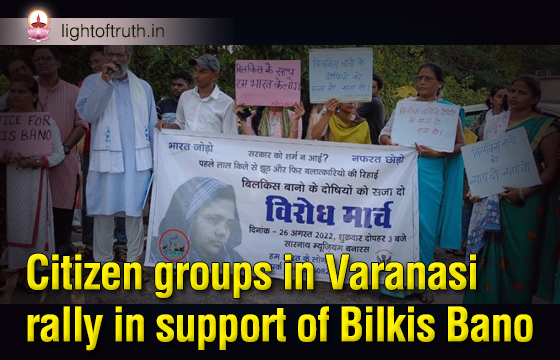
Citizen groups in Varanasi rally in support of Bilkis Bano
A powerful citizen’s movement in Varanasi has come to the streets demanding justice to Bilkis Bano, a rape survivor of the 2002 communal riots in the western Indian state of Gujarat.
The Sajha Sanskriti Manch (SSM, United Forum for Cultural Diversity), network of various social and human rights organization, has organized a series of public protests, rallies and signature campaign in various parts of the northern Indian holy city to demand repeal of the mercy given by the Gujarat High Court to the 11 rapists and murderers.
SSM, in collaboration with Joint Action Council, an organization of the Students of Ba-naras Hindu University and Dakhal (Initiative), a young women’s organization for the rights of women and transgenders through cultural and political interventions, organized its third public meeting August 26 at Sarnath, 10 km northeast of Varanasi.
SSM convenor Father Ana-nd Mathew of the Indian Missionary Society, while addressing the gathering said: “We are standing in front of the Sarnath museum where the Ashoka pillar, symbol of peace and dharma is preserved. The place is significant because it is here Buddha preached his first sermon, denoting the four noble truths of dharma. And from here we appeal to the judiciary not to perpetuate injustice.”
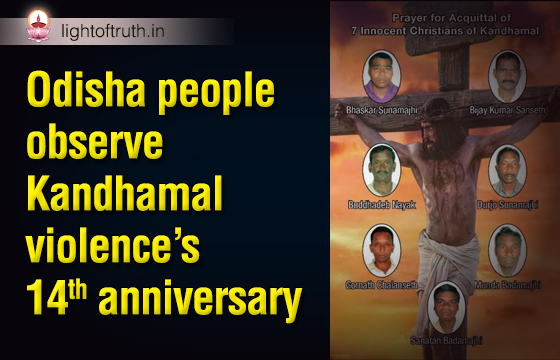
Odisha people observe Kandhamal violence’s 14th anniversary
A state-level peace and harmony convention was held in Odisha on the fourteenth anniversary of the Kandhamal communal massacre in the eastern Indian state.
More than 300 civil society groups, political leaders, journalists, lawyers, writers, students, and academicians, including priests, and nuns across the state joined the day-long peace and goodwill convention August 25 at Geet Govind Bhawan, Bhubaneswar, the state capital.
The chief speakers at the convention were Prakash Yash-want Ambedkar, a former Member of the Parliament, and Arfa Khanum Sherwani, a renowned journalist and the senior editor of the Wire online portal.
Sister Justine Geetanjali, a member of the Odisha unit of the Citizens for Communal Harmony Peace and Justice, in her introductory remark briefed about the current state of affairs in the country and about the Kandhamal riots.
Ambedkar, the grandson of the founder of the Constitution, Baba Saheb Ambedkar, who addressed the first session, raised questions on sensitive incidents such as the case of Bilkis Bano.
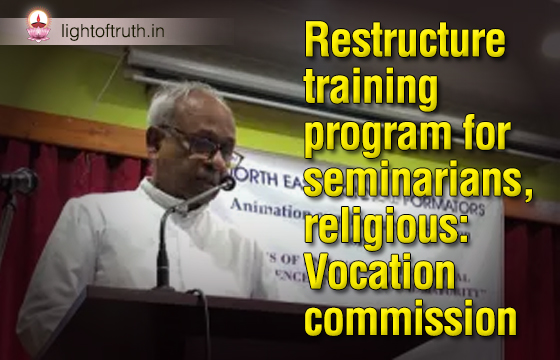
Restructure training program for seminarians, religious: Vocation commission
The sharp decline in the current standard of education has prompted the bishops of northeastern India to call for restructuring the initial forma-tion years for priests and reli-gious.
The all-promotion system in schools and making subjects like maths not compulsory to pass grade ten have adversely affected the reading, writing and numeracy skills of those entering minor seminaries and other formation houses, says a survey conducted by the Com-mission for Vocation, Seminaries, Clergy and Religious, North East India Regional Bishop’s Council.
The commission organized a meeting to address the current drawbacks in the training pro-grams.
Around 130 people engaged in training priests and nuns attended the August 17-18 meeting at Guwahati, the nerve center of northeastern India.
The meeting recommended increasing the initial formation to two years. Presently, the initial remedial education in formation houses is one year.
At the meeting, Bishop Thomas John Katrukuidyil, the commission chairman, presented a paper on the “Present Scenario of Formation” in north-eastern India.
The paper explained the results of an extensive survey the bishop undertook on the current vocation scenario in the region.
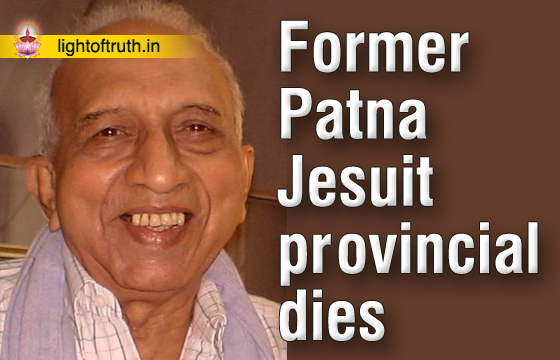
Former Patna Jesuit provincial dies
Father John D’ Mello, a former Patna Jesuit provincial and renowned spiritual director, died August 24. He was 89.
The death occurred at 7:30 am at Xavier Bhavan at Digha Ghat, a western suburb of Patna, where Father D’Mello was leading a retired life.
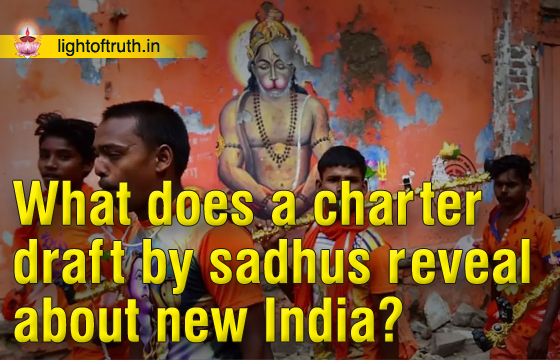
What does a charter draft by sadhus reveal about new India?
India’s constitution came into effect on Jan 26, 1950, completing the nation’s transition toward becoming an independent, democratic republic. But a self-appointed constituent assembly of 30 Hindu seers and scholars has come up with the draft of a “new constitution” for their proposed “Hindu Rashtra” (Hindu nation).
If the Hindu savants associated with the Shankaracharya Parishad of Varanasi, the northern city regarded as India’s spiritual capital, have their way then Muslims and Christians will be barred from voting in the Hindu Rashtra.
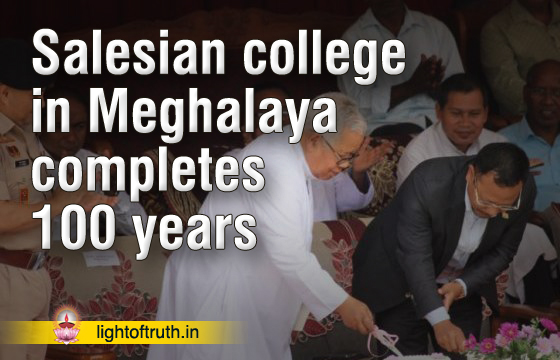
Salesian college in Meghalaya completes 100 years
A Salesian college in Meghalaya has completed 100 years of service in the northeastern Indian state.
The centenary of the Salesians entry into the region and Don Bosco college in Tura recently took place at the college on August 18.
Minister of Food and Civil Supp-lies James Pangsang K Sangma, the chief guest, hailed the Salesians’ contributions to northeastern India and Garo Hills in particular. He expressed gratitude and assured that the people of the region are also grateful to them.
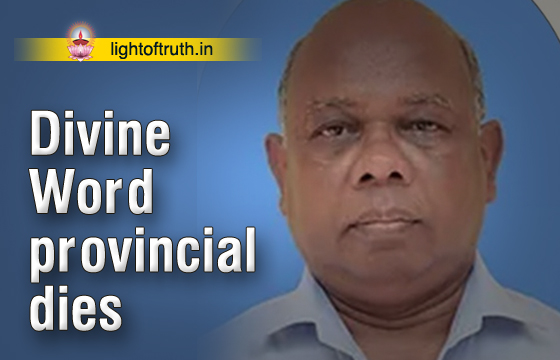
Divine Word provincial dies
Father Petrus Kullu, provincial of the Divine World Society’s Eastern Indian province, died August 18 of suspected Covid-19 infection. The death occurred at 4:15 pm in the Covid ward of Vikash Hospital, Bargarh near Sambalpur, a major town in the eastern Indian state of Odisha, according to a message from Father Victor Rodrigues on August 10.
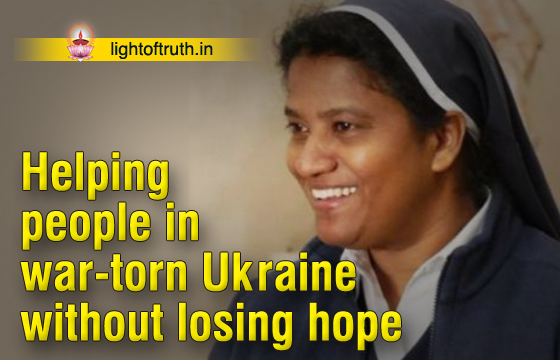
Helping people in war-torn Ukraine without losing hope
Sister Ligi Payyappilly, a native Indian, is worried that the Russia-Ukraine conflict continues, even after passing the six-month mark.
The member of the Sisters of St. Joseph of Saint-Marc has been serving war-hit people since Russia launched a full-scale invasion of Ukraine on February 24.
First, Sister Payyappilly help-ed evacuate hundreds of overseas nationals, mostly students, in Ukraine. The native Indian nun, who is now a Ukraine citizen, then turned her attention to Ukrainians who have become refugees in their own country.
Sister Payyappilly, superior of the congregation’s convent in Mukachevo, a town in western Ukraine, had followers across Ukraine as a renowned retreat preacher. She used this network in her rescue operations and refugee services.
“The crisis in Ukraine is worsening day by day. But the hopes of the people to get through the crisis too have increased.
Initially, everyone expected the war would end soon. But this is like the war between Goliath and David. Russians are mighty and powerful; Ukrainians are weak but determined. God is with us, and my mind says the final victory will be ours.” She said.
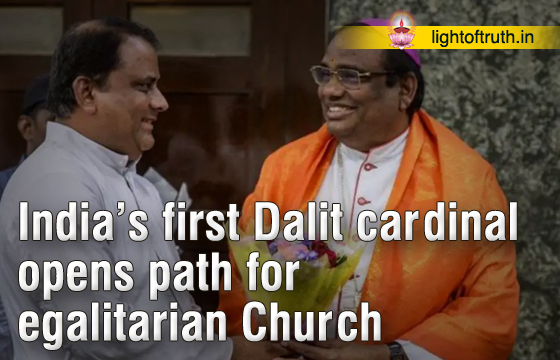
India’s first Dalit cardinal opens path for egalitarian Church
On Aug. 27, Pope Francis created 21 new cardinals at a consistory at the Vatican. The new cardinals include the first Indian cardinal from the socially poor Dalit community–Abp Anthony Poola of Hyderabad.
His appointment is seen as historical as it recognizes the Dalit Christian community, which continues to suffer caste discrimination within the Catholic Church.
The appointment of a Dalit as cardinal comes after three decades of public struggle by Dalit Christians against continuing caste discrimination and domination. For the past four years, they have been demanding to appoint Dalit bishops, especially in the Archdiocese of Pondicherry-Cuddalore. However, it has been prevented till now.
The struggles led by Dalit groups have been widely reported in recent times by some of the global Catholic media. And, this gesture of Pope Francis comes as a ray of hope for Dalit Christians. It also vindicates their struggle for justice and equality.
Caste discrimination against the Dalits started in the early days of Christianity in India. The early Provincial Councils of Goa in 1567, 1585, and 1606, forbade low castes and untouchables from joining seminaries.
The hierarchy continues that legacy even after several centuries.
“The appointment of a Dalit cardinal is a milestone in the history of the Church, particularly for Dalit Christians.”
For instance, when the first Dalit archbishop — Marampudi Joji of Hyderabad — was appointed two decades ago, several top Church leaders in India openly criticized the Vatican. “Rome is being taken for a ride. Rome does not know the ground realities,” said outgoing archbishop Samineni Arulappa of Hyderabad.
“If I say something, it will be interpreted as oppressing the oppressed, meaning the Dalits. Ninety-five percent of Hyderabad archdiocese’s priests oppose the appointment of Archbishop M. Joji. I give my successor less than five years in his new post. He has not remained more than three to four years in one place.” (UCA News, April 9, 2000)
Ironically, the first Dalit cardinal also comes from Hyderabad, where the first Dalit archbishop was installed 22 years ago.