- Dr Nishant A.Irudayadason
Professor of Philosophy and Ethics,
Jnana-Deepa Institute of
Philosophy & Theology, Pune.
The anger from the 2026 NEET paper leak still burns strong. At Jantar Mantar in Delhi, activist Sonam Wangchuk, who is now in police detention in a hospital, began his hunger strike against the question paper leaks. Many see the leak as the main problem, but it points to something much bigger. There is a clear split between the government and ordinary people. The state often uses tough, old colonial-era laws to control its citizens. It treats young protesters not as citizens who give power to leaders in a democracy, but as people who need to be watched and punished. This is not just a mistake in how things are run. It shows a deep distrust of the public. The political relationship between rulers and citizens, which should be based on trust and agreement, now feels like one side giving orders and the other obeying. Peaceful marches are seen as trouble. Even people on hunger strike get locked away so the daily work of government can carry on without protest.
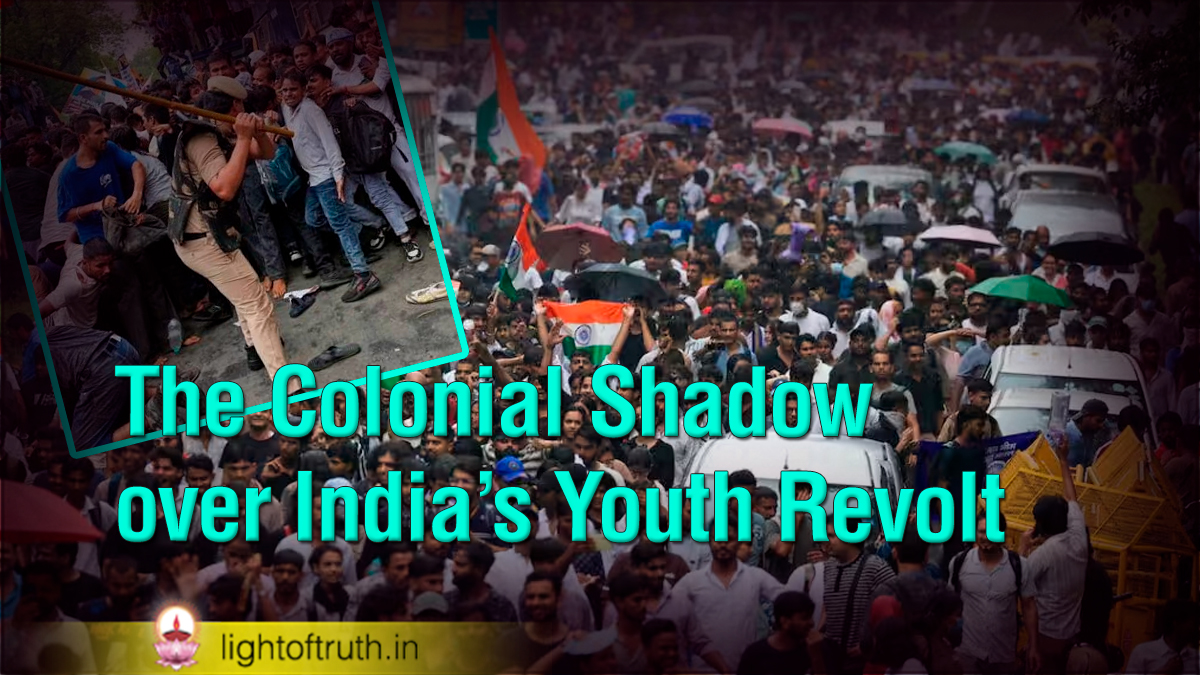
On 20 July 2026, the police in Delhi showed this old way of thinking in action. They brought back rules like the British-era Section 144, now called Section 163 under new laws. This stopped peaceful gatherings near Parliament. Barricades went up around the protest area. Tear gas filled the air and made young students cough and struggle to breathe. Water cannons soaked them. Some reports spoke of machine guns placed nearby at the centre of Indian democracy. The internet was cut off, and metro exits were blocked to stop people from joining or leaving. These steps were meant to keep everyone apart and scared. It looked like the government had lost trust in its people and chose force over talk. In a true democracy, citizens give up some freedom for safety and a say in decisions. Here, it felt like a return to a time when the strong “Leviathan” simply ruled by fear and power. The heavy response was not only about handling the protesters. It sent a loud warning that challenges to the system would not be allowed, especially from students fighting for a fair chance in exams.
The use of such force went hand in hand with harsh words that hurt people deeply. Several weeks earlier, people holding high respectable positions labelled jobless young people and activists as cockroaches and parasites, leading to the creation of “Cockroach Janata Party” as a sign of resistance against such a mindset. This mindset strips away their humanity and makes it easier to treat them badly. The state seems to pick up on this language too. Instead of fixing the real problems in the exam system, like cheating gangs, bribe-taking officials, and weak security, leaders focus on shutting down complaints. This cold approach shows a government that does not feel answerable to the people it serves. Ordinary families worry about their children’s future, but their fears are brushed off as annoying. The gap between rulers and citizens keeps growing wider. When leaders speak of protesters as pests that need removing, it becomes simple to justify rough treatment. Dissent is no longer a voice to listen to but a problem to stamp out fast.
The violence against students aged 17 to 19 made things even worse. These were hopeful NEET candidates, not troublemakers. Reports tell of police dragging them, hitting them with sticks, and tearing off their clothes. The way young bodies were manhandled suggests a dangerous normalisation of violence when it is justified as the maintenance of public order. Although the violence was not “directly sexual” in the traditional sense, the act of stripping or tearing the clothing of a minor by a state actor constitutes a profound violation of the child’s bodily dignity and personhood. Many of them ended up with head wounds and were pushed into vans. These young people just wanted fairness in an exam that offers one of the few paths to a better life for families with little money or connections. The rough handling broke their trust in the system that should protect them. Such actions raise hard questions about right and wrong, and about the law. Treating children this way in the name of order adds to the injustice and makes young minds turn away from democratic ways. Instead of making exams trustworthy again, the focus stays on control. This approach risks losing the support of the very generation that will shape the country’s tomorrow.
Sonam Wangchuk’s case shows another side of these old tactics. The 59-year-old activist remains held in a hospital. He says he will not eat until young leaders can meet members of parliament. His family calls the detention wrong. It feels like the state has blocked every door for young voices to be heard. This goes against the old Indian idea of Raj Dharma, the duty of rulers to act with care and justice. The government is not only failing to keep exams honest but also using force against those who point out the faults. India needs to move past the shadows of its colonial past. Real talk, not quick deals, should be at the heart of democracy. The image of the tough leader who never bends belongs to times before independence. Leaders must see citizens as equals, whether they speak on the streets or sit in protest. Young people are not a group to manage. They are the heart of the nation itself. Only respect and open ears can mend this failed trust in the government and build a better future. The first step in the right direction is the resignation of the education minister.