All posts by Sathyadeepam Weekly

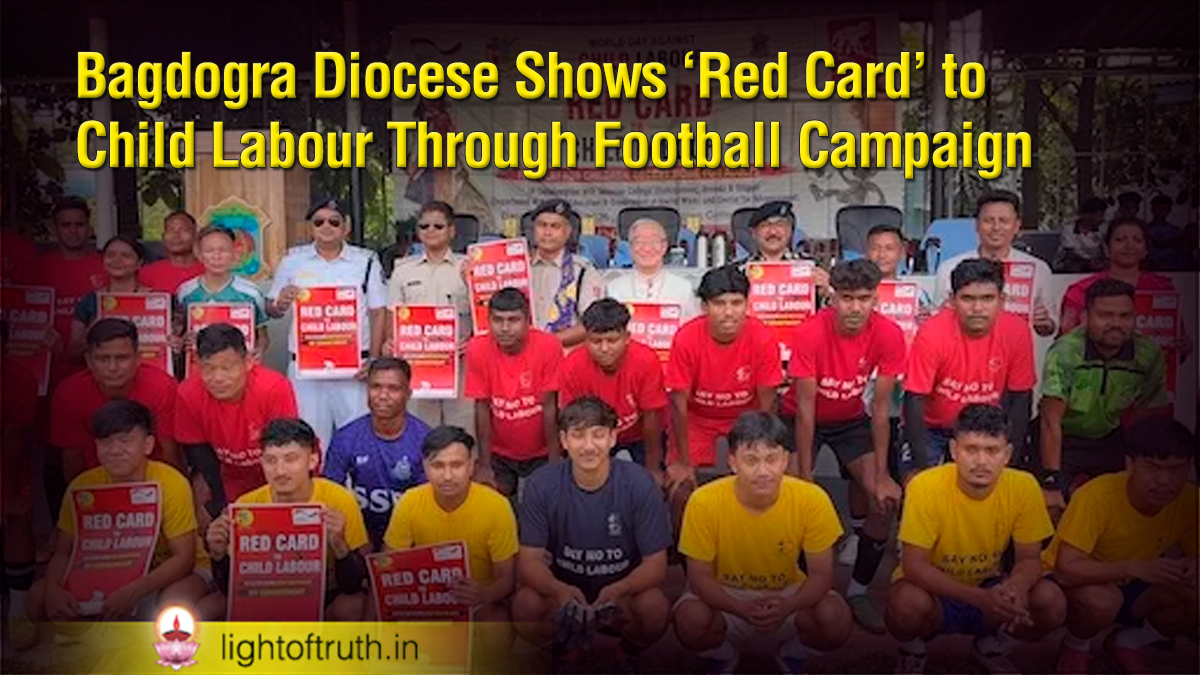
Bagdogra Diocese Shows ‘Red Card’ to Child Labour Through Football Campaign

The Diocese of Bagdogra observed the World Day Against Child Labour with a football campaign promoting children’s rights and the importance of education. The event was held under the theme, “Red Card to Child Labour – Fair Play for Children, Decent Work for Adults.”

The programme was organised by Seva Kendra, the social service wing of the diocese, in collaboration with Salesian College (Autonomous), Siliguri. Church leaders, educators, students, and local officials joined the campaign to raise awareness about the harmful effects of child labour.

Among those present were Bishop Paul Simick of Bagdogra, Seva Kendra Director Fr. Naresh Beck, Advocacy Officer Tez Kumar Thapa, and Salesian College Vice Principal Fr. C.M. Paul. Representatives from the Sashastra Seema Bal and Siliguri Police Commissionerate also took part.

Welcoming the gathering, Fr. Beck introduced the Church’s Surokhit Shaisav Project, which focuses on child protection and access to education. Awareness sessions highlighted the causes of child labour and encouraged communities to work together to end it.

“Child labour steals children’s dignity and future. Education is the strongest red card we can show against this injustice,” Bishop Simick said.

Two friendly football matches carried the campaign’s message, with teams from Salesian College, SSB Ranidanga, Gungaram Moonic, and Belgachi participating. Certificates were presented to all players in recognition of their efforts.

Organisers said the campaign aimed to inspire young people to become voices for justice and help build a society where every child can learn, dream, and grow free from exploitation.
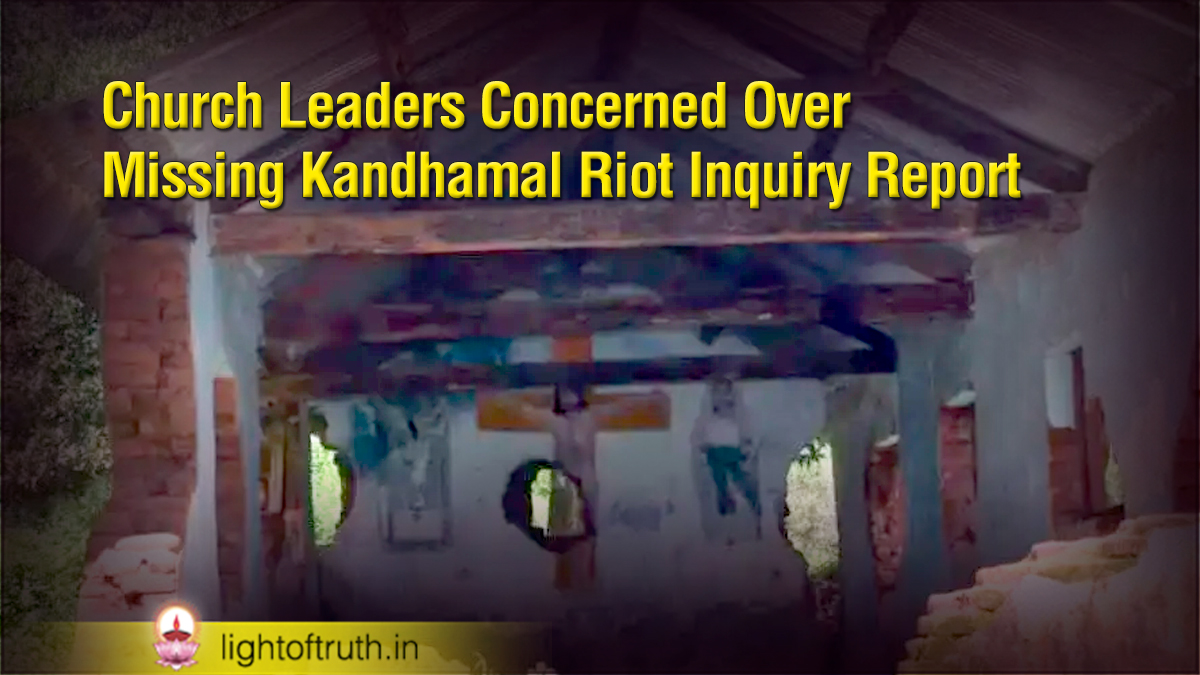
Church Leaders Concerned Over Missing Kandhamal Riot Inquiry Report

Church leaders in Odisha have expressed serious concern over the reported disappearance of an important inquiry report related to the 2008 anti-Christian violence in Kandhamal district.

A First Information Report (FIR) was filed on June 10 by a senior official of the Odisha Home Department, stating that several important documents had gone missing from the Chief Minister’s Office during the change of government in 2024. Among the missing records is the report of the Justice A.S. Naidu Commission, which investigated the murder of Vishwa Hindu Parishad leader Swami Laxmanananda Saraswati and the communal violence that followed.

Church leaders described the incident as alarming. They questioned how such an important document could disappear and raised concerns about possible foul play. They also pointed out that, according to media reports, only one hard copy of the report existed, increasing worries about the safety and authenticity of any digital versions.

The Kandhamal violence began after the killing of Swami Laxmanananda on August 23, 2008. Christian groups have long maintained that Christians were wrongly blamed for the murder, while Maoist rebels later claimed responsibility.

The violence lasted for nearly seven weeks. According to rights groups and Church organisations, around 100 people were killed, more than 56,000 people were displaced, about 6,000 houses were destroyed, and over 300 churches and Christian institutions were attacked.

Justice A.S. Naidu said the two-volume report contained more than 1,500 pages of findings and recommendations aimed at preventing such violence in the future. Church leaders have called for a thorough investigation to recover the missing report and ensure justice for the victims of Kandhamal.

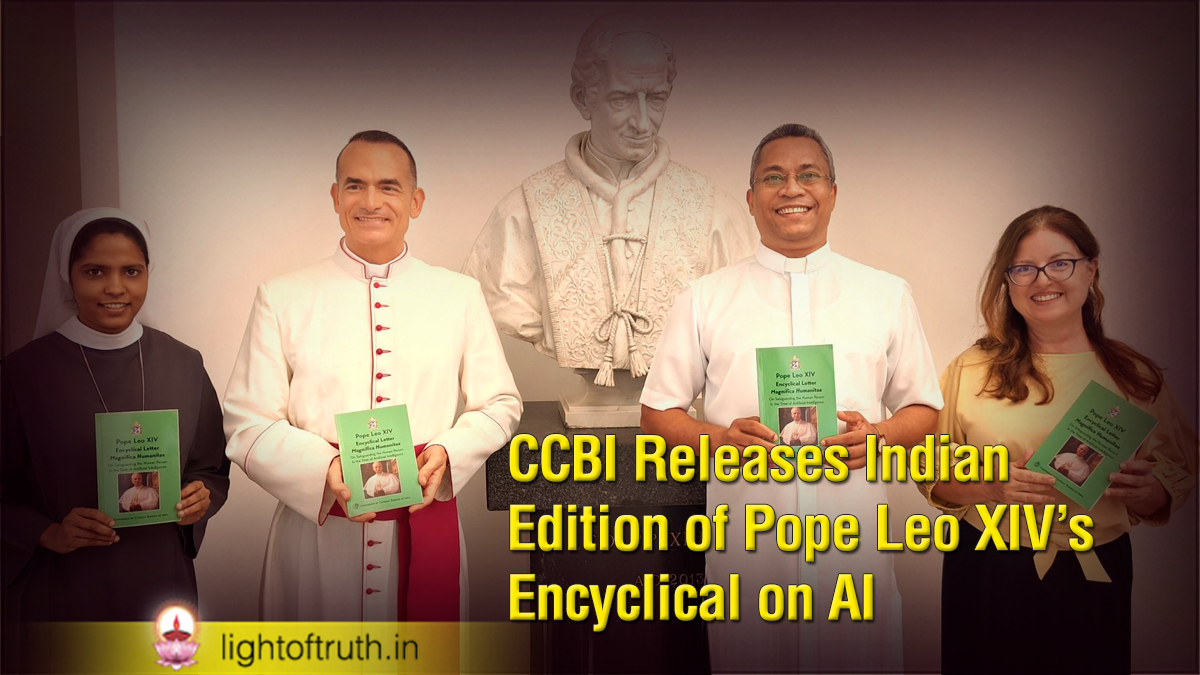
CCBI Releases Indian Edition of Pope Leo XIV’s Encyclical on AI

The Conference of Catholic Bishops of India (CCBI) released the Indian edition of Pope Leo XIV’s encyclical Magnifica Humanitas at the Apostolic Nunciature in New Delhi on June 10, 2026.

The first copy was formally handed over by Msgr. Andrea Francia, Chargé d’affaires a.i. of the Apostolic Nunciature in India, to Rev. Dr. Stephen Alathara, Deputy Secretary General of the CCBI, during a brief ceremony at the Nunciature. Ms Caroline Bussutti and Sr. Reema Martin O.SS.S. were also present.

Issued by Pope Leo XIV on May 25, 2026, Magnifica Humanitas reflects on the growing influence of artificial intelligence and its impact on human life. The encyclical discusses how rapid technological development affects human dignity, work, solidarity, ethics, and the common good.

Drawing on the Church’s social teaching tradition, the document builds on earlier encyclicals such as Rerum Novarum, Centesimus Annus, and Laudato Si’. It calls for a human-centred approach to technology, insisting that innovation should serve people, protect dignity, and contribute to a more just and compassionate society.

The CCBI said the Indian edition has been published to make the Pope’s teaching on artificial intelligence more accessible to the faithful, educators, policymakers, and others involved in shaping technology and society.

The release comes at a time when questions about AI ethics, employment, privacy, and human responsibility are becoming increasingly important across the world.

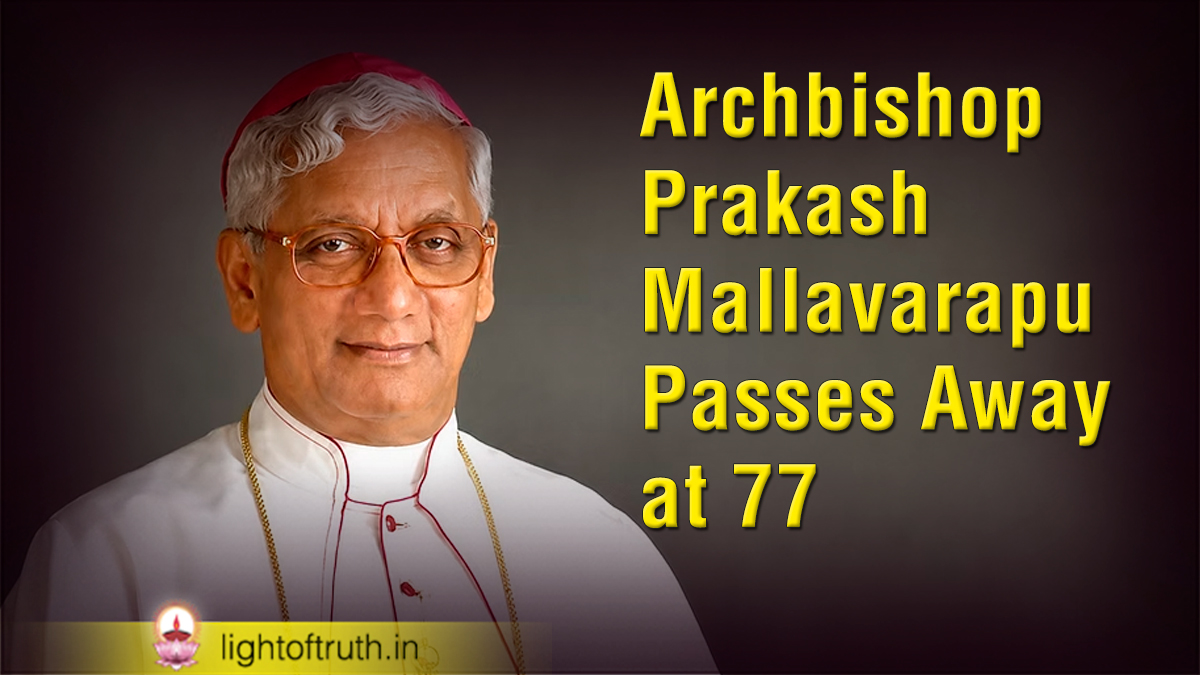
Archbishop Prakash Mallavarapu Passes Away at 77

Visakhapatnam, June 7, 2026: Archbishop Prakash Mallavarapu, Archbishop Emeritus of Visakhapatnam and a respected leader of the Catholic Church in India, passed away on June 7, 2026, at a private hospital in Visakhapatnam. He was 77 years old.

The Archbishop had been admitted to St. Joseph’s Hospital in May due to severe breathing difficulties and was later transferred to Medicover Hospital for specialized treatment. After showing signs of recovery and being discharged, his health suddenly worsened because of acute respiratory distress. He passed away peacefully in the early hours of Sunday.

Born on January 29, 1949, in Nizamabad, Telangana, Archbishop Prakash pursued his priestly formation at St. Peter’s Minor Seminary and the Papal Seminary in Pune. He was ordained a priest on October 11, 1979.

During his long ministry, he served in several important roles in the Church. He was Bishop of Cuddapah from 1998 to 2002, Bishop of Vijayawada from 2002 to 2012, and Archbishop of Visakhapatnam from 2012 until his retirement in 2024. He also served as Apostolic Administrator of Srikakulam and held many leadership positions at regional and national levels.

One of his most notable responsibilities was serving as Secretary General of the Conference of Catholic Bishops of India (CCBI) from 2005 to 2011. He also chaired several commissions related to healthcare, education, theology, and pastoral ministry.

Archbishop Prakash Mallavarapu will be remembered for his dedicated service, intellectual leadership, and commitment to the growth of the Church in India. Funeral arrangements are expected to be announced shortly.

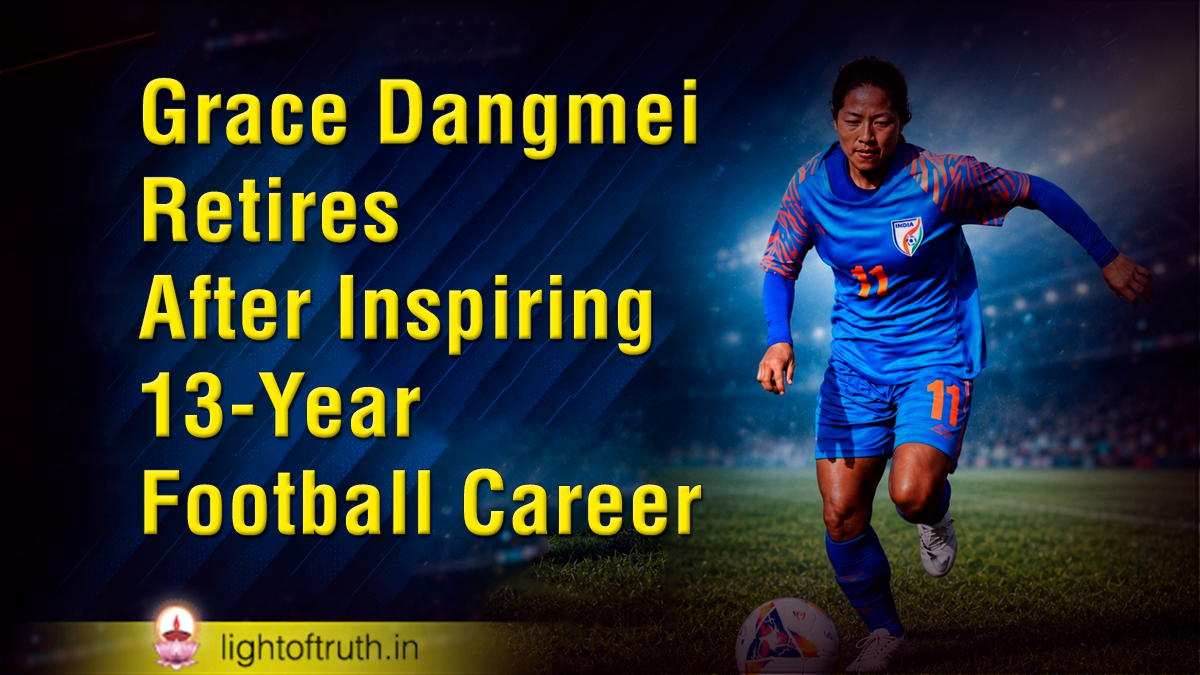
Grace Dangmei Retires After Inspiring 13-Year Football Career

Indian women’s football star Grace Dangmei has announced her retirement from professional football, bringing to a close an outstanding 13-year career that inspired countless young athletes across the country.

Dangmei, who comes from Dimdailong village in Manipur’s Churachandpur district, shared her decision after helping India win the SAFF Women’s Championship. In an emotional message, she said it was difficult to say goodbye to a sport she loved deeply and expressed gratitude for the support she received throughout her journey.

A member of the Rongmei Catholic community, Grace is the daughter of Simon Dangmei, a catechist of St. Ignatius Parish, Bishnupur, and Rita Dangmei. Church and community leaders praised her dedication, humility, and achievements, describing her as a role model for young people, especially girls.

Grace began her football career in 2013 and went on to become one of India’s most respected women footballers. She made 96 appearances for the national team and scored 24 international goals. Her performances earned her several honours, including AIFF Emerging Player of the Year, Indian Women’s League Emerging Player, and FPAI Indian Player of the Year in 2023.

She represented leading clubs such as KRYPHSA, Sethu FC, Gokulam Kerala, and Sribhumi. In 2022, she also played for FC Nasaf Karshi in Uzbekistan, helping the club win both league and cup titles.

As Grace Dangmei retires from international football, she leaves behind a legacy of hard work, perseverance, and excellence. Her journey from a small village in Manipur to the international stage continues to inspire aspiring athletes across India.

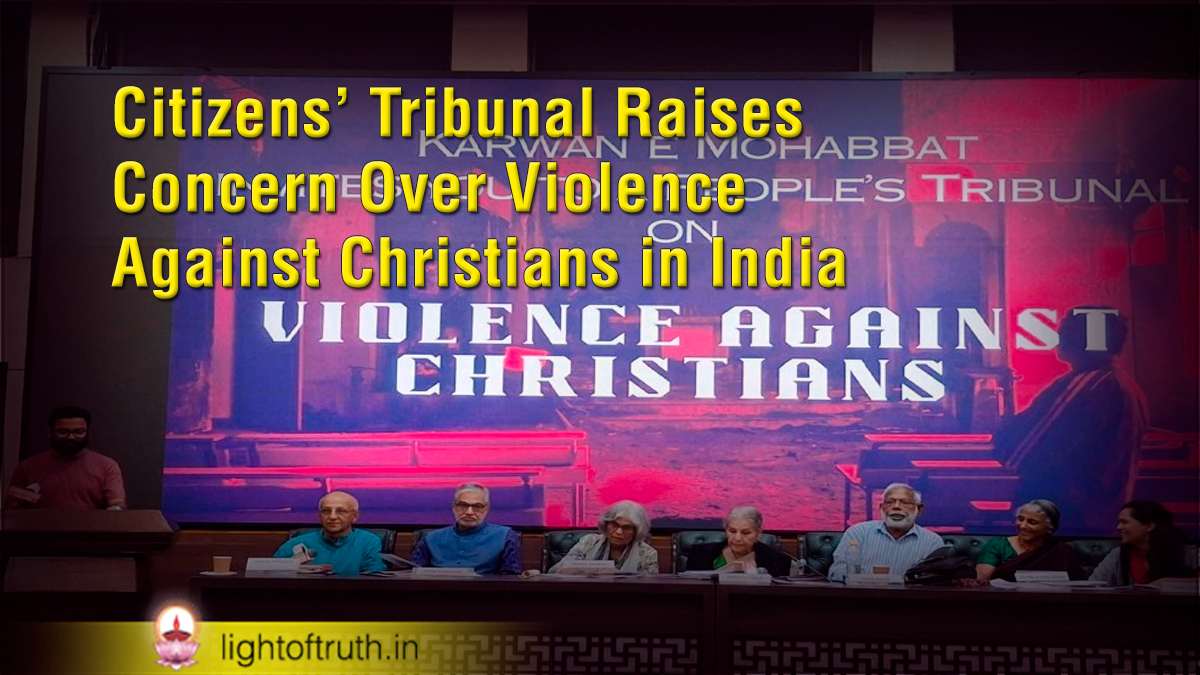
Citizens’ Tribunal Raises Concern Over Violence Against Christians in India

A nationwide citizens’ tribunal held in New Delhi has heard testimonies of violence, social boycott, and discrimination faced by Christians in different parts of India. The People’s Tribunal on Violence Against Christians in India was convened on June 1 at the Constitution Club by Karwan-e-Mohabbat and a group of concerned citizens.

The tribunal followed field visits to Chhattisgarh and Odisha, where members met many affected families. Survivors, lawyers, researchers, and human rights defenders shared accounts of increasing hostility, especially against Adivasi and Dalit Christians.

Evidence presented included attacks on churches and prayer meetings, intimidation of pastors and worshippers, forced displacement from villages, denial of burial rights, and economic boycotts. Testimonies also described arrests under anti-conversion laws and a growing atmosphere of fear.

Several speakers expressed concern over what they called institutional failure. They pointed to the low number of police complaints registered despite numerous reported incidents and alleged delays in investigations. Some survivors said that police filed cases against victims or pressured communities into compromise agreements.

Participants also highlighted the denial of burial rights, describing incidents where funeral processions were obstructed and Christian families were prevented from burying their loved ones according to their faith traditions.

The tribunal concluded that these incidents should not be seen as isolated events but as part of a broader pattern that threatens constitutional guarantees of religious freedom and equal citizenship. It called on citizens, institutions, and governments to take urgent steps to protect the rights and dignity of religious minorities in India.

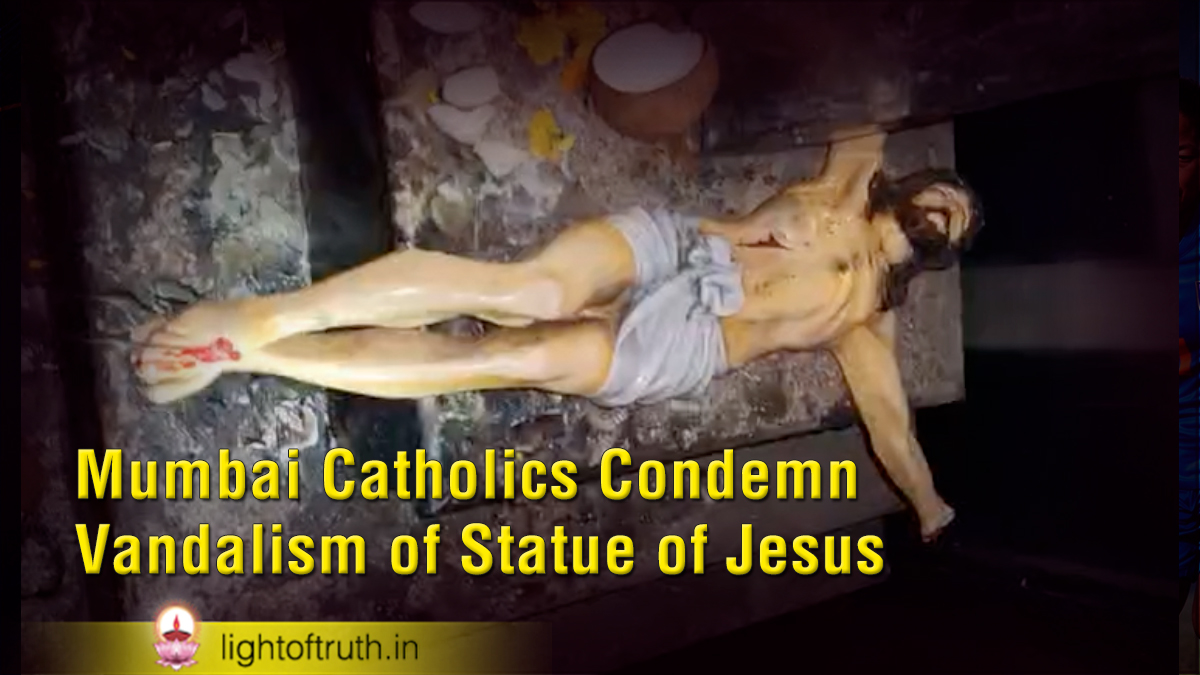
Mumbai Catholics Condemn Vandalism of Statue of Jesus

Catholics in Mumbai have strongly condemned the vandalism of a roadside statue of Jesus Christ in the Parel suburb and have demanded strict action against those responsible. The statue, located outside Holy Cross Church, was damaged by unidentified persons on June 7.

The incident caused deep hurt among parishioners who regularly gathered at the site for prayer and devotion. Church leaders described the act as an attack not only on a religious symbol but also on the faith and sentiments of the Christian community.

The Archdiocese of Bombay issued a statement expressing deep concern and condemning the desecration. It said such incidents are not isolated acts of mischief but targeted attacks that threaten the spirit of peaceful coexistence for which Mumbai is known.

The latest attack comes less than a month after a roadside Cross near the historic St. John the Baptist Church in Andheri East was vandalized twice. Following those incidents, police had taken steps to protect several roadside crosses in the area.

Roadside crosses and statues have long been part of Mumbai’s Catholic heritage, dating back to the Portuguese era. They are not only objects of devotion but also symbols of history, identity, and community life.

The Archdiocese has called for a thorough investigation and urged the authorities to ensure the protection of all places of worship. Catholic organizations and community leaders warned that repeated attacks on religious symbols could disturb communal harmony.

They appealed to all citizens to uphold Mumbai’s values of pluralism, tolerance, and mutual respect.

Experts Urge Ethical Approach as India Introduces AI in Schools

India is set to introduce artificial intelligence (AI) and computational thinking in schools from Grade 3 beginning with the 2026–27 academic year. While the move aims to prepare students for a technology-driven future, education experts are urging caution and calling for stronger ethical safeguards.

The Ministry of Education has described AI as a “basic universal skill” necessary for future-ready learning. However, many believe that children should first understand the limits and risks of AI before depending on it.

Recent studies show that children are adopting AI tools rapidly. A 2025 survey across 10 Indian states found that 35 percent of students using educational technology already use generative AI for learning. Yet, nearly 75 percent mistakenly believe AI works just like an internet search engine.

Experts warn that using AI without proper understanding could weaken important skills such as critical thinking, concentration, fact-checking, and independent judgment.

Concerns have also been raised about India’s preparedness. Official figures show that around one-third of schools still lack adequate computer or internet facilities, while more than 100,000 schools continue to function with only one teacher.

International organisations such as UNESCO have stressed the importance of teacher training, ethical guidelines, and age-appropriate use of AI in classrooms. They recommend that younger children focus on computational thinking, creativity, and responsible technology use rather than becoming dependent on generative AI tools.

Educators say the goal should not simply be teaching children how to use AI, but helping them become wise, responsible, and thoughtful individuals who can use technology for the common good.

A quarter of Irish Gen Z will have no children new report says

While current trends show that 1 in 4 young women today will remain childless, Iona Instituteʼs Breda OʼBrien said the huge question is “whether this will be by choice or circumstance.” One in 4 members of Ireland’s Gen Z demographic are expected to be childless by age 45, according to a new report from Dublin’s Iona Institute, which promotes marriage, freedom of conscience, and religion in society. Gen Z generally refers to people born between 1997 and 2012. Drawing on cohort-level data from the Human Fertility Database (HFD), as well as using demographic modelling, the institute’s “Choice of Circumstance? Rising Childlessness in Ireland” report, released in May, charts a huge increase in the number of Irish women who are childless. Among those born in the late 1950s, only 30.9% were childless by age 30, rising to 63.6% for those born in the early 1990s. This trend suggests 25% of women born in the late 1990s will be childless when they reach age 45. Breda OʼBrien of the Iona Institute told EWTN News that “a huge question is whether this will be by choice or circumstance.” Much will be unplanned and forced by circumstance, such as the cost of living,” she said.

“It’s worrying and weʼre sliding into it without too much discussion. Before the 1930s, we had similar rates of childlessness in Ireland, but that was because of extreme poverty, late marriage, and low marriage rates. Weʼre supposed to be in an era where women have every possible choice.”  “The choice to have children, which is fundamental, is being taken away from young women. Itʼs being painted as a kind of freedom. I don’t think young women themselves consider it to be a type of freedom, and I think a lot of them are worried about it.” According to Central Statistics office data, the average man’s age at marriage is now nearing 38 and the average women’s age is almost 36. O’Brien that there needs to be debate about why this is happening as a society. “It is a phenomenon we should discuss far more widely if our aim is to help people achieve their eventual life goals. I think among people of faith, they are still prioritizing children and family, and marriage. The Catholic Church needs to support those young families in every way possible.”

Research finds parents play decisive role in children’s religious Future

The Institute for Family Studies and Communioʼs study suggests the most influential ministry is at the family dinner table, bedtime prayers, and the everyday witness of a home centred on Christ. Parental practice is the strongest predictor of whether children remain Christian as adults, a study found. The study, “Passing the Torch: How Faith Moves Across Generations”, released in June examined data from four national studies involving tens of thousands of Americans raised in Christian households. Researchers sought to identify which behaviors most strongly influence whether children retain their faith into adulthood. The study found that the family home is the single-most critical factor in determining whether faith is successfully passed on from one generation to the next.

According to the report, children whose parents regularly attended church, prayed consistently in front of them, spoke openly about their faith, and fostered strong family relationships were significantly more likely to remain active Christians as adults. The results showed that adults whose parents attended church weekly were more than twice as likely to attend church regularly themselves decades later (26% versus 12%). The effect was even stronger when both parents participated in religious life together. The study also highlighted the importance of simple spiritual practices within family life. Saying grace before meals, evening or morning prayers together, and having frequent conversations about faith all corresponded with higher levels of religious belief and practice in adulthood. Children raised in homes where religion was discussed several times a week were substantially more likely to identify as Christian, pray daily, and consider faith an important part of their lives as they went through adulthood.

For Catholics, the findings reflect what the Church has always taught regarding the role of Parents as the primary educators of their children in the faith. The Church has often referred to the family as the ‘domestic Church’ emphasizing that parents are called not only to teach religious truths but also to model a life of discipleship through daily prayer, sacramental participation, and Christian witness.

The quality of family relationships had a tremendous impact on children as well. Adults who reported having strong and loving relationships with both parents were more likely to remain religious than those who experienced distant or conflict-ridden family environments. About 41%of children who attend church weekly with both parents go on to attend church weekly as an adult. This percentage drops to 29% if children attend with only one parent. In particular, researchers noted the significant role fathers play in shaping the spiritual lives of their children.