

A delegation of Christian leaders has urged the governor of a northern Indian state to repeal a proposed law saying it can be misused to target religious mino-rities under the pretext of preventing fraudulent conversions. The Uttar Pradesh state government passed the bill restricting religious conversions on July 30. The northern state is ruled by the right-wing Hindu Bharatiya Janata Party (BJP). The United Christian Forum (UCF) delegation, in its Aug. 19 memorandum to Governor Anandiben Patel, pointed to “the broad and ambiguous language” in the proposed law, adding that it may “embolden individuals and groups to target religious minorities.” The governor is the consti-tutional head of the state who functions on the aid and advice of the council of ministers. To be-come a law, every bill passed by the state legislature must receive the governor’s assent. The eight-member UCF delegation said that the terms used in the Uttar Pradesh Prohibition of Unlawful Conversion of Religion (Amendment) Bill, 2024, like “force, fraud, and allurement,” are un-defined and vague. “For instance, any collective gathering of Chri-stians is demonized and portrayed as an attempt to allure people to Christianity,” it said. The memo-randum stressed that existing laws, such as the Uttar Pradesh Prohibition of Unlawful Conver-sion of Religion Act, 2021, as well as criminal and civil laws, already address the issue of con-versions by fraud, coercion, or force. The new Bill imposes dis-proportionately severe penalties, such as the provision of 20 years or life imprisonment if convicted for religious conversion. Earlier, the maximum punishment pro-vided for was 10 years.
All this results “in undue violation of the right to life and liberty,” it stated. The new Bill also permits any third person to register a first information report when the existing law requires that the victim or blood relatives give information or file a complaint in a conversion case.
The memorandum said researchers have documented how anti-conversion laws have been weaponized to target religious minorities, including Christians. Vigilante mobs, often supported by local police officials, brutalize Christians for holding house prayer meetings, leading to the registration of false cases, which linger for many years and result in growing harassment and legal costs.
The new provision allowing “any person” to complain “widens the door to accusations driven by personal, political, or communal biases, leading to a wave of violence and harassment against these [minority] communities,” the memorandum stated. UCF national convener A C Michael said the delegation urged the governor to “suspend” the new Bill in its current form. The Christian lay leader told UCA News that in its memorandum, the UCF recommended that the Uttar Pradesh government focus on initiatives that strengthen harmony and promote tolerance among different religious groups rather than causing tensions through punitive legislation. It further suggested public awareness campaigns to educate citizens about their constitutional rights and the importance of respecting diversity. It was also suggested that police personnel and judicial officers be trained to safeguard religious freedoms, handle complaints ethically, and conduct unbiased investigations. The UCF also urged setting up support systems for innocent people who are wrongfully accused and jailed in the form of psychological counseling and legal assistance to deal with the trauma and financial impact of such illegal actions.
All posts by Light of Truth
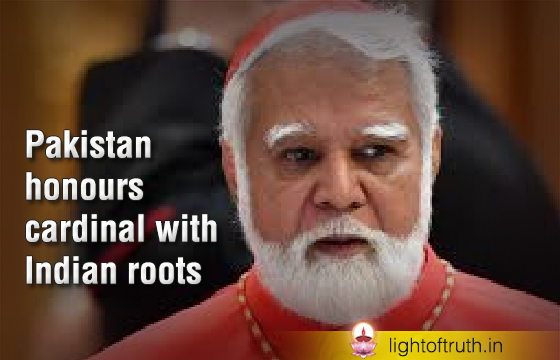
Pakistan honours cardinal with Indian roots
Pakistan President Asif Ali Zardari has awarded Cardinal Joseph Coutts, Archbishop emeritus of Karachi who was born in India’s Amritsar, on the country’s 78th Independence Day. The 79-year-old cardinal is among 104 people awarded for their contributions to the nation. Pakistan celebrates its Independence Day on August 14, a day before India’s Independence Day. The award “Tamgha-i-Imtiaz” (medal of excellence) is given to any civilian in Pakistan in recognition of their exceptional contributions to the nation. Cardinal Coutts has been recognized for his efforts in fostering dialogue among various religious communities and promoting social welfare and minority rights. His initiatives have focused on improving healthcare, education, and community well-being across Pakistan. In his remarks, President Zardari commended Cardinal Coutts’ contributions to interfaith harmony. “His service to humanity and his role in bringing different faiths together is an inspiration for all Pakistanis,” President Zardari said, highlighting the cardinal’s impact on peace and prosperity in the nation. The awards ceremony is scheduled for March 23, 2025.
Cardinal Coutts served as the archbishop of Karachi from 2012 to 2021. Earlier, he served as the bishop of Faisalabad from 1998 to 2012. Pope Francis created Coutts a cardinal on June 28, 2018. He was born in Amritsar, British India, now in India’s Punjab state, on July 21, 1945 in a Goan family. His father Pedro Jose Couto was from Aldona, a village in north Goa. Archbishop Anil Joseph Thomas Couto of Delhi is his first cousin.
He received his seminary training at the Christ the King seminary in Karachi and was ordained a priest in Lahore, Pakistan, on January 9, 1971. After ordination, he completed ecclesiastical studies in Rome from 1973 to 1976 and then became professor of philosophy and sociology at Christ the King Regional Seminary, Karachi, rector of St. Mary’s Minor Seminary, Lahore, and diocesan vicar general from 1986 to 1988. On May 5, 1988, he was appointed coadjutor bishop of Hyderabad in Pakistan by Pope John Paul II and consecrated a bishop on September 16 that year. He became bishop of Hyderabad on September 1, 1990 and on June 27, 1998, he was appointed the bishop of Faisalabad. In Faisalabad he developed ties with Muslim scholars and clerics. The Catholic University of Eichstätt-Ingolstadt, Germany, awarded Bishop Coutts the 2007 Shalom Prize for his commitment to interfaith dialogue in Pakistan. The award is given to people and projects working for human rights. On January 25, 2012, Pope Benedict XVI appointed him the Karachi archbishop to succeed Archbishop Evarist Pinto. In both Faisalabad and Karachi, he has campaigned against Pakistan’s blasphemy law, which he believes is too easily manipulated for personal attacks or to target religious minorities for insubstantial or pretended offenses. In Karachi he has established multiple connections for inter-religious dialogue between Muslims and Catholics, aiming at both acceptance by the general population and increased understanding on the part of political and religious leaders. He was president of the Pakistan Catholic Bishops’ Conference from 2011 to 2017. He became a cardinal on June 28, 2018. He became the country’s second cardinal after Joseph Cordeiro, who was also of Goan origin. He is a member of the Pontifical Council for Interreligious Dialogue. Pope Francis accepted his resignation on February 11, 2021.

Cardinal Jaime Sin Museum set to open in central Philippines
The Cardinal Jaime Sin Museum will open on September 1, 2024, as announced by the local government of New Washington and the Diocese of Kalibo in the central Philippines.
This museum, the first ecclesiastical museum in Western Visayas, will showcase the life and legacy of Cardinal Sin, who played a key role during the 1986 Edsa People Power Revolution. “Already, we are thankful to the Serviam Foundation and the Kalibo Diocese for making the house of Cardinal Sin a museum,” said Mayor Jessica Panambo of New Washington.
The local chief executive said the government plans to open the museum to the public, especially the youth “so that they would learn all the good things about the good Cardinal.”
The National Museum in Visayas has been training the museum staff since June to prepare for the opening. Exhibits will include personal belongings of Cardinal Sin, preserved by the Serviam Foundation.
Fr. Rufino Sescon, Jr., former personal secretary to Cardinal Sin and current rector of the Minor Basilica and National Shrine of Jesus Nazareno in Quiapo, has donated items and memorabilia to the museum.
The opening events will include a cultural event on August 30 at the New Washington Community Center, followed by an unveiling and blessing on August 31, coinciding with what would have been Cardinal Sin’s 96th birthday. Fr. Justy More, chair of the Historical Research and Cultural Council and project coordinator, said the idea for the museum was proposed at the Catholic Bishops’ Conference of the Philippines meeting in Kalibo to mark the 50th-anniversary jubilee of the Kalibo Diocese in 2026.
The Kalibo Diocese has been preparing for this event since July 2023, following an agreement with the Serviam Foundation to secure and display the late Cardinal’s memorabilia.
Cardinal Sin, the 30th Catholic Archbishop of Manila and the third Filipino cardinal, was a prominent figure during the 1986 Edsa People Power Revolution. Hailing from Chinese-Filipino descent, he left a significant legacy in both the Church and national history.
He was born in New Washington on August 31, 1928. He died of kidney complications due to diabetes on June 21, 2005.
China officially recognizes formerly ‘underground’ bishop, Vatican says
The Vatican announced on August 27 its “satisfaction” that China has officially recognized Bishop Melchior Shi Hongzhen as bishop of Tianjin. “This provision is a positive fruit of the dialogue established over the years between the Holy See and the Chinese government,” reads a Holy See statement released Aug. 27. According to Reuters, 95-year-old Shi had once been placed under house arrest after refusing to join the church officially backed by the Chinese government.
Shi was ordained a priest in the Catholic Church on July 4, 1954, and consecrated coadjutor bishop of Tianjin on June 15, 1982. He was ordained bishop of the Diocese of Tianjin on June 8, 2019. According to the Holy See statement, 56,000 Catholic faithful – distributed across 21 parishes served by 62 priests – belong to the Diocese of Tianjin. Under Pope Francis, the Holy See has expanded dialogue with China and engaged in talks regarding provisional agreements on the appointment of bishops in the Asian nation.
The controversial Sino-Vatican Agreement, first signed in 2018, which has never been made public, is said to stipulate that the Catholic Church is allowed to have bishops in communion with Rome who are at the same time recognized by Chinese authorities in the country. It was renewed in 2020 and 2022.
In 2021, the Holy See sent a delegation led by a member of the then-Congregation for the Evangelization of Peoples (now known as the Dicastery for Evangelization), Archbishop Claudio Maria Celli, to meet with Chinese authorities and negotiate the two-year renewal of the Sino-Vatican Agreement before it expires.
Negotiations between the Vatican and China resumed Aug. 28–Sept. 2, 2022, when a Holy See delegation was sent to meet with local authorities in Tianjin.
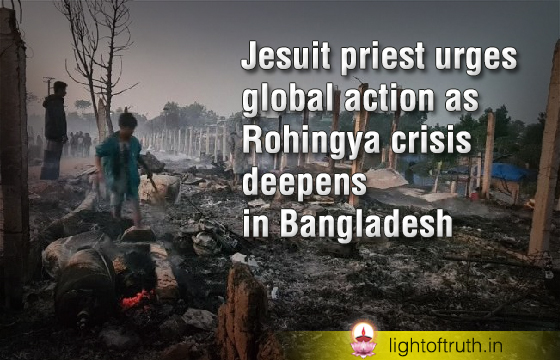
Jesuit priest urges global action as Rohingya crisis deepens in Bangladesh
Seven years after over 700,000 Rohingya fled Myanmar to escape violence, escalating tensions and dwindling aid in overcrowded camps threaten their survival. In an AsiaNews report, Father Jerry Gomes, a Jesuit priest and head of Jesuit Refugee Service (JRS) programs in Bangladesh,warned that Bangladesh cannot continue to bear the burden alone, urging the international community to take action.
“The violence in the camps continues, with incidents of theft, vandalism, murder, and kidnappings,” said Fr. Gomes, who has worked in Cox’s Bazar for seven years. As Myanmar’s civil war rages, more Rohingya refugees continue to flee, further straining Bangladesh’s resources. He stressed that repatriation is not viable without peace in Myan-mar. “A peaceful and favourable atmosphere must be created so that all ethnic communities can live in harmony,” he said.
Since 2020, JRS has partnered with Caritas Bangladesh to provide education, psychological support, and vocational training to over 6,000 Rohingya children and adolescents.
However, a 70 percent funding gap hampers efforts. Out of 400,000 school-age children, only 300,000 attend learning centres. Rising violence in the camps further jeopardizes progress.
Fr. Gomes echoed Pope Francis’ 2017 call for global compassion and justice for the Rohingya, emphasizing the need for the international community to step up.
“The international community should address the issue of repatriation since Bangladesh cannot hold them for long,” he said, urging global action to secure peace in Myanmar and support the refugees.
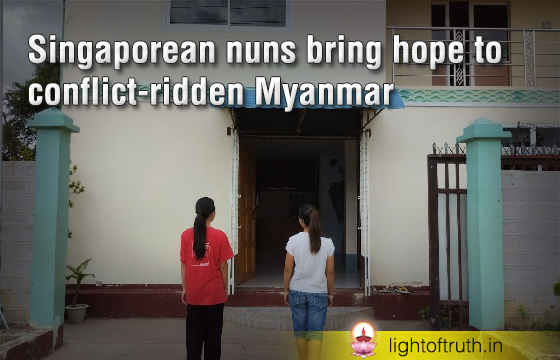
Singaporean nuns bring hope to conflict-ridden Myanmar
In 2021, a military junta seized power in Myanmar, plunging the country into a state of civil conflict, substantially worsening what was already a difficult humanitarian situation. For several decades, the Canossian Daughters of Charity, a religious congregation with a strong presence in Singapore, have been at work in the country, aiming to build a brighter future for Myanmar’s youth.
Canossian Sisters from Singapore first began making trips to Myanmar in 1996 – a journey of around 2,000 kilometres. They went, says Sr. Wang, in response to a request for help from the late Burmese Archbishop Matthias U Shwe, then Bishop of Taunggyi.
The Archbishop had invited them to educate the country’s young, and to help with the formation of groups of young evangelizers. Volunteers travelled regularly from Singapore to Myanmar on mission outreach trips for more than a decade, organising everything from leadership camps and English lessons to Bible courses.
Then, in 2008, the Canossians set up their first centre in the country, which became home to a small group of Sisters and lay partners. That community began a programme aimed at the integral formation of educators, with the motto: “Serve With Love.”
In 2012, they opened Canossa Home, which housed residential facilities for the formation of educators, as well as a boarding house for children from poor families living in villages with no schools.
These educators are trained to give quality care to children and teenagers staying in boarding houses run by the local Church – who otherwise would have no access to professional training – by educating them to one day become teachers themselves.
Since the centre was opened in 2008, the Sisters have trained about 350 young women, most of whom have now returned to serve in communities throughout Myanmar.
In 2017, meanwhile, the Sisters opened a preschool for children in the area.
Since the COVID-19 restrictions in 2020 and the military coup in 2021, volunteers from Singapore have not been able to travel to Myanmar. The Sisters and volunteers in Singapore keep in touch by sending parcels with food and other necessities. The communities in Myanmar, meanwhile, are kept running by six local Canossian Sisters and trained local lay staff, mentored by an experienced Sister from Singapore.
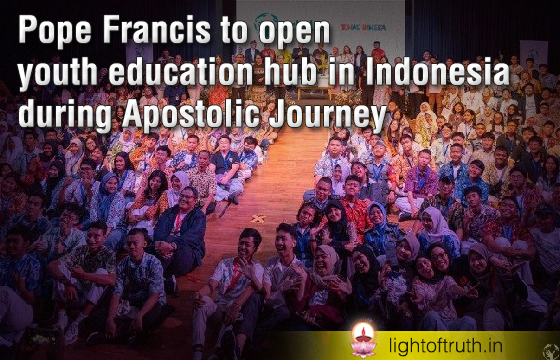
Pope Francis to open youth education hub in Indonesia during Apostolic Journey
Pope Francis will inaugurate the first regional headquarters of Scholas Occurrentes in Southeast Asia during his visit to Indonesia from Sept. 3 to 6.
The global educational project, which started in 2001 under his leadership as Archbishop of Buenos Aires, focuses on engaging youth in education, art, and sports.
On September 4, Pope Francis will visit the “Grha Pemuda” Youth House in Jakarta, where he will meet 200 Indonesian students from various islands, schools, and religions, according to a report by AsiaNews.
The visit will highlight the values of unity in diversity and the culture of encounter, key principles of Scholas Occurrentes.
Scholas Occurrentes will also launch the Scholas Citizenship program in Southeast Asia. This initiative is in partnership with Indonesia’s Ministry of Education, Culture, Research, and Technology and the Global 5P Movement.
The program will train university students and young teachers in the Scholas methodology, which they will implement in their communities.
Scholas Occurrentes said that the approach seeks to address the needs of Indonesian society, where the youth population is growing rapidly.
Scholas Occurrentes started as a project in Buenos Aires to bring together students from public and private schools, regardless of religious background, to work for the common good.
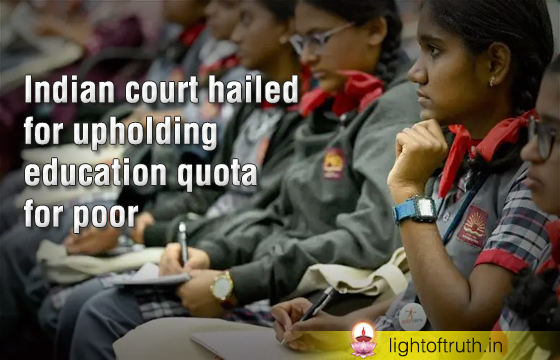
Indian court hailed for upholding education quota for poor
Christian leaders and lawyers have lauded India’s top court for upholding a legal provision that ensures the education of children from poor families in expensive private schools.
“The supreme court’s order has kept intact the rights of the children from economically weaker sections for quality education,” said Abraham Mathai, a former vice-chairman of the minorities commission in western Maharashtra state.
In February, the government in Maharashtra amended the Right to Education (RTE) Act. The law had asked private schools to admit students from poor families if they were within a 1-kilometer radius of a government or aided school. The amendment exempted private schools in the state from admitting poor children.
The Bombay High Court, the top court in the state, turned down the government’s decision. An appeal was filed in the Supreme Court, which, on Aug. 9, upheld the high court’s decision.
“I support the Supreme Court ruling upholding the Bombay High Court’s decision asking private schools to reserve 25 percent of their seats for children from economically weaker sections,” Mathai told UCA News on Aug. 12.
He said the law is crucial for children from weaker families to gain “access to quality education,” given the tardy state of affairs in government-run schools in the country.
“It is a step towards a more inclusive and equitable education system,” he added.
A bench of the Supreme Court headed by Chief Justice D Y Chandrachud dismissed the appeal by the Association of Indian Schools, a body of unaided private schools, seeking exemption from admitting students from the disadvantaged sections under the compulsory 25 percent quota.
Under the Act, students from poor families are given concessions in fees reimbursed by the respective state governments.
Private schools, however, are unhappy as the amount reimbursed is much lower than the fees they charge from other students.
The schools run by religious and linguistic minorities, including Christians, though private, are exempted from this norm as they are engaged in the welfare of their respective communities.
Both courts took the right decision; otherwise, the “RTE Act would have become toothless,” said advocate Govind Yadav, a former university student leader from Madhya Pradesh.
“Once this provision for 25 percent quota for admission is diluted, nothing is left in this law,” he added.

Indian Christians slam harsher anti-conversion law
Church leaders and rights activists have deplored the passing of sweeping changes to the anti-conversion law in a northern Indian state where Christians complain of harassment. The Uttar Pradesh Prohibition of Unlawful Conversion of Religion (Amendment) Bill, 2024, which provides for stricter punishment, including life imprisonment for fraudulent or forced conversion, was passed by the state assembly on July 30.
Uttar Pradesh, India’s most populous state, is ruled by the Bharatiya Janata Party (BJP). The National Council of Churches in India, in a July 31 statement, said the amended law “violates the provisions of the Indian Constitution” and “adversely affects the harmonious life in India and the basic rights of its citizens.”“Conversion itself is not an offense unless induced by undue influence, misrepresentation, or coercion, which only the victim can claim,” stressed the council, an ecumenical forum of Protestant and Orthodox churches in India. Reverend Asir Ebenezer, council general secretary, said the amended law grants extensive authority to officials and any third parties and can be misused to target specific individuals or communities based on religious prejudice. “The law is a risk… for heightened harassment and criminalization of peaceful religious practices, including baptism in Christianity,” he added. The earlier law allowed only a victim or a blood relative to file a complaint against illegal conversion. However, the amended law states that “any information related to violation of the provisions of the Act can be given by any person” to police or authorities. In the case of mass religious conversions, the jail terms have been increased to 7-14 years from 3-10, and fines to 100,000 rupees (US$1,250) from 50,000 rupees.
Earlier, the maximum punishment provided for marrying a woman by deceiving her and converting her was ten years, with a fine of Rs 50,000. The amended law prescribes imprisonment for 20 years or entire life. Also, all the alleged crimes under the amended law have been made non-bailable, which means a mere allegation of conversion can land suspects in jail with no hope of bail. The bill will become effective after the Uttar Pradesh governor, who is the constitutional head of the state, signs it. The Christian council said that “the anti-conversion law encroaches on the constitutional right to freely practice and profess religion, a fundamental human right recognized by both the Indian Constitution and international human rights standards.” Minakshi Singh, a Christian activist based in Uttar Pradesh, condemned the passing of the amendments to the anti-conversion law. “A law against conversion already exists in the state. Does it mean the government is not sure its previous law passed in 2020 was not effective enough?” she asked UCA News. Singh, who is general secretary of the charity, Unity in Compassion, said the amended law “threatens to aggravate communal tensions and undermine India’s diverse religious society.” Muhammad Arif, chairman of the Centre for Harmony and Peace, said the BJP government was playing the communal game and harassing religious minority groups. Christians make up less than 1 percent of more than 200 million people in Uttar Pradesh, and more than 80 percent of them are Hindus.

Indian Church extends help to rain-hit Himalayan states
The Indian Church has joined the government in relief work after a southwest monsoon became active over a large geographical area and torrential rains wreaked havoc across the South Asian nation. Down in the south, Kerala’s northern Wayanad district was hit by a massive landslide on July 31, killing nearly 407 people and the whereabouts of more than 200 are still unknown. India’s two Himalayan states have witnessed cloudbursts that uprooted as many as 3,500 people and killed 17 in northern Uttarakhand, according to the state-run Press Trust of India. In neighboring Himachal Pradesh, eight people lost their lives, and 45 were declared missing after houses, bridges, and roads were washed away. “The situation in both the states is worrisome.” The rains are hindering the rescue work, Bishop Vincent Nellaiparambil of Bijnor in Uttarakhand state told UCA News on Aug. 6. The Church and its social agencies have joined the state government and others to undertake rescue and relief work,” Nellaiparambil said. We are giving dry rations, medicines, water and clothes, he added. The sole Catholic diocese in Himachal Pradesh is in touch with the government to extend relief and rescue work. Simla-Chandigarh diocese has undertaken a campaign to collect essential items and money to help people in the state, said a senior priest from the Bishops’ House who did not want to be named. The Catholic Bishops’ Conference of India (CBCI) has expressed its condolences to the families of victims in Uttarakhand and Himachal Pradesh. In a statement on Aug. 3, the CBCI called on Church-run institutions to support government agencies working in affected areas. On Aug 7, the Indian Meteorological Department forecast the possibility of heavy showers in Himachal Pradesh and Uttarakhand. The metrology department said the northern states of Uttar Pradesh and Madhya Pradesh and northeastern Nagaland, Manipur, Mizoram, Tripura, Assam, and Meghalaya will also witness torrential rains. India gets 70 percent of its annual rainfall in the monsoon, which irrigates farmlands and supplies water to industry in the vast nation. Official rainfall statistics indicate that total rainfall in India jumped from 242mm on July 9 to 305.8mm on July 17. After remaining subdued till the second week of July, the southwest monsoon gathered steam towards the month’s end and is active over a large geographical area of the country. At least 80 percent of the country reported torrential rains last week.