
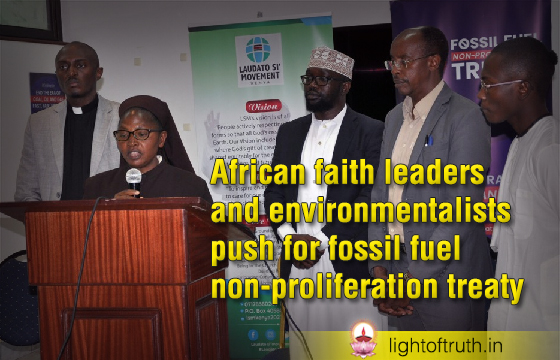
Faith leaders and climate activists in Africa announced their support on September 20 for an international treaty to halt the production and use of fossil fuels, the main cause of climate change, analogous to non-proliferation treaties governing the production of nuclear weapons.
“As people of faith, we have a moral duty to protect God’s creation,” said Ashley Kitisya, the African coordinator of the Laudato Si’ Movement, the global network of Catholics working to ameliorate climate change in the spirit of Pope Francis’ encyclical of the same name. “The Fossil Fuel Treaty gives us a tangible way to act on this duty by advocating for the preservation of our environment for future generations.”
Kitisya spoke at a media briefing organized as part of the Season of Creation, an event observed annually by Christian denominations and Christian climate activists from Sept. 1 to Oct. 4. Following the Greek Orthodox Ecumenical Patriarch Dimitrios’ declaration in 1989 of Sept. 1 as a day of prayer for creation, the World Council of Churches and Roman Catholic Church leaders joined the movement and sponsored prayer and action to call attention to climate change.
The 2024 theme, “To Hope and Act with Creation,” urges Christians and the world at large to reflect on what organizers say is a sacred responsibility in caring for the Earth. The Fossil Fuels Non-Proliferation Treaty Initiative began in September 2022, when Vanuatu, a tiny Pacific island state, called for the negotiation of such an agreement at the U.N. General Assembly. In December of that year, Tuvalu, another state in the South Pacific, made a similar call at the plenary of the United Nations Climate Change Conference.
Since then, momentum has grown, with the Vatican, the European Parliament and 101 Nobel Laureates endorsing it. “We are making progress, but there is still so much work to be done. We must continue to build momentum, to engage more communities of faith, and to push for governments and international bodies to recognize the urgent need for this treaty,” said Kitisya.
All posts by Light of Truth
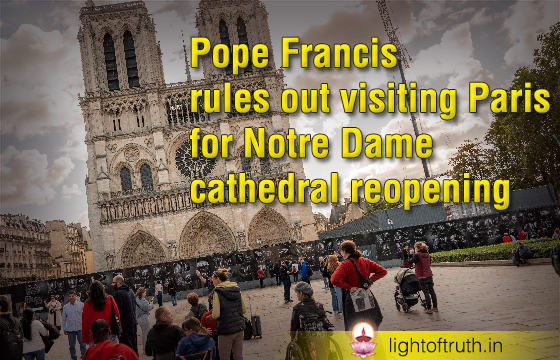
Pope Francis rules out visiting Paris for Notre Dame cathedral reopening
Pope Francis definitively ruled out the possibility of visiting France for the reopening of the Notre Dame cathedral on his re-turn flight on September 13 from Southeast Asia. Speaking during an in-flight press conference on the papal plane today, the pope resolutely stated: “I will not go to Paris.” French President Emmanuel Macron invited Pope Francis to visit Paris for the long-awaited reopening of the historic cathedral, which is set to take place on 8 December, the solemnity of the Immaculate Conception. Pope Francis traditionally celebrates the Marian feast with the city of Rome in the piazza at the foot of the Spanish Steps. In 2019 the world mourned the damage done to the medieval Paris cathedral by a fire that devastated the 315-foot-tall oak spire and timber roof of the eight-centuries-old cathedral.
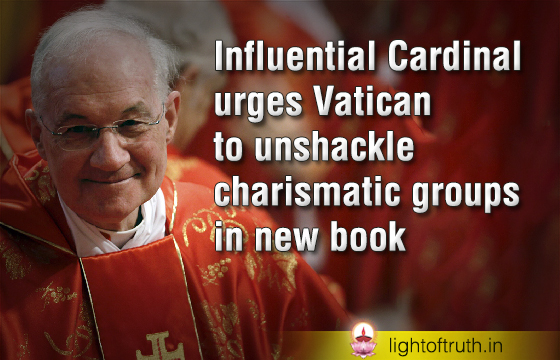
Influential Cardinal urges Vatican to unshackle charismatic groups in new book
In his new book, “Word, Sacrament, Charism: Risks and Opportunities of a Synodal Church,” Cardinal Marc Ouellet challenges the Church to worry less about creating something new, and more about treasuring what is already there.
“The Church is experiencing a moment of listening to the Holy Spirit,” Ouellet told journalists during a presentation of the book, soon to be translated into English, on 24 September. The cardinal was referring to the synod on the theme of synodality, a three-year-long project that has involved all members of the church, from faithful to pastors and bishops.
Ouellet’s new book hopes to offer a new perspective for synodal discussions by suggesting that the church should promote and enable charisms, intended as gifts by the Holy Spirit that are given to every baptized Catholic. “My book would like to reawaken the interest in charisms in the church,” Ouellet said, “but they often don’t find the space to develop because they are not valued and recognized.”
“A clerical culture doesn’t leave much space for charisms,” said Ouellet, adding that there is a “generalized mentality by faithful who don’t see the work of the Holy Spirit among all the people of God.” The Vatican’s Code of Canon Law isn’t equipped to address the needs of charismatic movements, the cardinal said, adding that if the law “is applied rigidly there is a risk that charisms will be extinguished.”
Loosening the grip on charismatic movements would allow these groups to thrive and evangelize, the cardinal said. “Not just the visible and spectacular ones,” he said, “but also humble and discreet charisms of service: listening, welcoming, compassion, visiting the sick and the poor, catechists and reconciliation operators.”
Pope Francis has shown the way to do this in the church, Ouellet said, by allowing lay men and women to hold positions of power and influence in the church. In his 13 years at the head of the Vatican congregation overseeing bishops, Ouellet said he saw first-hand how the contributions of everyday faithful and their charism could be easily discarded. He also praised the Synod on Synodality’s inclusion of laity and lower-level clergy — one-quarter of the participants were not bishops — which he said teaches the bishops how to work closely with other faithful in the church.
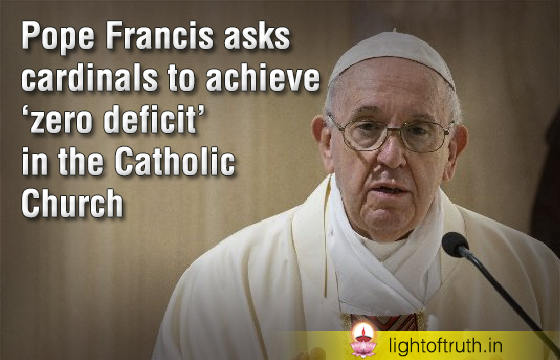
Pope Francis asks cardinals to achieve ‘zero deficit’ in the Catholic Church
Pope Francis has called on cardinals to work to achieve the goal of “zero deficit” in the economy of the Catholic Church through cost reduction, the search for external resources, and evangelical generosity.
In a Sept. 16 letter released by the Vatican Press Office, Pope Francis recalled that 10 years ago the reform of the Roman Curia began in the spirit of the principle “Ecclesia semper reformanda” (“the Church always reforming”). During this time, he pointed out, “despite the difficulties and, sometimes, that temptation of immobility and inflexibility in the face of change, many results have been accomplished in these years.”
Focused on the economic reform of the Holy See – “one of the topics that has most chara-cterized the general congrega-tions prior to the conclave,” he pointed out – Pope Francis said “an extra effort is now required from everyone so that a ‘zero deficit’ is not just a theoretical goal but an actually achievable objective.”
This objective is based on the awareness that “the economic resources at the service of the mission are limited and must be managed with rigor and seriousness so that the efforts of those who have contributed to the patrimony of the Holy See are not wasted.”
Along with the objective of not going into debt, the pontiff pointed out “the need for each institution to strive to find external resources for its mission, setting an example of transparent and responsible management in the service of the Church.”
In addition, Pope Francis called for setting an example on the cost reduction front by trying to avoid “the superfluous” and selecting priorities well, “favouring mutual collaboration and synergies.”
“We must be aware that today we are faced with strategic decisions that we must take with great responsibility, because we are called upon to guarantee the future of the mission,” the Holy Father indicated.
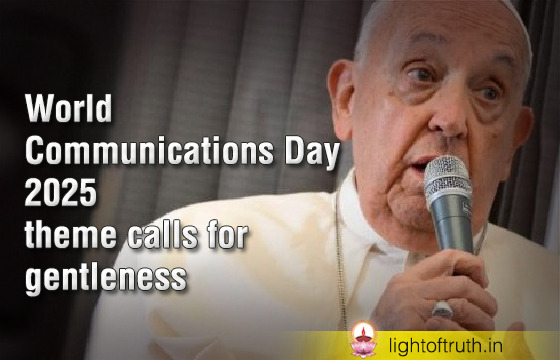
World Communications Day 2025 theme calls for gentleness
The Holy See Press Office released the theme Pope Francis has chosen for the Church’s 59th World Communications Day in 2025, Share with gentleness the hope that is in your hearts (cf. 1Pt 3:15-16).
The introductory text accompanying the theme notes that the topic aims to bring attention to the fact that in today’s world, ”too often communication is violent, aimed at striking and not at establishing the conditions for dialogue.” This calls for efforts “to disarm communication, to cleanse it of aggression.”
The theme description notes that the prevailing standard seems to be that of competition, opposition, and domination as can be seen in television talk shows to verbal wars on social media. It adds that for Christians, “hope is a person, and He is Christ.” And this hope is tied to community, since “when we speak of Christian hope we cannot disregard a community that lives the message of Jesus in such a credible way as to give a glimpse of the hope that it brings, and is capable of communicating the hope of Christ with deeds and words even today.”
World Communications Day is usually celebrated on the Sunday before Pentecost. Pope Paul VI established the Day in 1967 in the wake of the Second Vatican Council as an annual celebration that encourages reflecting on the opportunities and challenges that the media offer and how the Church can better communicate the Gospel message.
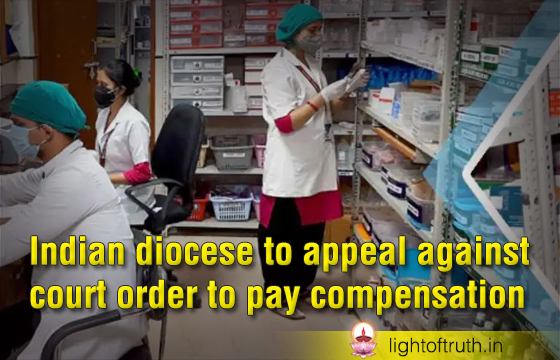
Indian diocese to appeal against court order to pay compensation
Gorakhpur diocese in Uttar Pradesh state has been asked to pay for ‘encroaching’ on land it took on lease from govt.
An Indian diocese has decided to appeal against a court order to pay compensation to a villager for occu-pying his land in a northern state.
The Allahabad High Court in Uttar Pradesh on Sept. 10 asked the Gorakhpur diocese to pay along with the state government a compensa- tion of 1 million Indian rupees (US$11,910) to Bhola, the land owner who was identified by a single name.
“We are going to challenge the high court order in the Supreme Court [the top court in the country] as we do not agree with its findings that the diocese illegally encroached upon the land,” said Gorakhpur diocese spokes-person Father Justin Cheruparambil.
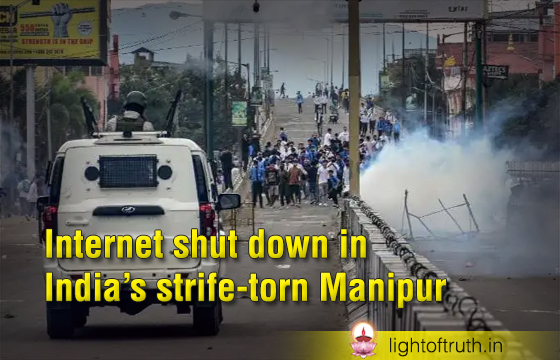
Internet shut down in India’s strife-torn Manipur
A ban imposed after protest by women and students from the Meitei Hindu community turned violent on Sept. 9
A five-day ban on internet services came into force on Sept. 10. in India’s Manipur state where tribal Christians and majority Hindus have been fighting for over 16 months.
The “temporary suspension” started on Sept. 10 at 3 p.m. and will end on Sept. 15 at 3 p.m., said the state government led by the pro-Hindu Bharatiya Janata Party of Prime Minister Narendra Modi.
On Sept. 9, women and students from the Meitei Hindu community held a protest in the capital Imphal, which turned violent. The protesters wanted removal of top police officers and resignation of lawmakers for their failure to end the ethnic strife that claimed over 220 lives.
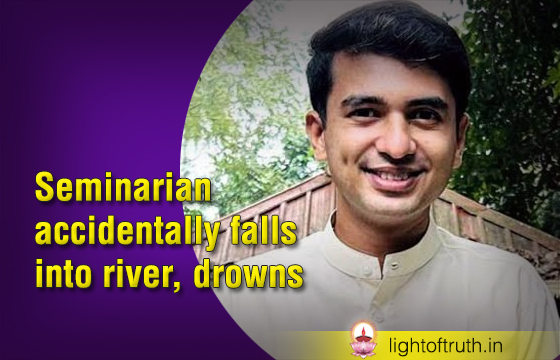
Seminarian accidentally falls into river, drowns
A young man who resigned a job in a multinational firm to join a semi-nary has died after he accidentally fell into a river and drowned. Brother Noel Felix Thekkekkara was doing his regency in an estate of Kalyan diocese in Sawantawadi, a town in Maharashtra state’s Sindhudurg district when the tragedy occurred. He was 29.
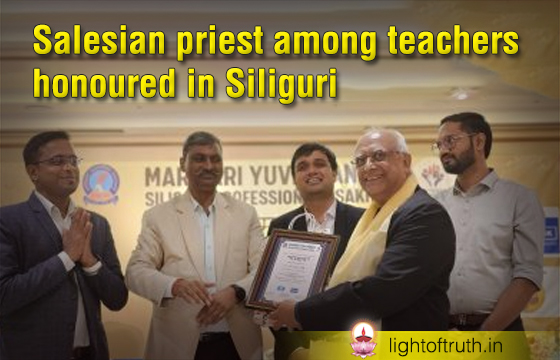
Salesian priest among teachers honoured in Siliguri
A professional youth group of company secretaries and chartered accountants in Siliguri marked this year’s Teacher’s Day by honouring school principals and senior teachers. Among the educators honoured by Marwari Yuva Manch was Salesian Father C.M. Paul, a lecturer of Sesian College Siliguri, West Bengal. Recognition was handed over on Sept. 8 by Inspector General of Sashatra Seema Bal, North Bengal, Sudhir Kumar, at an event held in Hotel Surya Grand Siliguri. The plaque given to Father Paul reads, “‘Saman’ proudly presented to Fr. C. M. Paul, SDB, Vice Principal of Sciences, Salesian College, on Sept. 8; in recognition of your selfless contribution as an educator.” After completing postgraduate studies in Mass Communication and Journalism from Fordham University New York and Salesian University Rome, Father Paul has been a lecturer at institutions such as St. Anthony’s College Shillong, Calcutta University Journalism Department, as well as Assam Don Bosco University and Salesian College Sonada Darjeeling, where he founded Mass Communication and Journalism departments. His professional contributions include being a reporter for South Asia Religious News (1981-1989), Union of Catholic Asia News (1989-2012), and Matters India (2013), as well as being accredited to the Vatican Press Office (2007-2010). Father Paul was editor of The Herald weekly Calcutta (1989-1991) and director of Salesian News Agency Rome (1992-1995), as well as two terms president of national Catholic media institutions for radio, television, and cinema (1999 to 2004), as well as serving on Central Board Film Certification Kolkata (2006-8). All India Marwari Yuva Manch is one of the largest volunteer organisations of youth in India, with chapters in major cities. Its primary goal is to support young people in contributing to community and country irrespective of caste, colour, or creed. The Manch was founded as a non-profit voluntary youth organisation on October 10, 1977, at Guwahati, Assam.
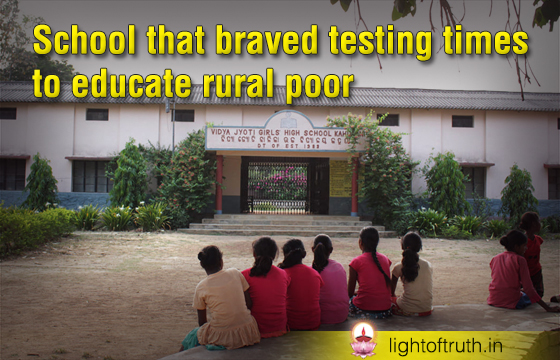
School that braved testing times to educate rural poor
On this teacher’s day, a school in Odisha, which is the lifeline of many students and a ray of hope for many teachers, Vidya Jyoti Girls High School, Kahupani, a tribal hamlet in the Kutra Block of Sundargarh district, was established in 1982. The hamlet is some 20 km from the nearest town. Transport and communication facilities are remote in this area. Basked in the natural beauty, Kahupani has both traditional folks and migrating youth.The school’s inception was the locals’ dream, as their children could not get admission in schools in the city. Bishop Alphonse Bilung of Rourkela supported the local people in realising their dreams. In 1982, the Holy Spirit Sisters arrived in Kahupani and got involved in the school. It began as Janta School, hoping for the government’s aid in further development. However, to keep up the standard of education, the Catholic Sabha was entrusted with the school management. The school began to receive full grant aid in 1989. The goodwill didn’t last long. Soon, the school management was caught in a power struggle. The tussle among the staff led to the ceasing of grants-in-aid in 1995. That was a big blow for the school. Many staff members sought transfers and went away. But the generosity of a few teachers upheld the school. They decided to work for the students. Some worked for a meagre 400 rupees a month. But they had faith that the storms would clear one day and they would receive their rightful salaries.Their faith didn’t go in vain. After two decades in 2017, they received the grand-in-aid scale salary again. Within a couple of years, some of them retired. Their dedication to the cause was commendable. They literally did their duty without expecting the return.Sister Aloysia Lugun captained the school during those difficult years. It took a long legal battle to restore the grants in aid. Even though many bureaus turned their files down, she kept trying. A year before her retirement, the much-awaited salary issues were rectified. She stepped down with the feeling of doing justice to the school and her faithful colleagues. The school has not only contributed to nation-building but also provided a good number of vocations to the church. Nearly 100 of its alumni now serve as missionaries all over the world. The decisions of the locals, the bishop, and the dedicated teachers had helped them. Nothing much has changed even after four decades. As part of the T5 initiative of the previous government, the school has received minimum facelift with smart boards and a few infrastructural additions. The school now functions with minimum staff and a repeated history—a few get full salary, while others teach with the hope that one day their hard work will be paid. On Teachers Day, the country honours teachers for their dedicated service and their role in nation-building. They play the primary role in moulding socially responsible citizens. However, the teachers’ day is not the same for every teacher, even if their mission is similar. The differences such as government, private, aided, unaided, and semi-aided schools make a huge impact on the quality and productivity of the students and the teachers.