

The official website of the Vatican for the first time has been refreshed since it was created in the 1990s, prominently featuring multimedia content and online links to other Vatican offices and ministries. A banner image of a waving Pope Leo XIV against a simple light blue background can now be found spread across the top half of the revamped Holy See website’s homepage published earlier this week.
Replacing the outdated dropdown mega menus found in the older version of the Holy See’s homepage is a large, clickable “Magisterium” button — which also features a small icon of the pontiff’s new coat of arms — to help online visitors find the pope’s prepared homilies and speeches and additional information about the Vatican.
Acquiring tickets for papal audiences and liturgical celebrations has also been made easier through the updated website. Earlier this year, the Prefecture of the Papal Household — which is one of four Vatican offices featured on vatican.va — launched its new website with digital registration forms for individuals and pilgrim groups wanting to see the pope.
The other three Vatican ministries featured on the updated website are the Church’s charitable organization Peter’s Pence, the Pope’s Worldwide Prayer Network, and the yearlong 2025 Jubilee Year of Hope.
Daily news and calendar events related to Pope Leo XIV and the Vatican can also be viewed on the updated homepage in nine languages: Arabic, English, Chinese, French, German, Italian, Latin, Portuguese, and Spanish.
Additional information and Church documents that can be accessed from the new homepage include the Bible, the Catechism of the Catholic Church, codes of canon law, ecumenical councils, Catholic social teaching, and reports on the Church’s response to the abuse of minors.
All posts by Light of Truth
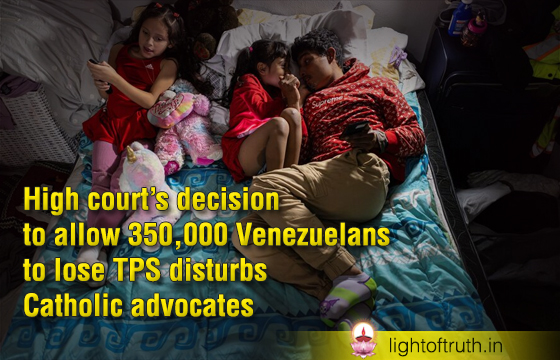
High court’s decision to allow 350,000 Venezuelans to lose TPS disturbs Catholic advocates
Catholic immigration advo-cates said they were “disturbed” by a Supreme Court order allow-ing the Trump administration to end legal protections from depor-tation for about 350,000 Vene-zuelan immigrants. The Vene-zuelans, a typically Catholic population, were permitted to remain in the United States without risk of deportation due to dangerous conditions in their homeland. The high court’s May 19 order paused a ruling by a federal judge in San Francisco that had blocked Homeland Security Secretary Kristi Noem from terminating the protections granted under a program known as Temporary Protected Status.
Anna Gallagher, executive director of the Catholic Legal Immigration Network, also known as CLINIC, said in a May 20 statement, “We have said it before: arbitrarily revoking the legal status of hundreds of thousands of vulnerable people who expected to be able to remain safely in the United States is cruel and unwarranted.”
Earlier in May, the Trump administration asked the Supreme Court to revoke TPS for the group of Venezuelan immigrants. Noem “vacated” a renewal of their TPS status in January, but those plans were blocked by a judge when those impacted by the decision argued proper procedures were not followed by the government.
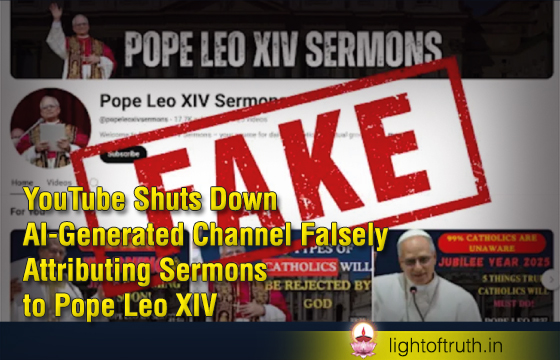
YouTube Shuts Down AI-Generated Channel Falsely Attributing Sermons to Pope Leo XIV
YouTube has removed a channel that amassed nearly a million views by publishing sermons supposedly delivered by Pope Leo XIV—sermons he never gave. The channel, titled «Sermons of Pope Leo XIV,» had gained a following of almost 18,000 subscribers before it was taken offline on May 21. Each of its 26 videos featured AI-generated texts delivered in a synthetic voice crafted to sound like the newly elected pontiff. While some scripts loosely drew inspiration from actual addresses, none were authentic papal messages.
Jack Malon, a spokesperson for YouTube, confirmed the takedown in comments to Aleteia. “We terminated the channel in question for violating our policies on spam, deceptive practices, and scams,” he said, noting that additional channels operated by the same creator were also removed. YouTube declined to identify those additional channels but emphasized that attempts to bypass bans by creating new accounts would be met with further enforcement.
The now-defunct channel had clearly struck a chord with unsuspecting viewers. Despite a disclaimer embedded by YouTube warning that the content had been digitally manipulated or generated, many comments revealed that users took the messages at face value.
The phenomenon underscores the increasingly complex challenges faced by digital platforms in an age when artificial intelligence can convincingly replicate public figures, including religious leaders. In the post-truth era, the boundary between reality and simulation is becoming harder to police, especially when deepfakes tap into the emotional and spiritual needs of believers.
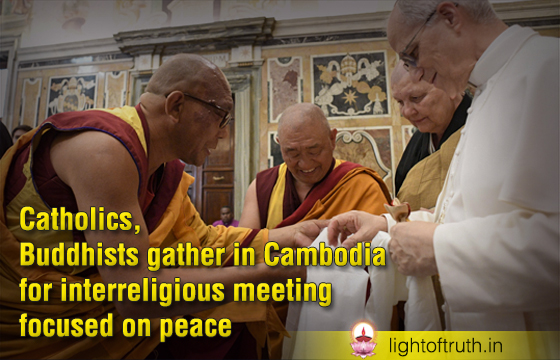
Catholics, Buddhists gather in Cambodia for interreligious meeting focused on peace
The Vatican commenced its eighth Buddhist-Christian Colloquium on 27 May in Cambodia, bringing together representatives of both religions to discuss the promotion of peace in Asia. Prefect for the Dicastery for Interreligious Dialogue Cardinal George Koovakad delivered a short speech on the first day of the May 27–29 conference on “Buddhists and Christians Working Together for Peace through Reconciliation and Resilience,” highlighting the significance of the two religions’ common commitment to peace, Vatican News reported. “Together, as Buddhists and Christians, let us explore how reconciliation and resilience can help shape peaceful and compassionate societies,” Koovakad said.
Approximately 150 people from Cambodia and abroad are participating in the three-day meeting organized by the Vatican’s Dicastery for Interreligious Dialogue, the Apostolic Vicariate of Phnom Penh, Saint Paul Institute, Preah Sihanouk Raja Buddhist University, and the MAGGA Jesuit Research Centre.
Since 1995, the Vatican has held a series of Buddhist-Christian meetings in different countries to advance mutual understanding and collaboration between the Church and non-Christian religions in the spirit of Pope Paul VI’s Second Vatican Council declaration Nostra Aetate released in 1965. The last Buddhist-Christian Colloquium in 2023 was held in Bangkok and focused on the theme of “healing a wounded humanity and the earth.”
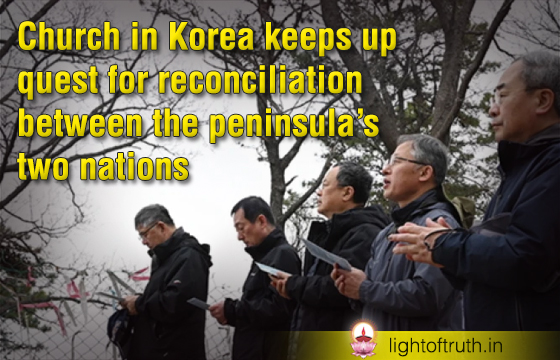
Church in Korea keeps up quest for reconciliation between the peninsula’s two nations
Eight decades after the partition of the Korean peninsula, the Catholic Church in South Korea remains one of the few actors that, with perseverance and faith, keeps alive the hope for reconciliation between the two Koreas. “Hatred and suspicion can never be a solution,” Bishop Simon Kim Jong-Gang, president of the Korean Reconciliation Commission, told ACI Prensa, CNA’s Spanish-language news partner.
Last month, the Korean bishop led a pilgrimage to Kyodong Island on the border with North Korea in a gesture that highlighted the Church’s commitment to reconciliation between the two countries. The bishops walked along the three-mile barbed-wire fence on the island that has divided the two countries since the Korean War (1950–1953) and prayed that the two countries would put their differences behind them.
For 80 years, soldiers on both sides of the demarcation line at the Panmunjom Peace Village in the Demilitarized Zone between the two Koreas have stood guard face to face, armed and under the pressure that any minor incident could trigger a new war. In 2018, as part of agreements between the two countries to build mutual trust, the Joint Security Area was cleared of firearms and military posts. But this openness was short-lived. In early 2020, North Korea closed its borders due to the COVID-19 pandemic and again ordered its soldiers to shoot at any movement across the border.
Kim noted that there are no exchanges between South and North Korea. “It’s impossible to meet people, exchange letters or phone calls, or even send emails between the two sides of Korea.”
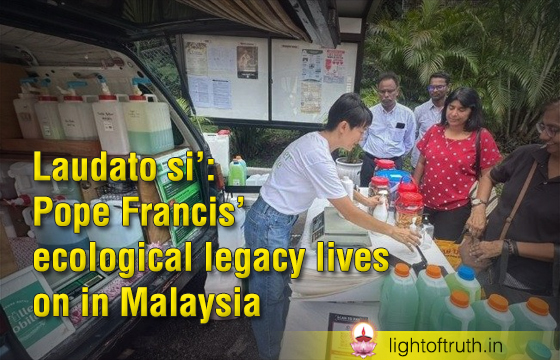
Laudato si’: Pope Francis’ ecological legacy lives on in Malaysia
Pope Francis’ call for ecolo-gical conversion has transformed hearts and communities world-wide. In Malaysia, the late Pope’s call for climate responsibility has flourished, with churches leading the movement for environmental stewardship. Inspired by the late Pope Francis’ encyclical Laudato si’, which came out ten years ago, the Catholic Church in Malaysia is converting used cooking oil into biofuels, planting trees, cutting single-use plastics, recycling candles, and pledging to live out a “deep ecological spirituality.”
In 2023, the country’s bishops signed an Ecological Diocese Pledge, committing parishes to live out “deep ecological spiritua-lity” and advance environmental justice across the country.
All nine bishops in Malaysia initially signed the pledge, before encouraging all the country’s parish priests to do so as well. The document includes ecological protocols, self-monitoring forms, and other documents designed to assist each diocese and parish in their ecological transition, with a focus on reducing carbon foot-prints and fostering community resilience.
The text of the pledge reads, “The Roman Catholic Parish of (name), Malaysia, hereby decla-res its pledge to be an Ecological Diocese in perpetuity, living out a deep ecological spirituality and advancing ecological justice and resilience for all creation, by pursuing decarbonised pathways and the building of community and Earth resilience, according to the Ecological Diocese Protocols appended to this pledge, to the best of its ability and creativity within local circumstances.”
The Archbishop of Kuala Lumpur, Julian Leow Beng Kim, told Vatican News that Pope Francis “truly highlighted the existential problem of climate change with the encyclical Laudato si’ and the more recent and urgent call to action of Laudate Deum.”
“The world is indeed in crisis, and the whole of humanity must respond and have an integral conversion now before it is too late,” Archbishop Julian said. He added that he is encouraging all parishes in the Archdiocese to undergo an ecological conversion, saying that “although much has been done, much more is needed locally and globally to tackle this climate crisis.”
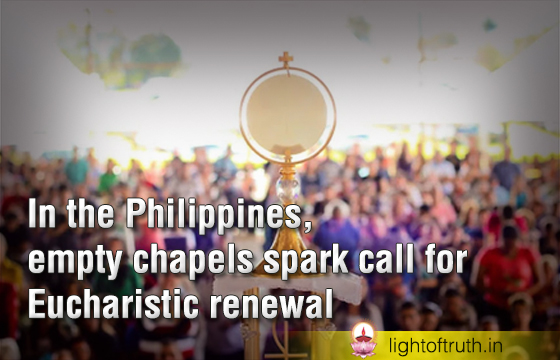
In the Philippines, empty chapels spark call for Eucharistic renewal
As the National Eucharistic Revival comes to an end in the United States this year, many believe there is a need for a global Eucharistic revival in other parts of the world — including the Philippines. Empty adoration chapels in the majority-Catholic country and lack of belief in the Real Presence are leading more parishes to implement a simple initiative called the “Holy Hour Pledge” and call for more catechesis.
Filipino-American priest Father James Cervantes of the Marians of the Immaculate Conce-ption (MIC) lamented the phenomenon throughout different parishes across the Philippines, despite its renown as the largest Catholic nation in Asia and the third largest in the world.
“I came here to Manila just a year and a half ago. I noticed there are a lot of adoration chapels where Jesus is exposed, but they’re empty and abandoned. I was puzzled. I thought, ‘OK, maybe this is just one.’ But then I visited another church and another, across different cities – and again, Jesus was exposed, but they were all empty. In the U.S. and in Poland, this wouldn’t even be allowed. All I could think was, ‘Oh Lord, no one is in here, I’m so sorry Lord.’” Cervantes recounted a tragic situation in one of the Manila parishes whereby the monstrance – with the consecrated host – was stolen by thieves inside an empty adoration chapel.
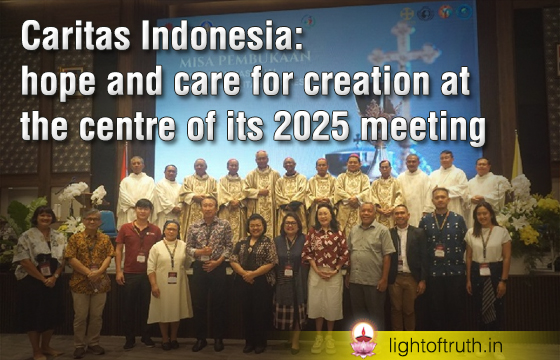
Caritas Indonesia: hope and care for creation at the centre of its 2025 meeting
Caritas Indonesia’s 2025 National Network Meeting was held from 21 to 24 May at the headquarters of the Catholic Bishops’ Confe-rence of Indonesia (KWI), in central Jakarta. The biennial meeting brought together the main actors of the Catholic Church’s huma-nitarian network to renew their commitment to cooperation, environmental justice and inclusive development across Indonesia. The theme echoed the Jubilee motto with hope at its centre.
The event fostered spiritual and strategic reflection, with participants urged to deepen their shared mission of mercy and solidarity. “The National Meeting is a vital opportunity to nurture synergy and strengthen the spirit of fraternal cooperation among diocesan Caritas offices nationwide,” said Emeritus Bishop Aloysius Sudarso SCJ, Chairman of the Karina Foundation’s Governing Board. “This spirit must guide our efforts in disaster response and long-term humanitarian programmes,” he added.
Now in the third year of the 2023-2027 Strategic Plan, Caritas Indonesia’s commit-ment is more on green initiatives. During the event, the dioceses presented their best pra-ctices for the care of Creation, in line with Pope Francis’s encyclical Laudato Si’. “These ecological programmes reflect our commit-ment to care for our common home,” Bishop Sudarso said, expressing hope that the meeting would generate follow-up actions to scale up environmental work across the country.
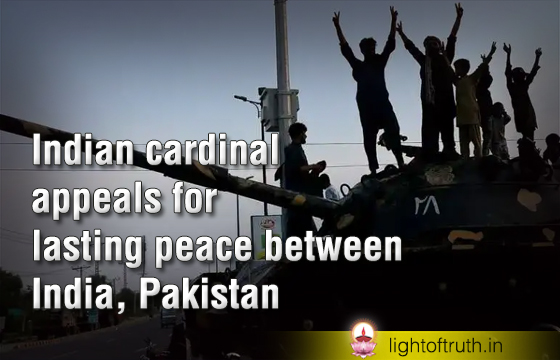
Indian cardinal appeals for lasting peace between India, Pakistan
A leading Indian churchman has called for a full and definitive agreement between India and Pakistan for lasting peace following the latest clashed involving the two nations, says a report. “It is time to put an end to ancient resentments,” Cardinal Oswald Gracias told the Vatican’s Fides news agency. “Ours is a heartfelt appeal for peace in Kashmir. We hope for a full and definitive agreement, which would be important not only for India and Pakistan but for peace in the world,” said the retired archbishop of Bombay (Mumbai), capital of Maharashtra state in western India. India and Pakistan agreed a ceasefire on May 10 following four days of retaliatory attacks. The conflict was triggered by a terrorist attack in the disputed Kashmir region on April 22 that left 26 civilians dead, mostly Indian tourists. New Delhi blamed Islamabad for harboring terrorist groups and orchestrating the attack, which Pakistan denied. The resulting conflict between the nuclear-armed rivals left about 70 people dead. Muslim-majority Kashmir became part of India following an agreement between its Hindu maharaja and the Indian government after the British partition of India and Pakistan in 1947. Both India and Pakistan claim the territory in full and have fought two wars over the region. It is now divided into Indian-administered and Pakistani-administered territories separated by what is known as the Line of Control. Pope Leo XIV welcomed the ceasefire on May 11 and hoped that “a lasting accord may soon be reached.” Cardinal Gracias echoed the call and said that “it is time for peace.”
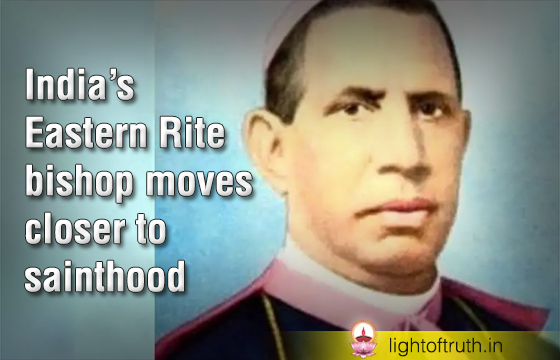
India’s Eastern Rite bishop moves closer to sainthood
The Vatican has declared Eastern Rite Indian Bishop Matthew Makil a venerable, bringing him one step closer to canonization. Bishop Makil (1851–1914), the first vicar apostolic of Kottayam vicariate in south-ern India, led the Syro-Malabar Church almost a decade before the Vatican established the Church’s hierarchy in 1923. Pope Leo XIV, on May 22, signed the decree declaring him venerable along with two other Servants of God – Sister Inés Arango Velá-squez and Bishop Alejandro La-baka Ugarte, reported the Vatican News. Makil, born in Manjoor village in Kerala state, is also the founder of the Sisters of the Visitation of the Blessed Virgin Mary. The launch of the women’s congregation signifies his social commitment, as he founded it in 1892 for the education of girls, just three years after becoming the Vicar General of Kottayam in 1889. His vibrant pastoral ministry led him to become the Apostolic Vicar of Changana-cherry in 1896. The Syro-Malabar Church was experiencing histo-rically turbulent times as his leadership role emerged a few years after Pope Leo XIII sepa-rated the Syro-Malabar Church from the Portuguese-led Latin hierarchy in the area in 1887. Although Pope Leo XIII esta-blished the Apostolic Vicariates of Trissur and Kottayam for Syro-Malabar Catholics, French Jesuit Bishop Charles Lavigne was appointed as the head of the Kottayam vicariate.
In 1889, Bishop Lavigne appointed Makil as the vicar general for the Knanaya Christian community, which had been clamouring for a separate identity and diocese. Makil steered clear of controversies and sought ways to resolve the conflicts arising from the differences between the two factions of Syro-Malabar Catholics – the “northerners,” who traced their faith to Saint Thomas the Apostle, and the “southerners” Knanaya commu-nity, which considered themselves the successors of migrant Meso-potamian traders. Makil visited Pope Pius X at the Vatican and submitted a joint memorandum signed by the three other apostolic vicars to establish the Apostolic Vicariate of Kottayam dedicated exclusively for the southerners.
In 1911, when a new Vicariate Apostolic of Kottayam was constituted exclusively for the southerners – the Knanaya Catholics who practice endogamy – Makil was transferred to Kottayam as its first Vicar Apostolic.
The status of a venerable is the step prior to beatification, the last one before canonization, which declares a Catholic’s life as worthy for other Catholics to emulate in practicing their faith.
The Church, by declaring Makil a “venerable,” officially acknowledges that he lived a life of heroic virtue and is worthy to be considered for beatification.