Pope says he has thought about when ‘to take my leave’

‘May the Lord give the grace to all of us to be able to leave this way, with this spirit, with this strength, with this love of Jesus Christ.’

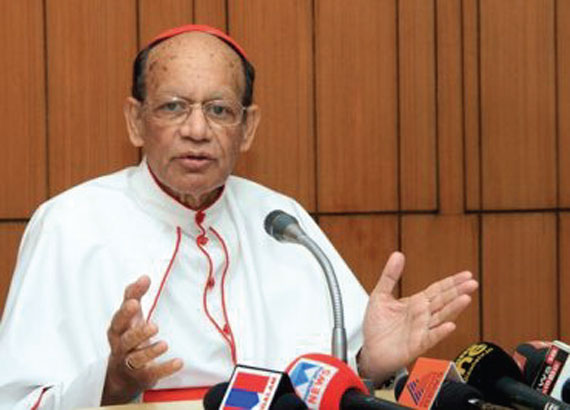
Pope Francis has said he has thought about when it might be time to “take my leave.”

Francis made the comment during his morning homily on May 15 at the Santa Marta chapel.

Speaking on a passage in Acts where the Apostle Paul is discerning when to leave his flock in the care of others, the Pope said: “when I read this, I think of myself.”

“I think of me as well, because I am a bishop and I must take my leave,” he continued.

Francis said that for Paul “his great love is Jesus Christ” and his second love is “for the flock.” As a result, Paul exhorts “watch the flock; you are bishops for the flock, to keep the flock, not to climb into an ecclesiastical career,” Francis explained.

Paul’s last testament – or will – is far “from worldly testaments” where people “have so many” goods to distribute, the Pope said.

Paul, the Pontiff insisted, had nothing, “only the grace of God, the apostolic courage, the revelation of Jesus Christ and the salvation that the Lord had given to him.” “I ask the Lord for the grace to be dismissed like this,” Francis said.

He concluded: “I think of the bishops, of all the bishops: may the Lord give the grace to all of us to be able to leave this way, with this spirit, with this strength, with this love of Jesus Christ, with this trust in the Holy Spirit.”

Pope to canonize Blesseds Paul VI, Oscar Romero in Rome Oct. 14

Pope Francis will declare Blesseds Oscar Romero, Paul VI and four others saints Oct. 14 at the Vatican during the meeting of the world Synod of Bishops, an institution Blessed Paul revived. The date was announced May 19 during an “ordinary public consistory,” a meeting of the Pope, cardinals and promoters of sainthood causes that formally ends the sainthood process. During the consistory, Cardinal Angelo Amato, prefect of the Congregation for Saints’ Causes, formally petitioned the Pope “to enroll in due course among the saints” six candidates for canonization “for the glory of God and the good of the whole church.” Each of the candidates, the cardinal told the Pope, gave “a convinced and coherent witness to the Lord Jesus. Their example continues to enlighten the church and the world in accordance with the perspective of mercy that your Holiness never ceases to indicate and propose.”

Two Vatican offices to release document on morality of global market system

Two influential Vatican offices are set to release a new joint document evaluating the morality of the global market system, in what appears to be an effort to give more theological weight to Pope Francis’ frequent criticism that “this economy kills.” The Congregation for the Doctrine of the Faith and the Dicastery for Promoting Integral Human Development have co-authored “Oeconomica eetpecu niariae quaestiones: Considera-tions for ethical discernment about some aspects of the current financial-economic system,” the Vatican press office announced May 14.

The new document, the first such joint effort of two Vatican offices during Francis’ five-year papacy, will be released on May 17. It will be presented at a press conference by the heads of the two dicasteries: Archbishop Luis Ladaria and Cardinal Peter Turk-son, respectively, alongside two noted Italian economists.

The Pope has often criticized the global capitalist system, saying it has perpetuated a “throwaway culture” that serves to enrich the wealthy at the expense of the world’s poorest.

In one of the pontiff’s most stinging criticisms, he told residents of a Kenyan slumduring a visit in 2015 that they were suffering from “wounds inflicted by minorities who cling to power and wealth, who selfishly squander while a growing majority is forced to flee to abandoned, filthy and run-down peripheries.”

German priest criticised for headscarf protest

A German pastor priest has ignited controversy by donning a headscarf during his Pentecost Sunday sermon. Fr Wolfgang Sedlmeier, pastor of the Parish of St Maria in Aalen, shocked his congregation by tying a scarf around his head during a Pentecost sermon and wearing it on the altar during the duration of the Mass.

Fr Sedlmeier said he wished to protest discrimination against Muslims and Jews, according to SWR radio.

Delhi archdiocese to launch prayer campaign for nation

The Archdiocese of Delhi will launch a prayer and fast campaign for India and its leaders as the country gets closer to general elections.

“We are witnessing a turbulent political atmosphere which poses a threat to the democratic principles enshrined in our Constitution and the secular fabric of our nation,” says a letter from Archbishop Anil Couto of Delhi addressed to all parish priests and religious institutions in the archdiocese.

The letter dated May 8 is to be read during Masses throughout the archdiocese on Sunday, May 13.

Archbishop Couto says praying for the country and it political leaders all the time has been a “hallowed pra-ctice” of the archdiocese. It is all the more necessary “when we approach the General Elections,” the prelate adds.

The current coalition government led by Prime Minister Narendra Modi of the Bharatiya Janata Party will complete its five-year term in May 2019. “As we look forward towards 2019 when we will have a new government let us begin a prayer campaign for our country from May 13, the anniversary of the Apparition of the Blessed Mother,” the archbishop appeals to his people. He wants them to consecrate themselves and the country to the Immaculate Heart of Mary. The campaign comprises observing a day fast and conducting an hour of adoration on every Friday for a year. The letter urges the faithful to forgo one meal on Fridays and offer penance and sacrifices for “our spiritual renewal and that of our nation.” The archbishop has also prepared a prayer for the nation to be recited during the adoration.

Theologians stress to address challenges of religious nationalism

Members of Indian Theological Association (ITA) say the ‘one religion, one culture, one language’ mantra of the religious nationalism challenges India’s diversity and secular ethos.

Some 70 theologians dis-cussed the theme “challenges of religious nationalism in India today” at their annual meeting and analyzed the complexity of the present Indian reality from various angles in the context of the current political scenario.

Through various papers presented during the April 26-29 gathering in Bangalore, they discussed the threat religious nationalism has posed to the secular and democratic foundations of the country.

Besides challenging the diversity of cultures, religions, languages and ethnic groups, the religious nationalism also threatens the existence of millions, who are systematically marginalized and deprived of their basic dignity.

The present political and social scenario of hatred, mistrust and violence compels every Indian “to reinvent and rejuvenate” the resources and claims of invincible Indian identity which has fostered, through the centuries, the unity and integrity of India, the papers said.

While searching together adequate theological response to the threat of religious nationalism, the theologians urged Christians to actively join the social mainstream to engage with others fighting the destructive trend.

They stressed the need to safeguard the fundamental rights ensured by the Constitution of the India, which is the ‘referral’ for the people of India to defend their secular and democratic rights.

Indian govt accused of ignoring religious violence

The United States Commission on International Religious Freedom has accused the Indian government of doing little to prevent violence against religious minorities and socially poor Dalit people.

The commission’s latest report, released on April 25, said the government run by the pro-Hindu Bharatiya Janata Party (BJP) has not addressed the problem of sectarian violence despite government statistics showing that sectarian violence has increased sharply over the past two years.

It categorized India in its Tier 2 countries along with Afghanistan, Azerbaijan, Bahrain, Cuba, Egypt, Indonesia, Iraq, Kazakhstan, Laos, Malaysia and Turkey.

Tier 2 countries are those with at least one of the elements of the “systematic, on-going and egregious” standard in a set of criteria the commission uses to gauge violations of religious freedom.

Ten countries including Pakistan are in the worst category.

The report noted that at least 10 Indians were lynched by Hindu groups in the name of cow protection.

“In 2017, religious freedom conditions continued a downward trend in India. India’s history as a multicultural and multi-religious society remained threatened by an increasing exclusionary conception of national identity based on religion,” the report said.

Hindu nationalist groups working to turn India into a Hindu-only nation stepped up their actions through violence, intimidation and harassment against non-Hindus and Hindu Dalit people. Both public and private actors pursued this effort, the report said.

About one third of state governments enforced “anti-conversion and/or anti-cow slaughter laws against non-Hindus, and mobs engaged in violence against Muslims or Dalits whose families have been engaged in the dairy, leather or beef trades for generations, and against Christians for proselytizing,” stated the report.

Even government records, presented on Feb. 6 in parliament, show increased sectarian violence. In 2017, 111 persons were killed and at least 2,384 injured in 822 communal clashes across the country.

In 2016, 86 persons were killed and 2,321 injured in 703 incidents. In 2015, there were 751 incidents.

India’s indigenous people rally for religion

Thousands of indigenous people marched through the streets of Gumla town in India’s Jharkhand State demanding recognition of their traditional religions.

The rally of about 10,000 people on April 24 aimed to put pressure on the eastern state’s government run by the pro-Hindu Bharatiya Janata Party (BJP), which considers indigenous people as Hindus and refuses to give official status to the animist Sarna religions.

Church leaders and acti-vists working for indigenous people said the rally succeeded in bringing together indigenous people of diverse groups and religions.

The government is counting Sarna followers as Hindus as part of a political game, said Father Cyprian Kullu, vicar general of Gumla Diocese, which supported the rally.

“It is certainly a positive move because this was the first time in the region that indigenous people of all religions have come on a single platform and demanded their rights,” Father Kullu told ucanews.com.

Pentecostal pastors abused in a Tamil Nadu Hindu temple

Two Pentecostal Christian pastors were dragged into a Hindu temple, seated in the corridors and covered with ash on their faces. Sajan K.George, president of the Global Council of Indian Christians (GCIC), told AsiaNews that the violence took place on April 22nd in Kanyakumari district, Tamil Nadu. The GCIC, states its leader, “is embittered by the deplorable [gesture] of humiliation and repeated harass-ment against the faithful and places of worship.”

The Christian leader complains that at least 15 similar inci-dents have occurred in the southern State of Tamil Nadu in the last three months. All of them had Pentecostal Christians as their target. Specifically, the aggression suffered by the two pastors “was filmed by criminals, who then posted the images online. The video shows that the religious leaders being forced to cover themselves with the sacred ashes inside the Mutharamman temple in Sandhaivalai. Then they were insulted despite one of the two sang the Bharat Mata ki jai [song typical of the Indian tradition that celebrates India as Mother Earth, ed].”

Vandals deface St Stephen’s College chapel 

Vandals have defaced the door of the chapel inside Delhi University’s St Stephen’s College with a pro-Hindutva slogan that read, “Mandir yahin banega” (The temple will be constructed here).
Moreover, the cross outside the chapel was also defaced.

Sources said the graffiti on the door was first noticed by students on May 4 evening and the work began to get rid of the slogans the following day.

A St Stephen’s student who did not wish to be named, said, “Some students had already noticed the graffiti, but I noticed it when I was out for an early morning jog. After a while, I saw that the staff had started to re-move the slogans. All signs of the slogans were gone.”

The writing may have gone unnoticed for hours since regular classes have been suspended owing to the impending Delhi University examinations.

Official Website

Exit mobile version