
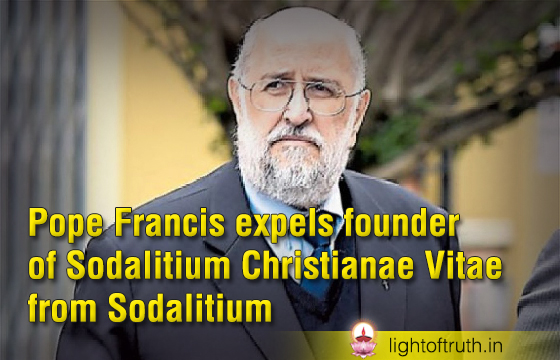
The Sodalitium Christianae Vitae welcomes the decision of the Holy Father, Pope Francis, to expel Luis Fernando Figari Rodrigo from the Sodalitium, as announced by the Peruvian Con-ference of Bishops. This measure is a gesture of pastoral charity, justice, and reconciliation within our community and with all those who have been affected by the abuses committed by Mr. Figari. We are grateful for it with filial adherence as part of the path of renewal that our community has been pursuing for several years under the guidance and accompa-niment of the Holy See. With this measure, Mr. Figari is now dissociated from our community. The authorities of the Sodalitium have closely collaborated with the Holy See in the pursuit of truth and justice, following the investi-gation of various allegations reported since 2011.
In September 2014, the Sodalitium imposed disciplinary measures on Luis Fernando Figari after receiving testimonies of abuses, which were approved by the Holy See. In 2016, he was declared persona non grata by the Sodalitium. In 2017, the Holy See imposed new disciplinary mea-sures, which were confirmed in 2018 after dismissing the appeals that Mr. Figari submitted.
After much reflection and dialogue, in December 2019, I requested the Holy See to expel Mr. Figari from the Sodalitium.
In 2019, the V General Assembly of the Sodalitium in Brazil expressed an institutional apology to all the victims who have suffered any kind of abuse by Luis Fernando Figari and entrusted me, as Superior General, to assess the pertinence of initiating a canonical process for his expulsion.
As part of the mandate entrusted by the Holy Father to the Special Mission Scicluna-Bertomeu sent to our community and the collaboration we have been developing with it, the Dicastery for Institutes of Consecrated Life and Societies of Apostolic Life issued the decree of expulsion, which has the approval of Pope Francis. As we have stated previously, Luis Fernando Figari is the historical founder of the Sodalitium of Christian Life but is not a spiritual reference for our community or the Sodalite Family.

Pope Francis Receives in Private Audience Innocent Man Who Spent 33 Years in Prison
In an emotional private meeting, Pope Francis received Beniamino Zuncheddu, a Sardinian shepherd, who spent over three decades in prison for a crime he didn’t commit. The meeting, which took place in the Apostolic Palace’s Library, represents a powerful act of reconciliation and hope for a man who, after 33 years in prison, was finally exonerated early this year. Zuncheddu, who in 1991 was accused of committing a tripple murder when he was only 26, faced a long and torturous legal process that kept him behind bars until January 2024, when Italy’s Court of Appeal acknowledged his innocence. For years he endured inhuman conditions in various prisons, sharing crowded cells and facing great physical and emotional challenges. But his faith and love for his family gave him the necessary strength to surmount each day.
In his audience with the Holy Father, Zuncheddu presented his book entitled “Io Sono Innocente” [“I Am Innocent”], written together with his lawyer. In this work he talks not only about the injustice he suffered, but also about his internal journey of forgiveness and healing. Despite the profound pain caused by the false accusation, Zjuncheddu decided to forgive the one who erroneously singled him out as culpable, thus showing notable spiritual and moral strength.
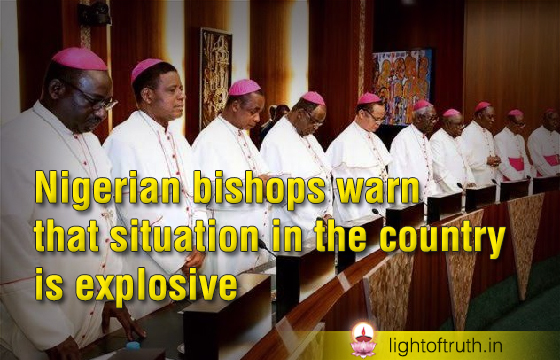
Nigerian bishops warn that situation in the country is explosive
The Catholic Bishops of Nigeria have warned that unless the government seriously addresses the issues of widespread poverty, hardship and corruption, the African nation should be ready to contend with more protests in the near future.
The alarm was launched on August 25 by Archbishop Lucius Ugorji of Owerri, the President of Catholic Bishops Conference (CBCN) as the bishops gathered in Auchi, Edo State, for their second general Assembly this year.
In recent weeks Nigeria has been facing significant unrest due to widespread protests against President Bola Tinubu’s economic reforms to address the nation’s growing debt burden and budget deficit.
The protests, that began in early August under the hashtag #EndBadGovernance, are driven by growing frustration over severe economic hardships, including soaring inflation, a weak currency, and the removal of fuel subsidies. These issues have led to a dramatic increase in the cost of living, with many Nigerians struggling to afford basic necessities like food and transportation. President Tinubu’s economic reforms, which were intended to stabilize the economy, have instead exacerbated the situation for many Nigerians, leading to widespread discontent.
The protests, however, have turned violent in some areas, particularly in northern states like Kaduna, where several demonstrators have been killed. Curfews have been imposed in various states, including Kano and Plateau, to curb the unrest.
Commenting these developments at the opening of the assembly, Archbishop Ugorji, condemned the violence by some rioters, but also the killing of some protesting youths by security forces. He remarked that: “As long as the nation is afflicted with poverty, hardship and corruption, and as long as the future of youths in our nation remains bleak, we continue to experience protest.”
He, therefore, criticized the federal government’s response, in particular that of some government officials who, “rather than address the ill”, are shifting their responsibility on others, “looking for a scapegoat”.
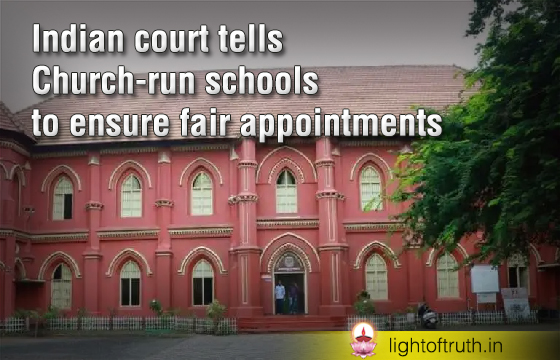
Indian court tells Church-run schools to ensure fair appointments
A top court has asked a Protestant diocese in southern India to appoint teachers irrespective of their caste, religious, and denominational backgrounds since their salaries are paid from the state exchequer.
The Madurai bench of the Madras High Court in Tamil Nadu state declared unconstitutional a list of prospective teachers prepared by the Tirunelveli diocese of the Church of South India (CSI) for appointment in schools managed by the diocese. The court said the list violated the principles of secularism. “When the salary is paid out of the state exchequer, the elementary principles of secularism demand that the appointment process is thrown open to all eligible candidates,” said Justice G R Swaminathan in his Aug. 8 order. A copy of the order was released to the media two days ago. “The appointment process as of today is patently discriminatory. To say that only a candidate of a particular religious denomination is entitled to apply for a post runs counter to constitutional morality,” said Swaminathan. The order came during the hearing of a petition filed by C Manohar Thangaraj, the treasurer of Tirunelveli Diocese. The petition accused the bishop of making unilateral appointments based on the diocesan priority list rather than inviting applications from eligible candidates. The court also stressed the need for transparency in the selection process, saying, ” Of course, all this can come to naught if the recruitment process is rigged and predetermined.” India’s constitution allows minority groups like Christians and Muslims to run educational institutions. The respective state governments pay the salaries for teachers in aided schools.
The Church in India runs more than 50,000 educational institutions, including schools and 400 colleges, six universities, and six medical schools. Catholic Church officials called the court order “a matter of concern.” A minority-run education institution has the right to appoint its staff from “the respective community on a priority basis,” noted Father Thankachan Jose, former national president of the All-India Association of Catholic Schools. Thankachan told UCA News on Aug. 26 that a minority education is bound to give priority to the community. “Provided there is no qualified or skilled candidate within, we may seek to appoint a candidate from outside,” the priest said. But “priority is given to a candidate from the community.” Father Maria Charles, secretary of the Catholic Bishops’ Council of Indian office for education, said Catholic schools do not restrict jobs only to Catholics or Christians. He told UCA News they “will take a call after consulting with our legal team.”

Church backs quota protest by India’s indigenous people
Church leaders have warned the government against diluting India’s affirmative action policy that gives job and education quotas to the country’s marginalized people following a top court order on Aug. 1. They have backed a day-long nationwide protest on Aug. 21 by former untouchables (Dalits) and tribal people under the aegis of the National Confe-deration of Dalit and Adivasi (tribal) Organizations (NACDA-OR) against a Supreme Court order that asked the government to identify a “creamy layer,” or wealthy group, benefiting from the affirmation action that India initiated after independence from Britain in 1947. A few of them have indeed been educated and secured government jobs. But if their success stories are removed, there would be no one left to raise concerns, said Bishop Sarat Chandra Nayak, chairman of the Catholic Bishops’ Conference of India (CBCI) Office for Scheduled Castes (SCs) and Other Backward Castes (OBCs). We agree with NACDAOR’s demand for a new law to keep the reservation quota intact following the court order, added Bishop Nayak. Grouped under Hinduism, Dalits in India are categorized as Scheduled Castes (SCs) and tribal people as Scheduled Tribes (STs) by the constitution. The former untou-chables are eligible for a 15% quota, and indigenous people are eligible for 7.5% of government jobs and places in educational institutions and legislative bodies, including the Lok Sabha (India’s lower house). “Calling for creat-ing a creamy layer is not in tune with the spirit and principles of the constitution,” the prelate told on Aug. 21. After all, “there is no provision for a creamy layer in their reservation quota,” asserted Bishop Nayak while supporting the Bharat Bandh (all-India protest) against the court order.
A constitutional bench of seven judges issued the order on August 1, allowing sub-classi-fication within the castes and tribes.
“The state must evolve a policy to identify the creamy layer among the Scheduled Castes and Scheduled Tribes and exclude them from the fold of affirmative action,” the judges told the government in the order. Scheduled Castes and Scheduled Tribes comprise about 16.6 percent of India’s 1.4 billion people. Under the Hindu caste system, they are treated as inferior and, hence, destined to toil for the other three upper castes in the hierarchy. Though they do not follow Hindu rituals and customs, Britain grouped them under Hinduism when it conducted a census in the Indian subcontinent during its colonial occupation. Christians in India number nearly 25 million and 60 percent of them are from marginalized groups and ethnic communities. However, they have been excluded from the affirmative action policy despite repeated demands and court cases.
There are many pro-Hindu groups and right-wing intellectuals in the country who oppose the seven-decade-old affirmative action. “This seems to be a ploy against reservation,” Bishop Nayak warned. Father Nicholas Barla, who recently resigned as secretary of the CBCI Office of Scheduled Tribes, termed the Supreme Court order inappropriate. Barla told UCA News on Aug. 21 that there is no strong base for a creamy layer as the government has failed to implement the reservation policy in letter and spirit. “Let the government come out with the data to show how effectively it has implemented the reservation policy,” the priest demanded. The nationwide protest, supported by nearly 21 Dalit and ethnic organizations, was peaceful and normal life was largely unaffected. However, it evoked a mixed response in Bihar, Rajasthan and Jharkhand. Transport services were partly hit in Odisha, four northern Indian states known for their strong tribal communities and Dalits. Political parties like the Rashtriya Janata Dal, the Bahujan Samaj Party, the Congress, the Jharkhand Mukti Morcha and the Left have supported the protest. The federal government, led by Hindu right-wing Bharatiya Janata Party of Prime Minister Narendra Modi, said it was against creating a creamy layer in the reservations quota.
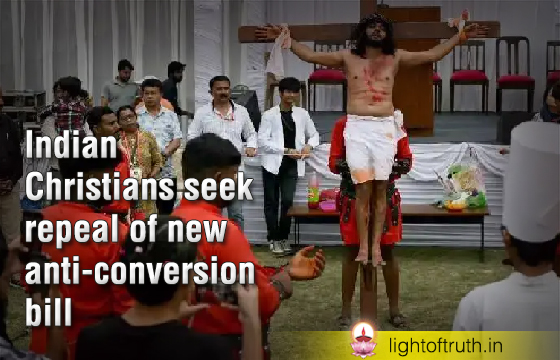
Indian Christians seek repeal of new anti-conversion bill
A delegation of Christian leaders has urged the governor of a northern Indian state to repeal a proposed law saying it can be misused to target religious mino-rities under the pretext of preventing fraudulent conversions. The Uttar Pradesh state government passed the bill restricting religious conversions on July 30. The northern state is ruled by the right-wing Hindu Bharatiya Janata Party (BJP). The United Christian Forum (UCF) delegation, in its Aug. 19 memorandum to Governor Anandiben Patel, pointed to “the broad and ambiguous language” in the proposed law, adding that it may “embolden individuals and groups to target religious minorities.” The governor is the consti-tutional head of the state who functions on the aid and advice of the council of ministers. To be-come a law, every bill passed by the state legislature must receive the governor’s assent. The eight-member UCF delegation said that the terms used in the Uttar Pradesh Prohibition of Unlawful Conversion of Religion (Amendment) Bill, 2024, like “force, fraud, and allurement,” are un-defined and vague. “For instance, any collective gathering of Chri-stians is demonized and portrayed as an attempt to allure people to Christianity,” it said. The memo-randum stressed that existing laws, such as the Uttar Pradesh Prohibition of Unlawful Conver-sion of Religion Act, 2021, as well as criminal and civil laws, already address the issue of con-versions by fraud, coercion, or force. The new Bill imposes dis-proportionately severe penalties, such as the provision of 20 years or life imprisonment if convicted for religious conversion. Earlier, the maximum punishment pro-vided for was 10 years.
All this results “in undue violation of the right to life and liberty,” it stated. The new Bill also permits any third person to register a first information report when the existing law requires that the victim or blood relatives give information or file a complaint in a conversion case.
The memorandum said researchers have documented how anti-conversion laws have been weaponized to target religious minorities, including Christians. Vigilante mobs, often supported by local police officials, brutalize Christians for holding house prayer meetings, leading to the registration of false cases, which linger for many years and result in growing harassment and legal costs.
The new provision allowing “any person” to complain “widens the door to accusations driven by personal, political, or communal biases, leading to a wave of violence and harassment against these [minority] communities,” the memorandum stated. UCF national convener A C Michael said the delegation urged the governor to “suspend” the new Bill in its current form. The Christian lay leader told UCA News that in its memorandum, the UCF recommended that the Uttar Pradesh government focus on initiatives that strengthen harmony and promote tolerance among different religious groups rather than causing tensions through punitive legislation. It further suggested public awareness campaigns to educate citizens about their constitutional rights and the importance of respecting diversity. It was also suggested that police personnel and judicial officers be trained to safeguard religious freedoms, handle complaints ethically, and conduct unbiased investigations. The UCF also urged setting up support systems for innocent people who are wrongfully accused and jailed in the form of psychological counseling and legal assistance to deal with the trauma and financial impact of such illegal actions.
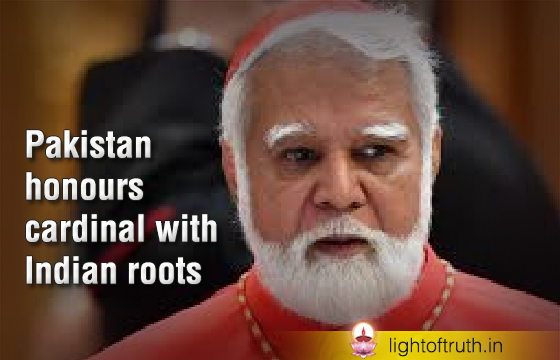
Pakistan honours cardinal with Indian roots
Pakistan President Asif Ali Zardari has awarded Cardinal Joseph Coutts, Archbishop emeritus of Karachi who was born in India’s Amritsar, on the country’s 78th Independence Day. The 79-year-old cardinal is among 104 people awarded for their contributions to the nation. Pakistan celebrates its Independence Day on August 14, a day before India’s Independence Day. The award “Tamgha-i-Imtiaz” (medal of excellence) is given to any civilian in Pakistan in recognition of their exceptional contributions to the nation. Cardinal Coutts has been recognized for his efforts in fostering dialogue among various religious communities and promoting social welfare and minority rights. His initiatives have focused on improving healthcare, education, and community well-being across Pakistan. In his remarks, President Zardari commended Cardinal Coutts’ contributions to interfaith harmony. “His service to humanity and his role in bringing different faiths together is an inspiration for all Pakistanis,” President Zardari said, highlighting the cardinal’s impact on peace and prosperity in the nation. The awards ceremony is scheduled for March 23, 2025.
Cardinal Coutts served as the archbishop of Karachi from 2012 to 2021. Earlier, he served as the bishop of Faisalabad from 1998 to 2012. Pope Francis created Coutts a cardinal on June 28, 2018. He was born in Amritsar, British India, now in India’s Punjab state, on July 21, 1945 in a Goan family. His father Pedro Jose Couto was from Aldona, a village in north Goa. Archbishop Anil Joseph Thomas Couto of Delhi is his first cousin.
He received his seminary training at the Christ the King seminary in Karachi and was ordained a priest in Lahore, Pakistan, on January 9, 1971. After ordination, he completed ecclesiastical studies in Rome from 1973 to 1976 and then became professor of philosophy and sociology at Christ the King Regional Seminary, Karachi, rector of St. Mary’s Minor Seminary, Lahore, and diocesan vicar general from 1986 to 1988. On May 5, 1988, he was appointed coadjutor bishop of Hyderabad in Pakistan by Pope John Paul II and consecrated a bishop on September 16 that year. He became bishop of Hyderabad on September 1, 1990 and on June 27, 1998, he was appointed the bishop of Faisalabad. In Faisalabad he developed ties with Muslim scholars and clerics. The Catholic University of Eichstätt-Ingolstadt, Germany, awarded Bishop Coutts the 2007 Shalom Prize for his commitment to interfaith dialogue in Pakistan. The award is given to people and projects working for human rights. On January 25, 2012, Pope Benedict XVI appointed him the Karachi archbishop to succeed Archbishop Evarist Pinto. In both Faisalabad and Karachi, he has campaigned against Pakistan’s blasphemy law, which he believes is too easily manipulated for personal attacks or to target religious minorities for insubstantial or pretended offenses. In Karachi he has established multiple connections for inter-religious dialogue between Muslims and Catholics, aiming at both acceptance by the general population and increased understanding on the part of political and religious leaders. He was president of the Pakistan Catholic Bishops’ Conference from 2011 to 2017. He became a cardinal on June 28, 2018. He became the country’s second cardinal after Joseph Cordeiro, who was also of Goan origin. He is a member of the Pontifical Council for Interreligious Dialogue. Pope Francis accepted his resignation on February 11, 2021.

Cardinal Jaime Sin Museum set to open in central Philippines
The Cardinal Jaime Sin Museum will open on September 1, 2024, as announced by the local government of New Washington and the Diocese of Kalibo in the central Philippines.
This museum, the first ecclesiastical museum in Western Visayas, will showcase the life and legacy of Cardinal Sin, who played a key role during the 1986 Edsa People Power Revolution. “Already, we are thankful to the Serviam Foundation and the Kalibo Diocese for making the house of Cardinal Sin a museum,” said Mayor Jessica Panambo of New Washington.
The local chief executive said the government plans to open the museum to the public, especially the youth “so that they would learn all the good things about the good Cardinal.”
The National Museum in Visayas has been training the museum staff since June to prepare for the opening. Exhibits will include personal belongings of Cardinal Sin, preserved by the Serviam Foundation.
Fr. Rufino Sescon, Jr., former personal secretary to Cardinal Sin and current rector of the Minor Basilica and National Shrine of Jesus Nazareno in Quiapo, has donated items and memorabilia to the museum.
The opening events will include a cultural event on August 30 at the New Washington Community Center, followed by an unveiling and blessing on August 31, coinciding with what would have been Cardinal Sin’s 96th birthday. Fr. Justy More, chair of the Historical Research and Cultural Council and project coordinator, said the idea for the museum was proposed at the Catholic Bishops’ Conference of the Philippines meeting in Kalibo to mark the 50th-anniversary jubilee of the Kalibo Diocese in 2026.
The Kalibo Diocese has been preparing for this event since July 2023, following an agreement with the Serviam Foundation to secure and display the late Cardinal’s memorabilia.
Cardinal Sin, the 30th Catholic Archbishop of Manila and the third Filipino cardinal, was a prominent figure during the 1986 Edsa People Power Revolution. Hailing from Chinese-Filipino descent, he left a significant legacy in both the Church and national history.
He was born in New Washington on August 31, 1928. He died of kidney complications due to diabetes on June 21, 2005.
China officially recognizes formerly ‘underground’ bishop, Vatican says
The Vatican announced on August 27 its “satisfaction” that China has officially recognized Bishop Melchior Shi Hongzhen as bishop of Tianjin. “This provision is a positive fruit of the dialogue established over the years between the Holy See and the Chinese government,” reads a Holy See statement released Aug. 27. According to Reuters, 95-year-old Shi had once been placed under house arrest after refusing to join the church officially backed by the Chinese government.
Shi was ordained a priest in the Catholic Church on July 4, 1954, and consecrated coadjutor bishop of Tianjin on June 15, 1982. He was ordained bishop of the Diocese of Tianjin on June 8, 2019. According to the Holy See statement, 56,000 Catholic faithful – distributed across 21 parishes served by 62 priests – belong to the Diocese of Tianjin. Under Pope Francis, the Holy See has expanded dialogue with China and engaged in talks regarding provisional agreements on the appointment of bishops in the Asian nation.
The controversial Sino-Vatican Agreement, first signed in 2018, which has never been made public, is said to stipulate that the Catholic Church is allowed to have bishops in communion with Rome who are at the same time recognized by Chinese authorities in the country. It was renewed in 2020 and 2022.
In 2021, the Holy See sent a delegation led by a member of the then-Congregation for the Evangelization of Peoples (now known as the Dicastery for Evangelization), Archbishop Claudio Maria Celli, to meet with Chinese authorities and negotiate the two-year renewal of the Sino-Vatican Agreement before it expires.
Negotiations between the Vatican and China resumed Aug. 28–Sept. 2, 2022, when a Holy See delegation was sent to meet with local authorities in Tianjin.
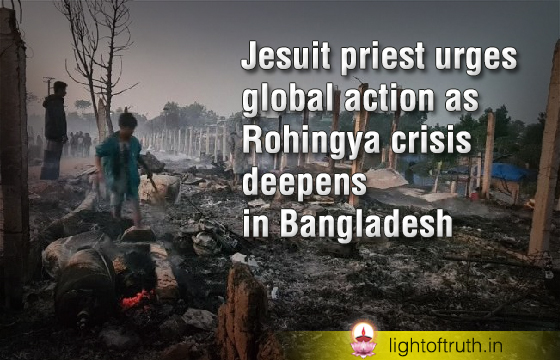
Jesuit priest urges global action as Rohingya crisis deepens in Bangladesh
Seven years after over 700,000 Rohingya fled Myanmar to escape violence, escalating tensions and dwindling aid in overcrowded camps threaten their survival. In an AsiaNews report, Father Jerry Gomes, a Jesuit priest and head of Jesuit Refugee Service (JRS) programs in Bangladesh,warned that Bangladesh cannot continue to bear the burden alone, urging the international community to take action.
“The violence in the camps continues, with incidents of theft, vandalism, murder, and kidnappings,” said Fr. Gomes, who has worked in Cox’s Bazar for seven years. As Myanmar’s civil war rages, more Rohingya refugees continue to flee, further straining Bangladesh’s resources. He stressed that repatriation is not viable without peace in Myan-mar. “A peaceful and favourable atmosphere must be created so that all ethnic communities can live in harmony,” he said.
Since 2020, JRS has partnered with Caritas Bangladesh to provide education, psychological support, and vocational training to over 6,000 Rohingya children and adolescents.
However, a 70 percent funding gap hampers efforts. Out of 400,000 school-age children, only 300,000 attend learning centres. Rising violence in the camps further jeopardizes progress.
Fr. Gomes echoed Pope Francis’ 2017 call for global compassion and justice for the Rohingya, emphasizing the need for the international community to step up.
“The international community should address the issue of repatriation since Bangladesh cannot hold them for long,” he said, urging global action to secure peace in Myanmar and support the refugees.