
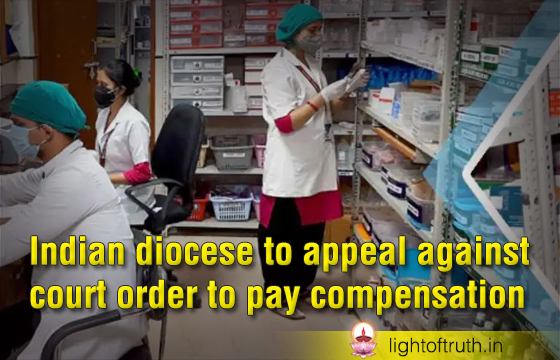
Gorakhpur diocese in Uttar Pradesh state has been asked to pay for ‘encroaching’ on land it took on lease from govt.
An Indian diocese has decided to appeal against a court order to pay compensation to a villager for occu-pying his land in a northern state.
The Allahabad High Court in Uttar Pradesh on Sept. 10 asked the Gorakhpur diocese to pay along with the state government a compensa- tion of 1 million Indian rupees (US$11,910) to Bhola, the land owner who was identified by a single name.
“We are going to challenge the high court order in the Supreme Court [the top court in the country] as we do not agree with its findings that the diocese illegally encroached upon the land,” said Gorakhpur diocese spokes-person Father Justin Cheruparambil.

Internet shut down in India’s strife-torn Manipur
A ban imposed after protest by women and students from the Meitei Hindu community turned violent on Sept. 9
A five-day ban on internet services came into force on Sept. 10. in India’s Manipur state where tribal Christians and majority Hindus have been fighting for over 16 months.
The “temporary suspension” started on Sept. 10 at 3 p.m. and will end on Sept. 15 at 3 p.m., said the state government led by the pro-Hindu Bharatiya Janata Party of Prime Minister Narendra Modi.
On Sept. 9, women and students from the Meitei Hindu community held a protest in the capital Imphal, which turned violent. The protesters wanted removal of top police officers and resignation of lawmakers for their failure to end the ethnic strife that claimed over 220 lives.
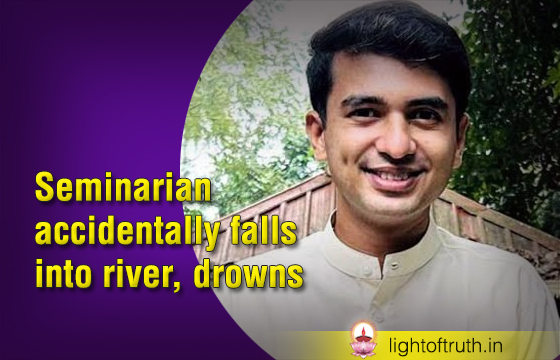
Seminarian accidentally falls into river, drowns
A young man who resigned a job in a multinational firm to join a semi-nary has died after he accidentally fell into a river and drowned. Brother Noel Felix Thekkekkara was doing his regency in an estate of Kalyan diocese in Sawantawadi, a town in Maharashtra state’s Sindhudurg district when the tragedy occurred. He was 29.
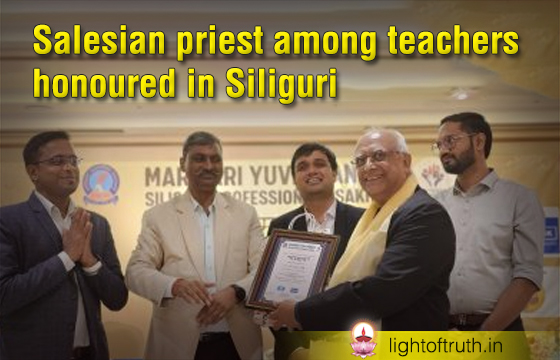
Salesian priest among teachers honoured in Siliguri
A professional youth group of company secretaries and chartered accountants in Siliguri marked this year’s Teacher’s Day by honouring school principals and senior teachers. Among the educators honoured by Marwari Yuva Manch was Salesian Father C.M. Paul, a lecturer of Sesian College Siliguri, West Bengal. Recognition was handed over on Sept. 8 by Inspector General of Sashatra Seema Bal, North Bengal, Sudhir Kumar, at an event held in Hotel Surya Grand Siliguri. The plaque given to Father Paul reads, “‘Saman’ proudly presented to Fr. C. M. Paul, SDB, Vice Principal of Sciences, Salesian College, on Sept. 8; in recognition of your selfless contribution as an educator.” After completing postgraduate studies in Mass Communication and Journalism from Fordham University New York and Salesian University Rome, Father Paul has been a lecturer at institutions such as St. Anthony’s College Shillong, Calcutta University Journalism Department, as well as Assam Don Bosco University and Salesian College Sonada Darjeeling, where he founded Mass Communication and Journalism departments. His professional contributions include being a reporter for South Asia Religious News (1981-1989), Union of Catholic Asia News (1989-2012), and Matters India (2013), as well as being accredited to the Vatican Press Office (2007-2010). Father Paul was editor of The Herald weekly Calcutta (1989-1991) and director of Salesian News Agency Rome (1992-1995), as well as two terms president of national Catholic media institutions for radio, television, and cinema (1999 to 2004), as well as serving on Central Board Film Certification Kolkata (2006-8). All India Marwari Yuva Manch is one of the largest volunteer organisations of youth in India, with chapters in major cities. Its primary goal is to support young people in contributing to community and country irrespective of caste, colour, or creed. The Manch was founded as a non-profit voluntary youth organisation on October 10, 1977, at Guwahati, Assam.
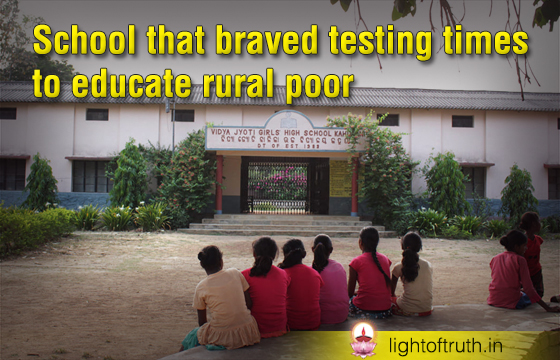
School that braved testing times to educate rural poor
On this teacher’s day, a school in Odisha, which is the lifeline of many students and a ray of hope for many teachers, Vidya Jyoti Girls High School, Kahupani, a tribal hamlet in the Kutra Block of Sundargarh district, was established in 1982. The hamlet is some 20 km from the nearest town. Transport and communication facilities are remote in this area. Basked in the natural beauty, Kahupani has both traditional folks and migrating youth.The school’s inception was the locals’ dream, as their children could not get admission in schools in the city. Bishop Alphonse Bilung of Rourkela supported the local people in realising their dreams. In 1982, the Holy Spirit Sisters arrived in Kahupani and got involved in the school. It began as Janta School, hoping for the government’s aid in further development. However, to keep up the standard of education, the Catholic Sabha was entrusted with the school management. The school began to receive full grant aid in 1989. The goodwill didn’t last long. Soon, the school management was caught in a power struggle. The tussle among the staff led to the ceasing of grants-in-aid in 1995. That was a big blow for the school. Many staff members sought transfers and went away. But the generosity of a few teachers upheld the school. They decided to work for the students. Some worked for a meagre 400 rupees a month. But they had faith that the storms would clear one day and they would receive their rightful salaries.Their faith didn’t go in vain. After two decades in 2017, they received the grand-in-aid scale salary again. Within a couple of years, some of them retired. Their dedication to the cause was commendable. They literally did their duty without expecting the return.Sister Aloysia Lugun captained the school during those difficult years. It took a long legal battle to restore the grants in aid. Even though many bureaus turned their files down, she kept trying. A year before her retirement, the much-awaited salary issues were rectified. She stepped down with the feeling of doing justice to the school and her faithful colleagues. The school has not only contributed to nation-building but also provided a good number of vocations to the church. Nearly 100 of its alumni now serve as missionaries all over the world. The decisions of the locals, the bishop, and the dedicated teachers had helped them. Nothing much has changed even after four decades. As part of the T5 initiative of the previous government, the school has received minimum facelift with smart boards and a few infrastructural additions. The school now functions with minimum staff and a repeated history—a few get full salary, while others teach with the hope that one day their hard work will be paid. On Teachers Day, the country honours teachers for their dedicated service and their role in nation-building. They play the primary role in moulding socially responsible citizens. However, the teachers’ day is not the same for every teacher, even if their mission is similar. The differences such as government, private, aided, unaided, and semi-aided schools make a huge impact on the quality and productivity of the students and the teachers.
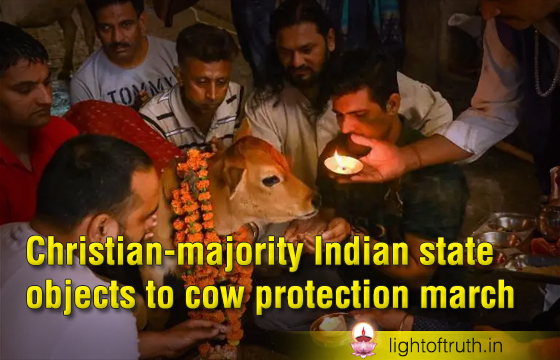
Christian-majority Indian state objects to cow protection march
A Hindu group’s plan to campaign against cow slaughter in India’s Christian-majority Nagaland has invited criticism from several quarters, including the state’s ruling alliance. National-level Hindu leaders, such as Shankaracharya Avimukteshwaranand Maharaj of Jyotirmath, are scheduled to arrive for the Gau Dhwaj Yatra (cow protection march) set for Sept. 28. However, the state’s political parties say such a march would go against the sentiments of the 1.97 million people in the state, where the majority—88 percent—are Christians. A statement from the Nationalist Democratic Progressive Party (NDPP), which leads the state’s ruling alliance, said the “event would go against the sentiment of the majority of people.” m The march could disrupt the socio-religious harmony in the state, the statement added. Alliance partner, the pro-Hindu Bharatiya Janata Party (BJP) of Prime Minister Narendra Modi, urged the organisers “to reconsider the proposal.” The cow is a revered animal under Hinduism, and 20 of 28 Indian states have laws banning or regulating cow slaughter. The NDPP statement said the Nagaland legislature had already decided not to ban cow slaughter. The party observed that Nagaland became a state in 1963 under constitutional provisions safeguarding the social practices of its people, called the Nagas. In a statement, BJP Nagaland president Benjamin Yepthomi said the government of Nagaland should uphold the special provisions of the constitution. Two state legislators belonging to the Baptist Church also opposed the proposed event. Kuzholuzo Azo Nienu of the Nagaland People’s Front (NPF) expressed “shock” at the announcement of such an event in Nagaland, where beef is a staple for most Naga people. The march would be “tantamount to infringement on freedom of individual rights to choice of food.” In 2017, the NPF organised a “beef festival” in the state capital, Kohima, to protest the move to ban cow slaughter. Lawmaker Imkong L. Imchen from the BJP said the proposed march will not aid the cause of the right-wing party in Nagaland. “Beef is the most delicious food for the Nagas,” he told UCA News. As many as 20 Indian states have laws regulating the act of slaughtering cows. Leaders of religious minorities, such as Christians and Muslims, say cow vigilante groups have stepped up violence since Modi came to power in 2014.

Indian diocese foils bid to install Hindu deity idol in college
An Indian prelate says his diocese has foiled an attempt by the student wing of the country’s ruling party to install a Hindu deity’s statue in a church-run college with police help. Members of the Akhil Bharatiya Vidyarthi Parishad (All India Students’ Council), affiliated to the pro-Hindu Bharatiya Janata Party (BJP) of Prime Minister Narendra Modi, insisted on installing Lord Ganesh’s statue at St. Mary’s P.G. College in Sagar diocese, in Madhya Pradesh state, on Sept. 7 the birthday of the elephant-headed deity. “It is true right-wing activists wanted to install the statue of Lord Ganesh, but we did not permit it because it is not our practice,” Bishop James Athikalam of Sagar told UCA News on Sept. 9. It is wrong on the part of right-wing Hindu groups and students “to force their religious practices on minority education institutions,” said Bishop Athikalam, citing India’s constitution. “We function as per the provisions of the law,” Athikalam added. Along with Muslims, Buddhists, Jains, Sikhs, and Parsees, Christians are grouped as a minority, and the constitution gives them freedom to practice and propagate their religion in their educational institutions. “We are not bound to follow religious practices of other religions on our campus,” Athikalam said. “It does not mean that we are against other religions.” We summoned the police against “a totally illegal act on our campus,” and they discouraged the students, the prelate said. As a compromise, the students were allowed to install the statue outside the campus. Hindus believe worshipping Lord Ganesh will help them overcome obstacles. The student wing of the BJP insisted on installing the statue in the more than two-decade-old Catholic college as the majority of students are Hindus. Its leader, Shalini Verma, told the media that “close to 90 percent of the students in the college are Hindus, and it is wrong to hurt their religious sentiments by denying permission to install the idol of Lord Ganesh.” We are grateful to the police for their support, the prelate said, adding we don’t “disrespect any religion.” Church-run educational institutions have been facing harassment from the ruling BJP in Madhya Pradesh, which has enacted a sweeping anti-conversion law, according to church leaders. On July 27, members of the All India Students’ Council forced their way into St. Peter Higher Secondary School in Jhabua diocese and demanded the removal of statues of St. Peter and Mother Mary and wanted portraits of Goddess Saraswati in their places. The ruling party’s student wing also created problems at St. Thomas Higher Secondary School in Mansuar district in the same diocese on June 27. A few days before, they entered the premises of Vandana Convent School under the Sagar diocese and sought action against the nun principal for allegedly hurting religious sentiments. Christians make up a mere 0.27 percent of 72 million people in Madhya Pradesh, most of them Hindus. Most Christians are from indigenous and lower-caste communities, which make up about 30 percent of the population of Madhya Pradesh.

Latin bishops launch school textbooks for higher secondary schools
The Conference of Catholic Bishops of India (CCBI) on September 10 launched a set of 115 textbooks for schools under the Central Board of Secondary Education and the Indian Certificate of Secondary Education. CCBI president Cardinal Filipe Neri Ferrao, Archbishop of Goa and Daman, unveiled the textbooks at an event held at St. John’s National Academy of Health Sciences, Bengaluru.Present on the occasion were 40 bishops, including Cardinals Oswald Gracias and Anthony Poola, attending the CCBI Executive Committee meeting, along with educationists, major superiors, secretaries of the CCBI Commissions, and other dignitaries. “Education is a primary mission of the Church in India. With numerous schools across the country, we are committed to providing quality education to future generations. This new series of textbooks will further strengthen our education,” said Cardinal Ferrão. Cardinal Gracias, Archbishop of Bombay, congratulated those involved in publishing the textbook series for Catholic schools. Archbishop Peter Machado of Bangalore stressed the church’s responsibility in shaping future citizens who uphold both human and constitutional values. He also referred to the CCBI’s value education textbooks, launched in 2022, as an essential tool in this mission. The textbooks were published by Arclight Global, the CCBI’s publishing arm, established in 2022.The launch marks a significant step forward in the Church’s efforts to enhance educational resources in its schools across India, says Father Alathara.
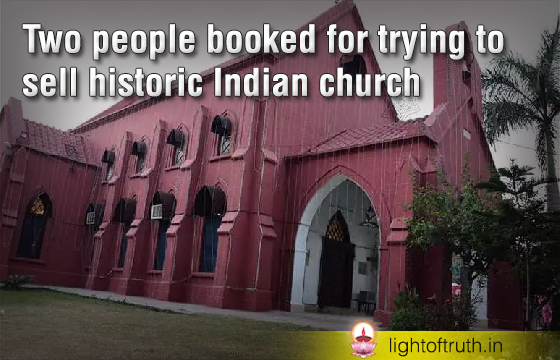
Two people booked for trying to sell historic Indian church
Police in a northern Indian state have booked two people for allegedly trying to sell off a more than a century-old Protestant church by posing as its office bearers. Police said Jordan Masih and Mary Wilson were arrested after they tried to sell the 129-year-old Golaknath Memorial Church in Punjab state’s Jalandhar city, posing as the treasurer and member of the church.Sanwar Bhatti, president of the United Church of Northern India Trust Association, which claims to hold a power of attorney for the church, told UCA News on Sept. 10 that they learnt about the fraud last week and complained to the police. Jalandhar police said the duo struck a deal with a prospective buyer and collected a token amount of 500,000 rupees (some $5,000) in June. “The duo is absconding, and police are trying to trace them,” Bhatti said. Pastor Nanook Bhatti, a Jalandhar-based Christian leader, told UCA News that media reports of the incident have shocked the local Christian community. “It is a very unfortunate thing to happen. But it is also a lesson to all Christians that they must be very alert about their church properties,” he said. Church sources said the church, located in the Mission Compound in Jalandhar city, is spread over 0.5 hectares of land and is valued at 1.5 billion Indian rupees (some US$19 million). The church also has historic significance as it is named after Golaknath Chatterjee, a Bengali Hindu convert to Christianity who renounced his home and became the first Indian missionary in the Punjab around 1830. Before him, the region was served by foreign missionaries. Pastor Amit Prakash, secretary of the Chandigarh diocese of the Church of North India (CNI), thanked the police for timely action as Masih was trying to register the deal at the land records office. Jordan Masih “is not a member of the CNI Church. He has a history of fraudulently selling church properties,” Prakash said. He said several people, like Masih, are targeting the properties owned by the CNI. “They pretend to be members and try to forge documents to make fraudulent deals,” the pastor added. Punjab is a Sikh-majority state where the rate of conversion to Christianity has been on the rise in recent decades, causing concern among the state’s Sikhs. Sikh preachers allege that Christians now constitute 10 percent of the northern state’s 28 million people.
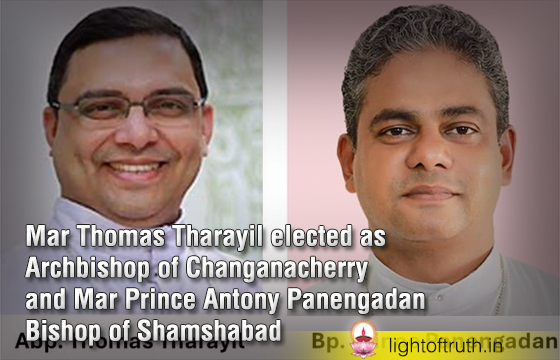
Mar Thomas Tharayil elected as Archbishop of Changanacherry and Mar Prince Antony Panengadan Bishop of Shamshabad
The Synod of the Syro-Malabar Major Archiepiscopal Church, gathered at Mount St. Thomas, Kerala, having received prior papal assent according to CCEO can. 184, canonically elected to the office of Archbishop of the Archeparchy of Changanacherry, Mar Thomas Tharayil (52), until present Auxiliary of the Archeparchy of Changanacherry, and Mar Prince Antony Panengadan (48), until present Bishop of the Eparchy of Adilabad. Both elections were made public on August 30, 2024. Archbishop Thomas Tharayil was born on February 2, 1972, in Changnacherry. He was ordained a priest on January 1, 2000, after completing his theological studies at St. Thomas Apostolic Seminary, Vadavathoor. He holds a doctorate in psychology from the Gregorian University in Rome and has served as Director of Danahalaya, an Institute of Formation in Alappuzha. Known for his expertise in psychology and as a retreat preacher, he was ordained as a bishop on April 23, 2017, and now assumes the role of Archbishop of Changanacherry.Bishop Prince Antony Panengadan was born on March 13, 1976, in Arimpur, Archdiocese of Trichur. He was ordained a priest on April 25, 2007, after completing his theological studies at Ruhalay Seminary, Ujjain. He later obtained a Doctorate in Biblical Theology from Urbaniana University, Rome. Bishop Panengadan has served as Assistant Parish Priest and priest-in-charge of mission stations in the Eparchy of Adilabad. He was ordained a bishop on October 29, 2015, and is now appointed as the Bishop of the Eparchy of Shamshabad.