
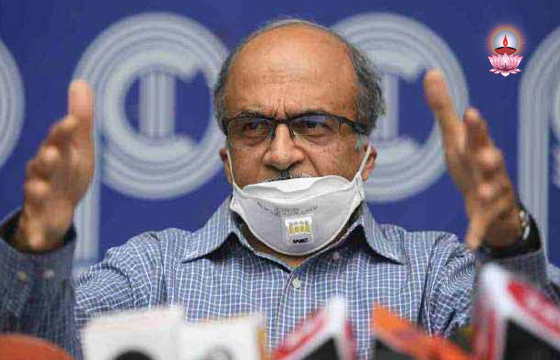
The decision of India’s top court to punish an activist lawyer for his criticism of the court raises concerns about free speech in the country, say activists including some Catholic priest-lawyers.
The Supreme Court on Aug. 31 imposed a token fine of one rupee on Prashant Bhushan after he was convicted of contempt of court for two tweets that question-ed the functioning of the court.
“Such a punishment is uncalled for,” said a statement from the National Lawyers Forum of Religious and Priests, a body of more than 200 Catholic priests, brothers and nuns.
The punishment may not be severe “but it could be perceived as an outcome of egotism,” said the forum of priests and nuns who practice law in different courts.
The court “in the name of protecting the institution of the constitution has let down the constitutional tenets,” the statement said.
Telangana people’s assembly presents eight-point demands
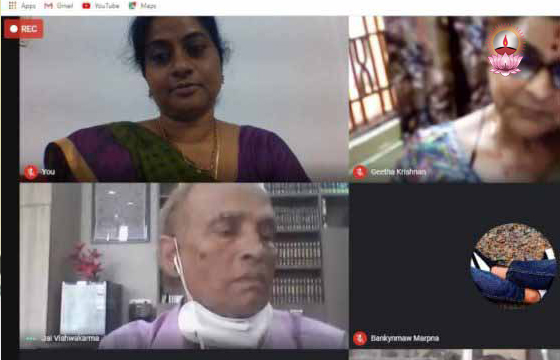
Revival of grant-in-aid to Christian minority schools, land for cemeteries and stringent action against those attacking Christians are in an eight-point charter of demands that the Telangana State People’s Assembly on September 7 submitted to opposition parties in the southern Indian state. The assembly that met on September 4-7 in the state capital of Hyderabad also demanded that the state government allot necessary budgets to help Christians face problems from Coronavirus pandemic.
More than 3,000 people attended the webinar that heard eminent activists, academicians and legal luminaries address issues of social protection and welfare, rights of vulnerable sections such as minorities, women, transgenders, Aadivasis, Dalits, the disabled and children. The assembly approved the charter of demands presented by Montfort Brother Varghese Theckanath, director of Montfort Social Institute in Hyderabad. Brother Theckanath, one of the organizers, told Matters India that a delegation from the assembly presented the charter to the opposition parties so that they can take them up in the state legislative assembly sessions that began on September 7.
He said the charter stressed democratic rights and the state’s responsibility.
Fear keeps Pak judges from acquitting innocent Christians
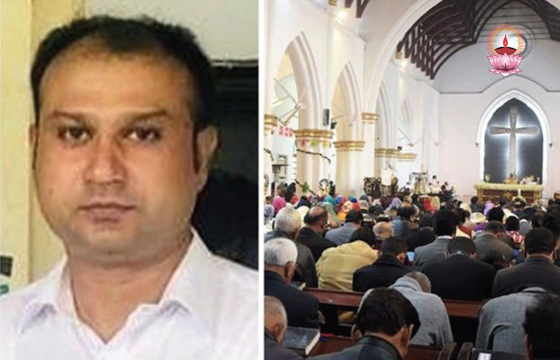
Judges in smaller courts in Pakistan are too afraid to let Christians go free in blasphemy cases because of the threat from extremists, a human rights activist says.
The country prosecutes anyone who is seen to be insulting Islam – with the death sentence often handed out.
In light of another Christian falling foul of the laws, Sajid Christopher Paul, President and Executive Director of Human Friends Organisation, has said more needs to be done to make judges feel secure.
“Judges in the low courts do not feel as secure as the judges in the higher courts. The judges in the low courts do not have as much security as the High Court and the Supreme Court,” Paul told religious freedom charity Aid to the Church in Need.
“I am not saying the judges themselves say they are insecure but the lawyers and everyone involved in cases such as this say that they don’t have the same security so they don’t make the bold decisions.
“The Supreme Court can make daring decisions like the acquittal of Asia Bibi because they have high-level security.”
As Vatican ponders China deal, expert says it’s brought ‘little fruit’
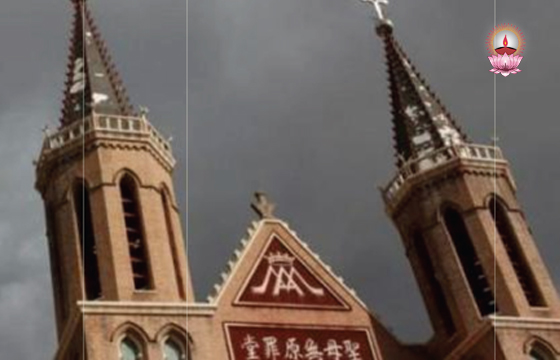
As the Vatican sits poised to renew its historic agreement with China on the appointment of bishops later this month, one of the Catholic Church’s leading experts on Chinese affairs has argued that while the desire for dialogue is understandable, there is still nothing to show for the deal two years later.
“I understand the positivity, the temptation to have this relationship with China, but I have to say that there is very little fruit,” said Father Bernardo Cervellera, voicing his hope that “the Vatican, in renewing the agreement, instead of undergoing still more of the demands of China, puts more posts” in the way of their demands.
Head of Asia News and a former missionary in China, Cervellera spoke during a Sept. 4 online discussion hosted by the Acton Institute, a free-market Catholic organization, offering his evaluation of the state of the Asian continent amid the coronavirus pandemic and the new national security law in Hong Kong.
Speaking of the provisional agreement on the appointment of bishops the Vatican made with China in 2018, which is up for renewal this month, Cervellera noted that many officials on the Vatican’s side have praised the deal as something both positive and fruitful, while “China has never said anything.”
He referred to one article printed in the Global Times, a Chinese newspaper with ties to the Communist Party, which quoted Vatican officials praising the agreement, but which contained no references to officials or opinions from members of the Chinese government.
Everything, in this sense, he said, would mean that “the Vatican must give the ‘okay’ for everything that China does, and certainly they must interrupt their dialogue with Taiwan.”
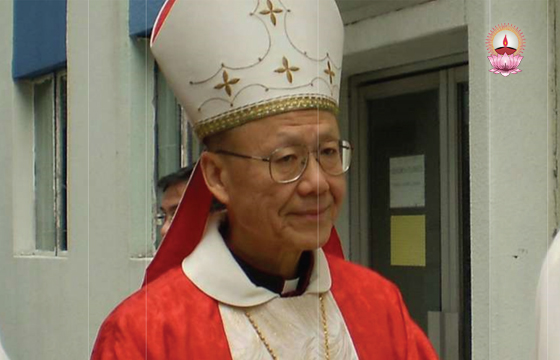
Hong Kong cardinal warns priests to ‘watch your language’ in homilies
The leader of the Diocese of Hong Kong has instructed priests to avoid politics in homilies and admonishing them for “offensive” and “provocative” preaching. The warning comes amid a crackdown on free expression in Hong Kong, after the implementation of the new National Security Law in July.
A letter, obtained by CNA, was sent from Cardinal John Tong Hon, the former Bishop of Hong Kong and current administrator of the diocese. “The homily is not meant to convey the preacher’s personal views (such as his own view on a social or political issue) but God’s message,” the cardinal wrote.
While the letter does not explicitly reference the ongoing political situation, the cardinal warned that priests and deacons “should be well aware that our faithful are all the time listening to what we say and watching what we do.”
“Therefore, we have to be prudent and attentive to what we say in our homilies, sermons and speeches.”
Cardinal Tong has previously spoken in support of the National Security Law, which came into force on July 1. The cardinal insisted the law would have “no effect” on the local Church’s religious freedom. Since the law came into force, Catholic journalists, political activists, and businessmen have been arrested on charges of sedition.
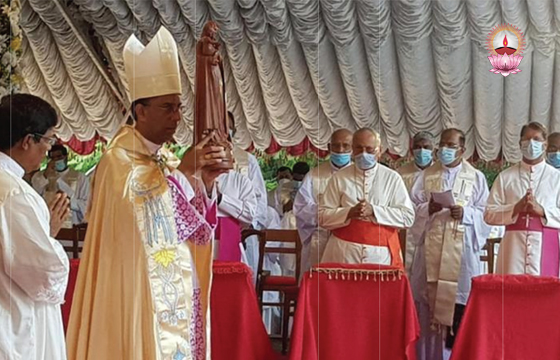
Sri Lanka, Card. Ranjith: No to religious or ethnic political parties
Religious and ethnic parties must be banned: they do nothing but divide the country, says Cardinal Malcolm Ranjith, Archbishop of Colombo, in his homily for the National Day of the Sick, delivered in the basilica of Our Lady of Lanka in Tewatte.
Referring to the Easter attacks last year, and to the slow progress in investigations to find the culprits, Cardinal Ranjith recalled that religion must not divide or kill people: “If one religion destroys another, what is its meaning? Show me where such a God is!”
According to the Archbishop, religious extremism has spread dangerously in the country. He wonders if religious leaders are responsible for the attacks. The suicide bombers targeted three churches – two Catholic and one Protestant – and three hotels. The explosions caused about 280 deaths, including 45 foreigners, and nearly 600 victims.
After more than a year, justice has still not been done. “The investigation is underway – under-lined Cardinal Ranjith – but the authorities have not found out who planted the bombs, who the organizers are and who financed the raids.”
He continued that it is of serious concern that those politicians and officials who failed in their responsibilities have yet to be identified: “We ask and hope that the government will keep its promises to the Church, punishing those responsible.”
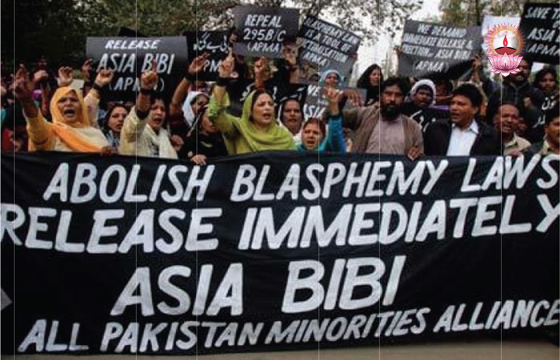
Khyber Pakhtunkhwa, another Christian arrested for blasphemy. The 42nd in a month
On 30 August a Pakistani Christian was arrested on charges of blasphemy in Nowshera (Khyber Pakhtunkhwa). It is the 42nd case of its kind recorded in August in the country, a real record according to the Naya Daur (New Era) website.
David Masih’s arrest occurred three days after a video – which went viral – was posted on social media showing pages of the Koran being thrown down a drain. Reported to the police by some Muslim inhabitants of his neighbourhood, he allegedly confessed to having torn the pages “to practice witchcraft.”
The Pakistani Penal Code states that “anyone who intentionally defiles, damages or desecrates a copy of the Holy Quran or an extract from it, or uses it in a derogatory manner or for any illegal purpose, will be punished with life imprisonment.” In the case of defamation of the Prophet Muhammad (section 295-C), the death sentence is foreseen.
Since 1987, when Pakistan added sections 295-B and 295-C to the blasphemy law, the number of arrests for this crime has increased. According to the National Commission for Justice and Peace of the Pakistani Bishops’ Conference, between 1987 and 2018, 776 Muslims, 505 Ahmadis, 229 Christians and 30 Hindus were accused of blasphemy.
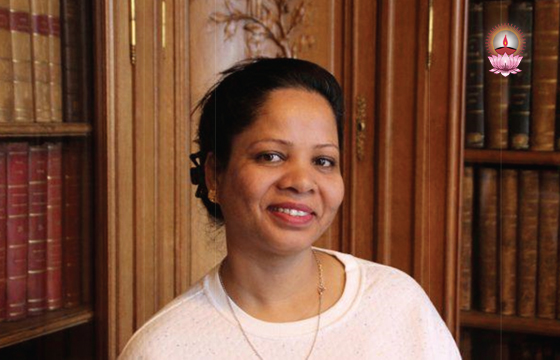
Activists shocked after Asia Bibi dissociates herself from autobiography
Human rights activists were shocked after Asia Bibi dissociated herself from her autobiography, due out later in September. Bibi, the Catholic woman acquitted of blasphemy in 2018 after spending eight years on death row in Pakistan, sparked controversy with an Aug. 31 interview with Voice of America Urdu, reported ucanews.com. “I wasn’t involved in its drafting. I don’t know when she wrote it, whose story is it and who guided her for the book. I absolutely do not agree with this book because it’s not my autobiography,” she said, referring to French writer Anne-Isabelle Tollet, the only reporter to have met her during her stay in Canada. In February, Bibi confirmed that she was seeking asylum in France to live closer to Tollet, who played a key role in her fight for freedom and helped write her autobiography, “Enfin Libre!” (“Finally Free”).
Researchers Find Christians in Iran Approaching 1 Million
Missiologists have long spoken of the explosive growth of the church in Iran.
Now they have data to back up their claims—from secular research.
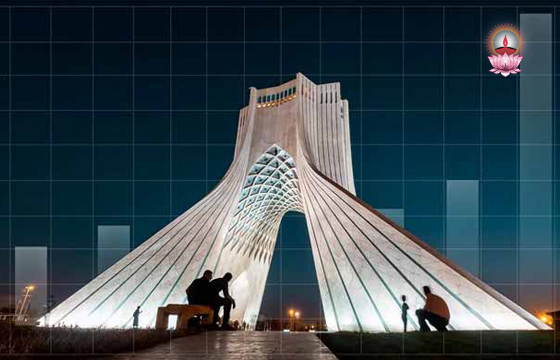
According to a new survey of 50,000 Iranians—90 percent residing in Iran—by GAMAAN, a Netherlands-based research group, 1.5 percent identified as Christians.
Extrapolating over Iran’s population of approximately 50 million literate adults (the sample surveyed) yields at least 750,000 believers. According to GAMAAN, the number of Christians in Iran is “without doubt in the order of magnitude of several hundreds of thousands and growing beyond a million.”
The traditional Armenian and Assyrian Christians in Iran number 117,700, according to the latest government statistics.
Christian experts surveyed by CT expressed little surprise. But it may make a significant difference for the Iranian Church.
“With the lack of proper data, most international advocacy groups expressed a degree of doubt on how widespread the conversion phenomenon is in Iran,” said Mansour Borji, research and advocacy director for Article 18, a UK-based organization dedicated to the protection and promotion of religious freedom in Iran.
“It is pleasing to see—for the first time—a secular organization adding its weight to these claims.”
The research, which asked 23 questions about an individual’s “attitude toward religion” and demographics, was run by professors associated with the respected Dutch universities of Tilburg and Utrecht. “The Iranian authorities lost oversight of it,” said Nicolai. “There was nothing they could do to stop the spread of the gospel.”

Salvadoran imprisoned for 1989 killings of 5 Jesuit priests
A former colonel of the Salvadoran military, Inocente Orlando Montano Morales, has been convicted in a Spanish court for is participation in the murder of five Jesuit priests in 1989. Montano has been sentenced to more than 133 years in prison. The former colonel was El Salvador’s vice-minister for public security during the civil war that divided El Salvador in the 1980s. He was convicted on September 11 of planning and ordering the killing of five Jesuit priests, all of whom were Spanish, at the Central American University in San Salvador.
A Salvadoran Jesuit priest, their housekeeper, and her daughter were also killed, but the former colonel was convicted in Spain only of the killings of the five Spanish Jesuits.
Montano maintained his innocence, though witnesses testified that he believed the Jesuits were collaborators of the Marxist guerilla Farabundo Marti National Liberation Front, which El Salvador’s military junta fought in a bloody civil war that spanned more than a decade.
The Jesuits in El Salvador were active proponents of peace talks and a negotiation between the government and the Farabundo Marti National Liberation Front. One of the priests killed, Father Ignacio Ellecuria SJ, was an outspoken critic of El Salvador’s government, according to Reuters. The killings took place on Nov. 16, 1989, during a battle being waged across the city of San Salvador. Ellecuria served as rector of the Central American University, which was occupied by an elite battalion of the Salvadoran army.
A unit of the Salvadoran Army dragged from their beds the six Jesuits and shot them.