

Bishop Paul Chittilapilly, the first prelate of a Syro-Malabar diocese Pope Paul II created 33 years ago to resolve the rite rivalry in the Indian Church, died on Sept. 6. He was 86. Bishop Chittilapilly, who had served as the bishop of Kalyan in Maharashtra and Thamarassery in Kerala, died at 6:45 pm in Nirmala Hospital, managed by the Ursulines of Mary Immaculate nuns, in Kozhikode.

Kottayam archdiocese gets new auxiliary bishop
Pope Francis on August 29 appointed Father George Kurisummoottil as the auxiliary bishop of Kottayam Syro-Malabar archdiocese to take care of its Knanaya faithful from Syro-Malankara Church. The new bishop is currently the vicar general for the Syro-Malankara faithful of the archdiocese. Father Kurisummoottil has chosen the name Gheevarghese Mar Aprem.

Indian prelate serving as Vatican ambassador in Japan dies
Apostolic Nuncio to Japan Archbishop Joseph Chennoth, an Indian, died September 7 in Tokyo following a heart attack. He was 76. The death occurred at 1:30 pm Japan time (8 am Indian time). The Syro-Malabar prelate from Kerala, southern India, was reportedly recuperating after a stroke some time back. His funeral details are yet announced. Archbishop Chennoth was the apostolic nuncio to Japan since 2011. Archbishop Chennoth was born on October 13, 1943, as one of the six sons and two daughters of Joseph and Mariakutty of Kokkamangalam Chennoth family in Cherthala, Alapuzha district.

Nun appointed to provide free legal aid in Mysuru
An Ursuline Franciscan nun has been appointed by Mysuru District Legal Service Authority as panel advocate for free legal aid clinic. Sr Jenifer Pinto of the congregation’s of Mysuru Province will provide as a free legal advisor in the Taluk office at Mysuru, a city in south-western Indian State of Karnataka.
She is the first person to be appointed as a free legal adviser in the newly started Free Legal Aid Clinic of Mysore Taluk.
Sister Pinto is a practicing advocate in Mysuru and Chamarajnagar District Courts.
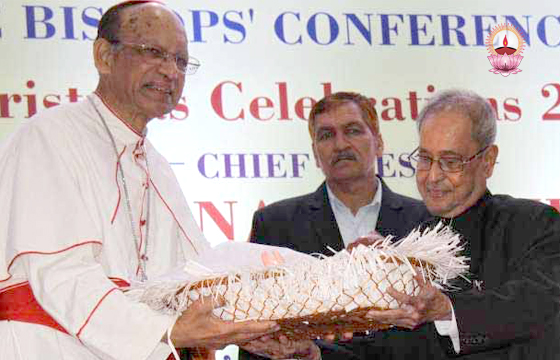
Church mourns former Indian president
The Indian Church and political leaders across party lines are mourning former Indian president Pranab Mukherjee, who died on Aug. 31 in New Delhi. Mukherjee, 84, had brain surgery at the Army Research and Referral Hospital in the national capital in late August. He had also tested positive for Covid-19.
“His passing away leaves a deep void in Indian politics. The Church in India will miss him very much for his political statesmanship, moral integrity and fine oratorical skills,” said Cardinal Oswald Gracias, president of the Catholic Bishops’ Conference of India (CBCI).
He recalled that Mukherjee was the chief guest at the CBCI’s Christmas celebrations in December 2018 when he impressed many with his vast knowledge of the Bible.
“We mourn his loss and express our gratitude for all the support and encouragement he gave the Christian community and its activities. May the Almighty grant him eternal rest.” Cardinal Gracias said.
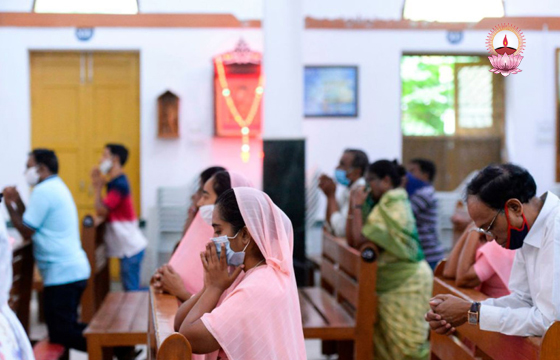
India bans four Christian groups from accepting foreign funds
India’s Home Ministry has cancelled four Christian organizations’ licenses to receive foreign donations without specifying any reason for the move. The Christian groups are among six organizations whose licenses have been cancelled this year, a ministry source told UCA News.
The four organizations are Mumbai-based New Life Fellowship Association, Evangelical Churches Association of Manipur in the northeast, Ecreosoculis North Western Gossner Evangelical and Northern Evangelical Lutheran Church — both based in Jharkhand State. A license number under the Foreign Contribution Regulation Act (FCRA), commonly known as an FCRA number, is mandatory to receive foreign donations in a bank account.
“From time to time, relevant matters concerning FCRA norms are reviewed, and government actions are taken,” said an official without citing any specific reasons for cancelling the FCRA numbers of the four Christian organization. Federal agencies are probing the funding activities of two US-based Christian donors — the Seventh Day Adventist Church and Baptist Church — in India.
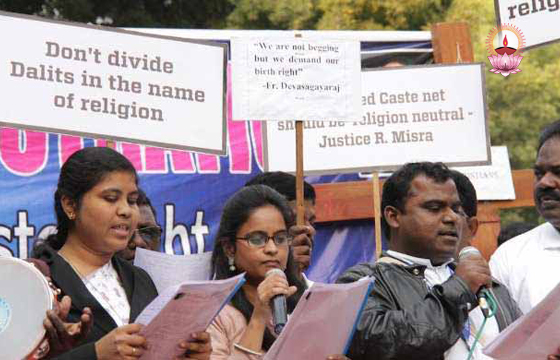
Dalit Catholics threaten to start new Indian church
Dalit Catholic leaders across India have threatened to start a new church if their demand to end casteism and discrimination against Dalits in the Catholic Church is not met. Around 30 speakers and 150 participants attended a virtual meeting on Sept. 5 organized by six Dalit Christian organizations from the southern State of Tamil Nadu.
“If the Vatican does not immediately remove the discriminatory process of bishop selection that neglects qualified Dalit priests, we could announce our own Indian Dalit Catholic Church or the Indian Dalit Catholic Rite,” Franklin Caesar Thomas, coordinator of the National Council of Dalit Christians (NCDC), told.
“The new church will separate Dalit Catholic Christians from the Indian Catholic Church’s casteist leadership.”
During the virtual meeting, Dalit leaders appealed to the Catholic Church, the apostolic nuncio to India and Pope Francis to curb the visible and invisible untouchability practices that exist in the selection of bishops.
They said that none of India’s four cardinals and 31 archbishops have a Dalit background. Similarly, among 188 bishops, only 11 are from the Dalit community. In caste-ridden Tamil Nadu, only one of 18 bishops is from a Dalit background.
Dalits, formerly untouchables, are the lowest caste within Hindu society. Huge numbers of Dalits have converted to Christianity and Islam over the decades, though the religions offer limited protection from societal prejudice.
The word Dalit means “trampled upon” in Sanskrit and refers to all groups once considered untouchable and outside the four-tier Hindu caste system. Government data shows 201 million of India’s 1.2 billion people belong to this socially deprived group. Some 60 percent of India’s 25 million Christians are of Dalit or tribal origin.
Vincent Manoharan, national convener of National Dalit Christian Watch (NDCW), told that years of protests by the Dalit Christian community had not brought any positive changes. He said protest marches are planned near the nuncio’s office and the headquarters of the Catholic Bishops’ Conference of India (CBCI).
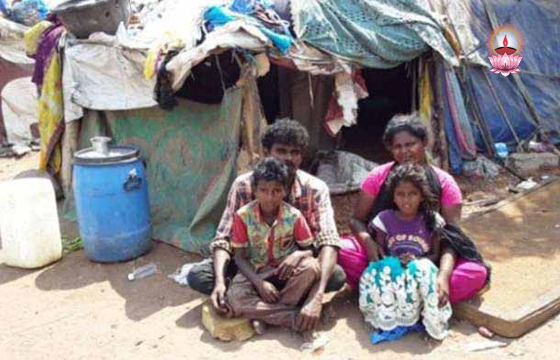
Minorities make up more than half of India’s prisoners
Muslims, Dalits and tribal people are more likely to be imprisoned in India than Hindus, according to a new report. The National Crime Records Bureau (NCRB) report also says that that these groups make up around 52% of inmates across the country.
“Minority groups have been subject to suppre-ssion for several years, so it is nothing new. There is prejudice among people that crime is always committed by minorities,” Father Vijay Kumar Nayak, secretary of the Indian Catholic bishops’ office for Dalits and lower classes.
“It is obvious that their number is more because of their illiteracy, financial crises and lack of means to engage lawyers, plus police bias to file charges against them freely without fearing a backlash.”
The priest said these minorities are poor, vulnerable and easy prey for authorities. Muslims, Dalits and tribal people together account for 39 percent of India’s population, according to the 2011 census, Muslims make up 14.2%, scheduled castes 16.6% and scheduled tribes 8.6%.
According to the NCRB, at the end of year 2019, Muslims formed 16.6%, Dalits 21.7% and tribal people 13.6% of India’s prison population. Muslim leader Muhammad Arif, chairman of the Centre for Harmony and Peace, told that the poor are “left at the mercy of God to fend for themselves.”
“The so-called media, which claims that it is secular, is least bothered to raise its voice at national level as it is more concerned with the activities of the elite group,” said Arif, whose organization is based in Uttar Pradesh.
“There are several cases in our country where the police arrest poor people in the name of solving the problem.”
Hindu-led inquiry blames Indian Christians for lynching of priests
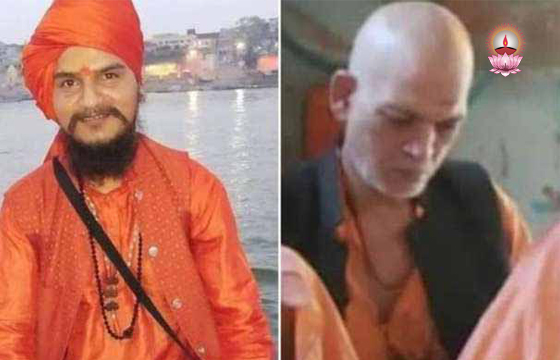
A fact-finding team led by a Hindu nationalist group in the western Indian State of Maharashtra has blamed Christians and left-wingers for violence that led to the killing of two Hindu priests.
The report by Vivek Vichar Manch, an NGO affiliated to Hindu nationalist group Rashtriya Swayamsevak Sangh (RSS), said the lynching was “anything but spontaneous.”
Vivek Vichar Manch has demanded federal investigation agencies such as the National Investigation Agency (NIA) or the Central Bureau of Investigation (CBI) handle the case.
“It has become fashionable these days to demand a CBI/NIA investigation. The demand made by the so-called fact-finding inquiry would have been more credible had it not come from an RSS-backed organization,” Joseph Dias, founder of the Mumbai-based Catholic Secular Forum, told.
“After targeting Muslims, it is now the turn of the left and Christians. Our community is known internationally for being non-violent and turning the other cheek and loving even our enemies as Jesus commanded.“
The lynching was fuelled by rumours circulating on Whats-App of thieves operating in the area during India’s nationwide lockdown to stem Covid-19.

Kerala records lowest male-female literacy gap in India
With 96.2 percent literacy rate, Kerala became India’s most literate state, according to the latest figures released by the National Statistical Office. Delhi came in second with 89 percent literacy rate. Uttarakhand with 87.6 percent and Assam with 85.9 percent are placed in third and fourth positions in the list. Earlier, south Indian states had topped as the most literate states. But the latest figures show a different story. Andhra Pradesh marked the worst literacy rate of 66.4 percent. Bihar with 70.9 percent, Telangana 72.8 percent and Karnataka 77.2 percent are the other states which marked low literacy rate compared to Kerala and Delhi.