12-Year-Old Kerala Boy Publishes Three English Novels

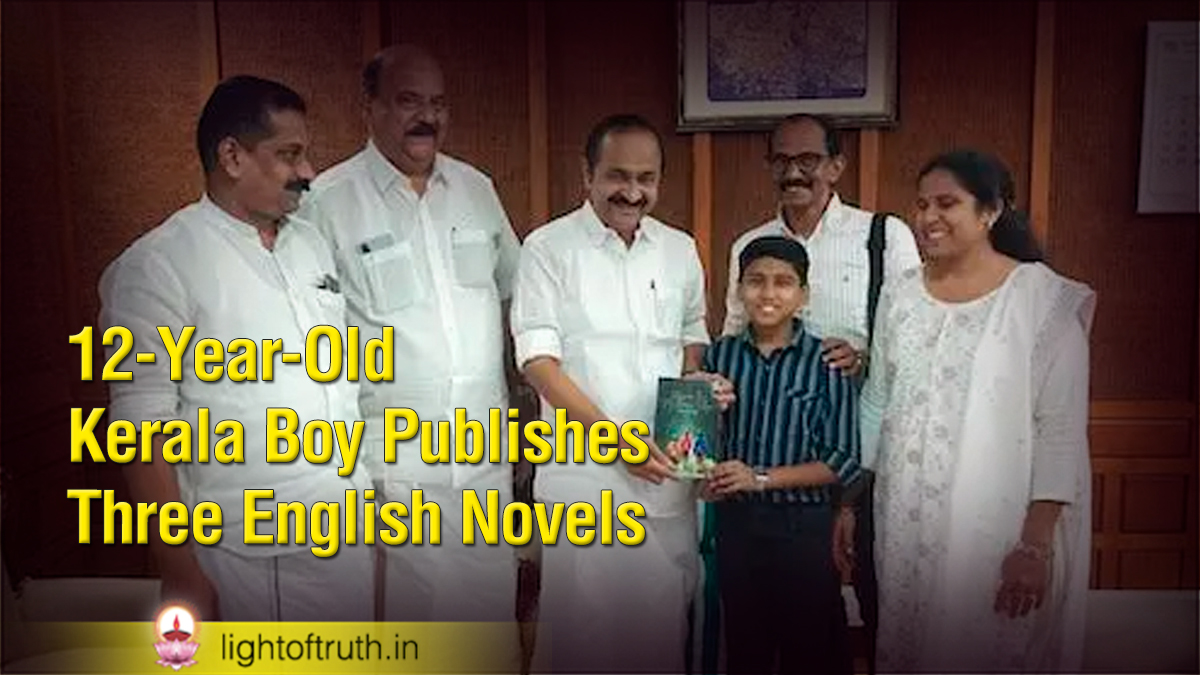
While most children his age spend their free time playing games, 12-year-old Yohan Joseph Biju from Kerala has already become a published author with three English novels released in two books.

Yohan began his writing journey after developing a love for reading. Encouraged by books gifted by his father, he started creating his own stories inspired by fantasy and adventure novels.

His first novel, Mission to a Mysterious Village, was published in 2024 when he was studying in Class 5. The story combines fantasy, mystery, thriller and time travel. This year, he released his second book, Adventures of Duo, which contains two novels and continues the story begun in his first work. He is already working on future books in the series.

Yohan comes from a family with a strong literary background. His father, Biju Vinayak Nirmal, is a well-known writer who has published more than 100 books. His mother, Sheejamol Thomas, and his elder brother, Francis Leo, have encouraged his writing journey. Francis, a seminarian, also designed the covers of Yohan’s books.

Apart from writing, Yohan enjoys reading, playing the guitar, serving as an altar server in his parish, and taking part in sports. He balances his creative interests with his school studies. Yohan dreams of becoming a software engineer and creating animated content for children in the future. His remarkable achievement at such a young age has inspired many students and young readers, proving that dedication, imagination and family support can turn dreams into reality.
Thousands attend martyred priest’s beatification in Vietnam

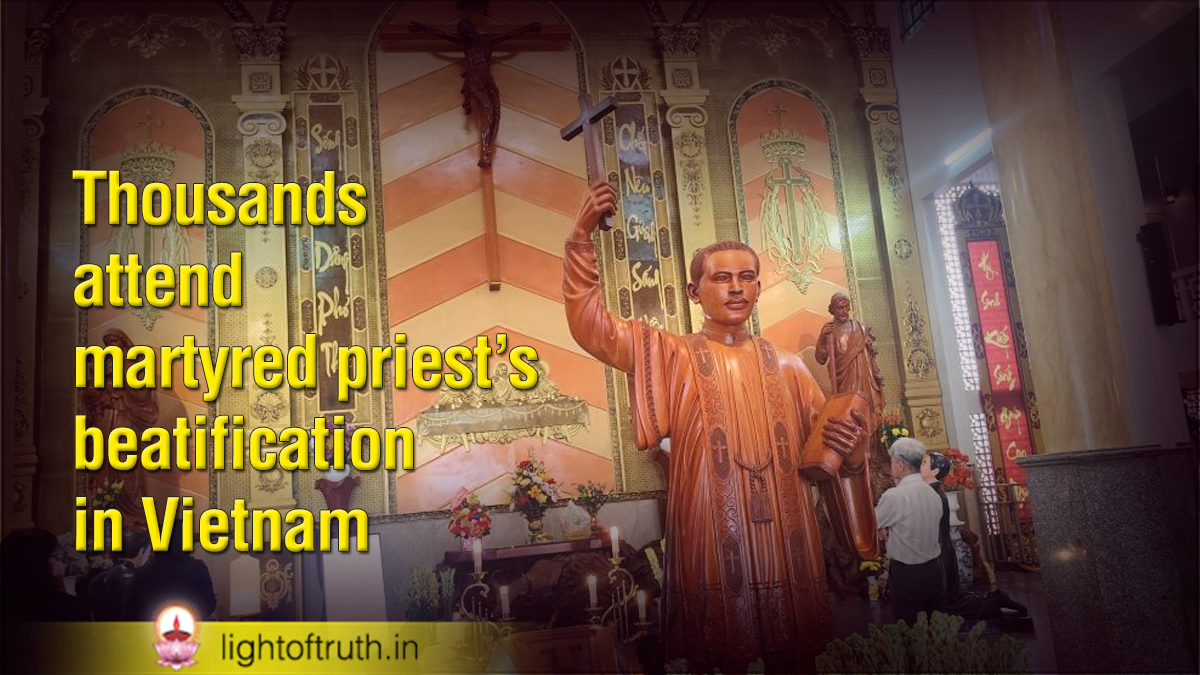
It was the first beatification ceremony of a Vietnamese Catholic held in Vietnam. About 70,000 Vietnamese people, including Catholics and people from other faiths, witnessed the beatification ceremonies for Francis Xavier Truong Buu Diep, a Catholic priest martyred for his faith 80 years ago.

Cardinal Luis Antonio Tagle, pro-prefect for the Section for First Evangelization and New Particular Churches of the Vatican’s Dicastery for Evangelization, officiated the ceremonies at Tac Say Pilgrimage center under Can Tho diocese in southern Vietnam on July 2. The event – the first beatification ceremony held in Vietnam -sparked enthusiasm among Catholics, forcing the authorities to close the national highway running through the pilgrimage center to accommodate the crowds.

In his homily, Tagle described Diep as “a witness to the faith and a martyr” of the Church, and said his life was a gift not only to the Church in Vietnam but also to the wider Church and to humanity. The martyred priest “invites each of us to choose God and to rely on him every day of our lives,” he said. Tagle also challenged Catholics to bear witness to Christ with their lives and said: “The world today badly needs people willing to bear witness to the truth. Let us not live for violence, hatred, division, incitement or falsehood.” Diep was born in 1897 and was ordained a priest in 1924. He served the Tac Say Parish from 1930 until he was killed on March 12, 1946, during a period of turmoil and violence. Despite repeated warnings, he refused to abandon his parishioners. Blessed Diep is now one of Vietnam’s not-yet-canonized Blesseds, following Andrew of Phu Yen, Vietnam’s first martyr, who was beatified by Pope John Paul II in 2000.

Huge fire in Bangkok bar kills more than 27

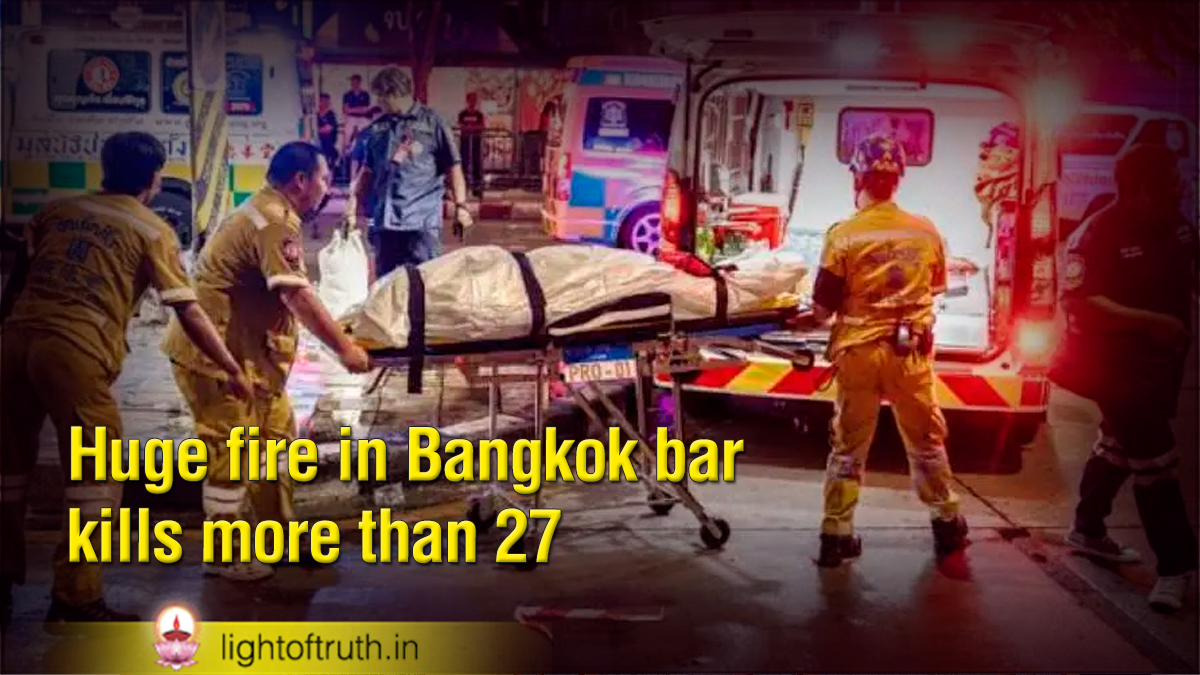
A huge fire in a Bangkok bar killed at least 27 people and injured dozens, officials and witnesses said July 13, the deadliest such incident in Thailand for almost two decades. People ran screaming out of the venue on the outskirts of the Thai capital on Sunday evening as flames shot out of the entrance, several with their clothing burned or ablaze, according to video verified by AFP.

An AFP journalist saw several body bags on the ground early July 12 morning outside the Rong Beer Na Lat Phrao bar and restaurant. A few hours later, forensic police began combing their way through the devastated venue. “The fire spread very quickly, reaching up to the ceiling. Smoke was likely the main cause of death,” Bangkok Governor Chadchart Sittipunt told reporters at the scene. He said 27 people were killed and 63 were hospitalised with injuries, including 22 in critical condition, adding that authorities had launched an investigation. It was the deadliest fire in Thailand since a blaze tore through Bangkok’s Santika club during New Year celebrations in 2009, killing 67 people and injuring more than 200. A number of the victims were found near a fire exit that authorities believe may have been blocked, the governor said. Motorbike taxi driver Surin Jaiharn said he saw the fire burst into the street from the bar door and helped about five people fleeing with burnt and blistering skin.”I feel depressed. I saw many deaths and I do not know the fate of the people I helped,” the 45-year-old told AFP. He said he used cloths to put out flames on their bodies while another driver carried a female victim away from the danger. Authorities said Monday they had identified 10 of the victims so far, nine of them Thai nationals and the other from Laos.

Floods in Myanmar displace thousands amid ongoing military strikes

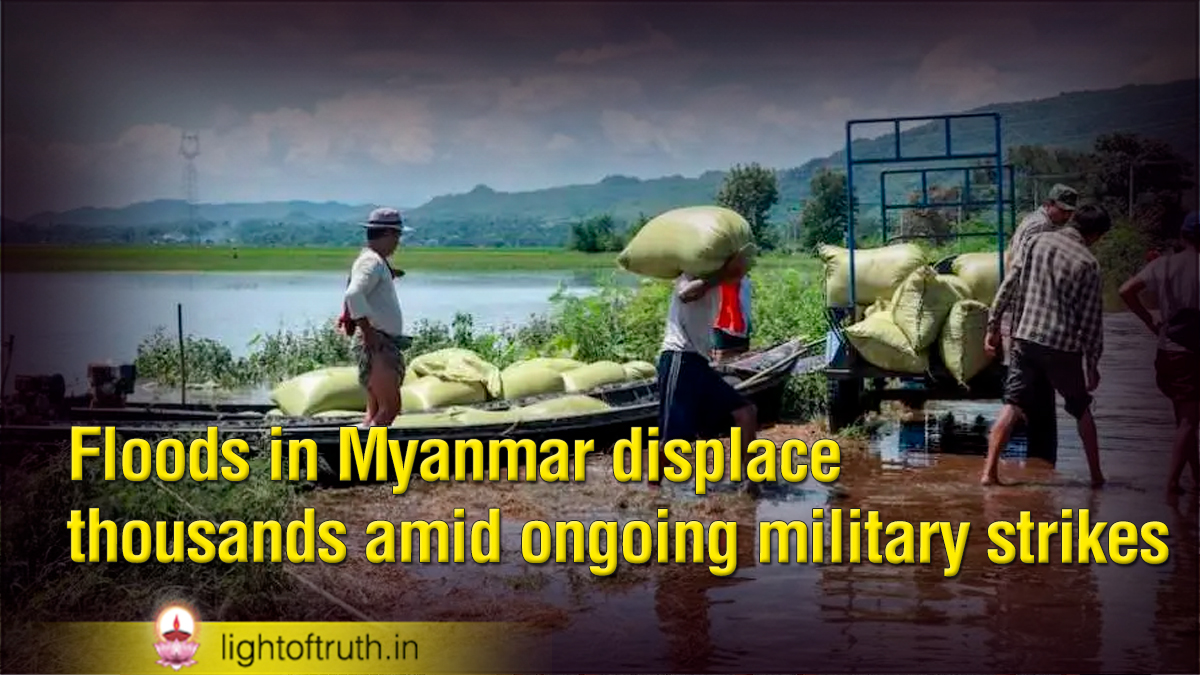
Flash floods triggered by days of torrential rain have displaced thousands of people across Myanmar, worsening an already dire humanitarian crisis as the military continues airstrikes in conflict-hit areas and ethnic tensions deepen. Heavy rains since early this month have caused major rivers in southern, central, and western Myanmar to overflow, inundating low-lying towns and villages, damaging infrastructure, and forcing residents to flee their homes. In southeastern Mon State, flooding from the Bilin River displaced nearly 1,000 people from 226 households by July 13, local authorities said. “We are experiencing flooding in a season when it normally does not occur,” Mar Mar Ye, a resident of Yezalote village, told UCA News. She blamed extensive gold mining upstream for reducing the river’s drainage capacity. “The mining sediment has reduced its capacity to drain properly. If the rain continues, the flooding will last much longer than the usual three days,” she said.

In Myawaddy, a border town in neighboring Kayin State, residents remained on alert as the Thaungyin River continued to rise. “Floodwaters have not yet entered the urban areas, but the river continues to rise, and the rain is continuing,” a local rescue volunteer told UCA News on July 13. Myanmar’s National Unity Government (NUG), the shadow administration formed by ousted elected lawmakers and pro-democracy groups after the military seized power in a 2021 coup, warned that water levels were expected to rise further in Bago Region and several other parts of the country.

The natural disaster has unfolded amid Myanmar’s civil war, with the military continuing airstrikes in flood-affected areas. On July 10, a military airstrike struck Kular Chaung village in Gwa Township, Rakhine State, killing three civilians, including a three-year-old child, and injuring two others, according to local sources.

Thousands of internally displaced people in seven townships administered by the rebel Arakan Army urgently need food, medicine and shelter, local relief groups say. Rescue efforts are being coordinated by the Arakan People’s Revolutionary Government and local civil society organizations, while state media have largely ignored the disaster, according to Wai Hun Aung, a Rakhine writer involved in relief work.

Why ‘child worship’ is failing Filipino youth and society

The Philippine Juvenile Justice and Welfare Act of 2006 (RA 9344) shifted the legal framework for minors from punitive to restorative. By exempting children 15 years old and younger from criminal liability, the state aimed to protect developing brains from the horrors of the adult penal system, opting for rehabilitation over retribution.

Here in Northern Mindanao in the southern Philippines, major religious leaders advocate for this restorative lens. Archdiocese of Cagayan of Cagayan de Oro Archbishop Jodse Cabantan has rightly pushed for a holistic approach rather than through a strictly legal lens.

Another local independent Catholic Bishop Felixberto Calang of the Iglesia Filipina Independiente correctly points out that lowering the age of criminal liability burdens children with matters that are not their responsibility, arguing that “parents and the state must bear the brunt of rearing children to be responsible.”

He is right to defend the youth, and the state must provide pathways for reform. But we need to take a brutally honest look at the first half of Bishop Calang’s equation: the parents. Children in conflict with the law do not exist in a vacuum. They are birthed into the world and molded by their households.

Pope to Asia’s Church: Be builders of communion

In a Letter to Cardinal Oswald Gracias, his Special Envoy to the 12th Plenary Assembly of the Federation of Asian Bishops’ Conferences (FABC), to be held in Jakarta from 20 to 26 July, Pope Leo XIV urges the Church in Asia to place God “on the horizon of our actions and the human person at the center of our decisions,” without fearing “to get our hands dirty at the building site of our time.”

“Be builders of communion, not architects of Babel; servants of the Kingdom that is coming, not masters of towers destined to collapse.” With these words, Pope Leo XIV reiterates the appeal he made in Magnifica Humanitas (No. 16) to place God “on the horizon of our actions and the human person at the centre of our decisions.” The exhortation appears in his Letter to Cardinal Oswald Gracias, Archbishop Emeritus of Bombay, whom he has appointed as his Special Envoy to the 12th Plenary Assembly of the Federation of Asian Bishops’ Conferences (FABC), to be held in Jakarta, Indonesia, from 20 to 26 July 2026.

Writing in Latin, the Pope encourages the faithful and his brother bishops not to fear “getting their hands dirty at the building site of our time,” sustained by the hope that the beloved Church in Asia “may never cease to flourish in faith and in humanity.”

Through this shared commitment of the entire ecclesial community, Pope Leo XIV writes in his magisterial document, citing Psalm 85, “the rejected stones-the poor, the sick, migrants, and the little ones—will become the cornerstone, and upon the earth there will arise a common home that is strong and welcoming, where love and truth will finally meet, and justice and peace will embrace.” With the heart of a shepherd and a father, the Pope therefore calls on everyone “to halt the construction of yet another Babel and to join forces in building what is good, so that humanity may never lose its beauty and the world may once again recognise, in the heart of every human person, the place where God desires to dwell.”