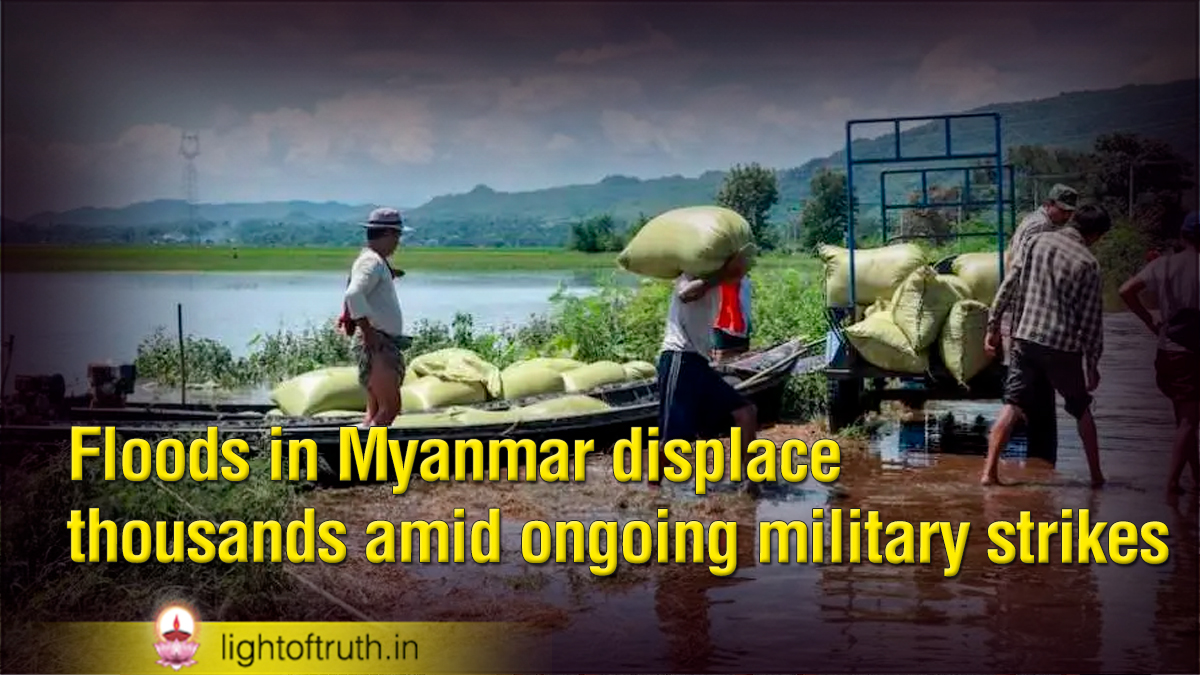
Flash floods triggered by days of torrential rain have displaced thousands of people across Myanmar, worsening an already dire humanitarian crisis as the military continues airstrikes in conflict-hit areas and ethnic tensions deepen. Heavy rains since early this month have caused major rivers in southern, central, and western Myanmar to overflow, inundating low-lying towns and villages, damaging infrastructure, and forcing residents to flee their homes. In southeastern Mon State, flooding from the Bilin River displaced nearly 1,000 people from 226 households by July 13, local authorities said. “We are experiencing flooding in a season when it normally does not occur,” Mar Mar Ye, a resident of Yezalote village, told UCA News. She blamed extensive gold mining upstream for reducing the river’s drainage capacity. “The mining sediment has reduced its capacity to drain properly. If the rain continues, the flooding will last much longer than the usual three days,” she said.
In Myawaddy, a border town in neighboring Kayin State, residents remained on alert as the Thaungyin River continued to rise. “Floodwaters have not yet entered the urban areas, but the river continues to rise, and the rain is continuing,” a local rescue volunteer told UCA News on July 13. Myanmar’s National Unity Government (NUG), the shadow administration formed by ousted elected lawmakers and pro-democracy groups after the military seized power in a 2021 coup, warned that water levels were expected to rise further in Bago Region and several other parts of the country.
The natural disaster has unfolded amid Myanmar’s civil war, with the military continuing airstrikes in flood-affected areas. On July 10, a military airstrike struck Kular Chaung village in Gwa Township, Rakhine State, killing three civilians, including a three-year-old child, and injuring two others, according to local sources.
Thousands of internally displaced people in seven townships administered by the rebel Arakan Army urgently need food, medicine and shelter, local relief groups say. Rescue efforts are being coordinated by the Arakan People’s Revolutionary Government and local civil society organizations, while state media have largely ignored the disaster, according to Wai Hun Aung, a Rakhine writer involved in relief work.