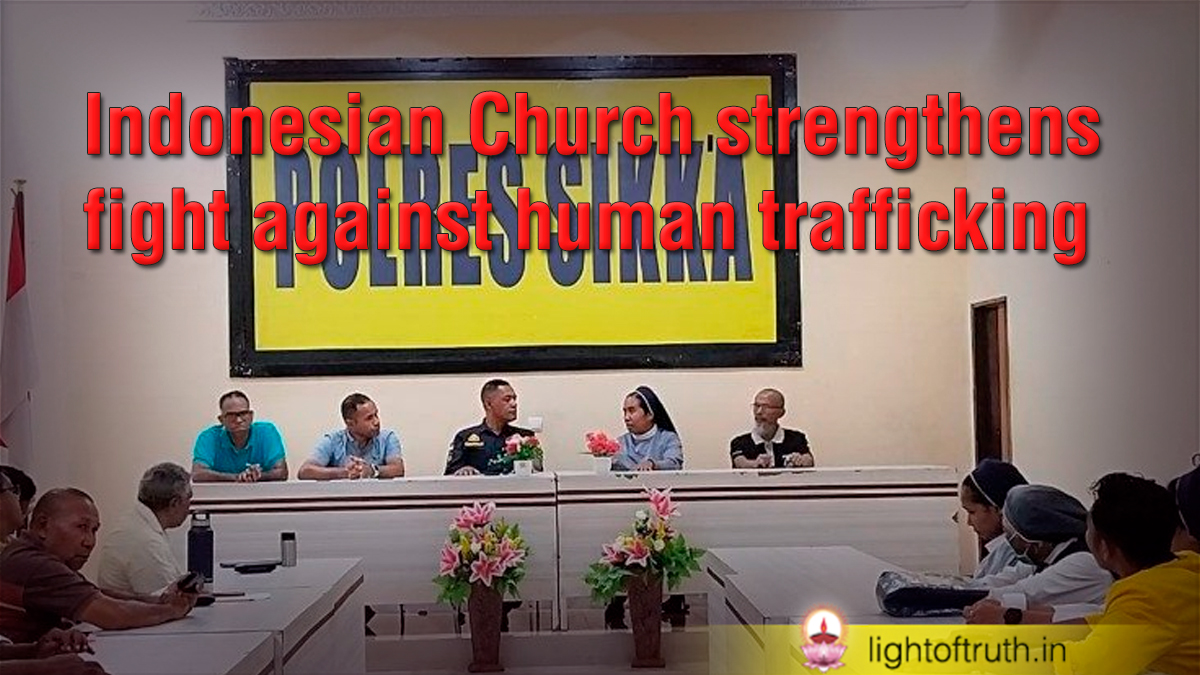
Indonesian Church strengthens fight against human trafficking

The Catholic Church in Flores has intensified efforts to combat human trafficking after 13 young women were rescued from alleged exploitation at a nightclub in Sikka Regency.

The women, aged 17 to 26 and originally from West Java, sought protection in January 2026 after reportedly suffering physical violence, sexual exploitation, and severe labor abuse. They are currently receiving shelter and assistance at a safe house run by Tim Relawan untuk Kemanusiaan Flores (TRUK-F), a humanitarian network supported by the Society of the Divine Word and the Missionary Sisters Servants of the Holy Spirit. The victims are being provided with psychological, pastoral, and legal support as their case proceeds through the courts.

The incident has raised alarm in East Nusa Tenggara. On February 9, the Sikka Human Rights Network organized a peaceful demonstration at the local legislative council in Maumere, calling for a thorough investigation and stricter enforcement of anti-trafficking laws. Priests, religious sisters, seminarians, and lay advocates urged authorities to strengthen oversight of entertainment venues and better protect vulnerable workers.

Sister Fransiska Imakulata, SSpS, director of TRUK-F, said the organization has assisted trafficking victims since 2000 and described the case as part of a recurring pattern. She cited previous incidents involving minors and migrant workers lured by promises of high salaries and stable employment.

She warned that women and children remain especially vulnerable, though men are also at risk when poverty forces migration. “When a victim suffers, the consequences extend to the entire family,” she said.
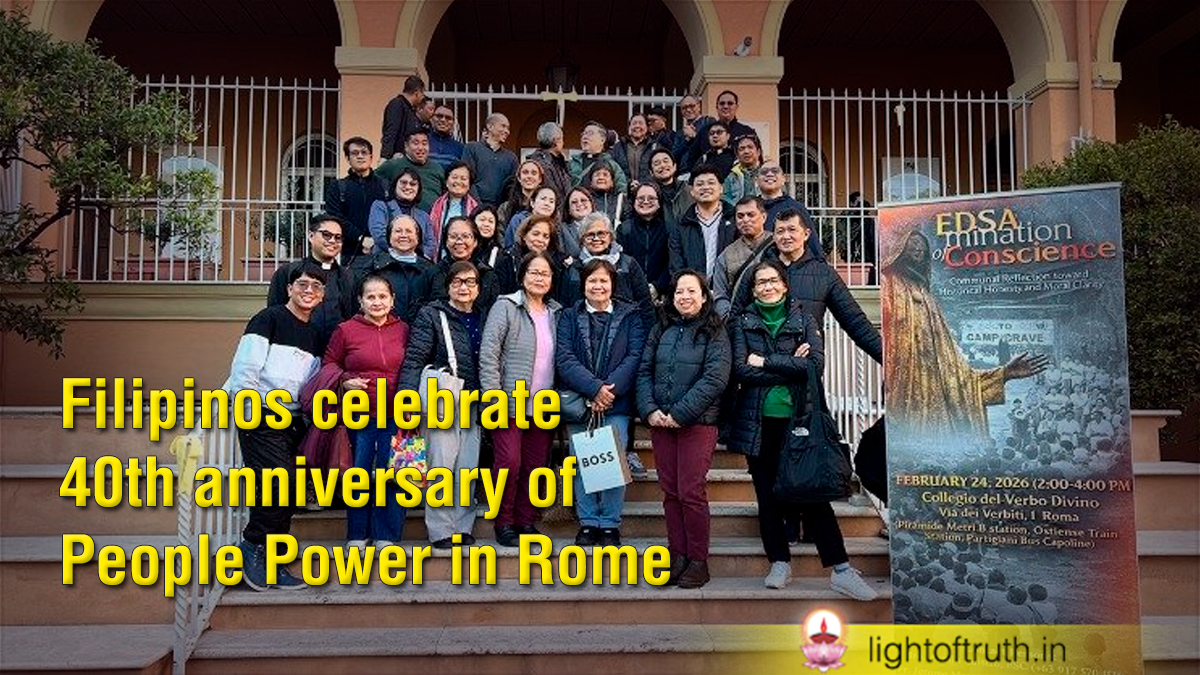
Filipinos celebrate 40th anniversary of People Power in Rome

On February 25, Filipinos around the world commemorated the 40th anniversary of the EDSA People Power Revolution, remembering the peaceful uprising that ended two decades of dictatorship in the Philippines in 1986.

The largely unarmed movement was sparked by an appeal from the late Jaime Sin, who urged citizens to gather along Epifanio de los Santos Avenue in Manila. Thousands responded, including priests, religious sisters, and lay faithful who stood before tanks and soldiers, offering prayers and rosaries. The revolution became a defining moment in Philippine history and a powerful testimony to the Church’s moral leadership, faith, and nonviolent resistance.

In Rome, Filipino priests, religious, students, and overseas workers marked the anniversary with a communal reflection on February 24 at the Collegio del Verbo Divino. The program, titled “EDSAmination of Conscience: Communal Reflection about Historical Honesty and Moral Clarity,” invited participants to revisit the revolution’s meaning in today’s social and political climate.

The gathering was spearheaded by Br. Armin Luistro, FSC, Fr. Jerome Marquez, SVD, and Fr. Albert Alejo, SJ. Participants shared memories and reflected on how the spirit of EDSA continues to challenge Filipinos.

In his opening remarks, Fr. Marquez emphasized that even far from home, Filipinos remain deeply connected to their nation. He described EDSA not merely as a historical event but as part of the Filipino moral conscience. Acknowledging ongoing divisions over justice and human rights, he called the gathering a space for courage, truth, and renewed love of country.

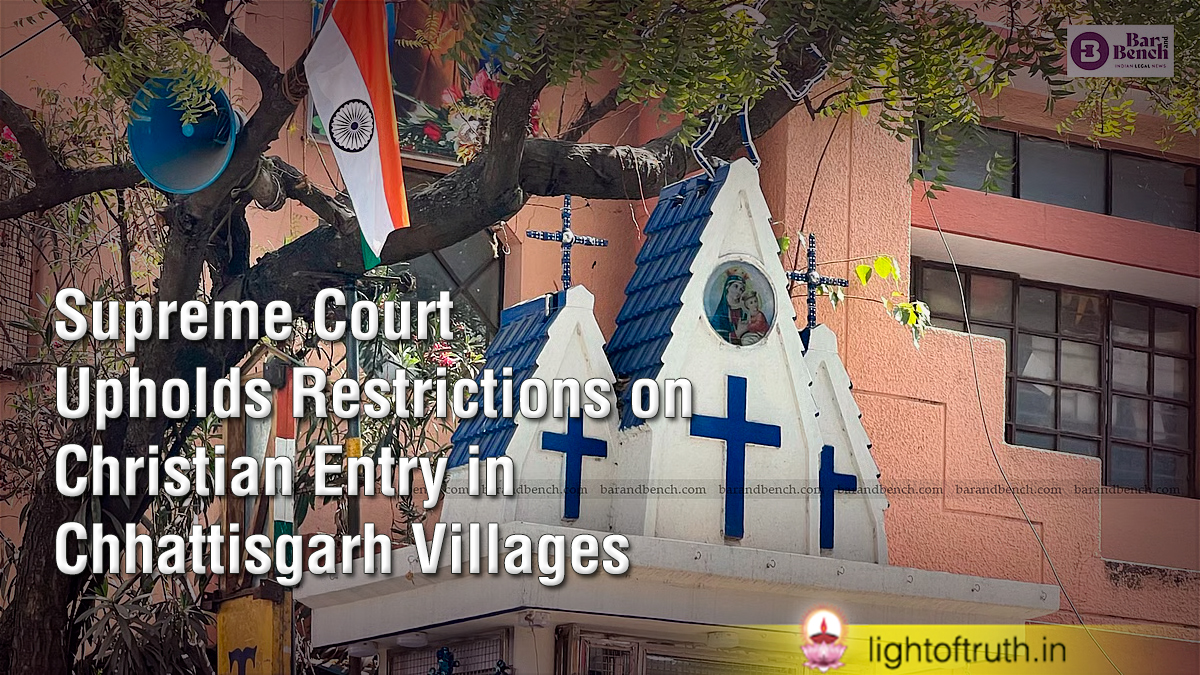
Supreme Court Upholds Restrictions on Christian Entry in Chhattisgarh Villages

The Supreme Court of India has dismissed an appeal challenging restrictions imposed by village councils in Chhattisgarh that bar the entry of Christian missionaries and converts into certain tribal areas.

On Feb. 16, the court declined to interfere with an October 2025 order of the Chhattisgarh High Court, which had directed the petitioner to seek remedy under the state’s Panchayat (Extension to Scheduled Areas) Rules (PESA), governing tribal self-administration.

The case arose after hoardings were erected in several villages in Kanker district in July 2025, prohibiting the entry of pastors and Christians who had converted from other religions. Village councils said the move aimed to prevent alleged forced or induced conversions.

Petitioner Digbal Tandi, a Protestant Christian, argued that the restrictions violated constitutional guarantees of religious freedom and free movement. His counsel contended that adverse observations about missionary activity were made without evidence.

The Supreme Court, however, advised the petitioner to approach appropriate statutory authorities under the PESA framework.

Christian leaders and rights advocates expressed concern over the ruling, saying constitutional protections should not be curtailed without proof of wrongdoing. They noted that similar restrictions have reportedly spread to at least 19 villages in Chhattisgarh and surfaced in parts of Odisha and Jharkhand. According to the 2011 Census, Christians constitute about 2.3 percent of India’s population.

Christian Worshippers Attacked During Sunday Prayer in Odisha Village

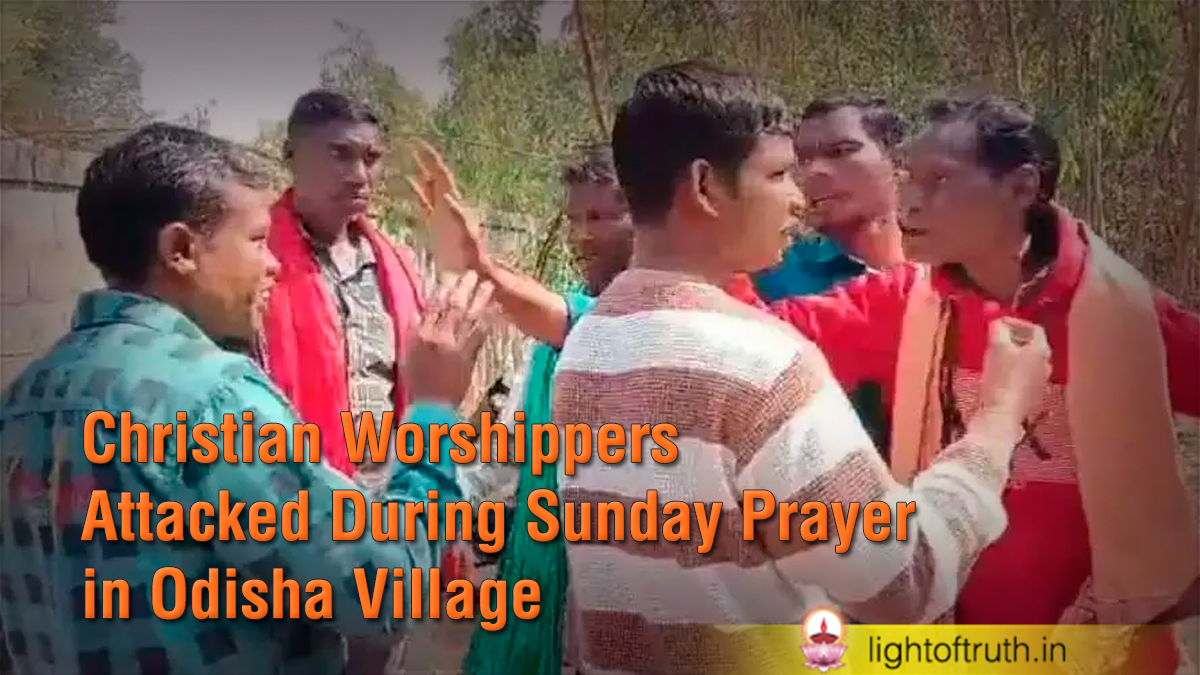
A group of Christian worshippers in Odisha’s Mayurbhanj district is living in fear after a mob allegedly disrupted their Sunday prayer service and threatened them with violence.

Members of the Christian Evangelical Assembly were gathered at the home of Pastor Jagannath Naik in Badabali Chua village on Feb. 22 when around 50 people reportedly stormed the house armed with sticks. The attackers allegedly ordered the group to stop praying to Jesus, claiming their worship angered local deities.

According to the pastor, his wife and an elderly woman were assaulted, and he was beaten when he tried to record the incident. He said he was forced to delete the video. Although the group contacted police through the emergency helpline, they claim no officers arrived.

The following day, alleged members of the mob reportedly warned Christians individually against continuing their worship. Bishop Pallab Lima of the United Believers Council Network India said the situation remains tense, with some families considering leaving the village.

Church leaders noted that Mayurbhanj is a sensitive region, recalling the 1999 killing of Australian missionary Graham Staines and his two sons in Odisha.

Data from the United Christian Forum recorded 40 incidents of harassment against Christians in Odisha in 2024. Christian leaders warn that even minor incidents in the region risk escalating into serious unrest.

Religious liberty restriction case: Archbishop expresses concern

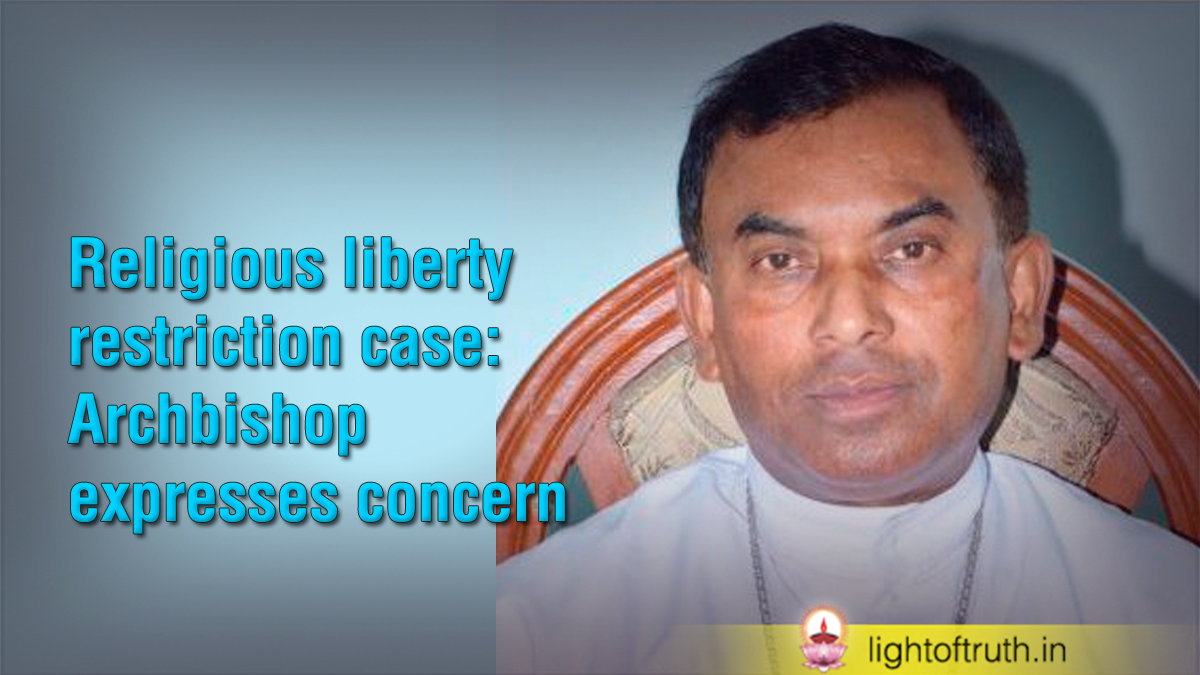
The head of the Catholic Church in Chhattisgarh has expressed concern after the Supreme Court of India dismissed a plea challenging restrictions on Christian missionaries and pastors entering certain tribal villages in the state.

On February 16, the apex court upheld a prior order of the Chhattisgarh High Court, which had declined to interfere with resolutions passed by some village councils allegedly barring the entry of pastors and tribal converts. The lower court observed that such measures were intended to prevent religious conversions through “inducement” or “manipulation” and to protect tribal culture and social harmony.

Archbishop Victor Henry Thakur of Raipur said the ruling appeared discriminatory and raised concerns about constitutional guarantees, including freedom of movement and the right to propagate religion. He noted that the Supreme Court’s dismissal seemed partly procedural, as petitioners were asked to first exhaust statutory remedies by approaching local authorities.

The case involved billboards in several tribal villages stating that entry of pastors and priests was prohibited under local resolutions. Petitioners argued the restrictions amounted to segregation and discrimination against Christians.

A bench of Justices Vikram Nath and Sandeep Mehta granted liberty to the petitioners to seek relief before the appropriate statutory authority.

India’s legal framework on religious conversion remains complex, with 10 states enforcing anti-conversion laws. Critics say such laws, which provide penalties for conversions deemed coercive or fraudulent, have sometimes been used to target religious minorities.

Bishops condemn racial abuse of northeast people

The Catholic Bishops’ Conference of India has condemned what it described as a “shameful act of racial abuse and harassment” against women from Northeast India in the national capital, calling such incidents a blot on the country’s cultural heritage.

In a statement issued on February 26, the bishops’ conference said repeated instances of racial discrimination in different parts of the country are unacceptable and urged authorities to ensure the safety and dignity of citizens from the Northeast.

The condemnation follows the arrest of a woman by Delhi Police in connection with alleged racial abuse and criminal intimidation of three women tenants from Arunachal Pradesh in Malviya Nagar, South Delhi. The tenants had reportedly been supervising electrical work in their rented flat when dust from drilling led to a dispute with neighbours. In their complaint, the women alleged verbal abuse, racial slurs, derogatory remarks, and threats.

The bishops appreciated the prompt police action and appealed to the Union and state governments to sensitize the public about the diverse cultures and traditions of Northeast India.

Delhi Chief Minister Rekha Gupta met the victims and assured strict action. Arunachal Pradesh Chief Minister Pema Khandu and other northeastern leaders also demanded exemplary measures. The statement reiterated that every citizen has the right to live with dignity and called for unity and respect for diversity across the nation.

Students name new plant species after Catholic priest

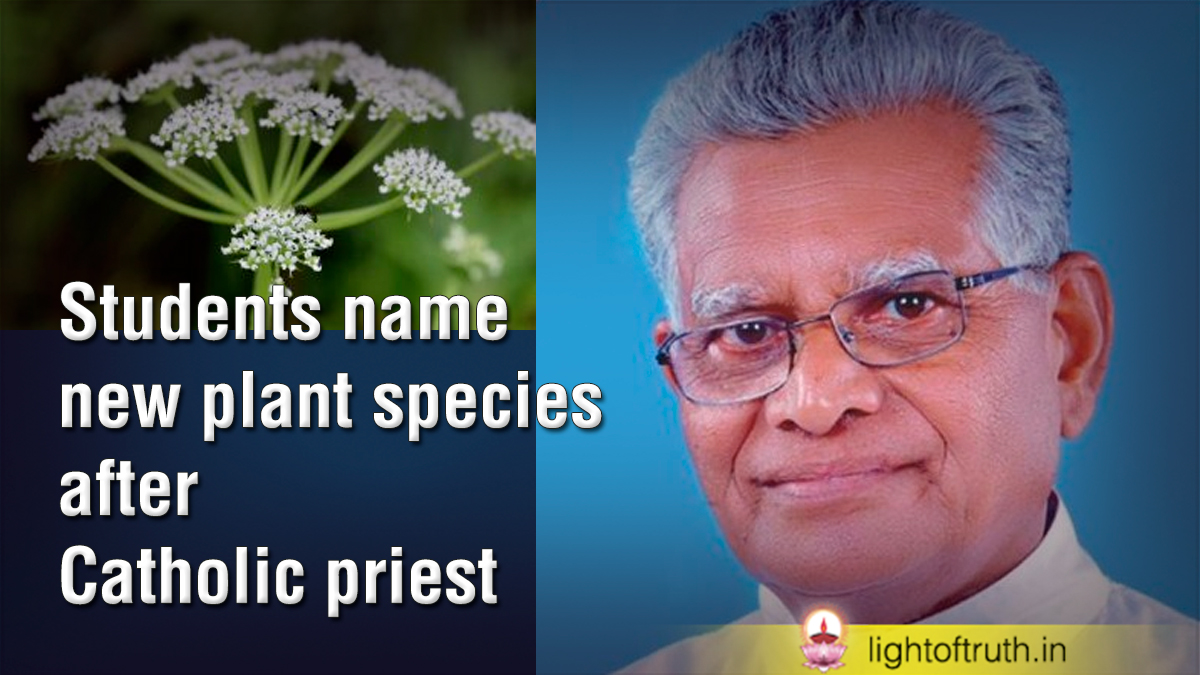
Students of a Catholic college in Kerala have named a newly discovered plant species after their former principal, Carmelite Father Joseph Paikada.

“Naming this plant after Father Paikada is a tribute to a teacher and principal who inspired students to study and love the natural world. The students themselves suggested the name, showing their deep respect and affection for him,” Carmelite Father Biju Joseph Chakkalayil, the current principal of Devagiri College in Kozhikode.

Tetrataenium paikadaeThe plant was discovered in the high-altitude grasslands of Idukki’s Iravikulam National Park by research students C. Rekha, M. K. Prashant, and T. P. Ashwindas under the guidance of their teacher K M Manudev.

The species has been named Tetrataenium paikadae. It belongs to the Apiaceae family, which includes carrots and celery.

The research finding has been published in the internationally recognized Nordic Journal of Botany. Supported by the Council of Scientific and Industrial Research and the Anusandhan National Research Foundation, the study highlights the rich biodiversity of Kerala’s Western Ghats and the importance of conservation.

Father Chakkalayil said Paikada is remembered for his humility, guidance, and his love for students. The naming of the species ensures that his legacy continues to bloom in the highlands he inspired students to explore and cherish, he added.

Father Paikada died December 20, 2019, aged 83. He served as the principal and manager of Devagiri College for almost three decades. He played a key role in the institution’s development, acting as a teacher, warden, and spiritual guide.

He was also the chairman of the Consortium of the Autonomous Colleges of Keralam.

He founded Christ College in Poonch, a historic, strategic town and district in Jammu and Kashmir, in 1990.

Caritas India’s Lenten campaign combats inequality, ecological distress

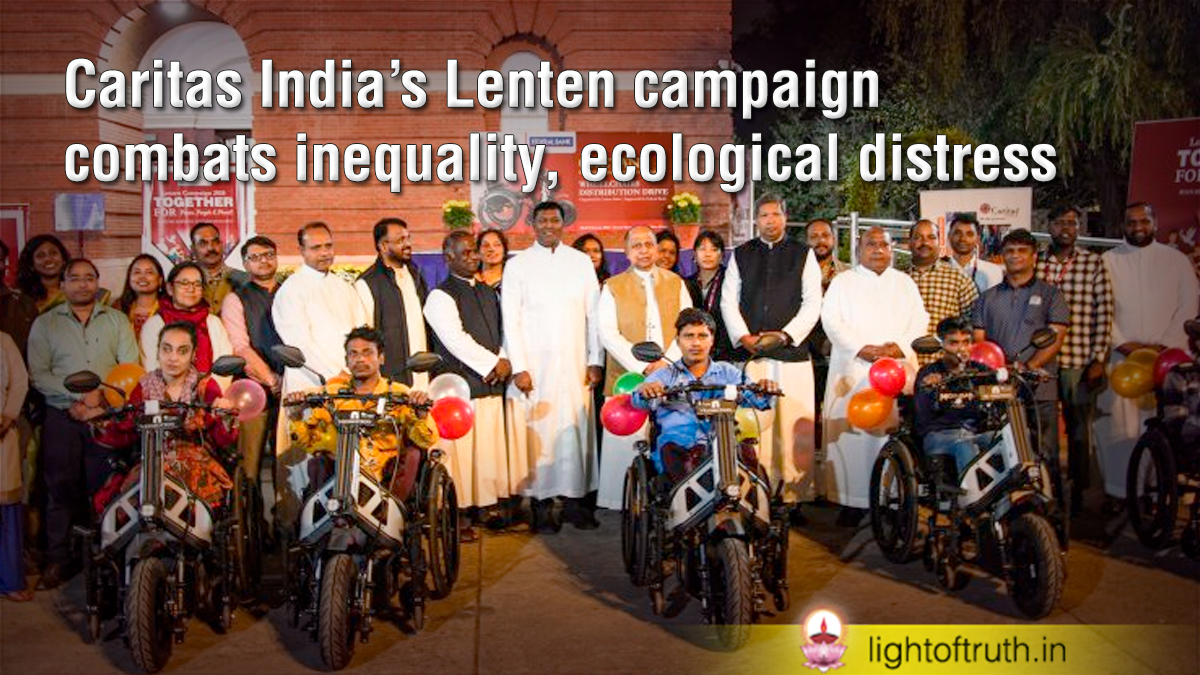
Caritas India launched its Lenten Campaign 2026 at the Sacred Heart Cathedral, reaffirming its commitment to combat inequality, promote inclusion, and address growing ecological distress.

The launch event witnessed the distribution of motorized wheelchairs to five persons with restricted mobility, supported by banks under their corporate social responsibility initiatives. Among the beneficiaries was a 32-year-old daily wage worker from East Delhi, paralyzed from the waist down, who described the wheelchair as a life-changing gift restoring his independence and dignity. He said the mobility support would now enable him to seek work opportunities and better provide for his family.

Caritas India Executive Director Father R. Jesudass said the distribution marked the culmination of last year’s Lenten campaign, Chetana (Awareness), which focused on supporting persons with disabilities and promoting their inclusion in society. He thanked donors and partners for their solidarity, calling it a visible expression of the Church’s commitment to dignity and justice.

The 2026 campaign poster was unveiled by Archbishop Anil Joseph Thomas Couto. This year’s theme addresses fractured relationships, deepening inequality, and escalating ecological challenges. The campaign encourages parishes to organize peace circles, families to practice weekly acts of solidarity, and institutions to adopt environmentally responsible practices.

Administrators noted that last year’s outreach impacted over 10,500 people nationwide, with continued advocacy and expanded initiatives planned for the year ahead.

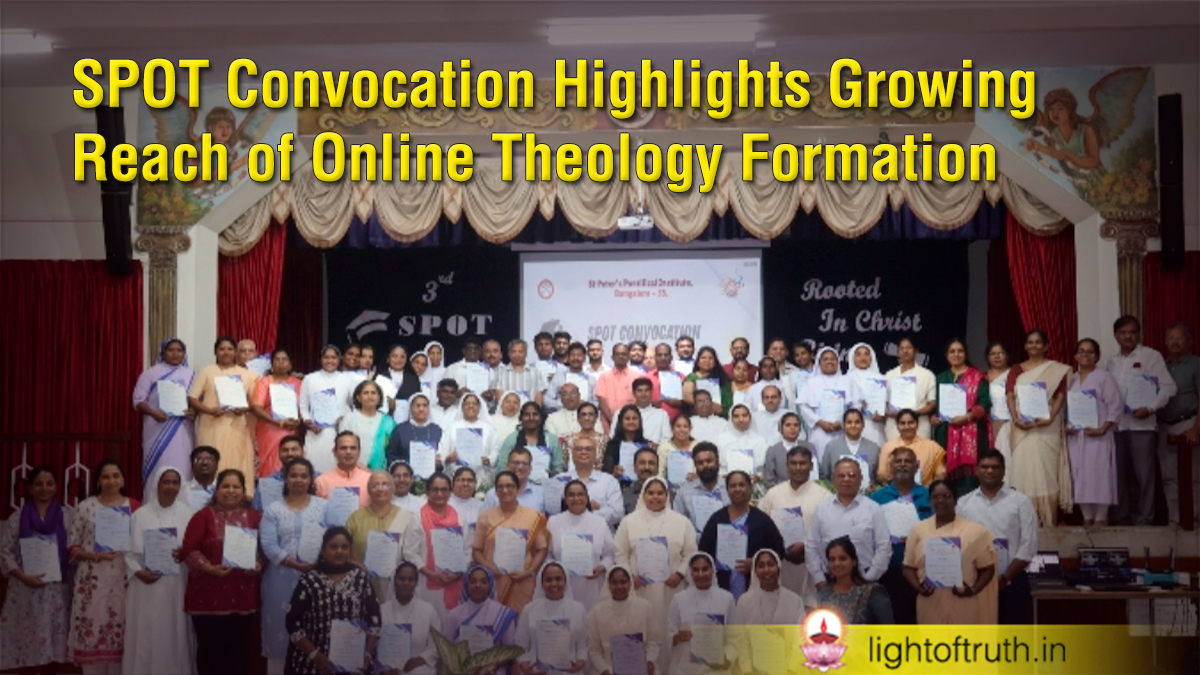
SPOT Convocation Highlights Growing Reach of Online Theology Formation

St Peter’s Pontifical Institute, Bangalore celebrated the third convocation of its St Peter’s Online Theology (SPOT) programme under the theme “Rooted in Christ, Rising in Wisdom,” marking another milestone in structured digital theological education.

The ceremony, attended by graduates, faculty and Church leaders, was livestreamed on YouTube to enable wider participation. The celebrations were centred on the Holy Eucharist, presided over by Bishop Antonysamy S., highlighting that theological formation is not merely academic pursuit but a journey of discipleship and service.

Students participated in departmental and common evaluation sessions and reflected on how the SPOT initiative enriched their understanding of Sacred Scripture, Church teaching and personal faith. They also suggested strengthening digital access to study materials and introducing more regular academic assessments.

The formal convocation ceremony was attended by Bishop Arockia Raj Satis Kumar as Chief Guest and Sr. Florence Fernandez of the FS Bangalore Province as Guest of Honour. Certificates were conferred on graduates in recognition of their academic achievement and commitment to ongoing formation.

In his address, the Chief Guest encouraged graduates to pursue lifelong wisdom and embody theological learning in daily Christian witness. The Guest of Honour urged them to remain rooted in Christ and serve the common good. The event reaffirmed SPOT’s mission of integrating academic rigour with spiritual growth, preparing graduates for meaningful engagement in Church and society.

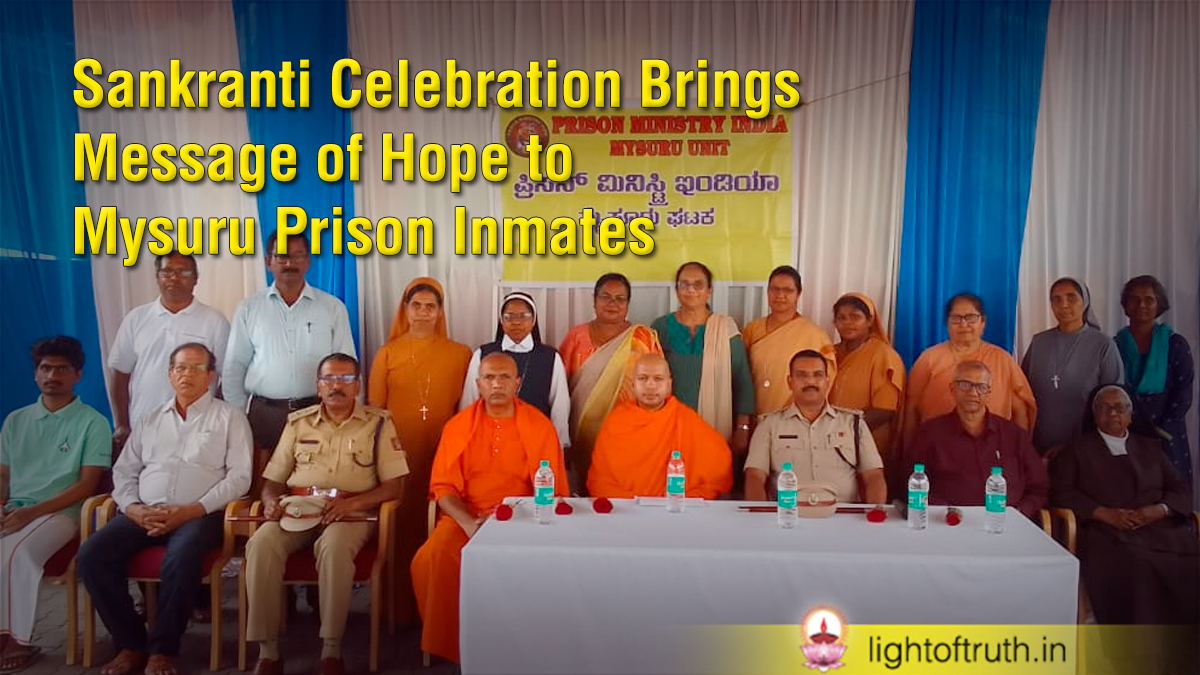
Sankranti Celebration Brings Message of Hope to Mysuru Prison Inmates

The festival of Sankranti was observed at Mysore Central Prison with a special programme focused on renewal and personal transformation. The event was organised by the Mysore Unit of Prison Ministry India (PMI).

Prison authorities, PMI coordinators, volunteers and inmates gathered within the prison campus, creating an atmosphere of fraternity and reflection. Sankranti, traditionally symbolising transition and new beginnings, was marked not only as a cultural celebration but also as a moment for introspection and reform.

Swami Sarvajayananda Maharaj of the Ramakrishna Ashram delivered the keynote address, highlighting the spiritual significance of the festival. He reminded inmates that failure and weakness are part of the human journey but stressed that sincere effort, prayer and self-discipline can lead to genuine transformation. He encouraged prisoners to use their time meaningfully for reflection and self-improvement.

V. Seshumurthy, Chief Superintendent of the prison, presided over the programme and extended festive greetings to inmates and staff. He expressed hope that the message of renewal would inspire prisoners to reform their lives and prepare for responsible reintegration into society. The distribution of yellu bella, symbolising harmony and forgiveness, marked the celebration’s conclusion. The programme was widely appreciated, reinforcing the belief that every individual is capable of positive change and a fresh beginning.