Chhattisgarh’s proposed law sparks debate on tribal identity and religious freedom

The Chhattisgarh government’s recent announcement to bar tribals who convert to another religion from accessing Scheduled Tribe (ST) welfare schemes has stirred intense debate across political, legal, and faith-based communities. The proposed legislation, expected to be introduced in the winter session, seeks to replace the existing Chhattisgarh Dharma Swatantrata Adhiniyam, 1968, with a more stringent framework. It mandates a 60-day advance notice to district authorities before any religious conversion and imposes prison terms of up to 10 years for violations. The bill also broadens the definition of inducement, including promises of education, healthcare, or employment.

Chief Minister Vishnu Deo Sai has voiced support for “delisting” converted tribals from the ST category, citing concerns over cultural erosion and dual entitlements. “India is secular, but tribal identity must be preserved,” he said, echoing calls from tribal groups in Bastar and Surguja. Faith leaders and civil society activists have expressed alarm over the implications for religious freedom and minority rights. “This move risks criminalizing personal faith journeys and deepening social divides,” said a spokesperson from the Chhattisgarh Christian Forum.

Former Chief Minister Bhupesh Baghel criticized the proposal as politically motivated. “Existing laws are sufficient. What we need is enforcement, not exclusion,” he said. However, tribal organizations like the Sarva Adivasi Samaj have welcomed the initiative, arguing that conversion often leads to cultural alienation and loss of traditional practices. “This is about safeguarding our heritage,” said Arvind Netam, a senior tribal leader. Legal experts caution that any attempt to redefine ST eligibility based on religion must align with constitutional protections and national jurisprudence. The state government has indicated plans to consult the Centre to ensure broader applicability.
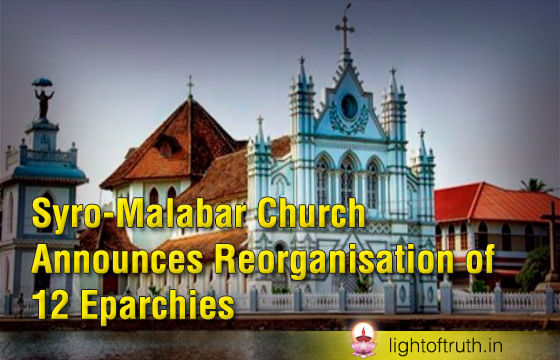
Syro-Malabar Church Announces Reorganisation of 12 Eparchies

His Beatitude Mar Raphael Thattil, the Major Archbishop of the Syro-Malabar Church, announced the reorganisation of the territories of twelve eparchies outside Kerala on 28 August, during a public meeting at the Major Archiepiscopal Curia at Mount St. Thomas, Kakkanad, in the presence of the Synod Fathers.

The Syro-Malabar Church obtained all-India jurisdiction with the erection of the Eparchy of Shamshabad on 9 October 2017. At that time, all territories in India not yet assigned to any Syro-Malabar eparchy were made part of the newly erected Eparchy by Pope Francis. Spread across twenty-three states, four union territories, and two islands, this vast jurisdiction required further administrative decisions in subsequent Synodal sessions to ensure effective pastoral care. As a result, the Synod decided to reorganize the territories of eleven eparchies by redistributing certain areas of the Shamshabad Eparchy. With the approval of the Apostolic See, the Major Archbishop has issued decrees redefining the territories of the following eparchies: Adilabad, Bijnor, Chanda, Gorakhpur, Kalyan, Jagdalpur, Rajkot, Sagar, Satna, Shamshabad, and Ujjain.

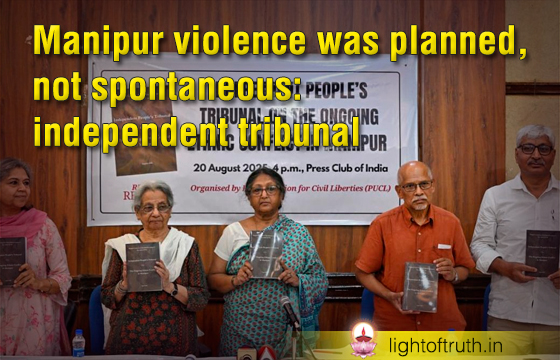
Manipur violence was planned, not spontaneous: independent tribunal

A high-level independent tribunal has concluded that the ethnic violence that engulfed Manipur from May 3, 2023, was a planned attack rather than spontaneous unrest, indicting both state and central governments for enabling the crisis through institutional breakdown. The 694-page report, released by the People’s Union for Civil Liberties (PUCL) at the Press Club of India, represents the most comprehensive independent investigation into the conflict that has displaced over 60,000 people and left them languishing in relief camps for 27 months.

“The violence which erupted on May 3, 2023, was not spontaneous but planned, ethnically targeted, and facilitated by state failures,” concluded the Independent People’s Tribunal chaired by former Supreme Court judge Justice Kurian Joseph. The tribunal, comprising 14 jury members and three experts deliberately chosen from outside Manipur, recorded testimonies from more than 150 survivors who painted what the report called “a picture of systemic impunity and targeted brutality.”

The report has drawn fierce criticism from Manipur’s Rajya Sabha MP Sanajaoba Leishemba, who dismissed it as “biased, one-sided and unprofound” during a public event Sunday. Leishemba, who founded the Arambai Tenggol group mentioned in the report, demanded “a strong probe against this PUCL” and warned the findings could mislead the Meitei community. The tribunal has recommended establishing a permanent High Court bench in hill districts, creating independent Special Investigation Teams monitored by the Supreme Court, and prosecuting those responsible for hate speech and propaganda.

Seoul registers ‘record’ levels of treatment for workplace bullying

In South Korea, the issue of bullying in the workplace is emerging with growing concern, with an increasing number of employees and professionals reporting “record levels” of trauma or psychological distress.

This is confirmed by the latest data provided in recent days by the government, starting with the Korean Occupational Safety and Health Agency (Kosha), which released the findings of its network of centres across the country.

The agency conducted 16,607 counseling sessions between 2022 and 2024, with annual figures rising sharply over the last three years. In 2023, 6,757 counseling sessions were conducted, an increase of 56.4% compared to 2022 and 22.2% compared to 2023.

The centres, first established in Daegu in 2018 and now expanded to 23 locations across the southern Korean peninsula, offer free psychological support to workers who have suffered trauma, including critical issues caused by serious accidents at work, suicides of colleagues, workplace bullying, or sexual harassment or violence.

Workplace accidents, including serious injuries, were the most common reason for seeking psychological support in 2023, with 3,214 sessions, almost half of the annual total. Counseling related to bullying and sexual harassment followed closely with 2,311 cases, almost double the 1,156 recorded in 2022.

Government-reported cases of workplace bullying also rose steadily, from 8,961 in 2022 to 11,038 in 2023 and 12,253 in 2024, suggesting a direct link with the growing demand for trauma support services.

Reports of abuse by workers, including verbal and physical assault, rose from 72 cases in 2022 to 202 in 2024, although this figure marks a decline from the 589 cases reported in 2023.

In addition, the overall increase in the use of post-traumatic counseling was also driven by an increase in “other” cases, such as trauma resulting from illnesses including COVID-19, which rose from 84 in 2022 to 1,030 in 2024.

Trauma assistance programs cover not only primary victims directly involved in workplace accidents, but also “secondary victims, such as colleagues or witnesses, who are psychologically affected by the events,” as Kosha experts explain in a statement.

The issue of bullying and discrimination on various grounds at the social level was a factor that, in the past, particularly affected North Korean refugees who left the Kim dictatorship in search of a better life in the South.

This was often a difficult journey characterized by lower pay, blocked career advancement, and a persistent climate of “surveillance” that continued even years after fleeing the North.

However, over time, the phenomenon has spread to different strata of society, even schools, with a growing number of complaints that have prompted the authorities to intervene with restrictions on university entrance exams.

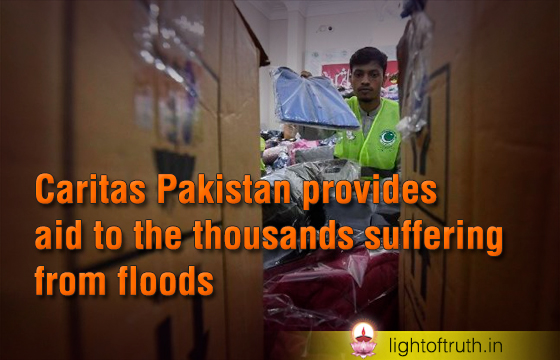
Caritas Pakistan provides aid to the thousands suffering from floods

In the aftermath of the devastating floods in Pakistan on 15-16 August, Caritas Pakistan is working to provide relief and care for those living with the effects.

“The Church stands with the affected families through prayer and action. Caritas Pakistan is actively responding, and we urge the continued support of all our faithful, as well as our local and international partners,” Archbishop Benny Mario Travas of the Archdiocese of Karachi and President of Caritas Pakistan told the Vatican’s Fides news agency.

A state of emergency has been declared for Karachi as new flood and heavy rain warnings have been issued for Sindh—a province in the south. At least seven people have died as a result of the flooding and reports show damage to infrastructure all throughout the area.

Recognizing the extent of the damage, the Executive Director of Caritas Pakistan, Amjad Gulzar, called the situation a national emergency. He explained immediate aid is being distributed in the different areas affected by the floods.

“Our teams are on the ground assessing needs and providing food, shelter, medical care, and restoring the dignity of affected families now also in the South,” Gulzar shared. The Caritas team is assessing the destruction and coordinating aid efforts. Working together, volunteers and district authorities are visiting affected areas to determine their needs.

The Executive Director reported that 2,500 flood-affected families—some 17,500 people—are expected to receive aid, in the form of food packages, hygiene kits, and drinking water.

Caritas Pakistan has also set up 15 free medical camps to help fight common flood-related illnesses and provided shelter kits for people who have lost their homes.

Church in Thailand equips seminarians for deaf ministry

The Catholic Church in Thailand is stepping up efforts to strengthen pastoral care for the Deaf, beginning with a training program for seminarians at Fatima Minor Seminary in the Archdiocese of Thare-Nongseng in the northeast of the country. Fr. Peter Bhuravaj Searaariyah, Director of Pastoral Ministry for the Deaf of the Diocese of Chanthaburi and of the Catholic Bishops’ Conference of Thailand, led the training program from August 22–24 with the support of the seminary director, Fr. Chatchai Nilkhet.

The sessions introduced seminarians to basic pastoral approaches for ministering to the Deaf, religious sign language terminology, participation in Thai Sign Language (TSL) Mass, and reciting the Liturgy of the Word in sign language.

Encouraged by the response, Fr. Peter plans to expand the training to other minor seminaries in the country, as well as to novices of male and female religious congregations. “The goal is to prepare future priests and religious to serve the Deaf with understanding and compassion,” he said. “There will be at least three sessions, each lasting at least two days,” he told LiCAS News.

The sessions at Thare drew strong engagement from seminarians, many of whom expressed a desire to deepen their knowledge of sign language for future pastoral work. A group of about 15 seminarians has already formed an online network to share resources, discuss Deaf culture, and explore how pastors can adapt to emerging challenges, including the role of technology in communication. Plans are also underway for in-person gatherings to strengthen the network.

Fr. Peter stressed that pastoral care for the Deaf requires more than language skills. “Many Deaf people live in isolation and feel excluded from opportunities hearing people take for granted,” he said.  Effective ministry, he added, means listening attentively, building trust, and ensuring access to sacraments and community life.

He noted that some Deaf Catholics feel neglected by the Church, making it urgent to develop specialized pastoral care similar to that offered to migrants and travelers. The Deaf, he said, have talents and skills equal to those of the hearing but require ministers who understand their unique cultural and linguistic identity. 

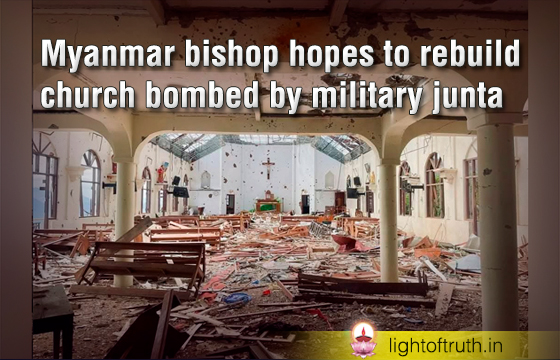
Myanmar bishop hopes to rebuild church bombed by military junta

A Catholic bishop in civil war-torn Myanmar voiced hope that “everyone will do their part” to rebuild a church destroyed in his diocese during a military junta airstrike against rebel groups. Hakha Bishop Lucius Hre Kung spoke during a recent visit to the Church of Christ the King, which was destroyed in military bombings in April, Vatican’s Fides news agency reported.

“They destroyed the walls of the church, but not the faith. Our faith remains strong, the people of God in Falam continue to believe and hope,” Bishop Kung added. The church was consecrated in November 2023 with assistance from the estimated 1000 Catholics in the Falam region. Chinland Defense Force (CDF), a part of the People’s Defense Forces, which opposes the military junta, had taken control of Falam, resulting in retaliatory airstrikes from the junta.

Bishop Kung said he regularly visits the affected people in his diocese while bringing them “the consolation of the Lord”. “In this moment of suffering and trial, we remain firmly anchored in prayer,” he said while praying to Jesus and Mary to give them “the strength and hope to continue and hope for a future of peace.” Bishop Kung was able to visit the church and its vicinity only recently, to assess the damage and comfort the local population, Fides reported.

Fr Paulinus G.K. Shing, a local priest, expressed deep sorrow at the current state of the church while expressing hope that it will be rebuilt soon. “It was a very beautiful church, and the parish was happy to take care of it. I hope it can be rebuilt soon. I look with sadness at pictures of priests of the diocese being ordained there,” Fr Shin said.

At least 107 religious buildings, including 67 churches, have been destroyed by army bombing in Chin State since the deadly civil war began in February 2021, after the military ousted the elected civilian government of Aung San Suu Kyi. The junta’s bloody campaign of violent repression against dissent has resulted in more than 6000 deaths, according to the Assistance Association for Political Prisoners.

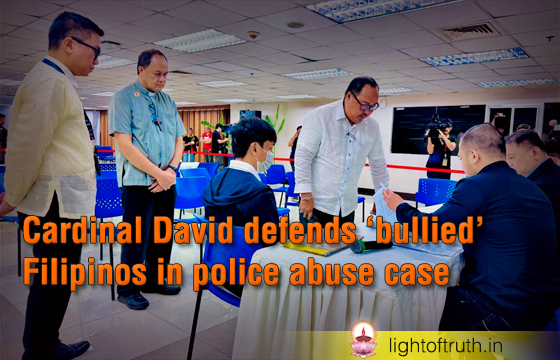
Cardinal David defends ‘bullied’ Filipinos in police abuse case

The Bishop of Kalookan Cardinal Pablo Virgilio David vowed to stand on the side of “bullied” Filipinos as he accompanied a victim of police abuse to file a complaint against police officers.

Cardinal David appeared at the National Police Commission (Napolcom), which administers and controls the Philippine National Police, with Jayson Dela Rosa on 18 August. The cardinal, who is also the outgoing president of the Catholic Bishops’ Conference of the Philippines, spoke to reporters at Napolcom afterwards. 

The case of Dela Rosa went viral, catching the attention of authorities, after David posted about it on Facebook earlier this month. The alleged abuse took place in David’s diocese in northern Metro Manila. 

Dela Rosa’s 20-year-old son, Dion Angelo, recently died of leptospirosis after wading in floodwaters to search for his missing father. The Dela Rosa family did not know, at that time, that the father had been arrested for illegal gambling. 

David said Dela Rosa had been wrongfully accused by abusive police officers. He recounted how Dela Rosa entered a “not guilty” plea, but his alleged co-player in an illegal street game pleaded “guilty”.

“The poor have no choice but to plead guilty to crimes they did not commit. That is hard to accept. The law should not be like that,” David said. 

The cardinal appealed to Filipino police officers to “save” their institution. “I still believe that a majority of police officers are good people. Yet a few abusive ones will destroy the institution,” he said. “How will people follow the law when law enforcers themselves do not follow it?”

David, 66, is a known defender of human rights in the Philippines. He rose to national prominence after criticising the drug war, which featured widespread police abuses, under former president Rodrigo Duterte from 2016 to 2022.

Rafael Vicente Calinisan, vice chairperson of Napolcom, thanked David for accompanying Dela Rosa in filing the complaint. “His presence in our office is a symbol of trust, a symbol of the new battle that we have to wage,” Calinisan said. “We will not let you down, cardinal.”

David said in response: “I am a priest, a bishop, that is why I am here. Our mission is to side with the marginalised, especially those who are bullied. It is not the role of law enforcers to bully people.” 

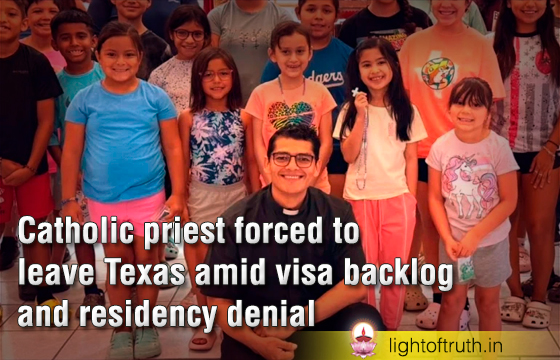
Catholic priest forced to leave Texas amid visa backlog and residency denial

A Mexican-born Catholic priest who has served in the Diocese of Laredo, Texas, for nine years must leave the United States because his application for residency was denied and his religious worker visa is expiring. Father Alan Sanchez, the pastor of St. Joseph Church in La Pryor and St. Patrick Mission in Batesville, will return to his native country of Mexico on Aug. 27, amid the visa issues. He will be received into the Archdiocese of Monterrey in northeastern Mexico when he arrives.

“Originally, I was hopeful … [this would] be resolved,” Sanchez told CNA. “I was sad [when I got the news] because of the community I was serving,” he said. “This is a very small and poor community in Texas and this was my first role as a pastor.”

Sanchez applied for residency two years ago but said the process was repeatedly delayed and then his application was eventually denied in November 2024. He appealed the denial and later applied for a different visa but said he ultimately “ran out of time.” He still hopes the matter can be resolved so he can return to his parish at some point.

“I spoke to my bishop about it and the attorney, but there’s nothing else that [I] can do except return to Mexico,” he said. Sanchez said the delay was caused by a backlog of applicants and that he was denied because of a lack of available spots for visas. He noted that asylum seekers and unaccompanied minors were given priority and that priests cannot have a “change of status for residency, because the spots are already taken.”

“True forgiveness does not wait for repentance, but is offered first,” the Pope explained during the General Audience in the Paul VI Hall on 20 August, noting that “forgiving does not mean denying evil, but preventing it from generating more evil.”

Pope Leo XIV to inaugurate Laudato Si’ Village in Castel Gandolfo

On Friday, September 5, at 4 PM Rome time, Pope Leo XIV will inaugurate the Borgo Laudato Si’, at the historic papal residence in Castel Gandolfo, newly opened to the public and dedicated to embodying the vision of Laudato si’, Pope Francis’ encyclical on care for creation—now celebrating its tenth anniversary.

First entrusted to the Laudato Si’ Centre for Higher Education in 2023, the Borgo—which in Italian means “village”—represents a tangible sign of the Church’s mission to unite faith with concrete care for the earth and for the most vulnerable.

Spread across 135 acres of gardens, villas, archeological sites, and farmland, the project integrates history with a forward-looking commitment to education, sustainability, and community life.

In a press release, the Centre explains, “This is not simply a place to visit but a place to live, to pray, to learn, and to grow in communion with God, with one another, and with creation.”

The Holy Father will begin the inauguration with a symbolic pilgrimage through the Village’s grounds, meeting workers, collaborators, their families, and all who have contributed to this new chapter of the papal estate. He will encounter educators, students, local communities, and benefactors—those who, through their work and dedication, give life to the Village’s mission. Following the procession, Pope Leo XIV will preside over a Liturgy of the Word with a Rite of Blessing.