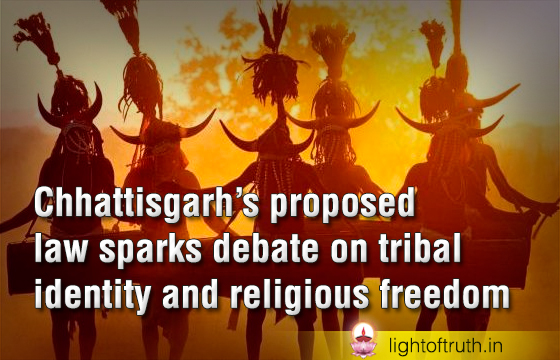
The Chhattisgarh government’s recent announcement to bar tribals who convert to another religion from accessing Scheduled Tribe (ST) welfare schemes has stirred intense debate across political, legal, and faith-based communities. The proposed legislation, expected to be introduced in the winter session, seeks to replace the existing Chhattisgarh Dharma Swatantrata Adhiniyam, 1968, with a more stringent framework. It mandates a 60-day advance notice to district authorities before any religious conversion and imposes prison terms of up to 10 years for violations. The bill also broadens the definition of inducement, including promises of education, healthcare, or employment.
Chief Minister Vishnu Deo Sai has voiced support for “delisting” converted tribals from the ST category, citing concerns over cultural erosion and dual entitlements. “India is secular, but tribal identity must be preserved,” he said, echoing calls from tribal groups in Bastar and Surguja. Faith leaders and civil society activists have expressed alarm over the implications for religious freedom and minority rights. “This move risks criminalizing personal faith journeys and deepening social divides,” said a spokesperson from the Chhattisgarh Christian Forum.
Former Chief Minister Bhupesh Baghel criticized the proposal as politically motivated. “Existing laws are sufficient. What we need is enforcement, not exclusion,” he said. However, tribal organizations like the Sarva Adivasi Samaj have welcomed the initiative, arguing that conversion often leads to cultural alienation and loss of traditional practices. “This is about safeguarding our heritage,” said Arvind Netam, a senior tribal leader. Legal experts caution that any attempt to redefine ST eligibility based on religion must align with constitutional protections and national jurisprudence. The state government has indicated plans to consult the Centre to ensure broader applicability.