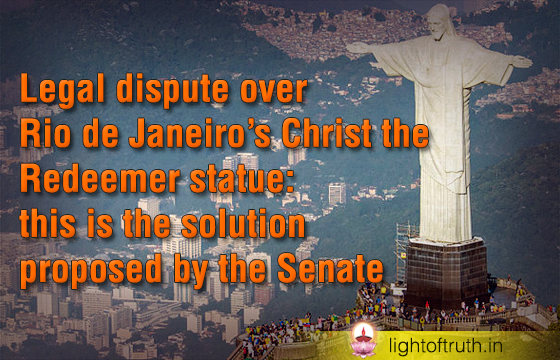
Legal dispute over Rio de Janeiro’s Christ the Redeemer statue: this is the solution proposed by the Senate

From the slopes of Corcovado, Christ the Redeemer gazes over Rio de Janeiro with open arms, a figure that has long symbolized both faith and nation. For millions, it is not simply a tourist attraction but a sanctuary in the sky — a place of prayer, pilgrimage, and sacramental life where weddings, baptisms, and daily Masses continue against the backdrop of Brazil’s most famous skyline. Yet behind the serenity of this landmark lies an ongoing dispute that pits the Church’s historical role against the demands of environmental authorities. The heart of the conflict is not the statue itself — consecrated in 1931 and entrusted ever since to the Archdiocese of Rio de Janeiro — but the land around it, a fraction of the vast Tijuca National Park. In late June, a federal court ruled in favour of the Chico Mendes Institute for Biodiversity Conservation (ICMBio), the agency managing the park, in a case concerning commercial stalls along the stairways leading up to the monument. While the Archdiocese was not formally on trial, it has sided with the vendors, many of whom operate under long-standing agreements with the Church. The ruling sparked confusion in the press and on social media, with some questioning who truly governs the sanctuary. The Archdiocese responded firmly in August: the monument, the plateau, and the chapel beneath remain Church property, safeguarded by the Mitra Arquidiocesana. “The Brazilian people must have certainty that Christ the Redeemer is sacred,” declared Father Omar Raposo, rector of the sanctuary, who underlined that the Church is the only legitimate authority over its use and preservation.

Still, legal ambiguities remain. Because Tijuca National Park was only established decades after the statue’s completion, overlapping jurisdictions have led to tensions. A bill now before Brazil’s Senate seeks to resolve the matter by carving out a small area — less than 0.02 percent of the park — to be managed solely by the Archdiocese. Supporters argue that this adjustment would free the Church from bureaucratic restrictions while having no impact on biodiversity, as the disputed zone is already heavily urbanized. Grassroots movements have rallied in favour of the measure, urging senators to guarantee that stewardship of the sanctuary stays with the Church. For Father Omar, these initiatives reflect not politics but devotion: “They show how the Brazilian people love and wish to care for Christ the Redeemer, a monument built by the Church with the offerings of the faithful, and one that welcomes all with open arms.”
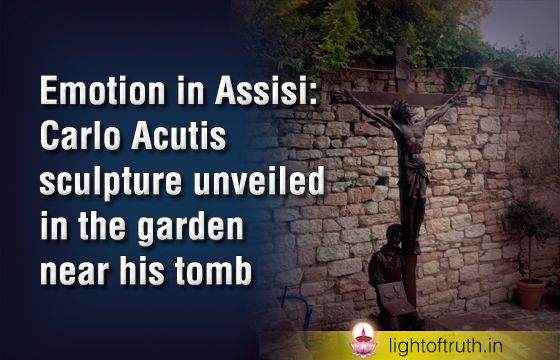
Emotion in Assisi: Carlo Acutis sculpture unveiled in the garden near his tomb

With less than a month to go before the canonization of Blessed Carlo Acutis, the sculpture St. Carlo at the Cross was unveiled in Assisi. The bronze artwork, created by renowned Canadian artist Timothy Paul Schmalz, shows him kneeling at the foot of the Cross. It is located in the garden of the Church of Santa Maria Maggiore, within the Sanctuary of the Renunciation complex. Created by the artist behind iconic works such as Homeless Jesus and Angels Unawares, this is the first sculpture to pay tribute to the millennial saint-to-be. St. Carlo at the Cross, a work by sculptor Timothy Schmalz, is inspired by one of his own paintings, which is currently on display at the Old St. Patrick’s Cathedral in New York City.

Known as the “Influencer of God,” Acutis used the internet to spread devotion to the Eucharist, documenting Eucharistic miracles from around the world and showing how faith can be integrated with technology. In the sculpture, Carlo holds a laptop computer, its screen displaying a chalice and paten—symbolizing how he brought the Holy Eucharist to the world through digital means. A sling also hangs from the side of his backpack, which artist Schmalz interprets as “a reference to David before Goliath: a young man confronting today’s secular culture with the tools of the digital world, drawing his strength from the pillar of the Cross.” St. Carlo at the Cross is a gift from the Canadian artist to the city. Reflecting on his work, Schmalz said, “As we add new figures to the army of Catholic saints, we also add new works of art; both enrich our heritage and deepen our understanding of the faith.”

The canonization of Carlo Acutis, known as “the saint of the millennials,” is scheduled for Sunday, Sept. 7, in Rome and will be presided over by Pope Leo XIV. The event, which will mark a significant moment of the Jubilee, is also expected to have a major impact on Assisi, where the young blessed’s remains rest and where preparations are already underway to welcome an extraordinary influx of pilgrims before and after the ceremony.

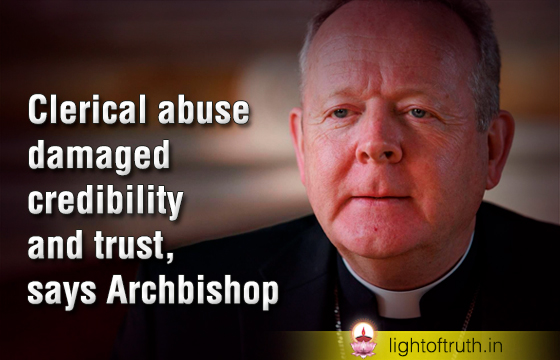
Clerical abuse damaged credibility and trust, says Archbishop

At the 50th National Day of Intercession for Priests at Ireland’s International Eucharistic and Marian Shine in Knock, Co Mayo, Archbishop of Armagh Eamon Martin said abuse had damaged priestly fraternity, credibility and the “precious trust” between priests and their people.

There are many times, he said, when priests feel their brokenness, woundedness and their need for God, especially when they learn that some of their brother priests have committed awful sins and crimes of abuse. 

He told the assembled priests that one of the greatest challenges they face is to be “good news” for the world even though they may see their priesthood undermined or attacked.

The annual intercession for priests, he said, had helped remind priests that priesthood is not like other jobs or professions because “it is subsumed into our whole being. Our priesthood is not our own. It is a share in the priesthood of Christ.”

Separately in his homily for an open-air Mass on the Hill of Slane in Co Meath for the “Light the Fire” faith event, Archbishop Martin appealed to the faithful not to allow the flame of the Holy Spirit to be quenched in Ireland. 

Acknowledging that these are challenging times for the faith, he said many have drifted away from practicing, distracted by “a frantic world of materialism and consumerism” and the superficial promises of easy pleasure and success. 

“We must be alert to the false gods that surround us, and their empty promises, stealing away life and happiness from our people through addictions to alcohol, drugs, gambling and gaming; destroying the hearts and minds of our children through unfiltered access to misinformation and harmful content online,” he warned.

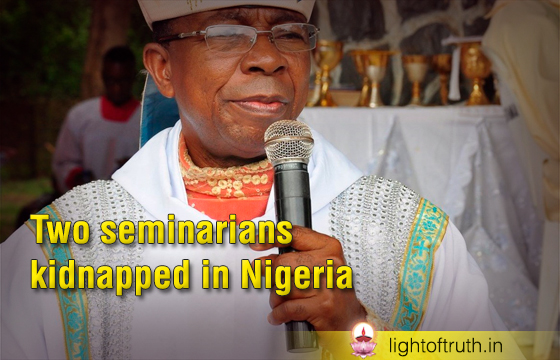
Two seminarians kidnapped in Nigeria

Two seminarians kidnapped in Nigeria’s southern Edo State appeared in a video filmed by their captors, pleading with their parents, the Church and the general public to help secure their release. They were seized in an attack on the Diocese of Auchi’s Immaculate Conception Minor Seminary in Ivianokpodi, Agenebode, Etsako East Local Government Area on 10 July. In the video, which appeared online earlier this month and was verified by the diocesan spokesman Fr Peter Egielewa, the two teenagers appeared holding human skulls and surrounded by armed masked men who threatened to kill them.

In the video, the seminarians said: “They kill people here. Our abductors have threatened to kill us. Please, send money to them to spare our lives. They told us they have killed people and they are not afraid of killing us.” The diocese asked Catholics and all who sympathise with the seminarians, “who, out of the love of God ‘s work, have volunteered their lives for the vocation”, to come out to their rescue.

Gunmen killed a civil defence officer in their attack on the seminary on 10 July and abducted three seminarians, later releasing one. Following the abduction, the Edo State Commissioner of Police Agbonika ordered the deployment of tactical units to track the attackers and rescue the victims.

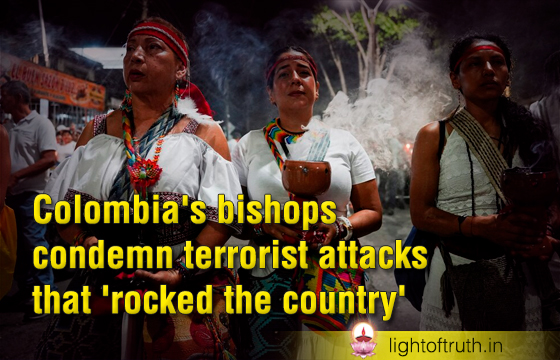
Colombia’s bishops condemn terrorist attacks that ‘rocked the country’

Colombia’s bishops expressed their outrage after at least 18 people died and more than 40 were injured after two attacks in Colombia attributed to different dissident factions of the former FARC guerrilla group. Bishops decried as “brutal” the “wave of violence that rocked the country,” with the Archdiocese of Cali, Colombia’s most populous city where the attacks happened, “urgently” calling for justice and peace.

Six people died when a cargo vehicle with explosives detonated near a Colombian Aerospace Force base, causing 71 further injuries, according to the mayor’s office, as reported by Reuters. Hours earlier, the agency reported, a National Police Black Hawk UH-60 helicopter participating in a coca leaf crop eradication operation was shot down in the municipality of Amalfi, in the department of Antioquia, leaving 12 officers dead.

The Colombian bishops’ conference, in an Aug. 22 statement signed by its leaders, including the conference president, Archbishop Francisco Javier Múnera Correa of Cartagena, condemned the terrorist attacks and extended its “sentiments of solidarity” to the families of the victims “at this time when violence continues to knock on the doors of Colombian homes, sowing pain and despair.”

The bishops made a direct appeal to all parties involved in the conflict to abandon “the path of death and walk the path of respect for life, which dignifies and makes true human development possible.”

Colombian President Gustavo Petro attributed the attacks to dissident groups of the former FARC guerrilla movement, which refused to accept the 2016 peace accord aimed at ending the decades-long conflict that has claimed over 450,000 lives.

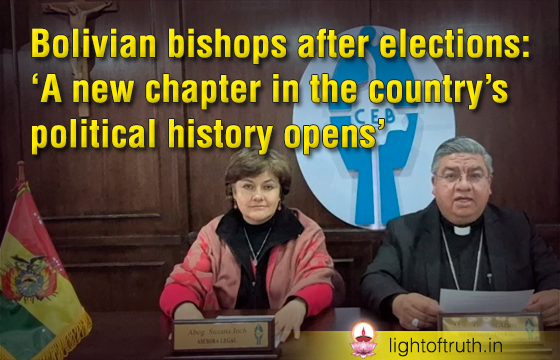
Bolivian bishops after elections: ‘A new chapter in the country’s political history opens’

The Bolivian Bishops’ Conference (CEB, by its Spanish acronym) expressed hope after Bolivia’s recent general election, which marked a change in the country’s political direction. Rodrigo Paz Pereira, the centrist Christian Democratic Party candidate for president who won the Aug. 17 election, will now face former president Jorge “Tuto” Quiroga in a runoff. The unexpected result is viewed as a setback for the far-left Movement Toward Socialism, the party that governed the country for two decades.

Amid food shortages, historic inflation, political confrontations, and a climate of violence in the country, Bolivians voted for change.  In an Aug. 18 statement, the bishops celebrated voter turnout on Election Day. “This demonstration of democratic commitment, hope, and responsibility on the part of the Bolivian people — who experienced a great historic occasion, marked by respect and the will to decide the country’s course — should characterize the path ahead,” they said.

They also praised the work of the institutions responsible for ensuring the integrity of the electoral process, “so that Election Day would be held within a framework of trust and respect for the will of the Bolivian people.” “We welcome with hope the election results that open a new chapter in the country’s political history,” the bishops stated, saying the election gave “a voice to all Bolivians who strive and yearn for significant change.”

The CEB congratulated the candidates who qualified for the runoff, scheduled for Oct. 19. The bishops urged the public to “continue to responsibly inform themselves about each candidate’s proposals in this new electoral phase.”

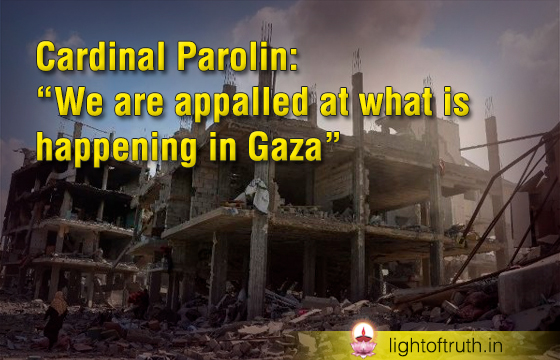
Cardinal Parolin: “We are appalled at what is happening in Gaza”

“We are appalled by what is happening in Gaza, despite the condemnation of the whole world,” Cardinal Parolin said, noting that “there is a unanimity in condemning what is taking place.” Speaking on the sidelines of the inauguration of the Liturgical Week in Naples on 25 August, the Cardinal referred to the Israeli strike on the Nasser Hospital in Khan Younis, which killed 20 people, including five journalists. “It makes no sense,” he said, adding that “there seem to be no openings for a solution” and that the situation is becoming “increasingly complicated and, from a humanitarian perspective, increasingly precarious, with all the consequences we are seeing day by day.”

On the war in Ukraine, the Cardinal stressed the need for “a lot of politics, because in theory there are many possible solutions and many paths that could lead to peace. But they must be put into practice, and this also requires dispositions of the spirit.”

“There is a need for hope for the whole world,” Cardinal Parolin continued, recalling that the Jubilee announced by Pope Francis, dedicated precisely to this theme, aims to be “a moment of regaining hope.” It is, he explained, “a hope against all hope,” at a time when “there are not many reasons to hope, especially at the international level.” Recent days, he said, show once again “the difficulty of setting in motion paths of peace in situations of conflict.” Yet, he insisted, “we must not give in to resignation” but rather “continue to work for peace and reconciliation.”