
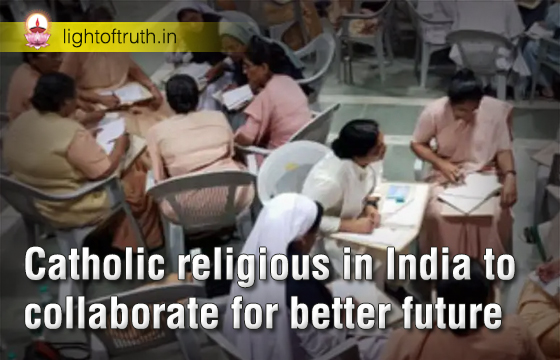
Superiors of Catholic religious congregations of men and women in India have stressed the need for inter-congregational collaboration for the betterment of the Church amid increasing hostility against Christians. The Conference of Religious India (CRI), the national body of major superiors of Catholic religious congregations, heard several such calls at its May 14-17 gathering in Bengaluru, a southern Indian city. “When we come together, it not only helps us promote innovation and creative thinking among ourselves but also helps us effectively address several pressing problems,” said Apostolic Carmel Sister Maria Nirmalini, the forum president.
“We find the need to enhance inter-congregational collaboration for better networking,” Nirmalini told. Archbishop Peter Machado of Bangalore asked the gathering to contemplate strategies to arrest the increasing persecution of Christians in the country. The CRI under Nirmalini has initiated a healthcare programme for elderly nuns after the survey found that 64% of nuns were elderly or in-firm. Nearly 190 congregations participated in the survey. More than 61% of the elderly nuns are retired because of physical inability, the survey said. The survey found that 40% of the participating congregations had no facility to look after their elderly. The meeting stressed the need for priests, brothers, and sisters to spare time for the youth and families rather than spend time in institutionalized jobs.
Daily Archives: May 31, 2024
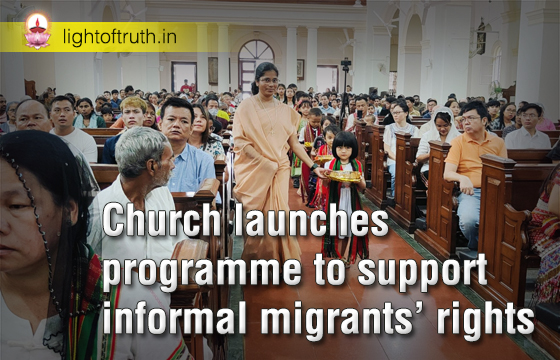
Church launches programme to support informal migrants’ rights
The Commission for Migrants of the Conference of Catholic Bishops of India (CCBI) launched the project “Supporting Informal Mi-grant Workers: Access to Entitlements” to ensure all migrant workers have equal access to basic rights and services. The CCBI Commission for Migrants, together with the International Catholic Migration Commission (ICMC), envisioned this project as a way to address the challenges faced by informal migrant workers in accessing essential services such as healthcare, education, and social protection. The project will also focus on raising awareness about the rights of informal migrant workers and advocating for policy changes to better protect this marginalized group. While inaugurating the project, Metropolitan Archbishop Most Rev. Anil J.T. Couto the Secretary General of CCBI and CBCI said, “This project is a testament to our commitment to serving the community and providing essential services to those in need. I am confident that this initiative will have a positive impact on the lives of many individuals in our city.” Archbishop Couto expressed his hope that this project will serve as a model for other cities to follow in addressing the challenges faced by marginalised populations.
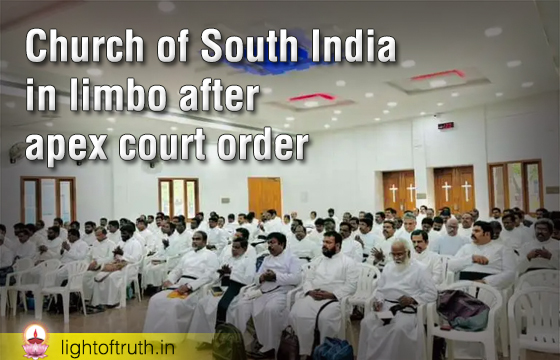
Church of South India in limbo after apex court order
The routine administration of the Church of South India (CSI) has come to a standstill following a top court order that restrained a court-appointed panel from exercising its power. “We do not know what to do and whom to report as there is no one to manage the daily affairs,” said an official working at the crisis-ridden Church headquarters in the southern city of Chennai. The official, who did not want to be named, said on May 29 they did not know if they would get their salaries for this month as the Supreme Court had restrained the high court-appointed administrators from managing the finances. “We are also uncertain about holidays and annual leaves. We do not know how to deal with this situation,” added the official with the leading Protestant denomination. The Madras High Court in Chennai, the capital of southern Tamil Nadu, on April 12 appointed retired Justices R Balasubramanian and V Bharathidasan as administrators of the Church. They were given the administrator’s powers to handle the Church’s finances and directed to conduct elections to the Synod, the apex decision-making body of the Church. The high court intervened after a section of the laity alleged corruption charges against former Synod moderator Bishop Dharmaraj Rasalam. However, on May 22 the top court in the country issued the restraining orders and posted the matter for hearing on July 8. The CSI was formed in 1947 after India’s independence from Britain as a union of Protestant denominations. Its counterpart in north India is known as the Church of North India (CNI). The CSI has 24 dioceses including one in neighboring Sri Lanka. Among them, 14 have bishops. The administrators have appointed bishops in charge of some of the other dioceses. But following the apex court order, they asked the bishops and other officials to refrain from exercising their powers. Kollam-Kottarakkara diocese in southern Kerala state is headed by a bishop in charge appointed by the administrators.
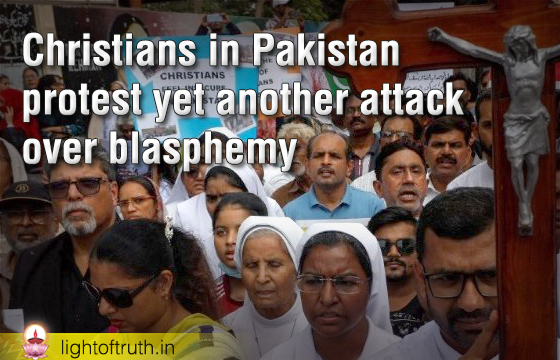
Christians in Pakistan protest yet another attack over blasphemy
Christians in Pakistan have taken to the streets across the Muslim-majority nation following yet another mob attack over false blasphemy accusations in the central Punjab province. Uca news agency reported that from Peshawar city in Khyber Pakhtunkhwa to southern Karachi in Sindh, Christians gathered in large numbers this week-end to protest the attack on two houses and a shoe factory owned by a Christian family in Sargodha district in Punjab.
The Christian factory owner, Mr. Nazil Gill Masih and his son were accused of having burnt pages of the Quran in their garbage in the residential area of the Gillwala Mujahid colony of Sargodha and last week were attacked by over 400 men armed with batons, bricks, and stones ransacking and burning their shops and homes. Although twelve members of the family were able to escape, Mr. Masih was badly beaten and severely injured before police arrived and managed to remove him from the mob. He was rushed to hospital in a critical condition. His son was also reportedly beaten and, according to the pontifical foundation Aid to the Church in Need (ACN), ransacking and fires continued after the attack, posing a grave threat to the safety and well-being of the local Christian community.
The Minorities Alliance Pakistan (MAP) demanded punishment for the perpetrators of violence. For its part ACN has joined in strongly condemning the incident, and has expressed its solidarity with the affected family and the whole Christian community in Pakistan. The police, meanwhile, ha registered cases against 450 unknown persons under an anti-terrorism law and 25 people have been arrested in connection with the attack.
At a demonstration in Peshawar, Christians declared May 25 as a “black day” and more than 500 protesters at the Faisalabad District Council Chowk in central Punjab blocked traffic for two hours and 20 women burned their head scarves in protest, Akmal Bhatti, a Catholic political leader and head of the MAP said.
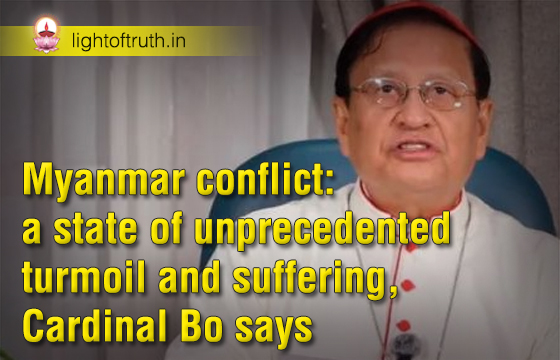
Myanmar conflict: a state of unprecedented turmoil and suffering, Cardinal Bo says
In an interview with ACI Prensa, CNA’s Spanish-language news partner, Cardinal Charles Maung Bo, Archbishop of Yangon in Myanmar, said there is an “unprecedented state of turmoil and suffering, which seems to have no end” in the country resulting from a coup d’état at the beginning of 2021 in the midst of the COVID-19 pandemic.
The conflict has already left more than 100 places of worship bombed or damaged, the cardinal said, and the violence has spread in many areas of the territory. In addition, he said that almost 3 million people have been displaced and are in urgent need of assistance, which has been arriving little by little thanks to the work of the Catholic Church and other nongovernmental organizations such as Religions for Peace.
Although Myanmar is a pre-dominantly Buddhist country, the constitution guarantees religious freedom. However, Bo pointed out a worrying reality: “The last de-cade saw the emergence of funda-mentalist forces that targeted mi-nority religions.”
The situation has been exa-cerbated by recent political unrest affecting people of all faiths who are suffering the consequences of an expanding civil war. “Peace is the common prayer of all the religions,” the cardinal emphasized.
Bangladesh Archbishop dismisses Christian state plot claims as ‘absurd’
“We, the Christians of Bangladesh, and their leaders – the Catholic Bishops’ Conference of Bangladesh (CBCB) and the United Forum of Churches (UF-CB) are surprised and worried,” said a joint statement issued on Sunday.
In today’s globalised and secularised world, the idea of a “Christian state” is absurd, said the statement signed by Abp Bejoy D’Cruze of Dhaka, the president of CBCB and UFCB.
The reaction came after Bangladesh’s Prime Minister Sheikh Hasina accused Christians of plotting to carve out a “Christian state” of their own by taking parts of Bangladesh and Myanmar. “Like East Timor …they will carve out a Christian country taking parts of Bangladesh [Chattogram] and Myanmar with a base in the Bay of Bengal,” national English newspaper The Daily Star quoted Ms Hasina as saying on May 23.
She said the government is under pressure to allow a foreign government to use a base in the Bay of Bengal, which she rejected without naming the country. “Many have their eyes on this place. There is no controversy here, no conflict. I won’t let that happen. This is also one of my crimes [in their eyes],” she said, adding that this is why the Awami League Government is always in trouble.
The alleged plot is neither supported nor accepted by Christians, he said.
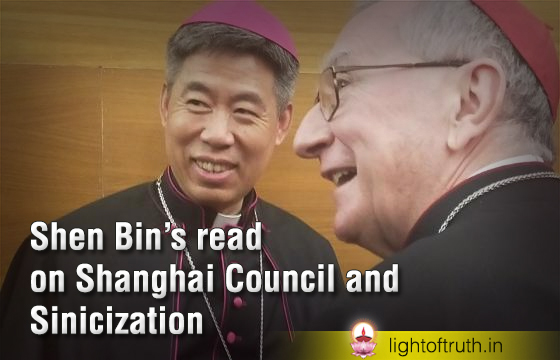
Shen Bin’s read on Shanghai Council and Sinicization
This year marks one hundred years since the Council of Shanghai, the first Plenary Council of the Church in China. For the occasion, the Pontifical Urbaniana University in cooperation with the Agenzia Fides organised a conference, which was held today, to highlight the historic event a century ago, but also to look at today’s challenges, starting with the notion of “sinicisation” of religions, an issue central to Chinese President Xi Jinping’s religious policy.
Pope Francis also underlined the importance of the council in 1924, which brought together the bishops and apostolic prefects present in China at the time, in a video message.
A lot of curiosity surrounded the first official visit in Rome of the current bishop of Shanghai, Msgr Joseph Shen Bin, at the centre of tensions last year after Chinese authorities unilaterally transferred him to China’s foremost epis-copal see, a situation later settled by Pope Francis’s decision to appoint him as well.
Bishop Shen was joined by important academics and Church officials from the People’s Republic of China, who brought their vision of what happened a century ago, as well as their views about the relationship between the “inculturation” of the faith promoted by the doctrine of the Church and “sinicisation”, processes seen as two circles that overlap but also diverge.
This also comes with the need for dialogue in the perspective of fraternity to avoid the risk of fuelling “new self-referential closures”, as Card Luis Antonio Tagle, pro-prefect of the Dicastery for Evangelisation, put it this in his conclusion. “The stories of our Chinese brothers and sisters have something important to show to the universal Church,” Card Tag-le said. “There may be misunderstandings, but [they are] never half-hearted with respect to the Church’s journey in China.”
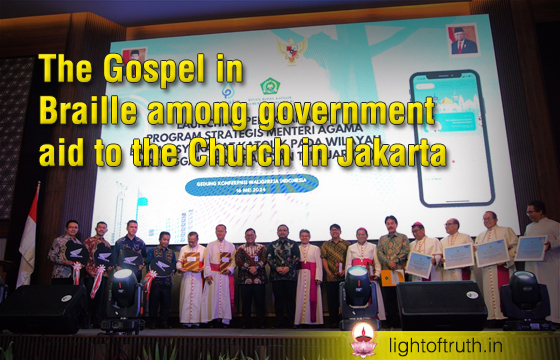
The Gospel in Braille among government aid to the Church in Jakarta
Instruments and institutions at the service of the disabled. And permits for the construction of two new churches in the archdioceses of Jakarta and Pelambang. These are the new projects put in place in agreement with the local Church by the Indonesian Ministry of Religious Affairs, through its Directorate for Catholics (Bimas Katolik Kemenag), presented in a meeting held with the Bishops’ Conference.
In particular, the government will take care of the dissemination of a Braille translation of the Gospel of Mark for the visually impaired and the establishment of two Catholic high schools to train catechists prepared to serve the disabled in the district of Nagekeo, located on the island of Flores, in eastern Nusa Tenggara province, and on the island of Nias, in Sumatra province.
‘Our agency has a primary focus on the neglected people in the remote areas of the country,’ explained the Director of the Directorate for Catholics, Mr Supraman, ‘providing a financial aid package to establish or renovate places of worship and to procure essential tools for apostolate in education or other areas. The project for the disabled is being carried out in cooperation with the Ministry of Social Affairs.
Expressing his thanks, the President of the Indonesian Bishops’ Conference, Bishop Antonius Subianto of Bandung, commented: ’We really have things in common: the good spirit of helping others, especially the neglected people.
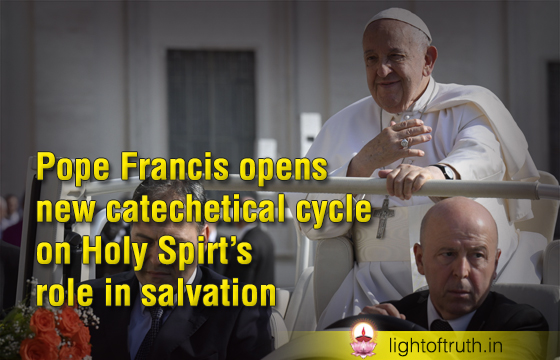
Pope Francis opens new catechetical cycle on Holy Spirt’s role in salvation
Pope Francis on May 29 opened a new catechetical series during his weekly general audience, focusing on the theme of creation across history and the role of the Holy Spirit in the story of salvation.
Titled “The Spirit and the Bride: The Holy Spirit Guides God’s People Toward Jesus Our Hope,” the new cycle will unfold across three main themes: the Old Testament, the New Testament, and “the time of the Church.”
“The Spirit of God, who in the beginning transformed chaos into cosmos, is at work to bring about this transformation in every person,” the pope said during the general audience held May 29 in St. Peter’s Square.
The first part of the series will begin with an overview of creation according to the Old Testament, but it will not be “biblical archaeology.” The pope explained that it will instead focus on how the promise given in the Old Testament “has been fully realized in Christ.” “It will be like following the path of the sun from dawn to noon,” he added. Quoting from the first two verses from the Book of Genesis, Francis observed that “the Spirit of God appears to us here as the mysterious power that moves the world from its initial formless, deserted, and gloomy state to its ordered and harmonious state.” Referencing the division between the “confused” and the “beautiful and ordered,” Pope Francis observed that it is God who “makes the world pass from chaos to the cosmos.”
The pope underscored the Holy Spirit’s role in creation and as a protagonist in the story of salvation by pointing to the Psalms and the New Testament. “The Apostle Paul introduces a new element into this relationship between the Holy Spirit and creation,” the pope said. He speaks of a universe that ‘groans and suffers as in labour pains.’ The pope emphasized that St. Paul understands the “cause of the suffering of creation in the corruption and sin of humanity,” which has alienated man from God and is a theme still present today.
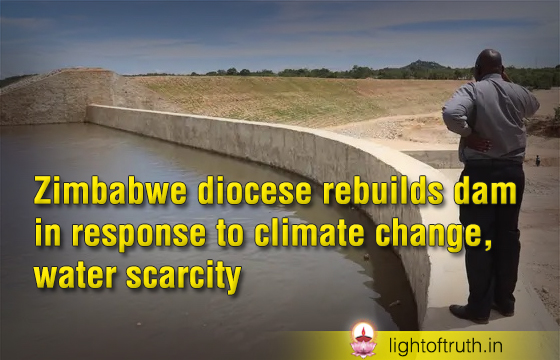
Zimbabwe diocese rebuilds dam in response to climate change, water scarcity
Catholic diocese in Zimbabwe has rebuilt its own dam as part of faith-based responses to water challenges brought by climate change. The Diocese of Gweru in the country’s low rainfall Midlands province says the Holy Cross Dam, reconstructed at the beginning of this year, will go a long way toward reviving long abandoned agriculture projects.
The dam is also expected to create a greenbelt for local farming communities and drive other downstream economic activities to help support long-term sustainable development. Gweru is in Midlands, one of the country’s 10 provinces that have in recent years experienced below average rainfall, sending agriculture pro-duction into a tailspin that has left thousands of households threatened by hunger.
The construction of the Gweru Diocese dam comes at a time when the Catholic international aid agency Caritas is also helping rural communities with the rehabilitation of a defunct dam as part of efforts to cushion against cli-mate-induced water stress. The government has touted more dam rehabilitation and dam construction as the answer to escalated food production after successive poor harvests due to below normal rainfall.
The government sees dams as a way to power the country’s vast irrigation infrastructure, with the minister of finance media, “When it comes to investment in irrigation, we are going to accelerate investments now that we have the water bodies. We have to impound water. So, it’s an ongoing program to complete dams under construction.” The government says so far that 12 large dams are under construction across the country.