

The Vatican has appointed an apostolic administrator for an Eastern-rite archdiocese in southern India where a decades-old liturgical dispute continues with the change in leadership.
The Vatican named Archbishop Andrews Thazhath, an expert in the Eastern Catholic Code of Canon Law, to replace Archbishop Antony Kariyil, metropolitan vicar of Ernakulam-Angamaly Archdiocese.
Kariyil was asked to resign by the Vatican for defying the Syro-Malabar Catholic Church’s supreme synod in the liturgical dispute. Thazhath is reportedly tasked to end the dispute and implement liturgical unity by making priests of the archdiocese accept a liturgical formula approved by the Bishops’ synod.
According to the synod-approved form, the Mass celebrant turns to the altar during the eucharistic prayer, a move archdiocesan priests refuse to accept; they want to continue facing the congregation throughout the Mass.
Father Kuriakose Mundadan, representing archdiocesan priests, told that the priests and the laity in the archdiocese continue to demand Mass be celebrated in the traditional way, with the priest facing the congregation throughout.
“The change in leadership does not mean that we have changed our stand,” said Mundadan. “We have conveyed our stand to the new administrator.”
Thazhath met with priests’ representatives soon after he took charge.
Cardinal George Alencherry, head of the Eastern rite Syro-Malabar Church, believes “the process to find a solution to the dispute has begun” with the appointment of a new administrator.
“The apostolic administrator will fix a date and begin to implement” celebration of the synod-approved Mass, Alencherry told the media, but said he was not sure when “it will happen.”
Church officials familiar with the developments say winning over priests and laity will be a huge task, as the liturgical dispute had become an emotional issue.
Daily Archives: August 13, 2022

Children In India face cyberbullying: Survey
A whopping 85% of children in India have reported being cyberbullied as well as having cyberbullied someone, according to a report released by computer security soft-ware company McAfee.
The India-centric findings are part of company’s global report titled ‘Cyberbullying in Plain Sight,’ a 10-country survey. It was conducted between June 15 and July 5, covering 11,687 parents and their children.
McAfee also claimed that the survey uncovered a startling fact – that many children take part in cyberbullying often without realizing their behavior for what it is, while parents struggle to keep up.
“Cyberbullying in India reaches alarming highs as more than 1 in 3 kids face cyber racism, sexual harassment, and threats of physical harm as early as at the age of 10 – making India the number 1 nation for reported cyberbullying in the world,” McAfee Chief Product Officer Gagan Singh said in the report.
It further said that children in India witness and experience the maximum cyber-bullying on almost every social media and messaging platform.
“85% of Indian children reported being cyberbullied as well as having cyberbullied someone else at rates well over twice the international average,” the report said.
Further, 45% of these children said they hide their cyber bullying experiences from parents, perhaps due to the relative absence of conversation.
In a release, McAfee explained the methodology it adopted for the survey, which was conducted in association with market research company MSI-ACI. The parents of children in the age group 10 and 18 were invited through e-mail to fill an online questionnaire.
The parents were first asked if their children were available to complete a survey. If yes, the parent was asked to complete a few questions themselves before turning over the survey to their child.
The 10 countries where survey was conducted are: United States, United King-dom, France, Germany, Australia, India, Canada, Japan, Brazil and Mexico.
Around 85% children in India have reported being cyberbullied and it is the highest in the world, according to a new survey released by global computer security firm McAfee Corp Monday.
Titled ‘Cyberbullying in Plain Sight’, the report is based on a 10-country survey to uncover new and “consequential trends” regarding cyberbullying.
The survey also noted that the number of Indian children reported to have cyberbullied someone is also twice the international average. Around 45% children in India said they cyberbullied a stranger, compared to 17% worldwide and 48% said they cyber-bullied someone they know, versus 21% of kids in other countries.
The top three forms of cyberbullying reported in India were spreading false rumours (39%), being excluded from groups or conversations (35%) and name calling (34%).

Cardinal Gracias denies reports he intervened in accused bishop’s case
Cardinal Oswald Gracias, one of Pope Francis’ closest advisers, has denied reports that he sought to intervene in the case of an Indian Bishop accused of secretly fathering a child.
In a video posted online August 7, Cardinal Gracias, who is the head of the Catholic Church in India, rebutted allegations he had arranged for Bishop Kannikadass Antony William of My-sore to take a paternity test at a Catholic hospital in order to control the outcome of the test results.
Cardinal Gracias said an audio clip from a two-year-old conversation with Bishop William, which has attracted attention among Indian Catholics in recent weeks, had been “mischievously edited to give the impression that there was collusion between Bishop William and myself for a cover-up.”
In the clip of the leaked phone call, which was promoted by the rightwing website Church Militant, the cardinal could apparently be heard telling Bishop William that Gracias would arrange for the paternity test to be conducted at a Catholic hospital “so we can control the media, control the doctors, control the publicity given to the whole thing.”
However, in his statement on August 7, Cardinal Gracias said he “categorically, emphatically and totally” denied that he had said or suggested that they could control the outcome of the test.
“At no time in the conversation or otherwise have I suggest-ed any action that would be illegal or bring disrepute to the church,” said the cardinal, who has led the Bombay Archdiocese since 2006 and has served as a member of Pope Francis’ influential Council of Cardinals since the group’s creation in 2013.
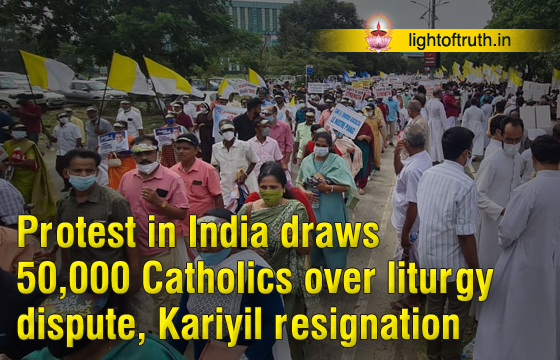
Protest in India draws 50,000 Catholics over liturgy dispute, Kariyil resignation
More than 50,000 Indian Syro-Malabar Catholics attended a protest in the southwestern city of Kochi on Sunday, demonstrating against changes that would have priests face east during parts of local Syro-Malabar Eucharistic liturgies, and opposing the recent resignation of Archbishop Antony Kariyil.
Protest Aug. 7 outside Kaloor Jawaharlal Nehru International Stadium.
The nearly two-hour protest at the Kaloor Jawaharlal Nehru International Stadium drew priests and laity from across the Ernakulam-Angamaly Syro-Malabar archdiocese, according to local media reports. Organizers said more than 320 parishes were represented, along with other nearby dioceses.
Some protesters held signs in Italian, in a possible attempt to attract Vatican attention.
A priest at the demonstration told The Pillar that the event was called the “Great gathering for the protection of Faith.”
Demonstrators have four demands, he said:
• They want to keep the liturgy in the diocese versus populum – with the priest facing the people, rather than facing liturgical east.
• They are also calling for financial restitution following a controversial sale of archdiocesan land.
• They want their Church’s senior officials to listen to the opinions of the laity on controversial matters.
• And they are calling for justice for Archbishop Antony Kariyil, who says he was forced by the Vatican to resign, without any reason given.
The protest comes amid a fierce ongoing debate over whether to implement a uniform mo-de of celebrating the Syro-Malabar Church’s Eucharistic liturgy, known as the Holy Qurbana.

Misery and disease conquer Afghanistan
The heaving wards of a ramshackle clinic in southern Afghanistan are just one sign of the catastrophic humanitarian crisis that has gripped the war-ravaged country since the Taliban returned to power a year ago.
Last month, the Musa Qala District Hospital in Helmand province was forced to shut its doors to all except those suffering from suspected cholera.
The infirmary was soon jammed with listless patients, intravenous drips needled into their wrists as they recuperated on rusting gurneys.
Though the clinic lacks facilities to test for cholera, about 550 patients presented themselves within days, showing symptoms of a disease caused by a lack of basic sanitation needs: clean drinking water and an adequate sewerage system.
“It’s very difficult,” hospital chief Ehsa-nullah Rodi, run ragged on just five hours of sleep a night since the influx began, told.
“We didn’t see this from last year, or another year.” The United Nations says Afghanistan’s humanitarian crisis is the world’s worst.
Poverty in the country — felt most keenly in Afghanistan’s south — has been driven to desperate new levels, exacerbated by drought and inflation since Russia’s invasion of Ukraine.
“Since the Emirate (Taliban) came into power, we can’t even find cooking oil,” said one woman, perched on a hospital cot next to her malnourished six-month-old grandson in Lashkar Gah, Helmand’s provincial capital.
“Poor people are squashed under their feet,” the 35-year-old said.
The United States froze $7 billion in central bank assets, the formal banking sector collapsed, and foreign aid representing 45 percent of GDP stopped overnight. Over the past year, would-be donors have grappled with the conundrum of funnelling fresh funding to the ailing nation, which the Taliban rebranded the “Islamic Emirate” in line with their austere theocratic beliefs.
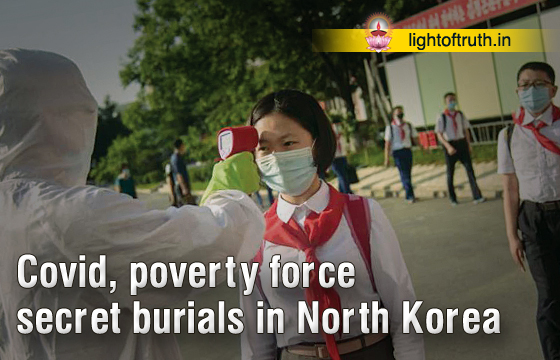
Covid, poverty force secret burials in North Korea
Extreme poverty intensified by the Covid-19 pandemic is forcing people in remote areas of communist North Korea to bury dead loved ones secretly in unmarked graves in forests at night to avoid high funeral costs, reports say.
North Korea recorded “zero” new infections over the previous 24 hours and the death toll remained at 74, the state-run Korean Central News Agency reported on July 30, citing officials. The total number of cases was put at 4.8 million out of a total population of 26 million people.
If true, the death rate of 0.0016 percent, is the lowest in the world.
The claims, however, are disputed by foreign experts who say the government is hiding the real infection figures and death toll to ensure North Korean leader Kim Jongun retains a firm grip on a nation facing a staggering economic situation, Associated Press reported.
Other outlets report that the pariah state is recording increasing deaths from the pandemic, prompting helpless Koreans to go for clandestine burials for family members — something very unusual as filial piety and reverence to ancestors are important in Korean culture.

Singapore should ban picking genetically best embryos
Genetic testing has recently attracted much interest in Singapore, with the Ministry of Health (MOH) issuing a public warning on the risks of consumer genetic testing, as well as announcing subsidies on IVF (in vitro fertilization) embryo genetic testing for some patients at risk of transmitting heritable genetic defects to their offspring.
In May 2021, the ministry placed a moratorium on genetic testing and insurance, which bans insurers from requiring their clients to provide predictive gene-tic test results for disease sus-ceptibility.
A more controversial development is the use of predictive genetic tests to select IVF embryos for good health and intelligence, in what is known as pre-implantation genetic testing for polygenic risks (PGT-P).
As good health and intelligence are complex traits deter-mined by the combination of multiple genes, polygenic risk scores (PRS) are used to estimate an individual embryo’s likelihood of developing an adult-onset, multi-factorial trait by analyzing the combination of specific gene-tic variants within its genome. The risk here is because there is no genetic modification, there are minimal risks involved, as it is basically a technique for picking the “winning ticket” in the “genetic lottery” for good health and intelligence.
It must however be noted that there is an important distinction between embryo testing and selection to avoid serious harm from known genetic defects and for so-called ‘enhancement’, like better health and greater intelligence.

Quo vadis? Pope revitalizes ancient theologian’s rules as a timely guide
When Pope Francis gave his first full-length interview after his election in 2013, he was asked about the importance of the church providing solid points of reference in a rapidly changing world. The new Pope pulled out his thumb-worn breviary and read out a Latin quote from a fifth-century French monk.
Highlighting the words of St. Vincent of Lérins, Pope Francis raised a curtain onto his pontificate: presenting a little-known but once highly influential theologian whose name and citations would soon appear in a number of papal speeches, documents and interviews over the next decade.
The Pope’s favorite quote? That Christian doctrine should follow the true and legitimate rule of progress, so doctrine may be “consolidated by years, enlarged by time, refined by age.”
It expresses how doctrine can develop and how there can be growth in the expression and awareness of the faith and in morals “while always remaining faithful to its roots,” He told re-porters on the plane to Rome from Morocco in 2019.
This is the point the Pope returned to again when speaking to reporters on his flight back to Rome from Canada July 29, when he said St. Vincent offered a “very clear and illuminating” rule for proper doctrinal development.
Like every one one of his predecessors, “Pope Francis has the difficult task of protecting the deposit of faith even while encouraging legitimate growth and progress,” U.S. Msgr. Tho-mas G. Guarino told on Aug. 3 in an email response to questions.
Tradition properly understood, he said, is “the root of inspiration for the church to go for-ward,” not backward.
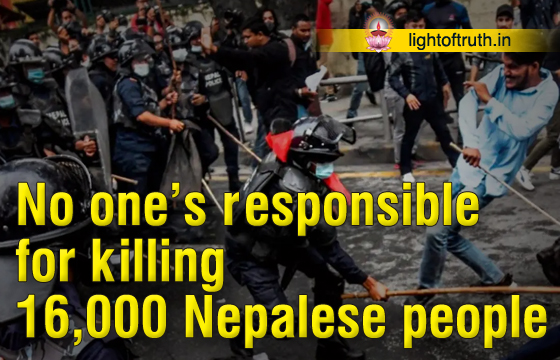
No one’s responsible for killing 16,000 Nepalese people
It still remains a Himalayan task for Nepal to achieve the transitional justice and reconciliation process to restore the social order that was ruptured because of mass atrocities during the protracted civil war from 1996 to 2006.
Sixteen years after the civil war left about 16,000 dead and 15,000 reported missing, repairing society after massive human rights violations has proved elusive in Nepal as the country does not possess the required political will.
The decade-long conflict was between the monarchy and Maoist rebels and as such transitional justice and reconciliation became tricky, which is even otherwise a balancing act. On the one hand, it upholds universal human rights norms to ensure justice for victims and, on the other, it respects the legitimacy of a political solution to a conflict.
King Gayanendra Shah, who ruled the nation of 30 million people at the time, subscribed to the divine right theory, which asked his subjects to treat him as an incarnation of the Hindu god, Vishnu. He took charge after the royal massacre in 2001 and reigned until 2008, when parliament declared Nepal a republic, ending the monarchy.
As chaotic politics and unstable governments continue, the bigger question asked is who will pin the responsibility for the atrocities, and on whom? Both security forces and rebels are accused of carrying out torture, killings, rapes and enforced disappearances.
The/ Comprehensive Peace Agreement, signed by rebel leaer Pushpa Kamal Dahal and the then prime minister. G.P. Koirala, pulled the curtain down on the 10-year conflict in the country.

Young Sudanese woman to be stoned to death
A court in Sudan has sentenced a 20-year-old woman to be stoned to death for alleged adultery.
The judgment comes as violence toward girls and women soars in the wake of last year’s military coup.
Civil society and human rights groups in Sudan and beyond have called for the abolition of the obligatory sentence of stoning to death under the 1991 Sudan Criminal Act.
The young woman’s trial, which did not meet recognized international standards, took place in Kosti city, White Nile State in July. Human rights advocates say accusations of adultery and blasphemy are often motivated by revenge, rather than based on fact.
The previous Islamist regime of Field Marshall Omar Bashir was overthrown in 2019. Democracy activists hoped Sudan’s penal code would be reformed in line with international standards and conventions.
However, a coup in October 2021 put the military and Islamist traditionalists back in effective control. Consequently, there has been a climate of impunity for those attacking women and girls challenging traditional roles by leaving their homes to go to school or work, or to be involved in civil society.
Until recently, rape victims could be charged with adultery: in 2014, a woman in Sudan was convicted of committing indecent acts after being gang raped, apparently because the act of reporting the rape was considered proof of her sin.