
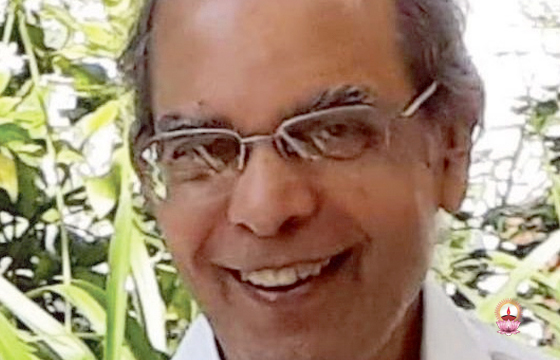
Father John Fernandes, founder president of the Catholic Priests’ Conference of India (CPCI), died in Mangaluru on July 3, the feast of Saint Thomas. He was 85.
The funeral is scheduled at 9:30 am on July 4 at St.Joseph the worker Church, Vamanjor, Mangaluru.
Father Fernandes, a priest of Mangalore diocese, had made a mark as a renowned human rights activist and a promoter of interreligious dialogue. He had led a number of movements for justice for Dalits, farmers and villagers while serving as pastor of rural parishes under the diocese of Mangalore.
He also fought for the rights of the Catholic diocesan priests in India the leader of CPCI, which was once the national forum of priests influenced by liberation theology.
As a dialogue activist he had addressed several meetings of the Rashtriya Swayam Sevak (RSS), the umbrella organiza-tions of the Hindu nationalist groups, as an invitee on topics related to interreligious har-mony. He was the recipient of the Herbert Haag Award for Freedom in the Church from Lucerne, Switzerland in 2007.
Fr Onil D’Souza, the dire-ctor of the St Anthony’s poor homes where Father Fernandes spent his last days, said he was “deeply touched by his passion for the poor, his secular app-roaches and sense of justice all through his priestly life.”
Daily Archives: July 16, 2021
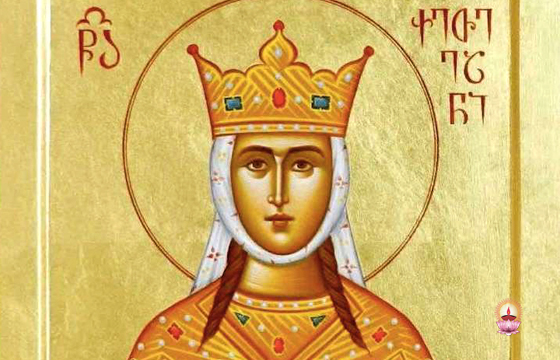
India hands over martyred queen’s relics to Georgia
In a rare diplomatic gesture, India has returned the relics of a Christian saint and Georgian queen killed in Iran for refusing to give up her faith 400 years ago and buried in Goa.
Foreign Minister S. Jaishankar handed over the relics of St Queen Ketevan to his Georgian counterpart David Zalkaliani on July 10 during a two-day visit to Georgia.
Ketevan was the queen of Kakheti, a kingdom in eastern Georgia in the 17th century. Iranian King Shah Abbas I took her hostage after he conquered her kingdom in 1613-14.
She refused to convert to Islam or join the Iranian ruler’s harem and is believed to have been tortured to death on Sept. 22, 1624.
Some Augustinian friars in 1627 brought her body to Goa, then a Portuguese colony. It was buried and remained hidden inside the Augustinian convent in Goa.
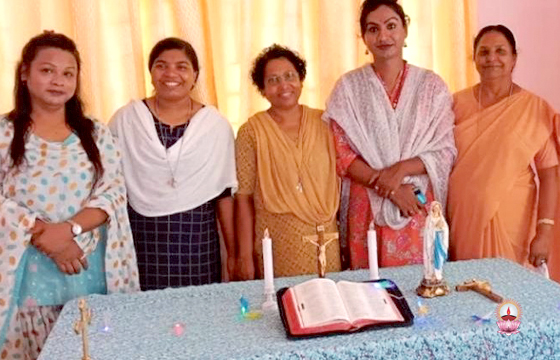
Nun opens facility in Assam to help transgender people
The Rainbow Home of the Seven Sisters (RHoSS) aims to provide a home for homeless transgender women and help them build a better future. The new facility – located in Guwahati, Assam’s commercial capital– is the brainchild of Sister Prema Chowallur, a member of the Sisters of the Cross of Chavanod, who has been working with marginalized people since 2016.
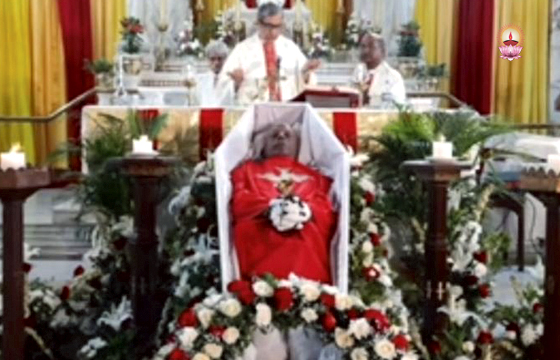
Fr Swamy, a modern day martyr, is laid to rest
Fr Stan Swamy, who died on Monday at the age of 84, was laid to rest today. His fellow Jesuits described the service as “The funeral of a saint of our time”, held in St Peter’s Church in Bandra (Mumbai). Only 20 people were able to take part in the ceremony due to COVID-19 restrictions, but the Mass was streamed live.
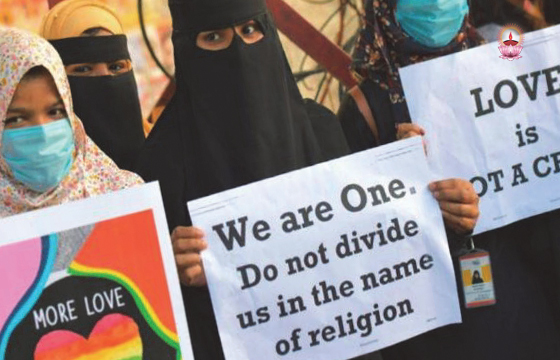
Gujarat, ‘love jihad’ in anti-conversion law
On June 15, a new version of the local anti-conversion law came into force in the Indian state of Gujarat: it mainly targets “love jihad”. And just four days later, in the city of Vadovara, the police filed a complaint arresting six people, including five members of the same family.
A 24-year-old woman raised this case, which shows how divisive the issue is in the Indian states where the Hindu nationalists of the BJP rule.
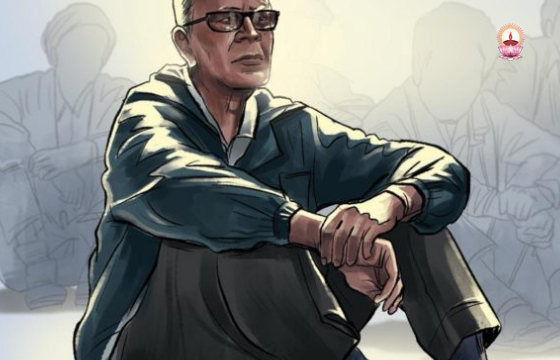
Swamy’s death stirs women theologians to fight draconian laws
The Indian Women Theologians’ Forum says it will campaign for the repeal of draconian laws that unjustly incarcerate those working for justice and human rights. Mourning the death of Father Stan Swami, the association of women theologians from various Christian denominations, expressed shock and anguish that the government labelled the Jesuit activist’s work as seditious whereas the State should have been doing what the priest had done – “upholding the Constitutional rights of all Indians.”
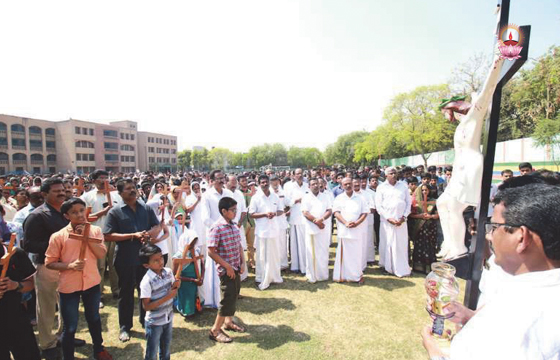
Hindu activists threaten Christian pastors in India
Hindu activists in the central Indian state of Chhattisgarh have disrupted a prayer service and threatened two Christian pastors in the space of three days for alleged religious conversion.
In the first incident on July 4, Pastor Firoz Bagh was conducting a prayer service at his house in Raipur, the state capital, when 30-40 Hindus surrounded the house and started shouting anti-Christian slogans.
Police took the pastor into custody but released him after a few hours after the intervention of church leaders.
On July 7, Pastor Ramesh Manikpur of Sarora Gogaon was resting at his house in the evening when a Hindu group wrote a slogan hailing Hindu gods on his boundary wall.
“They accused me of religious conversion and even slapped my son. They were around 100 and passing through our lane in a religious procession,” Pastor Manikpur told.
Pastor Moses Logan, president of the Chhattisgarh State Christian Welfare Society, told that they had faced similar situations
in the state but things were brought under control after the intervention of the administration.
“It is matter of concern and worry for us as some fanatic group members take us for granted and don’t even hesitate to harass and attack us in the name of religious conversion, which is not true,” he said.
“I spoke with Pastor Bagh and he said he has to visit the police station every other day for the investigation. He is very much worried for his family and his faithful. I hope the investigation is over soon.”
Pastor Logan said Pastor Bagh told him that after police took him to the police station, a mob even surrounded the police station and started shouting anti-Christian slogans and accusing him of forced conversions.
“The mob say they will not allow him to conduct any prayer service in the area in near future,” Pastor Logan said.
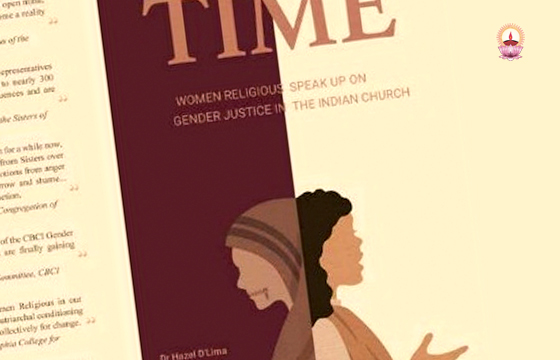
Survey highlights hierarchical exploitation of nuns in India
Sacramental blackmail, clergy sexual abuse, clericalism and property disputes are among challenges facing Catholic women religious in India, an international webinar was told.
The July 10 meeting organized by Voices of Faith, a Rome-based international network, discussed the findings of a Conference of Religious India survey conducted among the leaders of the women religious in the country.
Around 370 nuns, priests and laypeople from many English-speaking countries, Germany and Italy attended the two-hour program.
The survey was commissioned in 2018 by the women’s section of the Conference of Religious India, the national association of religious major superiors in the country, after media reports indicated widespread exploitation of nuns in the Catholic Church.
A four-member team conducted the study in 2019-20 and published the findings as a book in June this year.
“It is a landmark document,” Astrid Lobo Gajiwala, a laywoman theologian who coordinated the webinar, said of the book. “For the first time, we have hard data that cannot be discounted. Women religious from across India have courageously called out the exploitation they experience in the church.”
The book lists these problems faced by the Indian nuns: low wages, disputes over property, harassment from priests, refusal of sacramental celebrations, and verbal abuse in person and from the pulpit.
The issues discussed in the book were earlier discounted, Gajiwala says, lest they invite “the wrath of powerful priests and bishops,” adding the concerns “are finally out in the open.”
The India conferences of both bishops and religious have not responded to the survey or its findings.
The 86-page book titled It’s High Time: Women Religious Speak Up on Gender Justice in the Indian Church, was written by a three-member team led by Sr. Hazel D’Lima, former superior general of the Society of the Daughters of the Heart of Mary.
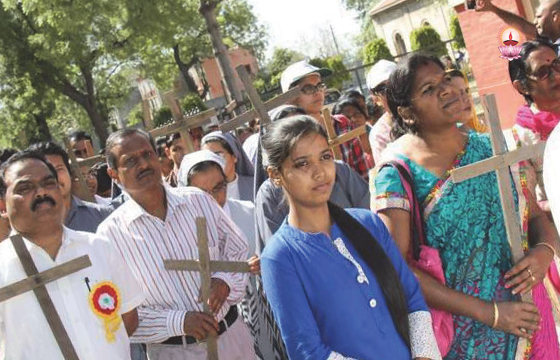
Indian Christians suffer 154 acts of violence this year
A human rights group that monitors atrocities against Christians in India says it has confirmed 154 incidents of violence in 17 states in the first half of the year.
The New Delhi-based United Christian Forum (UCF) said that perhaps a new ministry of cooperation may bring a better understanding of other faiths, especially among those who oppose Christianity.
“This year hasn’t been any different for Indian Christians except that Indian Christians across the globe came together to establish an exclusive day for themselves on July 3 and launched a decade of celebrations (2021-30) to honour the 2,000th anniversary of the earthly ministry of Jesus Christ,” the UCF press note said.
The press statement dated July 10 said 154 incidents of violence were reported on the UCF toll-free helpline number against Christians across India.
The UCF is an inter-deno-minational Christian organization that fights for the rights of members of the Christian minority, mainly through protest.
Other states which witnessed violence against Christians for their faith are Madhya Pradesh (15), Odisha (12), Maharashtra (nine), Tamil Nadu (six), Punjab (six), Bihar (six), Andhra Pradesh (four), Uttarakhand (three), Delhi (three), Haryana (two), Gujarat (two) and one each from Telangana, West Bengal, Assam and Rajasthan.
Some 1,137 calls were received by the UCF helpline and callers were given help through advocacy and assisting in forwarding their grievances to authorities.
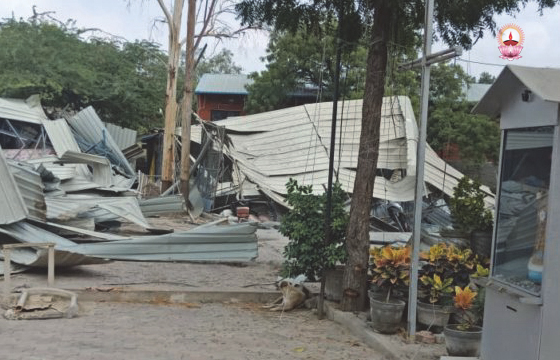
Church demolition upsets Catholics in Delhi
The demolition of a church in south Delhi has upset the Syro-Malabar Catholics living in the national capital.
Fr Jose Kannukuzhi, parish priest of Little Flower Church in Lado Sarai, said that on July 12 morning officials of the South Delhi Municipal Corporation came with three bulldozers and some 150 police personnel.
“They told me they would only demolish a hall adjacent to the church building. So I did not remove the sacred things from the church building,” the priest told.
As the news of the demolition spread through social media, parishioners came to the demo-lished church to protest. People from other parishes also gathered at the church compound and joined a Mass and a candle light protest late in the evening.
Monsignor Joseph Odanat, vicar general of Faridabad Syro-Malabar diocese, said the demoli-tion was a “calculated hidden agenda of the local administration and the land mafia to evacuate us from there.” He claimed the diocese had obtained a stay order in 2015. “We will go ahead with legal actions,” Monsignor Odanat told.