
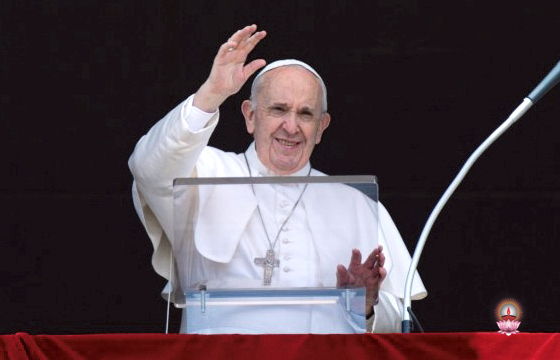
Pope Francis’s recovery from intestinal surgery continues to be “regular and satis-factory,” the Vatican said Wednesday, as it revealed that final examinations showed he had suffered a “severe” narrowing of his colon.
The Vatican’s daily update indicated there was no evidence of cancer detected during an examination of the tissue removed Sunday from Francis’ colon. Doctors said that was a good sign and evidence that the suspected condition of a narrowing of the colon due to inflammation and scarring had been con-firmed.
The Vatican spokesman, Matteo Bruni, said the 84-year-old pope was continuing to eat regularly following Sunday’s surgery to remove half his colon, and that intravenous therapy had been suspended.
“The fact that he is eating means his intestinal tract is working as it should,” said Dr. Walter E. Longo, professor of surgery and colon and rectal surgery at the Yale University School of Medicine and Yale-New Haven Health, who was not involved in Francis’s care. “The fact that infusion therapy has been discontinued means the amount of fluid he needs for sustaining his everyday functions is now being met by his oral intake.”
Bruni said final examination of the affected tissue “confirmed a severe diverticular stenosis with signs of sclerosing diverticulitis,” or a hardening of the sacs that can sometimes form in the lining of the intestine.
Dr. Manish Chand, an associate professor of surgery at University College London who specializes in colorectal surgery, said the hardening of the tissue would have occurred as a result of repeat inflammation and infection, resulting in scarring that makes the colon less elastic.
Daily Archives: July 16, 2021
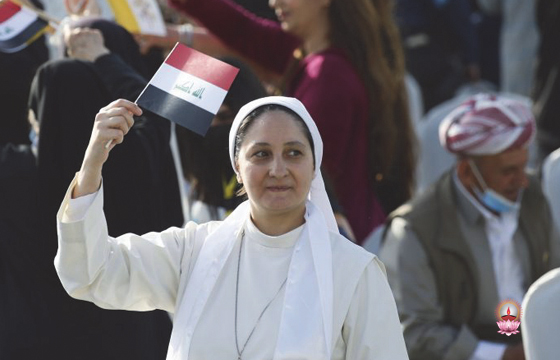
Experts say Iraqi government struggling to secure Christian future
In March, Pope Francis made history by becoming the first Roman pontiff to visit Iraq. His visit was a sign of solidarity with one of the Middle East’s oldest Christian communities, a small minority in the Muslim-majority country.
Some even credit the mere scheduling of the trip as an agent for change in Iraq. After the trip was announced, the Iraqi Parliamentary Assembly voted unanimously to declare Christmas an annual national holiday, and Salih ratified a law benefitting Yazidi survivors of the 2014-2017 ISIS genocide.
However, months after the trip, experts say nothing has changed.
“I have not seen any changes with the Iraqi government that would give any indication that they’ve made any shifts in the way that they are dealing with Christians,” said Nadine Maenza, chair of the United States Commission on International Religious Freedom.
Maenza and Ed Clancy, director of outreach for Aid to the Church in Need, said security concerns and a lack of economic opportunity are the most significant issues Iraqi Christians
face.
“Christians, when they live in the cities, are in a very difficult situation because they don’t have a large enough community to protect themselves,” Clancy said.
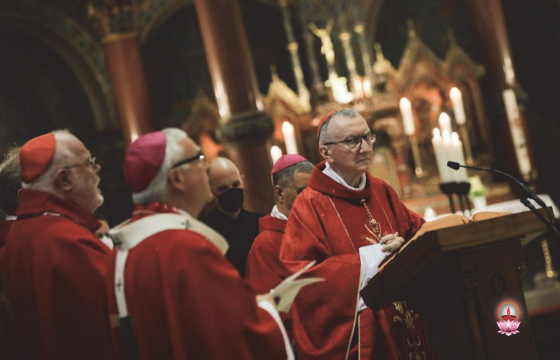
Vatican secretary of state urges Catholic Church in Germany to unite
Cardinal Pietro Parolin, Vatican secretary of state, urged German Catholics to put aside visions and individual needs, noting, “the community must take precedence.”
Addressing several German bishops during a church service June 29, Parolin referred to
Pope Francis’ 2019 letter on the Synodal Path of the Catholic Church in Germany, reported the German Catholic news agency KNA. This reform dialogue deals with controversial issues such as Catholic sexual morality, priestly life, power and the separation of powers as well as the role of women in the church.
Parolin urged the church in Germany “to return to a unity that does not depend on agreeing to common orientations, as is usual in politics, but on being rooted in God.” He opposed “reducing togetherness to only one particular part, however relevant and significant it may be.”
KNA reported that among those attending the service were Limburg Bishop Georg Bätzing, president of the German bishops’ Conference; Cardinals Reinhard Marx of Munich and Freising and Rainer Maria Woelki of Cologne; Berlin Archbishop Heiner Koch; and several other German bishops.
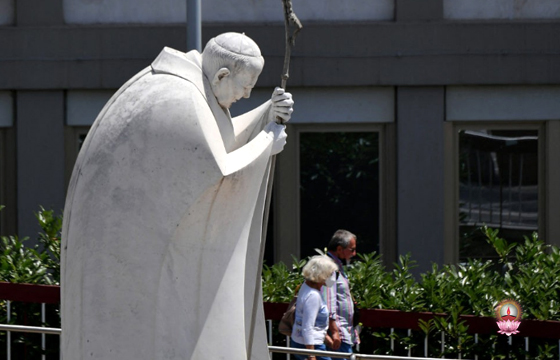
Vatican Insider: Pope Francis ‘Will Never Be the Same’ After Colon Operation
Luis Badilla, editor of the semi-official Vatican news aggregator Il Sismografo, said that Pope Francis’ health situation is “severe” and when he returns from hospital he “will never be the same again.” In his sobering blog post, Badilla declares that journalists and commentators are not doing the pope any favours when they downplay the seriousness of his illness.
There is a very significant detail that many “underestimate, ignore, or manipulate,” he writes, namely that “the disease that has affected Pope Francis is severe and degenerative” and “could also be chronic.” “The Holy Father will certainly return to the Vatican to resume his path in the footsteps of Peter but he will never be the same again,” Badilla insists. “All the rhetoric about a Jorge Mario Bergoglio ‘superman’ damages his image and charisma.” In his post, Badilla notes several details of the pope’s recent surgical operation to treat his diverticulitis that give cause for concern. As cited by numerous authoritative press sources, on Sunday evening the pope underwent general anesthesia and was administered powerful sedatives, Badilla observes, after which he was “subjected to laparoscopic surgery (almost a sort of scouring of the lower part of the abdominal cavity, with small, very sophisticated probes) and immediately afterwards to an ‘open’ or ‘open sky’ surgical intervention to allow hands-on work with full visibility.”

Vatican suppresses Italy-based lay movement founded by alleged visionary
With the approval of Pope Francis, the Vatican has ordered the dissolution of an Italy-based lay movement, citing problems with the group’s origins, catechesis, governance, respect for members’ consciences, handling of donations and with the divisions it allegedly has created among clergy of the Archdiocese of Catanzaro-Squillace, where it is based.
The decree ordering the suppression of the “Apostolic Movement” founded 40 years ago by Maria Marino was dated June 10 and signed by Cardinals Luis Ladaria, prefect of the Congregation for the Doctrine of the Faith; Beniamino Stella, prefect of the Congregation for Clergy; and Kevin J. Farrell, prefect of the Dicastery for Laity, the Family and Life.
“The presumed revelations that gave birth to the Apostolic Movement through its founder, Mrs. Maria Marino, are to be considered not of supernatural origin — ‘constat de non super-naturalitate,’” the decree said.
While Marino has not been public about what she says were apparitions of Mary to her, she said they inspired her to establish the movement in 1979 and form the basis of the two key texts used to educate members.
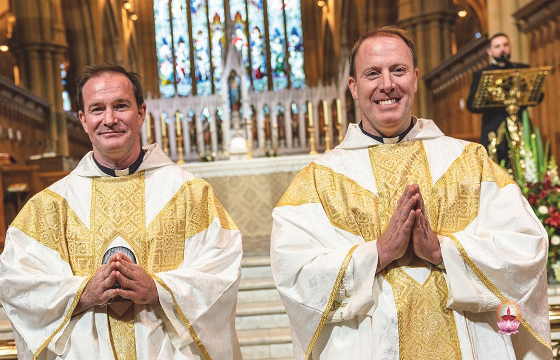
Australian brothers’ ordination completes hat trick of religious vocations
For the first time in Sydney’s history, two brothers have been ordained to the priesthood on the same day. Siblings Daniel and Stephen Drum were ordained May 29 by Sydney Archbishop Anthony Fisher at St Mary’s Cathedral in front of more than 700 people, including 90 of their closest family.
The family’s vocations story does not stop there; younger sibling Rosie has been a sister with the Missionaries of God’s Love for more than 10 years. Known to friends as the “Holy Trinity,” the spiritual siblings are the beating drums of the Catholic Church in Australia and prove that the family that prays together stays together.
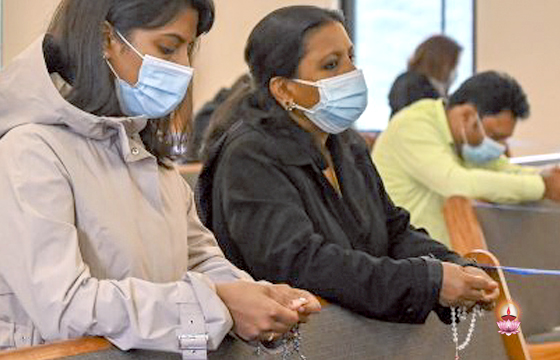
Syro-Malabar priests to appeal Vatican congregation’s order to sell land
A controversial land deal that rocked India’s Eastern-rite Syro-Malabar Church four years ago has resurfaced after a group of priests called a Vatican restitution decree unjust and unethical.
Syro-Malabar priests in India say the new archdiocesan administrator bypassed canonical channels to sell property to pay off debt. They will appeal to the Vatican’s Apostolic Signature against a decree from the Congregation for Eastern Churches, a senior priest told.
The Vatican decree, leaked to the media June 27, seeks to reduce the arch-diocese’s losses by selling two plots of archdiocesan land at a price and a buyer approved by the permanent synod of the church.
The demand for restitution began in November 2019 after a group of arch-diocesan priests publicly accused Cardinal George Alencherry of bypassing canonical bodies to sell off several plots of land over a period of two years, incurring a loss of some $10 million to the arch-diocese. Alencherry, major archbishop of the Syro-Malabar Church, was archbishop of Ernakulam-Angamaly at the time.
The Vatican intervened two years ago and removed Cardinal Alencherry from administrative duties in the archdiocese. It later appointed Archbishop Antony Kariyil as its administrator.
The Vatican also asked the church’s synod to find a way to recover the losses.
Earlier this year, the synod suggested the sale of two pieces of land bought during the time Alencherry led the archdiocese, suggesting that price appreciation of the land could make up for the losses incurred.
However, members of the archdiocesan college of consultors and finance body opposed the suggestion, saying the land legally belongs to them because they bought it with their own money. The consultors say income from its sale cannot be considered restitution of the losses.
More than 385 of about 400 priests in the archdiocese also signed a petition to the Vatican congregation rejecting the synod proposal.

Tribal Catholic gets post in India’s new cabinet
Church leaders and activists have welcomed the appointment of a tribal Catholic as India’s new minister of state for minority affairs.
John Barla, an MP who represents Alipurduar in West Bengal state for the Bharatiya Janata Party (BJP), was part of Prime Minister Narendra Modi’s latest cabinet reshuffle on July 7.
“We are quite delighted after John was given the chance to look after minority affairs and will be directly responsible for day-to-day activities of minorities’ groups. We hope he does justice to his responsibilities,” Father Nicholas Barla, secretary of the Indian bishops’ commission for tribal affairs, told.
“It feels good when someone from the same community is chosen as a federal minister, and we pray and wish him good luck. “Since John himself belong to an Oran tribe, he is the right person who can understand the sufferings, difficulties and socioeconomic condition of the tribal people. It will be easy for him to work for the downtrodden people.
“We have a big list of demands concerning tribal rights and we hope the new minister will be able to address all these issues.”
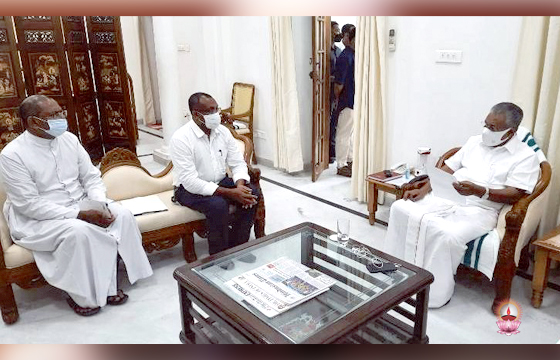
North East bishops condemn Delhi church demolition
The Catholic bishops in north-eastern India on July 13 condemned the demolition of a church in the national capital the previous day.
“It is shocking and sad news,” said Archbishop John Moolachira of Guwahati, who is president of North East India Regional Bishops’ Council (NEIRBC). The Little Flower Church in Lado Sarai was demolished by the South Delhi Municipal Corporation citing encroachment of government’s agricultural land “by some people by instalment of reli-gious structures.”
Speaking on behalf of NEIRBC, Archbishop Moolachira said, “Demolition of the Church in Delhi has hurt the religious sentiment of the peace loving Christian community not only in Delhi but across the country. The number of such incident has been on the rise in the recent past, including many parts of North East India.”
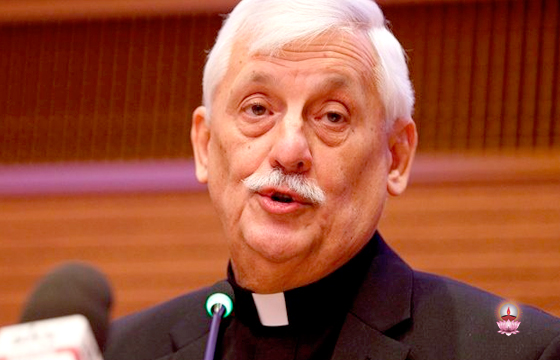
Indians account for one third Covid victims among Jesuits
Every third Jesuit who succumbed to Covid-19 in the world since June 2020 was Indian, according to a list circulated by Father Arturo Sosa, superior general of the Society of Jesus. The list, sent with a letter to all heads of 83 provinces, six independent regions and ten dependent regions, shows that as many as 158 Jesuits died of Covid-19 within a year starting June 2020. Among them 50 were Indians and two Sri Lankans.
Father Sosa recalled the death of another 44 Jesuits due to Covid in the previous year. “This list is long, and it would be even longer if we added the names of all our relatives who have left us,” he says.
The Covid toll adds to the already dwindling numbers among the Jesuits. As of 2018, the Society of Jesus had 15,842 members: 11,389 priests and 4,453 men in formation. This was 56 percent less than 36,038 in 1965, when the congregation’s membership peaked.