Church health workers from Kerala make mark in Maharashtra

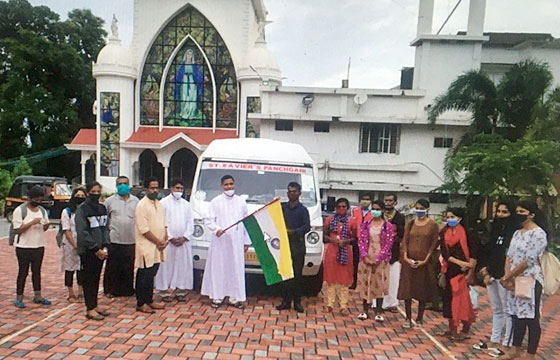
A group of health workers from Tellicherry archdiocese in Kerala has won praises for their dedicated services among coronavirus victims in a Maharashtra district.

“The district collector and other officers are highly impressed with their work,” says Father Tomy Kariyilakulam, director Bel Air Hospital, a Red Cross Society of India institution managed by the church at Panchgani in Satara district of Maharashtra.

The member of Missionary Congregation of Blessed Sacrament told Matters India on July 9 that 36 nurses have come on deputation from Kerala to work in various government hospitals in the district.
The 54-year-old priest, popularly known as Father Tomy, said the Bel Air hospital trained the Kerala nurses’ team in Covid care before deputing them to various hospitals.

District Collector Shekhar Singh had visited the priest’s hospital that has set apart 75 of their 200 beds for Covid patients.
Religious institutions offer premises for Covid-19

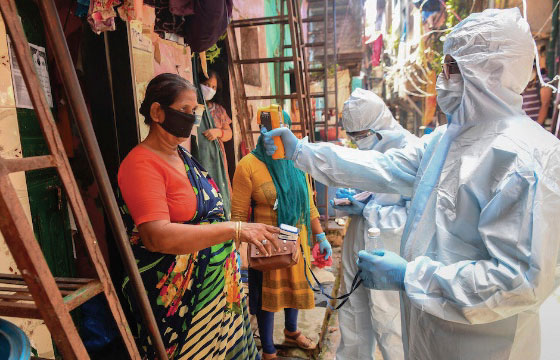
As the number of coronavirus infections surge across the country, minority religious institutions, staying true to their values of humanism, have shown the way by offering their premises to be converted to quarantine centres or hospitals to strengthen the fight against the pandemic.

In Mumbai, Pawan Dham and Paras Dham Jain derasars (temples) had been converted into hospitals, the Makkah Masjid had been turned into an oxygen centre and the St Michael’s church had been turned into an isolation facility, Mumbai Mirror reported. These institutions, open to people of all faiths, these institutions have paved the way in showing that religion and caste do not matter in the fight against the pandemic.

The two Jain derasars in Kandivali and Ghatkopar respectively were converted into Covid-19 hospitals without ICU facilities, after their religious head Namramuni Jain Maharaj urged people to give back to the society, said Mumbai Mirror. Pawan Dham is a 75-bed facility that has already treated 230 patients from different communities.

Indian Church leaders ‘Ignoring Papal norms on Sex Charges’

Catholic lay leaders in India have accused church officials of ignoring papal instructions to deal with sex abuse by trying to shield a bishop facing allegations of murder, womanizing and corruption.
Lay leaders Chhotebhai and Melwyn Fernandes urged the papal nuncio to India, Archbishop Giambattista Diquattro, to take action against Bishop Kannikadass Antony William of Mysore in Karnataka State.

Chhotebhai is the convener of the Indian Catholic Forum and adviser to Catholic Church Re-form International, while Fernandes is general secretary of the Association of Concerned Catholics, a forum of laypeople in India.

Some 37 priests sought Bi-shop William’s removal from office a year ago. The priests accused him of financial corru-ption, fathering children and having sexual relations with several women.

Indian cardinal clarifies reports of priests missing Covid-19 funerals

Cardinal Oswald Gracias of Mumbai has explained the confusion that resulted in some laypeople leading funeral rites and accusing their parish priests of not attending the last ceremonies of Covid-19 victims.
The cardinal’s statement came after the media published reports about lay Catholics leading funeral prayers and blessing graves to bury their family members. The reports also accused priests of refusing to bury Covid-19 victims for fear of contracting the virus.

“The archdiocese wishes to make clear that from the very beginning of the lockdown” on March 25, the clergy have been “responding to funeral requests with care and compassion,” the cardinal said in a June 26 statement.

He said the archdiocese had asked parishes not to have public requiem Masses. It also asked for bodies to be taken directly to the burial ground “where all the funeral prayers can be said before the burial.”
Directions also advised limiting the number of mourners to the minimum and keeping police informed of the funeral. In a video message, Cardinal Gracias also asked his priests not to visit houses because of the lockdown rules. “There was no direction to the priests to keep away from funerals,” Fr Nigel Barrett, spokesperson of Cardinal Gracias, told UCA News on June 28.

There must have been “rare incidents of some priests failing to arrive at a cemetery” but “most of our priests attend funerals with sensitivity and compassion,” he said.

Vietnam court jails Catholic blogger for eight years

Vietnam has jailed an out-spoken Catholic blogger, known for commenting on social issues, for allegedly trying to undermine the state.

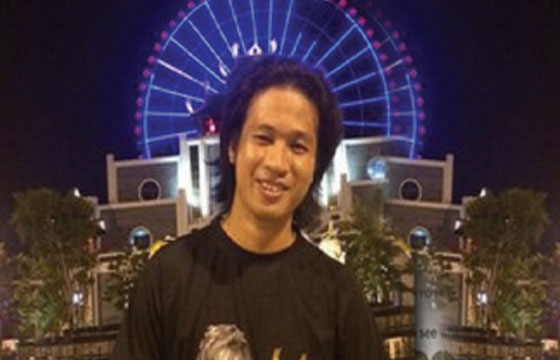
The People’s Court in Lam Dong province on July 7 senten-ced Nguyen Quoc Duc Vuong, 29, to eight years in jail and three years’ probation for “mak-ing, hoarding and disseminating anti-state propaganda.”

The blogger from Don Duong district was arrested in September last year.

According to a four-page indictment, Vuong had posted and spread 98 video clips and 366 articles against the govern-ment on Facebook.

He was also accused of taking part in illegal protests in Ho Chi Minh City in 2018 against the approval of the country’s contro-versial cyber security law and proposed special economic deve-lopment plans. The indict-ment said his posts criticized the country’s socialist system and Ho Chi Minh, the father of commu-nism in Vietnam. It said Vuong was heavily influenced by his anti-communist father, who was a soldier in the South Vietnamese army during the Vietnam War.

Jakarta cardinal to sit on Vatican interfaith body

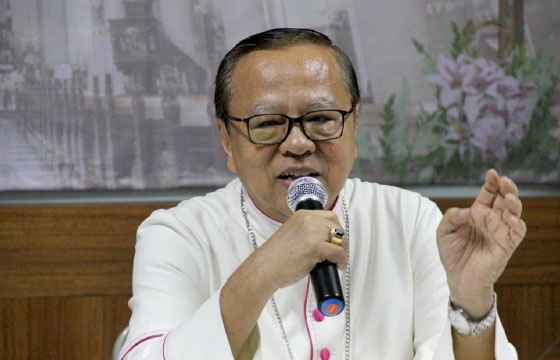
Catholics in Indonesia have welcomed the appointment of Cardinal Ignatius Suharyo Hardjoatmodjo of Jakarta as a new member of the Pontifical Council for Interreligious Dialogue. Many of them stressed the need for him to promote tolerance in the multi-religious country. Cardinal Suharyo, also the chairman of the Indonesian Bishops’ Conference and an ordinary of the Military Ordinariate of Indonesia, was among more than 20 new Pontifical Council members announced by the Vatican on July 8.

South Korean Christians discontent with online worship

Church-goers in South Korea, where religious services are typically characterized by large in-person gatherings, are growing increasingly dissatisfied with online worship, an inevitable reality at times given the government’s social distancing directives and the protracted coronavirus pandemic.
According to a survey conducted by a publication operated by a Protestant denomination, more respondents said online worship proved unsatisfactory, with the vast majority saying that they were more easily distracted during online services.

Those who disapproved of online worship accounted for 41 percent of the respondents in the survey, while around one quarter (24.2 percent) said they were in favour of online church services. The survey, titled “Social Perception and Sense of Religious Belief,” was conducted by KEHC News in comme-moration of the 30th anniversary of its founding. The publication is run by the Korea Evangelical Holiness Church, one of the major Protestant denominations in the country.

Among the dissatisfied respondents, more than 70 percent said they had some difficulty concentrating during services held online, while the inability to feel engaged and the vitality of church services — usually felt during on-site worship – ranked second when it came to causes of discontent with online worship.

Muslim volunteers bury Christians who died from the coronavirus

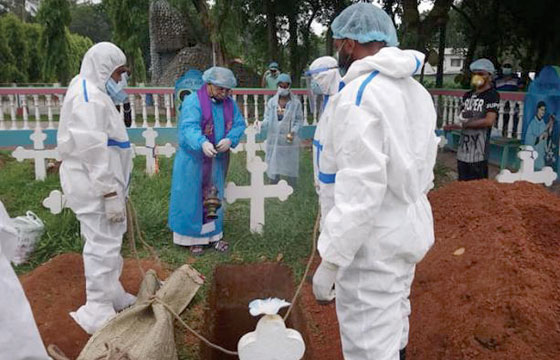
Groups of Muslim volunteers are burying Christians who have died from the coronavirus. This is seen as a great example of interfaith harmony, and videos of their work have gone viral in Bangladesh.
According to World Health Organisation data, almost 160,000 cases have been reported in Bangladesh with about 2,000 deaths, including a dozen Christians. Fearing contagion, very few people in the country are willing to touch the bodies of infected people, living or dead.

Muslim volunteers, who live isolated from their families, have been trained to bury those who die from the respiratory disease.

As part of the burial process, they first spray a disinfectant (a mixture of water and alcohol) onto the body of the dead, then bathe it with a solution of soap and water, and rub it with a cloth. Finally, the body is wrapped in a shroud and placed inside a special plastic bag.
Sahidul Islam, head of Al-Manahil Foundation, a charity based in Chittagong, notes that the burial of Christians is a new experience for his group.

Bishops: concern over the increase in violence against religious minorities

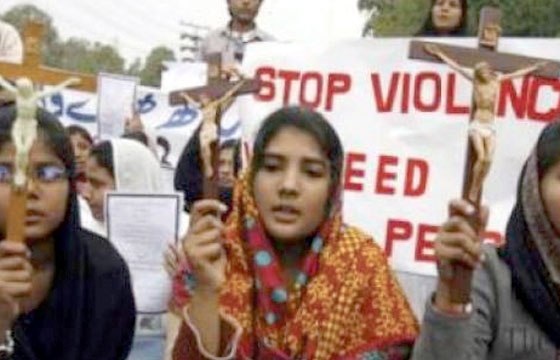
“Despite the current Covid-19 pandemic, which is posing its share of challenges in Pakistan, religious intolerance and discrimi-nation in recent months have increased”: is the complaint of the National Commission for Justice and Peace (NCJP), within the Pakistan Catholic Bishops’ Conference.
The statement sent to Agenzia Fides states: “Recently, Nadeem Joseph, a Chri-stian from Peshawar, and his mother-in-law Elizabeth Masih were brutally attacked by the Muslim Salman Khan and his sons a few days after Nadeem Joseph bought a house in the Colony in Peshawar, Pakistan on June 4, 2020, in a Muslim dominated neighbourhood and his neighbours did not tolerate the pre-sence of a non-Muslim in their neighbour-hood.” Police arrested several members of Salman Khan’s family in connection with the incident.

NCJP strongly condemns this act of violence. In a joint statement, Archbishop Joseph Arshad, Chairman of the Commi-ssion, National Director Fr Emmanuel Yousaf and Executive Director Cecil S. Chaudhry declare: “Pakistani society has become increasingly intolerant and living as a religious minority is becoming more and more difficult. There are many similar incidents that are not reported. Religious minorities continue to face discrimination as part of their daily lives,” it stresses, citing refusal to give food supplies or provide relief to non-Muslims during the pandemic, or that of poor personal protection for health workers, who are at the forefront. Bishops call on law enforcement agencies to do everything possible to catch the main culprit who brutally killed Nadeem Joseph and bring him to justice, noting the “clear violation of human rights” and “an act against the law that cannot go unpunished.”

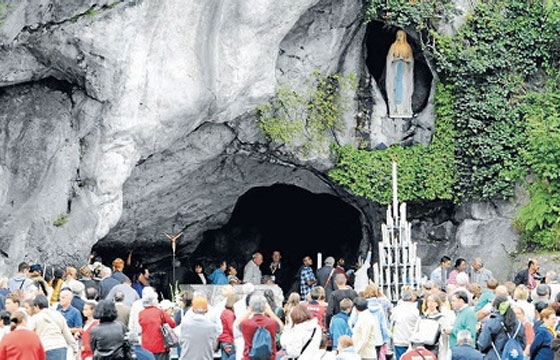
Facing $9 million deficit, Lourdes launches online pilgrimage

As Europe slowly but steadily re-opens after coronavirus closures, Catholics across the continent are being allowed back to Mass. However, organized groups of pilgrims in large numbers are still a long way off, leading the famed Shrine of Our Lady of Lourdes to organize an online pilgrimage and crowd funding drive to try to make up a $9 million deficit.

“Lourdes needs the world, and the world needs Lourdes,” said Monsignor Olivier Ribadeau Dumas, rector of the Sanctuary of Our Lady of Lourdes in southern France.

“Lourdes United” took place on July 16, and it included a 15-hour live session, in different languages, with Masses, proce-ssions, rosaries and other prayers. The date was significant: It’s the anniversary of the last Marian apparition recorded in Lourdes.

While the Vatican has approved devotion to the apparition and installed a feast day to Our Lady of Lourdes, it and other apparitions still are considered “private revelations” and thus not mandatory for Catholic belief.