Amazon conference is ‘experiment in Church structure’

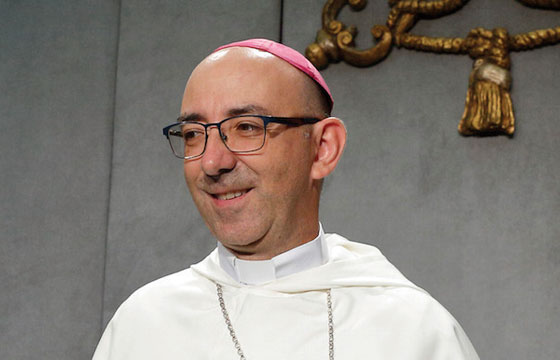
Following the decision on 29 June to establish an Amazon Ecclesial Conference, its president, Cardinal Cláudio Hummes, former archbishop of São Paulo, Brazil, and its vice-president, Bishop David Martínez de Aguirre, of Puerto Maldonado in southern Peru, have shed further light on the significance of the new body and how it will be structured. A key feature is its synodal nature, which will emphasise the participation of the laity, especially women and indigenous people.

Cardinal Hummes commented: “Following a suggestion from the Pope himself, this is not going to be an episcopal conference, like so many others, but what he has called the Ecclesial Conference of the Amazon Region. The reason for this is that it is meant to be an expression of the synodal nature of the Church in the region…Like the Amazon Synod, where there were bishops who had a vote, but many others, laypeople, indigenous, with the right to speak, it is a Church that listens to the communities and with them looks for ways of evangelising that are incarnate and inculturated.”

Bishop Martínez de Aguirre went further and stressed that the new body is intended to be a model for the Church as a whole. “We can say that this could be considered a sort of experiment – I’m not sure if that’s the most appropriate word – for a new form of Church life, based on synodality, in which the bishop is no longer someone that leads the Church on his own, but someone who is part of the whole Church journey…As Pope Francis said in The Joy of the Gospel, the pastors are there, sometimes in front, sometimes in the middle and sometimes at the back.”
Humanity Is Facing ‘Tsunami of Humanitarian Crises’

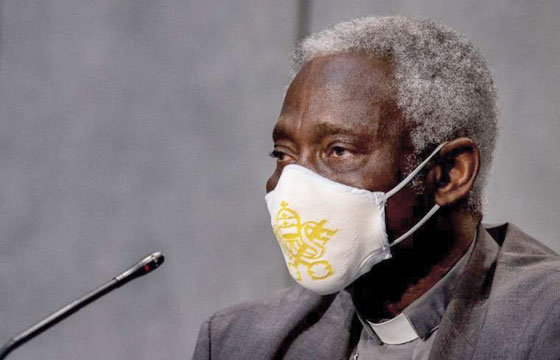
The head of the Vati-can’s coronavirus taskforce said that humanity is facing “a tsunami of humanitarian crises” caused by the con-vergence of medical, eco-nomic and environmental factors.

This tsunami “has spread and spared no human life and no institution,” said Ghanaian Cardinal Peter Turkson, who also heads the Vatican department for Integral Human Development, and in the wake of the pandemic and its lockdowns domestic violence, discrimination, prejudice, and global conflicts have all “reared their ugly head.”

Cardinal Turkson spoke these words during a July 7 Vatican press briefing, in which he added that the world is currently “facing one of the worst humanitarian crises since the Second World War.”
The cardinal noted his appreciation for the recent United Nations appeal for a global ceasefire, insisting that “there should be only one battle in the world: the battle against COVID-19.”

“Political tensions are rising, because of the decline in employment or the restrictions on movements,” he suggested, adding that the commission recognizes that “there can be no peace without reconciliation and healing.”

Pope weaves ‘Tale of Two Cities’ on Hong Kong and Hagia Sophia

Cue the soundtrack from film adaptations of the Dickens classic, because what Pope Francis has given us, ladies and gentlemen, is a Tale of Two Cities… only the settings aren’t London and Paris, they’re Beijing and Ankara.
We’re in the middle of July, which means most of Italy, including the Vatican, is down-shifting in preparation for the August holidays. Though a Pope can make news anytime he wants, in reality about the only time he’s on the public stage is for his noontime Sunday Angelus address, and the last two have been humdingers.
The headline was what the pope didn’t say. An advance text circulated by the Vatican included a passage about Hong Kong which Francis chose to skip, fueling endless speculation about whether China had somehow exercised pressure on the Vatican, or whether the Pope maybe got cold feet.
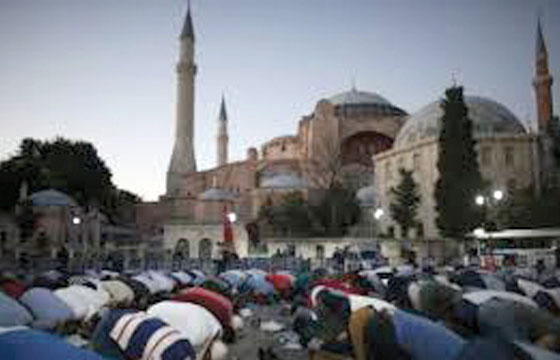
On July 13, by way of contrast, the story was what the Pope did say that wasn’t in the advance text. He spoke out on Turkey’s decision to revert the fabled Christian basilica of Hagia Sophia from a museum to an active mosque, a move which had been strenuously resisted by Turkey’s small Christian co-mmunity centering on the Patriarchate of Constantinople.
“I’m thinking of Santa Sophia … I am very pained,” he said, in language that did not appear in the advance version of his remarks circulated by the Vatican Press Office.
So, the obvious question presents itself: Why did Francis speak out on Hagia Sophia, but bite his tongue on Hong Kong? In all likelihood, the distinction, at least in part, has to do with who’s most likely to be paying attention and most likely to be unhappy: Turkey, in the case of Hagia Sophia, and China with regard to Hong Kong.
In other words, it’s the difference between Ankara and Beijing.
To begin with, Turkey is a regional power while China is a global superpower. Diplo-matically, there’s a lot more to lose in fraying relations with Beijing than Ankara.

Survey of bishops reveals how pandemic has shaken diocesan, parish life

Nearly every bishop responding to a survey said the coronavirus pandemic has seriously affected the celebration of the sacraments and rites and sacramental preparation programs in their dioceses.
Confirmations, first Communions, the Rite of Christian Initiation of Adults and other sacramental preparation were the ministries most often cited by the bishops as being affected, according to the survey conducted by the Centre for Applied Research in the Apostolate at Georgetown University.
In addition, six out of 10 bishops said that since March when restrictions on ministry and Mass attendance were put in place, the morale of priests, lay ecclesial ministers, deacons and chancery staff has been at least somewhat affected, according to the findings released on July 9.

Titled “Ministry in the Midst of Pande-mic,” the survey asked bishops about six areas of concern that have arisen in dioceses since the pandemic caused public Masses to be suspended and the celebration of sacraments to be restricted or postponed.

The questions focused on the pandemic’s effect on dioceses; special pastoral provisions issued by dioceses; financial concerns raised by the pandemic; actions to address a diocese’s financial health; the pandemic effect’s on parish assessments; and diocesan technological assistance to schools and parishes.
CARA staff members mailed the survey to bishops in 177 archdioceses and dioceses and 20 eparchies on May 18 and followed up with a mailing June 8 to those who did not respond. Overall, 116 bishops, 59%, had responded by the release of the report. About 60% of diocesan bishops responded and about 50% of eparchial bishops responded, the report’s authors said.

CARA officials said the results of the survey were likely affected by whether a bishop responded while his diocese or eparchy was in total lockdown or as restrictions began to be lifted.

When it came to specific sacraments, 99% of bishops said confirmation had been very much or somewhat affected; 99% said that about first Communion; 92%, about the Rite of Christian Initiation of Adults process; and 94%, about other sacramental prepa-ration programs.